Blog

  • The ‘Hidden Lobby’ Shortcut: Join High‑Payout Rebate Groups By Starting Where Power Shoppers Already Hang Out

    The ‘Hidden Lobby’ Shortcut: Join High‑Payout Rebate Groups By Starting Where Power Shoppers Already Hang Out

    If you have ever searched Facebook, Telegram, or Discord for rebate groups and felt like you were walking through a flea market full of knockoff signs, you are not alone. Most people type in a few hopeful keywords, join three or four groups, and quickly find the same mess. Dead chats. Endless affiliate links. “Proof” screenshots with no dates, no names, and no way to verify anything. That is frustrating, and it is also why so many people miss the groups where the biggest payouts actually happen. The trick is not to search harder. It is to start where active power shoppers already gather, then watch which rebate programs keep coming up in real conversations. Those repeated mentions are often the doorway into private buying clubs, contractor rebate circles, and other member groups where pooled volume leads to better payouts, and where results are visible enough to judge before you jump in.

    ⚡ In a Hurry? Key Takeaways

    • To learn how to find real community rebate groups, start in busy shopper communities and follow repeated mentions of the same rebate programs.
    • Look for public payout tracking, active member replies, and proof tied to real products or orders before joining any closed group.
    • Avoid channels that push one brand nonstop, hide all results, or ask for too much personal data too early.

    The hidden lobby most people skip

    The biggest mistake is starting at the final step.

    People look for the rebate group first. But serious savers usually do the opposite. They begin in larger, proven spaces where buyers, resellers, contractors, or deal hunters are already talking every day. Think active forums, busy Discord hubs, Facebook groups with real back-and-forth, or niche communities built around a category like appliances, tools, building supplies, or bulk household goods.

    That bigger space is the lobby. It is where you can observe before you commit.

    Inside those communities, you are not hunting random invite links. You are looking for patterns. Which rebate names keep popping up? Which buying clubs get mentioned by different people, not just one admin? Which posts include actual payout timelines, order thresholds, or screenshots that match the product category being discussed?

    How to find real community rebate groups without guessing

    If you want a repeatable method, use this one.

    1. Start with a high-activity community, not a search bar

    Search bars are fine for finding broad communities. They are terrible for finding the best rebate group directly.

    Instead, look for places with these signs:

    • Recent posts and replies every day
    • Members asking and answering detailed questions
    • Screenshots or proof that include dates, amounts, and product context
    • Conversation that is not controlled by one person

    If every post sounds like an ad, keep moving.

    2. Watch for recurring program names

    This is where the hidden lobby shortcut starts working.

    In real communities, the same rebate programs or buying circles get mentioned again and again. Not because someone is spamming them, but because members are comparing notes. One person mentions a payout. Another asks about timing. A third says they joined through a contractor alliance or pooled order run.

    That repetition matters. It tells you a group may have actual momentum.

    3. Follow the thread into the smaller group

    Once you spot a recurring program, dig into who is talking about it. Are several members pointing to the same private group, signup path, or organizer? Are they discussing how volume is pooled, when rebates hit, or what documentation is needed?

    That is often your path into the real action.

    If you want a related approach for broader platform hunting, The ‘Directory Leapfrog’ Shortcut: Join High‑Value Rebate Groups By Skimming Telegram & Discord Hubs, Not Random Links pairs well with this method because it focuses on finding good hub communities before you chase individual invites.

    What real rebate communities tend to look like

    Good groups are usually less flashy than bad ones.

    That surprises people. Scammy or low-value groups often look polished. They have giant promises, dramatic screenshots, and breathless captions. Strong rebate communities are often more boring on the surface. But boring can be good.

    Signs you may have found a real one

    • Members talk about volume thresholds, not magic money
    • Payouts are tracked in a shared sheet, pinned post, or public update thread
    • People discuss misses, delays, or limits honestly
    • The group works across multiple brands or vendors, not just one promoted product line
    • Admins explain rules clearly, including what makes a purchase eligible

    Signs you are in a content farm or promo funnel

    • Every post points to the same store or brand
    • No member discussion, only admin broadcasts
    • “Proof” is cropped, repeated, or impossible to date
    • Links constantly expire with no context
    • You are asked to hand over sensitive information before seeing how the group works

    Why the best payouts are moving into pooled communities

    Rebate hunting is changing.

    A lot of the real money is no longer sitting in public coupon groups. It is moving through pooled buying systems. That can mean buying clubs, contractor rebate alliances, local sourcing circles, or AI-managed group purchasing organizations that negotiate better terms when members buy together.

    The reason is simple. Volume changes the math.

    A lone shopper might get a small rebate. A coordinated group placing repeat orders can often qualify for better tiers, private offers, or category-specific incentives. That is why some of the strongest groups are closed, moderated, and selective. They are not trying to go viral. They are trying to maintain enough quality and buying discipline to keep payouts working.

    How to verify a group before you join

    You do not need a forensic lab. Just a short checklist.

    Check the paper trail

    Look for dated payout reports, order examples, rebate rules, and discussion around what counted and what did not. Real groups leave a trail because real transactions create follow-up questions.

    Check the member mix

    If possible, see whether the group includes a mix of newcomers and long-time members. Long-time members who still answer questions are often a better sign than a giant member count.

    Check the friction

    Some friction is normal. Good groups may screen members, set category rules, or require you to read a guide before posting. That is different from secrecy for its own sake. If a group explains its process, that is healthier than a group that says, “Trust us and send your info.”

    Check what happens when things go wrong

    This is a big one. Search the chat for words like “delay,” “issue,” “missing,” or “denied.” In a real rebate community, you will usually see problem-solving. In a fake one, you will mostly see silence or deleted questions.

    A simple example of the shortcut in action

    Let’s say you want appliance, building supply, or home improvement rebates.

    Most people would search “best rebate group” and join whatever appears first. A better move is to join a busy shopper or contractor discussion space first. Watch which rebate programs or buying clubs get mentioned over a week. If the same one comes up from several people, and if those mentions include payout timing or order size details, follow that trail. Ask how members joined. Read old threads. Then decide.

    That process takes a little patience up front. But it can save you weeks of joining junk groups that lead nowhere.

    Safety rules worth keeping

    Excitement makes people careless. Try not to let it.

    • Do not upload ID, tax forms, or payment details until you understand who runs the group and why they need it
    • Use a separate email for rebate communities if possible
    • Read the eligibility rules before buying anything
    • Be careful with groups that promise guaranteed payouts on every order
    • Take screenshots of terms, timelines, and proof posts in case details change later

    At a Glance: Comparison

    Feature/Aspect Details Verdict
    Where you start Random keyword searches often surface dead chats and spam. High-activity shopper hubs reveal which rebate programs real members actually use. Start in active communities first.
    Quality signals Recurring mentions, public payout tracking, and honest discussion of delays or limits are strong signs of a legitimate group. Look for patterns, not hype.
    Risk level Promo funnels and content farms often push one brand, hide results, and request too much data too soon. Verify before sharing personal information.

    Conclusion

    Right now, a lot of so-called savings communities are all surface. They look busy, but they are really content farms or one-brand promo machines. Meanwhile, the better payouts are increasingly flowing through community systems where people buy together, track results openly, and qualify for stronger rebate terms because they have volume. That is the real shift to pay attention to. If you remember one thing, make it this: do not start by hunting random links. Start where serious shoppers already hang out. Watch for repeated mentions of specific rebate programs. Then follow those threads into the smaller groups that show public proof, clear rules, and real activity. That is how to find real community rebate groups faster, with less guesswork, fewer dead ends, and much less risk of handing your data to the wrong crowd.

  • The ‘Directory Leapfrog’ Shortcut: Join High‑Value Rebate Groups By Skimming Telegram & Discord Hubs, Not Random Links

    The ‘Directory Leapfrog’ Shortcut: Join High‑Value Rebate Groups By Skimming Telegram & Discord Hubs, Not Random Links

    You are not crazy if hunting rebate groups feels weirdly harder than it should be. Most people start by clicking random Telegram invites, following promo accounts, or joining Discord servers that promise “deals” and end up being a mess of spam, fake screenshots, and dead channels. That is exhausting. It also wastes time.

    A better move is what I call the directory leapfrog shortcut. Instead of chasing one-off links, start with Telegram and Discord directories where active groups tend to leave a trail. Tools like TeleHub and other group finders can help you spot communities that are actually alive, focused, and worth joining. The trick is knowing what to search, what to ignore, and how to tell the difference between a serious rebate group and a noisy promo dump in under a minute. If you want to know how to find legit Telegram rebate groups, this is the faster, safer path.

    ⚡ In a Hurry? Key Takeaways

    • Start with Telegram and Discord directories, not random invite links, if you want to find legit rebate groups faster.
    • Check recent activity, member quality, topic focus, and posting style before you join or trust any group.
    • Use curated sources like Rebate Clubs alongside directories to avoid scammy, dead, or low-value communities.

    Why random links are usually the worst place to start

    Random invite links feel convenient. They are also where a lot of the junk lives.

    Here is the usual pattern. A creator posts a link in a story. A Reddit comment says “DM me.” A Telegram bio promises “daily rebates.” You join, and suddenly you are in a chat full of copied promos, bot replies, and vague claims about huge earnings.

    That does not mean every invite link is bad. It means the odds are worse when you have no context.

    Directories give you context first. You can often see the group name, size, category, posting history, related groups, and sometimes a short description before joining. That alone helps you skip a lot of junk.

    The directory leapfrog shortcut

    The shortcut is simple. Do not hunt group by group. Hop into a directory first, scan for clusters of relevant communities, then jump into the best-looking ones.

    Step 1: Search the directory like a shopper, not like a fan

    If your only search term is “rebates,” you will get a messy mix of coupon spam, affiliate drops, and generic deal chats.

    Try combinations instead:

    • rebate group
    • amazon rebate
    • cashback community
    • review reimbursement
    • shopping deals usa
    • buyer group telegram
    • deal hunters discord

    This is the practical answer to how to find legit Telegram rebate groups. Use narrower terms that reflect how real communities describe themselves, not just the broad buzzword.

    Step 2: Skim the preview before joining

    A good directory listing can tell you a lot in seconds.

    Look for:

    • Recent posts or signs of activity in the last few days
    • A clear niche, such as household goods, electronics, beauty, or Amazon deals
    • Human-sounding descriptions instead of hype like “100 percent profit daily”
    • Stable membership, not wild claims with almost no conversation

    If a listing looks vague, overhyped, or abandoned, keep moving.

    Step 3: Join quietly and observe first

    You do not need to introduce yourself right away. Lurk a bit.

    Watch how members talk. Are people asking normal questions? Are moderators answering clearly? Do deal posts include details like product type, timing, proof of past payouts, or rules for participation?

    Serious groups usually feel organized. Bad groups feel frantic.

    How to tell if a Telegram or Discord rebate group is legit

    This is where people save themselves a lot of grief.

    Green flags

    • Recent activity that looks consistent, not fake bursts
    • Moderators with clear rules and pinned messages
    • Specific deal categories instead of endless unrelated promos
    • Members discussing timing, stock, limits, and payout experiences
    • Proof that looks normal and repeatable, not too polished

    Red flags

    • Pressure to act immediately before you can read anything
    • Requests for upfront payment to “unlock” better rebates
    • No rules, no pinned posts, and no visible moderation
    • Every message reads like an ad
    • Admins pushing people into side chats or private payment arrangements

    If a group asks for money just to let you participate, that is a giant warning sign. Same goes for groups that demand personal information before you even know how they work.

    Why member quality matters more than member count

    A 50,000-member Telegram group can still be useless.

    Big numbers look impressive, but they do not tell you whether the group is active, trusted, or worth your time. A smaller group with real discussion often beats a giant one filled with bots and recycled posts.

    What you want is signal. Not noise.

    Scan the recent messages. If you see real members comparing notes, confirming payouts, and discussing which offers are worth doing, that is a much better sign than a huge audience reacting with emojis to every post.

    Use directories and curation together

    Directories help you find options. Curation helps you avoid the bad ones.

    This is why pairing your search with Rebate Clubs makes sense. A directory can show you where communities exist. A curated source can help narrow down which ones are actually useful for serious buyers.

    If you have already been burned by dead links and mystery chats, you might also like The ‘Comment Keyphrase’ Shortcut: Unlock Hidden Rebate Communities By Asking One Smart Question. It is another smart way to skip low-quality leads and get closer to the groups people actually use.

    A quick screening checklist you can use in under a minute

    Before you stay in any new group, ask yourself:

    • Was there activity this week?
    • Can I tell what the group is actually for?
    • Do members sound like real shoppers?
    • Are the admins visible and organized?
    • Are there clear rules about offers, payouts, and behavior?
    • Does anything feel rushed, secretive, or too good to be true?

    If you answer no to most of those, leave. There are better groups out there.

    Best habits for staying safe once you join

    Keep your personal details tight

    Do not share extra personal info in chat. Only provide what is needed for a specific, trusted transaction, and even then, be careful.

    Separate your browsing from your buying

    It is smart to observe first, then act later. You do not need to jump into the first deal you see.

    Save proof and screenshots

    If a group has payout examples, rules, or deal instructions, keep your own copy. It helps if posts get edited or deleted later.

    Trust patterns, not promises

    One flashy screenshot proves almost nothing. Repeated normal feedback from different members is worth more.

    At a Glance: Comparison

    Feature/Aspect Details Verdict
    Random invite links Fast to click, but often low-context, outdated, spammy, or risky Worst starting point
    Telegram and Discord directories Let you search by topic, preview activity, and compare groups before joining Best discovery tool
    Curated sources like Rebate Clubs Help filter out low-quality communities and point you toward useful ones Best for quality control

    Conclusion

    If you have been stuck clicking sketchy links and landing in noisy chats, the fix is not more luck. It is a better starting point. Telegram and Discord are quietly becoming the backbone of serious buying and rebate groups, but most shoppers only see the spammy surface layer. Directories like TeleHub and other Telegram group finders are growing fast right now, which makes this a good time to search smarter. Check activity. Check member quality. Watch for red flags. Then pair that with Rebate Clubs’ curation so you spend less time sorting through junk and more time finding safe communities where group buying power actually pays off.

  • The ‘Comment Keyphrase’ Shortcut: Unlock Hidden Rebate Communities By Asking One Smart Question

    The ‘Comment Keyphrase’ Shortcut: Unlock Hidden Rebate Communities By Asking One Smart Question

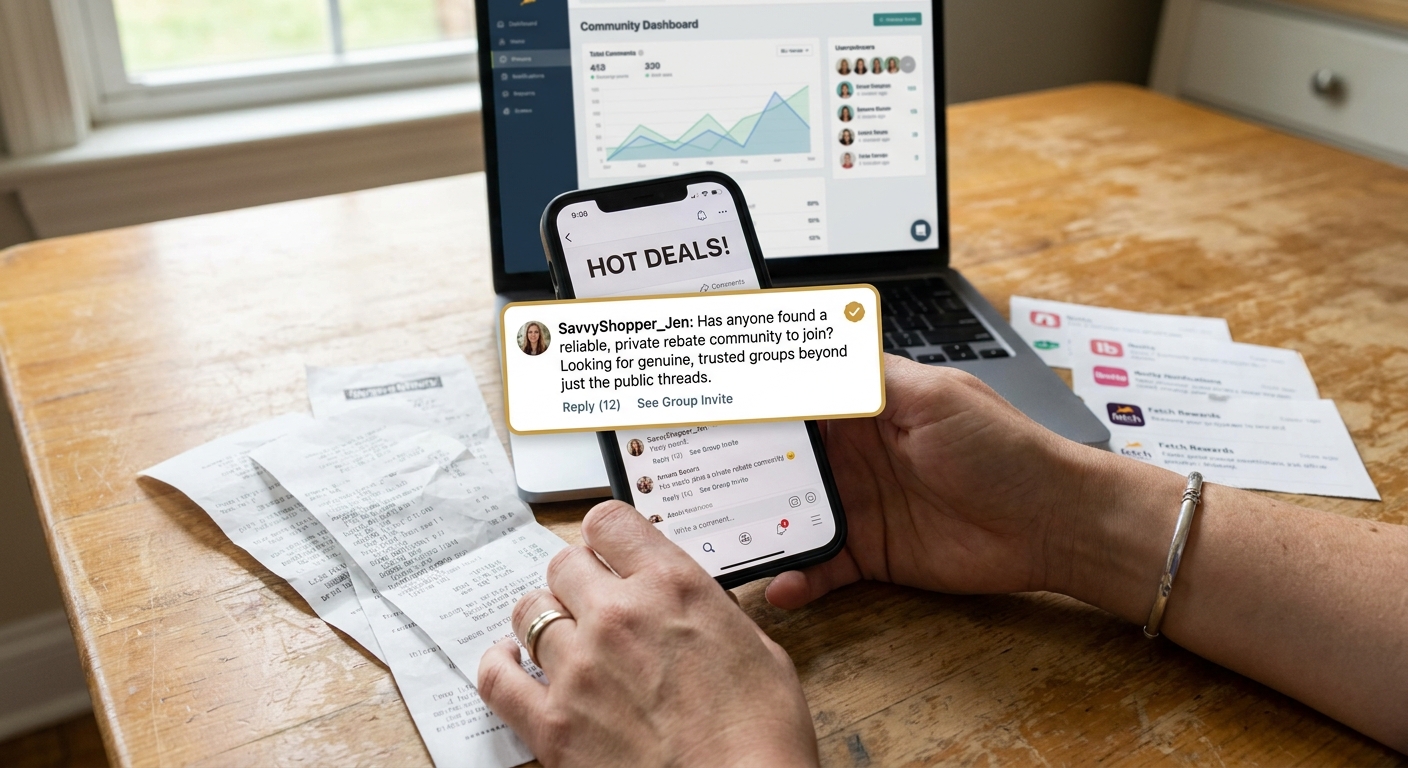
    You can waste a ridiculous amount of time hunting for rebate groups and still end up nowhere. One dead Telegram link. One weird Facebook group. One Reddit thread full of people saying “DM me” and then vanishing. It is frustrating, especially when it feels like other shoppers already know where the real paying communities are. The good news is that many legit group admins do not hide in some secret corner of the internet. They watch comment sections under active deal posts. That is where they spot people who sound real, careful, and worth inviting. If you want to know how to find legit community rebate groups in comments, the trick is not begging for links. It is posting one smart, specific keyphrase that signals you understand how these groups work. Done right, that comment can bring better invites to you, instead of sending you into the usual spam maze.

    ⚡ In a Hurry? Key Takeaways

    • Use a precise comment like “Looking for a vetted rebate group with payout proof and clear rules, open to DM” instead of “invite link please.”
    • Post that comment under active deal threads where admins and experienced members are already talking, not under stale posts.
    • Good groups respond with questions, rules, or proof. Bad ones rush you into random links, pressure, or vague promises.

    The shortcut is not a secret code. It is a trust signal.

    Most people ask the wrong question.

    They write things like “link?” or “add me pls” or “need rebate group ASAP.” That tells serious admins almost nothing. At best, you look like a stranger who has not done any homework. At worst, you look like easy bait for scammers.

    A better comment is short, calm, and specific:

    “Looking for a vetted rebate group with payout proof and clear rules. Happy to review details by DM.”

    That works because it does three things at once. It shows you care about safety. It shows you understand that legit groups have structure. And it gives real organizers a low-drama way to contact you.

    Why comments work better than random searches

    Search bars are messy. Public invite directories are even messier. Comment sections, though, are where people reveal who they are.

    Under a hot-deal post, you can usually spot three types of people fast. First, the shoppers who actually redeemed offers. Second, the regulars who explain the process. Third, the admins or group moderators quietly watching for serious new members.

    That makes comments a better filter than blind searching. You are not just looking for a group. You are looking for signs of a real community.

    What to look for in an active thread

    Pick posts with fresh engagement. Think recent comments, real questions, and replies that mention payout timing, product limits, screenshots, or region rules.

    A good thread often includes:

    • People discussing completed rebates, not just hype
    • Specifics about rules, caps, or retailer steps
    • Moderators correcting bad info
    • Members warning others about expired or fake offers

    That is usually a healthier place to leave your keyphrase comment.

    The exact kind of comment that attracts better invites

    You do not need to sound clever. You need to sound careful.

    A solid comment template

    Try one of these:

    • “Looking for a vetted rebate group with payout proof and clear rules. Open to DM.”
    • “Interested in legit community rebate groups. Prefer active mods, payout history, and transparent steps.”
    • “If any trusted rebate admins are here, I am looking for a well-moderated group with real member feedback.”

    Why this wording matters

    Notice what these comments avoid. No desperation. No demand for instant access. No “send link now.”

    Instead, you are quietly telling the right people, “I am serious, I value safety, and I know the difference between a real group and a junk link.” That tends to pull in better responses.

    Where to post it

    If you are trying to learn how to find legit community rebate groups in comments, placement matters as much as wording.

    Best places to use the comment keyphrase

    • Under Facebook posts from known deal pages with active moderation
    • In Reddit deal threads where users are discussing actual results
    • In Telegram-adjacent public channels that share deal recaps and feedback
    • Under posts where people mention successful reimbursements, not just discounts

    Bad places to use it

    • Old threads with no recent replies
    • Posts flooded with copy-paste “DM me” spam
    • Comment sections where nobody talks about proof, rules, or limits
    • Accounts that only post invite links and nothing else

    How to tell if the reply is from a legit organizer

    This is the part that saves you from getting burned.

    A real organizer usually does not rush. They might ask what country you are in, what platforms you use, or whether you understand the rebate steps. They may explain group rules before sending anything. Some will point you to proof posts or feedback from existing members.

    A shady one usually pushes speed.

    Green flags

    • They mention rules before money
    • They can explain how payouts work
    • They answer normal questions without getting defensive
    • They have a visible history in the thread or community
    • They do not mind if you take time to check the group first

    Red flags

    • “Join now, spots closing” pressure
    • No proof of payouts or member feedback
    • They avoid basic questions
    • They send shortened or suspicious links immediately
    • They want upfront payment for access without context

    Use comments to start a conversation, not a scramble

    The biggest mistake is treating every response like a race. It is better to get one decent invite than ten junk ones.

    When someone replies or sends a DM, ask simple questions:

    • How are deals verified?
    • What are the group rules?
    • Is there payout proof or member feedback I can review?
    • What countries or retailers does the group cover?

    If you need a safer way to branch out beyond random local links, The ‘Country Hop’ Shortcut: Join Safer Rebate Communities By Following Global Deal Hubs, Not Random Links is a smart next step. It pairs well with the comment trick because it helps you find better starting hubs before you ever ask for an invite.

    Why this works right now

    Deal chatter is exploding across Telegram, Facebook, and Reddit. But most people still act like lurkers. They watch. They scroll. They hope the right group link falls into their lap.

    Meanwhile, many legit admins are paying attention to the comments under hot posts because that is where they can quickly spot genuine shoppers. If your comment sounds thoughtful instead of spammy, you stand out fast.

    That is the real shortcut. Not hacking the system. Just asking the one smart question that signals trust.

    How Rebate Clubs fits in

    Once you start getting invites, the next challenge is keeping them straight. Which groups cover your country? Which ones focus on Amazon-style rebates? Which ones have rules you can actually follow without wasting time?

    That is where Rebate Clubs can help. It gives you a cleaner way to evaluate and organize what you find, instead of juggling screenshots, DMs, and half-remembered group names.

    At a Glance: Comparison

    Feature/Aspect Details Verdict
    Generic “link please” comment Gets ignored by serious admins and attracts low-quality spam replies Weak approach
    Keyphrase trust comment Signals you want vetted groups, payout proof, and rules, which draws better DMs Best option
    Random invite links from strangers Fast, but often risky, unverified, or a dead end Use caution

    Conclusion

    You do not need to keep wandering through endless lists and sketchy group invites. Across Telegram, Facebook and Reddit, deal and rebate chatter is exploding, but almost none of it explains how to move from public-feed lurker to trusted community member without getting burned. Right now, active comments under hot-deal posts are where legit admins and organizers often hang out, and most people completely miss that. By posting one precise, non-spammy keyphrase, you turn noisy comment sections into a targeted discovery tool for safer, community-based rebate groups. That means fewer random clicks, better invites, and a much clearer path to communities that Rebate Clubs can help you evaluate and organize.

  • The ‘Micro‑Niche Meetup’ Shortcut: Turn Tiny Interest Groups Into High‑Power Rebate Communities

    The ‘Micro‑Niche Meetup’ Shortcut: Turn Tiny Interest Groups Into High‑Power Rebate Communities

    You are not imagining it. Rebate hunting really has gotten more annoying. The big Facebook groups are crowded, coupon forums get picked clean in minutes, and a lot of Telegram channels feel like a mix of spam, affiliate links, and old offers that no longer work. That is why the smarter move now is smaller, not bigger. If you want to learn how to join community based rebate groups, start with micro-niche meetups. These are tiny circles built around one repeated buying habit, like apartment gardeners, EV drivers in one zip code, parents managing food allergies, home coffee hobbyists, or people in one condo building who all use the same utility. Because members already buy the same things again and again, they are often in a better spot to pool referrals, ask for supplier discounts, and organize repeat rebate wins. You are not chasing scraps. You are building a system with people who already need the same stuff.

    ⚡ In a Hurry? Key Takeaways

    • Small interest groups often beat giant deal forums because members share the same repeat purchases and can organize better rebate opportunities.
    • Start with a narrow meetup, track one product category, and pool referrals, bulk buys, or supplier offers in a simple shared sheet.
    • Stick to transparent rules, verify every rebate, and avoid any group that hides fees, overpromises savings, or pushes sketchy links.

    Why tiny groups work better than giant rebate spaces

    Big public deal spaces have one obvious problem. Everyone sees the same thing at the same time.

    That sounds fair, but it usually means the fastest people win and everybody else gets leftovers. A micro-niche meetup works differently. Instead of trying to save on everything, the group saves on one narrow slice of life.

    Think about a neighborhood pet owners club that all buy the same brand of food. Or a local cycling group that replaces tubes, helmets, lights, and hydration gear all year. The members do not need random coupons. They need repeated savings on the same items.

    That makes it easier to ask stores, brands, co-ops, and service providers for something better than a one-off promo code.

    What counts as a micro-niche meetup?

    It does not need to be formal. It can be a club, a message thread, a church group, a community class, a tenant board, a PTA subgroup, or a hobby meetup with 12 people who all spend money in the same category.

    Good examples

    Look for groups where buying behavior overlaps in a very specific way:

    • People in one apartment complex who all use the same internet or power provider
    • Parents of kids with gluten-free or dairy-free diets
    • EV owners who use the same charger network
    • Gardeners who buy soil, mulch, seeds, and rain barrels each season
    • Home bakers who buy flour, butter, storage containers, and specialty tools
    • Remote workers sharing software subscriptions, office supplies, or shipping habits

    The key is repetition. One purchase is nice. Repeat purchases are where a real rebate community starts to make sense.

    How to join community based rebate groups without wasting time

    If you want a practical answer to how to join community based rebate groups, do not search only for “rebate club” or “coupon group.” Search for the buying habit first, then the community around it.

    Start with places where people already gather

    Try local libraries, community centers, Facebook Groups, Meetup, Nextdoor, Discord servers, church bulletins, condo associations, parent groups, maker spaces, and neighborhood email lists.

    But do not ask, “Any rebate groups here?” That is too broad.

    Ask questions like:

    • Does anyone here regularly buy the same brand or service?
    • Has this group ever done a shared bulk order?
    • Are there referral credits or loyalty perks people are not using?
    • Would anyone want a shared deal tracker for this one category?

    That gets people talking about real behavior instead of vague bargain hunting.

    Check for underused rebate paths

    Most micro-groups miss savings in boring places. Utility provider referral bonuses. Co-op memberships. Brand ambassador credits. Warehouse pricing. Group buys. Local supplier reward programs. These are not flashy, but they can add up.

    If your group overlaps with home upgrades, energy use, or local improvement projects, it is also worth reading The ‘Grant Group’ Shortcut: Turn Local Nonprofit Programs Into Hidden Rebate Communities. That route can fit nicely with a meetup that already shares costs and information.

    The shortcut most people miss

    The real shortcut is this. Join the group for the interest first. Build the rebate layer second.

    People are much more willing to share useful savings if the group already has trust. A birding group that buys binocular straps and field guides has trust. A building chat where neighbors already discuss utility bills has trust. A local runner group that rotates shoe recommendations has trust.

    That trust matters because pooled rebates only work when people believe the tracking is fair and the links are clean.

    How to turn a meetup into a rebate community

    You do not need an app or a startup budget. Keep it simple.

    Step 1: Pick one category

    Start narrow. Groceries for allergy-safe families. Water filter replacements for one building. Internet referral credits for new tenants. Native plant supplies for local gardeners.

    One category is manageable. Ten categories become a mess.

    Step 2: Track repeat spending

    Use a shared Google Sheet or simple form. List:

    • Item or service
    • Typical monthly or seasonal spend
    • Current store or provider
    • Known loyalty or referral programs
    • Possible group buy timing

    This does two things. It shows whether the group actually has buying power, and it reveals where unused perks are hiding.

    Step 3: Pool information, not money, at first

    This is important. Do not begin by collecting cash from everyone. Begin by collecting facts.

    Who has a referral code? Which stores offer volume pricing? Which utilities give account credits? Which suppliers offer school, nonprofit, or community discounts? Which rebates can stack with store promotions?

    Once the information is solid, then try a small coordinated buy.

    Step 4: Test one small win

    Do a single trial. Maybe 8 members buy from the same supplier in one week. Maybe 5 households use one referral chain. Maybe the group organizes one seasonal order.

    Do not overcomplicate it. The goal is proof, not perfection.

    Step 5: Write down the rules

    Good groups stay healthy because the expectations are clear:

    • No hidden commissions
    • Share expiration dates
    • Post screenshots or links for proof
    • Say who gets referral credits
    • Set a minimum trust standard before any money changes hands

    Where the money usually shows up

    People think “rebate” means a coupon clipped at checkout. In small communities, savings often come from a few less obvious places.

    Referral credits

    These are common with internet providers, meal boxes, utilities, apps, pet services, and subscription products. One person may only get a little back. A group using referrals carefully can create a rotating benefit system.

    Supplier discounts

    Small vendors sometimes offer better pricing when they know a group will reorder. Especially if delivery can be consolidated.

    Co-op or membership pricing

    This is easy to miss. Some buyers qualify for discounts through housing groups, local organizations, schools, or neighborhood programs but never ask.

    Stackable local programs

    This is where the savings can get interesting. A community group may combine a store discount, a local utility incentive, and a referral bonus. Not always, but often enough to matter.

    Red flags to watch for

    Not every “community savings group” is worth joining.

    Be careful if you see:

    • Pressure to pay upfront before any real deal is shown
    • No proof that past rebates were paid
    • Confusing spreadsheets nobody can audit
    • Admins who keep all referral value without saying so
    • Links that look shortened, suspicious, or constantly changing
    • Claims that sound too good to be true

    If it feels like a side hustle pitch instead of a transparent savings effort, walk away.

    Best first niches for beginners

    If you want easy wins, start with categories people already rebuy often and can compare easily.

    • Utilities and internet
    • Special diet groceries
    • Pet food and supplies
    • Garden and seasonal yard products
    • Coffee, tea, or home kitchen staples
    • Baby and toddler essentials
    • Cleaning products for shared buildings

    These work because members can quickly tell whether the group saved real money or just created extra work.

    Why this works better over time

    Public deal hunting is reactive. You wait. You scroll. You hope.

    A micro-niche rebate community is more active. The group learns what it buys, when it buys, and where the unused savings are. After a few cycles, members start spotting patterns. Which month has the best promos. Which supplier actually honors discounts. Which referral program is worth the trouble.

    That kind of memory is valuable. Big coupon sites cannot build it for your exact neighborhood or hobby circle.

    At a Glance: Comparison

    Feature/Aspect Details Verdict
    Big public coupon groups Lots of volume, but heavy competition, old links, and generic deals that vanish fast. Useful for one-off finds, weak for steady community savings.
    Micro-niche meetup groups Smaller membership, shared buying habits, more trust, and better chances to coordinate repeat rebates or supplier offers. Best option for building long-term rebate habits.
    Formal pooled buying setup Can save more, but needs rules, clear tracking, and careful handling of money and referrals. Great after trust is built. Not the best first step.

    Conclusion

    Prices keep inching up, and most savings advice still points people to the same crowded places everyone else is already watching. That is why this approach matters. When you start with a tiny group that already buys the same stuff over and over, you can create fresh, less crowded rebate streams from co-op pricing, supplier discounts, local programs, and pooled referral credits. That is a lot more useful than chasing random coupon scraps. If you have been wondering how to join community based rebate groups, the answer is often to find a real community first, then build the rebate system around the buying habit you already share. Small can be powerful. And in this case, small is often where the best savings are still hiding.

  • The ‘Grant Group’ Shortcut: Turn Local Nonprofit Programs Into Hidden Rebate Communities

    The ‘Grant Group’ Shortcut: Turn Local Nonprofit Programs Into Hidden Rebate Communities

    You are not crazy if rebate hunting feels weirdly harder than it should be. You hear about people getting money back for insulation, heat pumps, EV chargers, lawn removal, rain barrels, even native plants. Then you search online and fall into a swamp of city PDFs, utility pages, expired grant notices, and forms that look like they were last updated three mayors ago. Meanwhile somebody down the street somehow got a free home energy visit and a much bigger rebate than the one you found. What gives? Usually, the money is not hiding in some secret app. It is moving through local nonprofits, city partners, utilities, watershed groups, and neighborhood programs that need real households to join in batches. If you know how to find those groups, attend one workshop, and get on the right mailing list, you can often move from public info to insider-level opportunities pretty fast.

    ⚡ In a Hurry? Key Takeaways

    • Local community rebate programs are often the easiest path to bigger 2026 savings because nonprofits, councils, and utilities are paid to enroll groups of residents.
    • Start with workshops, webinars, and neighborhood sign-up pages, then follow the trail to small cohorts, installer lists, and staff contacts who help with paperwork.
    • Stick with real grant-backed groups tied to your city, county, utility, or established nonprofit. That cuts down the risk of scams and expired offers.

    The real shortcut is not a coupon. It is a community program.

    When people search how to join local community rebate programs, they usually expect a single portal with a clean list of offers. That is not how many of the best deals work right now.

    A lot of 2026 funding is being pushed out through local partners. Think nonprofit climate groups, watershed councils, neighborhood associations, county sustainability offices, utility conservation teams, and native plant organizations. These groups get funding goals. They need a certain number of homes, blocks, or households to participate.

    That changes everything.

    Instead of waiting for random consumers to stumble in, these programs often create small rebate communities. Join the info session. Get into the email list. Fill out the interest form. Suddenly you are in a group that gets better instructions, preferred contractors, reminder emails, and sometimes extra bonus money for joining as part of a cohort.

    Why neighbors seem to get better rebates than the public pages show

    It is usually not because they are richer, better connected, or gaming the system. Often they just found the local organizer before you did.

    Public pages are the top layer

    The public website is often basic because it has to cover everyone. It may only show the standard utility rebate or the broad city offer.

    The real action happens one step deeper

    Once you attend a webinar or join a neighborhood challenge, you may hear about:

    • extra stackable utility incentives
    • free site visits or energy coaching
    • group purchasing discounts
    • paperwork help
    • special funding for income-qualified households
    • pilot programs that are not heavily advertised yet

    This is also why buying clubs and community cohorts overlap so often. If you want to see how group deals can quietly beat public offers, read The ‘Quiet Co‑op’ Shortcut: Slip Into Serious Rebate Power By Piggybacking On Existing Buying Clubs. The same “you had to be in the room” feeling shows up here too.

    Who is running these programs in your city?

    Look for organizations that already manage public-interest projects. They are the most likely to have grant money and participation targets.

    Good places to look

    • Your electric, gas, or water utility
    • City sustainability or environmental departments
    • County energy offices
    • Watershed councils and water conservation nonprofits
    • Native plant societies and garden nonprofits
    • Air quality districts
    • Community action agencies
    • Local climate alliances
    • Housing nonprofits
    • Neighborhood associations with “green homes” or resilience programs

    Search phrases that actually work

    Skip broad searches like “best home rebates near me.” Try these instead:

    • your city + home energy workshop rebate
    • your county + electrification program
    • your utility + community rebate program
    • your city + rain garden native plant rebate
    • your county + lawn conversion grant
    • your utility + neighborhood pilot EV charger
    • your city + climate action webinar homeowner

    Also search the words program partner, community outreach, cohort, pilot, technical assistance, and implementation support. Those terms often lead to the real operator, not just the official funding source.

    How to join local community rebate programs without getting lost

    Here is the simple path.

    1. Find the public front door

    Look for an event page, webinar registration, interest form, newsletter sign-up, or community challenge page. If a program is active, there is usually some low-pressure entry point.

    2. Join even if you are “just curious”

    Do not wait until you are 100 percent sure you want a heat pump, charger, or landscape project. Many of the best offers go first to people already on the list.

    3. Watch for the handoff

    This is the part most people miss. After the public webinar, there is often a next-step email inviting you to:

    • a smaller orientation call
    • a neighborhood cohort
    • a contractor matchmaking event
    • a rebate pre-screening form
    • a private group Q&A
    • a site assessment waitlist

    4. Reply to the human being

    If a program manager or outreach coordinator signs the email, answer it. Ask, “Are there upcoming funding rounds, group discounts, or partner rebates I should know about?” That one message can save you weeks of random searching.

    5. Ask the stacking question

    Always ask what can be combined. For example:

    • utility rebate + city incentive
    • water district rebate + native plant grant
    • state charger program + utility make-ready support
    • home energy audit + installer discount + tax credit

    Program staff usually know what stacks cleanly and what order to file things in.

    What these micro-communities often offer that public shoppers miss

    The money matters, of course. But the hidden value is often the hand-holding.

    Paperwork help

    Many residents give up because forms are annoying. Local programs know this. Some will pre-screen your eligibility, review invoices, or walk you through application steps.

    Preferred installers

    You may get a short list of contractors who already know the program rules. That means fewer mistakes and fewer rejected rebates.

    Participation bonuses

    Some grants reward neighborhoods or groups for hitting enrollment targets. If ten homes sign up, the support level may improve. If fifty do, the program may add workshops, coaching, or extra funds.

    Earlier notice

    This is a big one. Once you are in the orbit of a local nonprofit or utility partner, you are more likely to hear about new pilots before they are widely promoted.

    Red flags to watch for

    Not every “community program” is worth your time. A few checks can keep you safe.

    • No clear tie to a utility, city, county, school, or established nonprofit
    • Pressure to pay a large fee upfront just to access basic rebate information
    • Vague promises of “guaranteed” savings without written program details
    • No physical address, no staff names, no public partners
    • Expired dates or broken application links all over the site

    A legitimate group should be able to explain who funds the program, what zip codes qualify, what deadlines matter, and what the application process looks like.

    Best categories to target in 2026

    If you want the best odds of finding active local funding windows, start with areas where public agencies have clear participation goals.

    Home energy upgrades

    Heat pumps, insulation, sealing, induction, panel work, and home energy coaching are still strong categories in many places.

    Water conservation

    Think turf replacement, drip irrigation, rain barrels, smart controllers, and stormwater-friendly yard projects.

    Native plants and habitat

    This is one of the quieter rebate spaces. Local districts and nonprofits often fund demonstration gardens, pollinator yards, and low-water conversions.

    EV charging

    Some of the best opportunities are tied to utilities, multifamily housing, or neighborhood charging pilots rather than broad consumer ads.

    A simple script you can use today

    If you find a local program and are not sure what to ask, send this:

    Hello, I live in your service area and I’m interested in current home or yard rebate programs. Are there any upcoming workshops, group sign-ups, pilot programs, or partner incentives for residents in 2026? I’d also like to know whether your team helps with paperwork or approved contractor lists. Thank you.

    That is it. Short, clear, and easy for staff to answer.

    At a Glance: Comparison

    Feature/Aspect Details Verdict
    Public rebate search Broad results, old pages, lots of self-service research, easy to miss local add-ons Useful for a first pass, but rarely the best final path
    Community nonprofit or utility program Workshops, staff help, group enrollment, better awareness of stackable incentives Often the smartest route for active 2026 funding
    Private cohort or buying group May include negotiated pricing, vetted installers, and smoother paperwork after you join Great if tied to a real local partner and clear program rules

    Conclusion

    The main thing to remember is this. The best rebate opportunities are often not sitting on flashy consumer websites waiting to be claimed. Right now, a lot of the new money is flowing through community-based programs run by nonprofits, councils, and utilities. These groups are quietly building small communities of residents so they can hit participation goals for home energy, water conservation, EV charging, and native plant projects. When you join their workshops, get on their lists, and follow the trail from public webinar to smaller cohort to private rebate group, you stop chasing dead links and start getting in front of current 2026 funding windows. That is how people end up with bigger, easier, more stacked savings, sometimes with paperwork help included. Keep using Rebate Clubs as your guide. The real win is not one lucky rebate. It is learning how to plug into the local grant machinery again and again as new programs roll out.

  • The ‘Country Hop’ Shortcut: Join Safer Rebate Communities By Following Global Deal Hubs, Not Random Links

    The ‘Country Hop’ Shortcut: Join Safer Rebate Communities By Following Global Deal Hubs, Not Random Links

    You are not imagining it. A lot of “secret” WhatsApp and Telegram rebate groups really do feel sketchy. One minute you see people bragging about 70% back on everyday items. The next minute you are staring at an invite link from a random comment account, wondering if you are about to join a smart shopping community or walk straight into a mess involving fake offers, stolen cards, or dead channels. That frustration is real, especially if you just want better deals without turning bargain hunting into a part-time investigation. The safer shortcut is not chasing every fresh invite link. It is following established global deal hubs that already run public communities across regions and platforms. Think of it as using the front door instead of climbing through a window. If a deal network already has a visible brand, active public pages, and multiple linked groups, you have a much better shot at finding legit rebate communities without wasting time or taking unnecessary risks.

    ⚡ In a Hurry? Key Takeaways

    • To learn how to safely join legit rebate and deal groups on WhatsApp and Telegram, start with known public deal hubs, not random invite links from comments or DMs.
    • Check for signs of a real ecosystem first. Public website, active social accounts, linked channels, clear rules, and a history of posted deals.
    • This cuts down the odds of landing in scam groups, fake rebate schemes, or channels tied to stolen-payment abuse.

    The Country Hop shortcut explained

    The basic idea is simple. Instead of joining one mystery group at a time, you start with a larger public deal community that already has members in different countries and on different apps.

    These hubs often run Telegram channels, WhatsApp groups, websites, newsletters, or social pages all at once. That matters because it gives you a trail to follow. You can see who is behind the group, how long they have been posting, and whether people are actually discussing deals instead of just dropping suspicious payment requests.

    This is why I call it the “Country Hop” shortcut. You are not trusting a single invite link. You are moving through connected, visible deal communities that already have some structure and reputation.

    Why random invite links are such a gamble

    A random invite link can lead to a perfectly harmless group. It can also lead to spam, affiliate bait, fake screenshots, or worse. The biggest problem is that you have no context.

    No track record

    If the link came from a comment section, a DM, or a forwarded message, you often do not know who runs the group, how old it is, or whether previous members had a good experience.

    Fake urgency is common

    Scammy groups love pressure. “Join now.” “Only five slots left.” “Admin verifies payouts manually.” That kind of language is meant to make you stop checking and start clicking.

    Some schemes are not just fake. They are illegal

    This is the ugly part. Some “rebate” groups are really fronts for carding, refund fraud, account takeovers, or stolen-payment reselling. Even if you think you are just getting a cheap deal, you do not want your name, number, or shipping address mixed up in that world.

    What a safer deal hub looks like

    If you want to know how to safely join legit rebate and deal groups on WhatsApp and Telegram, look for a hub that behaves like a real community, not a pop-up trap.

    Public-facing presence

    A safer hub usually has a website, public Telegram channel, social profile, or landing page you can inspect before joining anything private.

    Connected communities

    Good signs include one main channel linked to region-specific groups, separate chat and announcement channels, or clear labels like “UK deals,” “US rebates,” or “EU alerts.” That structure shows organization.

    Clear rules and moderation

    If every post is chaos, be careful. Legit communities tend to pin rules, explain how offers work, warn about expired deals, and remove obvious spam.

    Normal deal behavior

    Real groups talk about coupon stacking, cashback apps, store policies, shipping limits, and timing. Sketchy groups push private payments, ask for account logins, or promise “guaranteed” returns that make no retail sense.

    How to check a group before you join

    You do not need to be a security expert. A few basic checks go a long way.

    1. Search the hub name outside the app

    Look it up on Google, Reddit, Facebook, or X. If it is real, there is often some footprint beyond one invite link.

    2. Inspect the public channel first

    On Telegram especially, many communities have a public broadcast channel before the chat group. Read a week or two of posts. Do deals look consistent? Do they name stores, prices, and rebate methods clearly?

    3. Watch for payment weirdness

    If admins ask members to send money directly, buy “access,” share banking details, or hand over retailer account credentials, stop there.

    4. Check for expired-link churn

    Scammy ecosystems burn through links and names quickly. Legit hubs sometimes rotate links too, but they usually announce changes through their main public pages.

    5. Use a burner approach at first

    Join with minimal exposure. Do not post your phone number publicly, do not share your home address in chat, and do not connect primary payment accounts until the group proves itself over time.

    What “country hopping” actually helps you do

    Done right, following global deal hubs can be genuinely useful.

    Find live communities faster

    Instead of testing ten dead links, you can start from one active hub and branch into regional groups that are already being maintained.

    Spot patterns across markets

    A rebate trend in one country often shows up elsewhere later. A public global hub can help you see which promotions are real, recurring, and worth your attention.

    Stack savings more safely

    Better communities often discuss the normal building blocks of legit bargain hunting. Store sales, manufacturer coupons, cashback apps, loyalty points, and official rebates. That is very different from groups built around suspicious payment tricks.

    Red flags that should make you leave immediately

    Here is the short list. If you see these, get out.

    • Admins promise “unlimited” refunds or guaranteed 90% cashback with no explanation.
    • Members are told to use someone else’s card, account, or invoice details.
    • The group requires crypto or person-to-person payment to unlock deals.
    • There is heavy pressure to act before you can verify anything.
    • All testimonials look copied, vague, or strangely identical.
    • You are asked for retailer logins, banking info, or identity documents.

    A simple safe-start routine

    If you are curious but cautious, use this routine.

    Start with observation

    Spend a few days reading before buying anything. Quietly watch the posts, comments, and admin behavior.

    Test with a low-stakes deal

    If you decide to try one, make it a small, ordinary purchase from a well-known retailer using your own payment method.

    Keep records

    Screenshot the offer, rebate terms, and any deadlines. Legit deals can still get messy, and having a record helps.

    Separate your bargain hunting

    Use a dedicated email address for deal communities. If possible, keep your main inbox and main messaging circles separate from promo groups.

    Why public ecosystems beat “secret” groups

    People hear “secret group” and assume that means better savings. Sometimes it just means less accountability.

    Public-facing ecosystems are not perfect, but they are easier to check. They have more eyes on them. They are more likely to correct bad links, flag fake offers, and point members toward verified rebate methods instead of shady shortcuts.

    That is the real advantage here. You are not just looking for a discount. You are looking for a setup that lowers risk while still giving you access to collective deal-finding.

    At a Glance: Comparison

    Feature/Aspect Details Verdict
    Random invite link Little context, weak history, often shared in comments or DMs High risk. Avoid unless you can verify it through a trusted public source.
    Established public deal hub Visible brand, linked communities, active moderation, clearer deal patterns Best starting point for safer joining and less wasted time.
    “Too good to explain” rebate group Big promises, vague methods, pressure tactics, private payment demands Walk away. This is where scams and stolen-payment schemes often show up.

    Conclusion

    The smart move right now is not hunting harder. It is filtering better. There is a flood of discount and rebate groups popping up around the world, and plenty of the fresh links passed around in comments and DMs are tied to scams, fake offers, or stolen-payment schemes. If you focus on established, public-facing deal hubs that already run multiple channels and communities, you give yourself a safer path into active, curated ecosystems instead of gambling on one-off invites. That means less time wasted, fewer bad surprises, and a better chance to tap real group buying power and stack verified rebates with confidence. You do not need a secret backdoor. You need a community that can be checked before it can be trusted.

  • The ‘Proof‑First’ Shortcut: Join Safe Rebate Communities Without Getting Burned By Scam Groups

    The ‘Proof‑First’ Shortcut: Join Safe Rebate Communities Without Getting Burned By Scam Groups

    You are not silly for being tempted by a “private” rebate group. Prices are up, everyone wants a break, and those screenshots showing half-off gadgets or lower utility bills can look very convincing. The problem is that scam groups know exactly how to press that pain point. They copy real rebate language, borrow legit store names, and rush people into paying a fee, sharing account details, or handing over personal info before anyone stops to ask one basic question. Where is the proof? If you want to know how to avoid scam rebate groups and find legit community rebate clubs, start there. The safest groups do not act mysterious about how savings happen. They show recent wins, explain the steps clearly, and let new members watch before they spend a dime. That proof-first shortcut can save you money, time, and a whole lot of regret.

    ⚡ In a Hurry? Key Takeaways

    • Legit rebate communities lead with proof, not pressure. They show real screenshots, timelines, and clear rules before asking for money or personal data.
    • Ask three questions first. Who pays the rebate, how long does it take, and what exact steps do members follow?
    • If a group hides details, demands upfront cash, or pushes you to move fast, walk away. Quiet, well-run clubs do not need panic tactics.

    The “proof-first” shortcut is simple

    Most scam screening advice gets too complicated. You do not need to become a fraud investigator. You need one filter that works fast.

    Before you join, buy, subscribe, or share anything, look for proof in public view or inside the group itself. Not hype. Not testimonials with blurry names. Proof.

    A legit community rebate club usually has three things:

    • Recent screenshots with dates, amounts, and enough detail to make sense
    • A plain-English explanation of how the rebate works
    • A visible history of members asking questions and getting normal answers

    That last one matters. Scam groups love one-way communication. Admin talks. Everyone else claps. Real communities look messier, because real people are involved.

    What legit rebate communities usually look like

    Good groups are often less flashy than fake ones. That surprises people.

    The scammy version promises “50 percent off everything” or “guaranteed utility credits today.” The legit version usually sounds more boring. It may focus on one type of savings, certain vendors, certain regions, or a repeat process that members understand well.

    They explain where the money comes from

    This is the biggest clue. If a group cannot explain who funds the rebate, stop right there.

    Real answers might include:

    • Manufacturer promotions
    • Cashback platforms
    • Bulk purchase discounts
    • Referral-sharing programs
    • Utility company efficiency rebates
    • Store-specific refund or credit programs

    Bad answers sound like this:

    • “Our supplier handles it”
    • “It is private, you do not need to know”
    • “Just trust admin”
    • “Method only shared after payment”

    They are specific about timing

    Legit savings programs have a delay. Maybe it is 24 hours. Maybe 30 days. Maybe a utility credit shows up on your next bill. Specific timing is normal.

    Scam groups often stay vague on purpose. They say “fast payout,” “same-day most times,” or “depends on volume.” That gives them room to stall you later.

    They let you observe first

    A healthy group does not panic if you lurk for a while. In fact, that is often the best sign.

    If admins are pushing you to pay a membership fee in the first five minutes, that is not community buying power. That is a sales funnel.

    The five red flags that matter most

    1. Upfront payment before any verifiable proof

    This is the classic move. You are asked to pay a setup fee, verification fee, admin fee, or “unlock” fee just to access deals.

    Some legit communities do charge memberships. But they can still show proof first. If they cannot show working examples before collecting money, move on.

    2. They want sensitive account access

    Be very careful if a group asks for:

    • Your Amazon login
    • Your utility account password
    • Your email verification codes
    • Your banking login
    • Your ID photo before any clear reason is given

    A rebate club should not need the keys to your digital life.

    3. Every comment looks too perfect

    If every member says “got paid instantly” in the exact same tone, you may be looking at fake engagement. Check for real back-and-forth. Do people ask follow-up questions? Do admins answer with useful detail? Are there occasional complaints that get handled normally?

    Real groups have texture. Fake groups feel staged.

    4. They dodge basic questions

    Ask simple things. Which stores? Which states? How often does it work? Are there limits? If answers get slippery, that tells you plenty.

    5. They pressure you with fake scarcity

    “Only 10 slots left.” “Admin closing this method in 15 minutes.” “If you leave, you cannot come back.”

    That is not how honest community savings usually work. Pressure is often covering for weak proof.

    Your 3-question safety script

    If you want a quick way to screen a group without sounding rude, use this:

    1. Who is funding the rebate or discount?
    2. Can I see a recent example with dates and steps?
    3. What information do I need to share, and why?

    If the answers are clear, specific, and calm, keep looking. If the answers are defensive, vague, or rushed, leave.

    How to test a group without getting burned

    You do not have to go all-in on day one. Start small.

    Watch before joining deeply

    Spend a few days reading posts and comments. See whether proof is consistent or only appears when someone asks for refunds.

    Use a low-risk first try

    If you decide to test a legit-looking group, try the smallest possible offer first. Do not start with a giant order or your main utility account.

    Use payment methods with buyer protection

    Avoid direct crypto transfers, gift cards, wire transfers, or payment apps marked as “friends and family” for unknown admins. Those are scam favorites because they are hard to reverse.

    Separate your main accounts from experiments

    Use a unique password. Turn on two-factor authentication. Do not reuse your primary login on anything sketchy. If a rebate process really needs an account, make sure you understand exactly what access is being granted.

    Good communities teach. Scam groups hide.

    This is one of the cleanest lines between the two.

    Well-run rebate communities usually explain the process because informed members are easier to work with. They want fewer chargebacks, fewer confused questions, and less drama.

    Scam groups depend on confusion. The less you understand, the easier you are to control.

    So pay attention to the teaching style. Are there pinned guides? FAQs? Step-by-step examples? Rules about what works and what does not? Those are green flags.

    Where people get tripped up on Telegram, Facebook, and TikTok

    Telegram

    Telegram makes it easy to create a polished-looking channel fast. That means fake social proof is common. Large member counts do not mean much. Many are inflated with bots or inactive accounts.

    Facebook

    Facebook groups can feel more trustworthy because profiles look more “real.” Still, hacked accounts, fake profiles, and copied screenshots are common. Check whether admins have a history in the group and whether member discussions feel natural.

    TikTok

    TikTok is great for hype and terrible for nuance. Short videos can make a rebate process look effortless while skipping all the risk details. Treat every viral “secret deal method” like a movie trailer, not the whole story.

    What honest rebate communities usually ask from you

    Reasonable asks might include:

    • An email address for group updates
    • A small membership fee with a clear refund policy
    • Proof that you are in an eligible area for a utility offer
    • Order confirmation details with sensitive info hidden

    Unreasonable asks include:

    • Your full login credentials
    • Payment through untraceable methods only
    • Your Social Security number without a clear legal reason
    • A promise not to ask questions

    If you already joined a shady group

    Take a breath. It happens.

    Do this next:

    • Leave the group
    • Change any password you shared
    • Turn on two-factor authentication
    • Check bank and card activity
    • Revoke third-party app access where possible
    • Save screenshots of chats, usernames, payment receipts, and promises made
    • Report the account to the platform and your payment provider

    If utility or retail account access was involved, contact that company directly and ask them to note the account for possible fraud.

    At a Glance: Comparison

    Feature/Aspect Details Verdict
    Proof of past rebates Recent screenshots, dates, clear steps, member discussion, and an explanation of where the savings come from Good sign. Keep checking, but this is what legit groups usually show.
    Admin behavior Answers questions calmly, allows lurking, does not push instant payment, and explains data needs clearly Strong green flag. Honest groups do not need pressure tactics.
    Payment and data requests Asks for upfront cash with no proof, wants logins or verification codes, or insists on gift cards or crypto only High risk. Leave immediately.

    Conclusion

    The best way to avoid scam rebate groups and find legit community rebate clubs is not to become paranoid. It is to become proof-first. Scammy “deal” and rebate groups are exploding on Telegram, Facebook and TikTok right now, riding the wave of higher prices and desperate shoppers. A focused proof-first approach is the single fastest way to filter out bad actors and find the quiet, well-run communities that actually share rebate screenshots, explain how the money flows and show which vendors or utilities they really work with. That protects your wallet, your accounts, and your time. It also helps the honest groups, because better-informed members make those communities stronger. If a group cannot show you how it works before asking for your money or your data, that is your answer.

  • The ‘Fresh Footprint’ Shortcut: Turn New Deal Communities Into Your Fast Track Into Rebate Groups

    The ‘Fresh Footprint’ Shortcut: Turn New Deal Communities Into Your Fast Track Into Rebate Groups

    You are not late because you are bad at deals. You are late because most people only hear about rebate groups after the best part is over. By then, the channel is full, the admin is tired, and every post is buried under “link?” and “still working?” comments. That is frustrating, especially when other people seem to be posting easy wins every week.

    The good news is this is fixable. If you want to know how to find new rebate groups before they get crowded, the trick is to stop hunting only for big, established groups and start watching for fresh footprints. New spin-off channels, invite lists, side chats, forum mentions, and admin migrations often appear days or weeks before a group gets noisy. If you know where to look, and how to check whether a community is real, you can get in early while the deals are still clean and the instructions still make sense.

    ⚡ In a Hurry? Key Takeaways

    • The fastest way to find new rebate groups is to follow the people and small spin-off chats that appear before the main crowd arrives.
    • Set up a simple weekly routine across Telegram, WhatsApp, Discord, Facebook, Reddit, and niche forums so you spot launches early instead of by accident.
    • Always verify a new group before you join deeply. Check admin history, posting quality, payout proof, and whether anyone is pressuring you for money or personal info.

    Why old rebate groups stop being useful

    Most rebate communities have the same life cycle.

    They start small. People share clear instructions. Good deals last long enough for normal humans to actually use them. Then the group gets popular. After that, things get messy fast.

    You see spam. Repeated links. Fake urgency. Admin burnout. Too many lurkers and too little moderation. Sometimes brands catch on and offers dry up. Sometimes the group is still active, but every decent find is gone in minutes.

    That is why chasing only the biggest channels usually backfires. Bigger is not always better. In rebate land, newer is often better.

    What the “Fresh Footprint” shortcut actually means

    Think of it like spotting a new restaurant before the line wraps around the block.

    A fresh footprint is any small signal that a new deal community is forming. Maybe an admin from a noisy Telegram group mentions a private Discord. Maybe a niche forum thread starts linking to a new WhatsApp broadcast list. Maybe a Facebook comment section keeps mentioning a fresh invite-only chat with cleaner posts.

    You are not looking for polished, famous communities. You are looking for the early signs that one is being built.

    The signs that matter most

    Fresh communities often have a few things in common:

    • A known deal poster starts mentioning a new home base.
    • A spammed-out group points members to a quieter backup channel.
    • Posts are recent, but member counts are still low.
    • Admins are answering questions instead of copy-pasting noise.
    • The group has rules, pinned posts, and actual structure from day one.

    Those are good signs. They suggest the group is active, intentional, and still early.

    How to find new rebate groups before they get crowded

    This is the part that changes everything. Instead of random searching, build a repeatable system.

    1. Follow admins, not just groups

    People move before communities do.

    If you notice a solid admin or reliable deal poster in one place, track where they post updates elsewhere. Many of the best new groups start because trusted posters get tired of managing chaos in older spaces.

    Look for usernames, profile links, link-in-bio pages, and “backup group” mentions. If a good poster says, “Main channel is too busy, join the side group,” pay attention.

    2. Watch pinned posts and exit messages

    When a group starts declining, admins often leave clues behind.

    Check pinned messages. Read welcome posts. Scan the last week of updates. Sometimes you will find “new room,” “new server,” “private list,” or “moving due to spam.” Those are gold.

    People ignore these because they are busy scrolling for deals. You are there for clues.

    3. Search for spin-off language

    Use simple search terms inside apps and forums:

    • backup group
    • new channel
    • VIP deals
    • deal alerts
    • rebate chat
    • private deals
    • uncrowded group
    • new admin channel

    Do this in Telegram search, Discord server discovery where available, Reddit search, Facebook group search, and even Google with app names included.

    Simple example: “Telegram rebate group new channel” or “Discord Amazon rebate server invite.” You are not trying to be clever. You are trying to be early.

    4. Use niche forums and comment sections as radar

    A lot of new communities are first mentioned in places that are not the final destination.

    Look at subreddit comments, Facebook comments, deal blog comments, and niche shopping forums. That is where people casually say things like, “The real action moved here.”

    These mentions are often short-lived. Once a link spreads too widely, it gets removed, expires, or floods.

    5. Join feeder communities

    Some groups are not amazing for deals themselves, but they are excellent for discovery.

    These are the communities where people share screenshots, compare methods, or ask where everyone is finding new offers. Even if the deals are average, the chatter can point you toward fresher spaces.

    If you still need a safer starting point for the main apps, The ‘Signup Stack’ Shortcut: Join Legit Rebate Channels On Apps You Already Use is a smart companion read. It helps you get the basics right before you start tracking newer launches.

    A simple weekly routine that actually works

    You do not need to spend your life doing this.

    Give it 20 to 30 minutes, two or three times a week.

    Monday: scan your current groups

    Check pinned posts, admin announcements, and recent comments for migration clues. Save any invite links or mentions in a notes app.

    Wednesday: run targeted searches

    Search your main platforms using the spin-off phrases above. Sort by recent where possible. Focus on posts from the last seven days.

    Friday: verify and test

    Join one or two promising groups. Do not go all in. Mute them first if needed. Watch the posting style, rules, admin behavior, and proof quality for a few days.

    This rhythm works because new communities often gain momentum over a weekend. By Friday, you can get in before the next rush.

    How to tell if a new rebate group is legit

    Early is good. Reckless is not.

    Some fresh groups are gems. Others are bait.

    Green flags

    • Clear rules and pinned instructions
    • Deals are explained in plain language
    • Admins answer basic questions without acting shady
    • Members post believable proof, not identical screenshots
    • No demand for upfront payment just to see ordinary deals

    Red flags

    • Pressure to act instantly before you can read anything
    • Requests for bank info, login codes, or unusual personal details
    • Admins who refuse simple questions about how rebates work
    • Floods of referral links with no context
    • Claims that every deal is “guaranteed” or “risk free”

    If a group feels weird, it probably is. Good communities may move fast, but they should still make sense.

    Where each platform shines

    Telegram

    Fastest for spin-offs and admin migrations. Also the easiest place for spam to explode. Great for early discovery if you stay picky.

    WhatsApp

    Often smaller and more controlled. Good for focused broadcast-style updates. Harder to discover through search, so most finds come from referrals and comments elsewhere.

    Discord

    Best for organized channels, categories, and archived info. Great if you like structure. Some servers are excellent, but they can feel hidden unless you catch an invite early.

    Forums and Reddit

    Not always where the deals happen, but often where the next group gets mentioned first. Think of them as your lookout towers.

    Do not make these common mistakes

    Joining too many groups at once

    If you join fifteen communities in one night, they will all blur together. Start with two or three promising ones and monitor quality.

    Judging a new group by member count

    A tiny group with one sharp admin can be better than a massive channel with nonstop junk.

    Ignoring admin reputation

    The people running the space matter more than the app they use.

    Waiting for social proof

    By the time everyone is talking about a group, your timing edge is usually gone.

    At a Glance: Comparison

    Feature/Aspect Details Verdict
    Best way to find fresh groups Track trusted admins, backup chats, pinned posts, and comment-section mentions before links spread widely. Most effective for getting in early
    Fastest platform for discovery Telegram usually surfaces new channels and spin-offs first, but it also attracts more spam. Great for speed, use caution
    Safest way to test a new community Join quietly, read pinned posts, watch admin behavior, and verify proof before participating. Best balance of safety and value

    Conclusion

    You do not need better luck. You need a better timing system. That is why this idea matters right now. The hottest rebate and deal channels on Telegram, WhatsApp, Discord, and niche forums are popping up all the time, while older groups are getting clogged with spam, lurkers, and tired admins. If you learn to spot fresh footprints, check whether a group is legit, and join before the crowd piles in, you stop living on leftovers. You become one of the early people getting the cleanest instructions and the best shot at high-value offers. That is the real win here. Not just joining more groups, but joining the right ones sooner.

  • The ‘Quiet Co‑op’ Shortcut: Slip Into Serious Rebate Power By Piggybacking On Existing Buying Clubs

    The ‘Quiet Co‑op’ Shortcut: Slip Into Serious Rebate Power By Piggybacking On Existing Buying Clubs

    You are not imagining it. Most “buyers club” talk really does sound like a private conversation you were not invited to. One person mentions a purchasing co-op. Another brags about a rebate deal that beats every public coupon. Then you click around and run into vague landing pages, member-only wording, and Facebook groups packed with sketchy affiliate links. It is frustrating, especially when all you want is a straight answer on how to join a buyers club for rebates without stepping into something spammy.

    Here is the good news. A lot of these groups are not truly closed. They are just badly explained. Many have guest memberships, public partner brands, local chamber access, category-specific signups, or approved referral paths that give regular people the same negotiated rebates the “insiders” get. The shortcut is not to build your own club from scratch. It is to piggyback on an existing one, through a legit front door, and use its buying power to get contract-level deals that ordinary promo codes rarely touch.

    ⚡ In a Hurry? Key Takeaways

    • Yes, you can often join a buyers club for rebates without being an insider, if you enter through open memberships, partner programs, or approved referral links.
    • Start by checking a club’s public partner list, membership page, and local business or community ties before you apply.
    • Real rebate groups explain eligibility, payout rules, and vendor terms clearly. If it is all hype and no documentation, walk away.

    What the “Quiet Co-op” shortcut really is

    The phrase sounds fancy, but the idea is simple. Instead of trying to negotiate with vendors by yourself, you join something that already has volume. A co-op, buyers club, or group purchasing program bundles demand from lots of members. That bigger pile of orders can unlock lower prices, rebates, cashback, fee waivers, or bonus credits.

    The “quiet” part is that many of these benefits are sitting in plain sight. They are not always advertised to the general public in big bright letters. You may need to come in through a neighborhood association, a local business network, a parent organization, a trade group, or a partner signup page.

    That is why people miss them. They assume “members only” means impossible. Often it just means “there is a process.”

    How to join a buyers club for rebates without insider connections

    1. Search for the public edge, not the private forum

    Do not start with random social posts. Start with the club’s official website, if it has one. Look for pages called:

    • Membership
    • Partners
    • Preferred vendors
    • Benefits
    • Community program
    • Affiliate or referral terms
    • Eligibility

    You are looking for clues that tell you who can join, what categories are open, and whether non-core members can still access vendor deals.

    Sometimes the club itself is closed, but a partner brand gives the same rebate to anyone referred through the club. That still counts. You are using the same negotiated path.

    2. Read the partner list like a detective

    This is where the real value usually hides. Public partner lists often show:

    • Which vendors actually participate
    • Whether rebates are category-specific
    • If there is a direct signup page
    • Whether benefits are tied to region, industry, or purchase size

    If a buying club lists office supplies, shipping, telecom, home services, insurance, travel, or software vendors, click through. Sometimes the vendor page says more than the club page does.

    You may find language like “available to members and approved affiliates” or “join through our community partner.” That is your opening.

    3. Look for open memberships hiding in boring places

    This is the part most people skip. Not every access point screams “rebates here.” Some examples:

    • Local chambers of commerce
    • Neighborhood business alliances
    • School or alumni associations
    • Nonprofit support networks
    • Professional associations with low-cost entry tiers
    • Warehouse-style member programs tied to business services

    You may pay a small annual fee and get access to a much larger purchasing network behind it. That can be worth it if the rebate categories match what you already buy.

    4. Ask one clean question

    If the website is murky, send a short message. Not a novel. Not “Hey, can I get deals?”

    Try this instead: “Hi, I found your partner/vendor page and wanted to check whether individuals or small businesses can access these rebates through a guest tier, referral link, or affiliated membership.”

    That shows you read the page and understand there may be rules.

    If you have ever had a legit-looking group ignore your join request, it is worth reading The ‘Welcome Script’ Hack: Slip Into High‑Value Rebate Groups Without Looking Like a Scam Bot. It is a good reminder that how you introduce yourself matters more than people think.

    Where regular people usually find these rebate paths

    Consumer-focused clubs

    These often center on home services, groceries, travel, fuel, family products, and seasonal bulk buys. They may live inside parenting groups, neighborhood communities, or local buying circles.

    The trick is to find the ones with actual vendor relationships, not just coupon reposts.

    Small-business purchasing programs

    This is where things get interesting. A lot of “B2B only” programs are open to solo operators, side hustlers, freelancers, or very small LLCs. If you buy shipping, software, internet, office gear, cleaning supplies, payment processing, or insurance, you may qualify even if your business is tiny.

    Many readers talk themselves out of these because they picture a giant company with a procurement department. In reality, plenty of programs welcome one-person businesses.

    Community and regional co-ops

    Local utilities, farm co-ops, housing networks, and civic organizations sometimes negotiate discounts or rebates for members. These are less flashy, but often more practical. Think appliance rebates, service discounts, broadband offers, and local merchant perks.

    How to tell a real rebate club from an affiliate carnival

    This matters. A true buyers club or purchasing co-op usually has structure. An affiliate farm usually has noise.

    Signs it is probably real

    • Clear eligibility rules
    • Named vendor partners
    • Specific rebate or pricing language
    • Terms for payouts, credits, or purchase tracking
    • Real contact information
    • Member support that answers direct questions

    Signs you should back away

    • Every post pushes a referral link with no explanation
    • No list of actual partner vendors
    • No written terms on how rebates work
    • Claims that sound too big to be true
    • Pressure to recruit before you save anything yourself

    If you cannot figure out how the money flows, assume the answer is “not in your favor.”

    The piggyback method that works best

    If you want a practical path, use this order:

    1. Pick one spending category you already use every month.
    2. Find two or three clubs or co-ops connected to that category.
    3. Read their public partner pages and eligibility terms.
    4. Check for guest tiers, local memberships, or approved referrals.
    5. Join the simplest legit entry point.
    6. Test one purchase first.
    7. Track whether the rebate, cashback, or pricing difference actually lands.

    This keeps you from signing up for five programs and forgetting which one does what.

    Common mistakes people make

    Chasing the biggest advertised percentage

    A 20 percent “up to” rebate with impossible rules is worse than a steady 5 percent that actually pays out.

    Ignoring category fit

    A great purchasing club is useless if its best deals are in categories you never buy.

    Not reading payout timing

    Some rebates show up fast. Others are quarterly, annual, or tied to minimum volume. That is normal, but you should know before spending.

    Trying to look clever instead of credible

    Groups are cautious because they deal with abuse, fake accounts, and people farming links. Be straightforward. Say what you want access to and why.

    Should you pay to join?

    Sometimes, yes. A small membership fee can make sense if:

    • The vendors are ones you already use
    • The rebate terms are clearly documented
    • The savings should exceed the fee within a few months
    • The program is run by a known organization

    If the fee is high and the savings are vague, skip it.

    At a Glance: Comparison

    Feature/Aspect Details Verdict
    Open access path Guest tiers, partner signups, local associations, and approved referrals often provide a legal, documented way in. Best place to start
    Public partner list Shows which vendors participate and whether the club has real negotiated relationships instead of generic promo links. Strong trust signal
    Paid membership Can be worth it if your normal spending matches the categories and the rebate rules are clear. Good only with math

    Conclusion

    The best part of this trend is that you do not need to become some rebate wizard to benefit from it. There is a real surge in community buying groups and rebate-focused purchasing clubs for consumers and small businesses. They exist to pool demand and squeeze better pricing, cashback, and contract-level rebates out of vendors. Most people never cash in because they assume these groups are invite-only or strictly for bigger businesses. A lot of the time, that is just not true. If you know how to locate the club, read the public partner list, and come in through a legit access point like an open membership, community event, or approved referral link, you can skip the junk coupon chase and get something much better. Start small, verify the terms, and piggyback on buying power that is already there.

  • The ‘Neighborhood Noticeboard’ Hack: Turn Local PSA Posts Into Invite-Only Rebate Communities

    The ‘Neighborhood Noticeboard’ Hack: Turn Local PSA Posts Into Invite-Only Rebate Communities

    Most people see a local Facebook post about a city workshop, energy rebate, or home upgrade class and keep scrolling. Fair enough. Those posts look dull, and a lot of us assume they lead to a long webinar and a stack of forms. But that is often where the useful stuff starts. The public post is just the front door. The real help usually shows up later, in the smaller circles around it. Think neighbor email threads, private Facebook chats, HOA message boards, church newsletters, library mailing lists, and text groups where people compare notes on what actually worked.

    If you have been trying to figure out how to find local community rebate groups, this is one of the smartest low-stress ways to do it. Instead of joining giant deal groups filled with random links and expired offers, you follow the trail from official local notices into smaller, higher-trust communities. That is where people share which contractor paperwork got approved fastest, which rebates can be stacked, how long checks took to arrive, and which programs looked good on paper but turned out to be a headache.

    ⚡ In a Hurry? Key Takeaways

    • Official local PSA posts often lead to the best invite-only rebate groups, not just the public event itself.
    • Sign up for workshops, ask one follow-up question, and look for side channels like email lists, private chats, and neighborhood groups.
    • Stick with groups tied to real local institutions or real neighbors, because spammy public deal groups are far less reliable.

    Why the boring posts are worth your time

    Here is the trick. City offices, utilities, county energy programs, and local nonprofits have to advertise publicly. That means they post on Facebook, Eventbrite, library calendars, neighborhood apps, and community boards. The post itself may be dry. It might say something like “Free weatherization workshop” or “Learn how to apply for heat pump incentives.” Not thrilling.

    But the people who show up are often exactly the people you want to meet. They are homeowners, renters, landlords, retirees, and practical savers who are already trying to get the same local rebates you are. And once a handful of them starts trading updates, a side group often appears naturally.

    That side group is where the useful details live. Not theory. Actual results.

    What these small rebate communities share that public groups miss

    Big public deal groups tend to be noisy. Someone posts a screenshot from another state. Someone else drops a referral code. Three people argue about whether the deal is dead. You leave with more confusion than you started with.

    Local micro-groups are different. They usually share things like:

    • Which local rebates stack with state or utility offers
    • Which forms need extra documents
    • Which ZIP codes or neighborhoods qualify for special pilot programs
    • Which workshops hand out one-on-one application help
    • How long approvals and payouts are actually taking
    • Which contractors understand the rebate paperwork
    • Which deals are more trouble than they are worth

    That kind of information almost never shows up on a national coupon blog. It is too local, too fresh, and often changes too fast.

    How to find local community rebate groups without wasting hours

    1. Start with the official noticeboard trail

    Search where local agencies actually post. Check:

    • Your city or county Facebook page
    • Your utility company events page
    • Local library event calendars
    • Community center boards
    • Eventbrite with your town name plus “rebate,” “energy,” “home upgrade,” or “workshop”
    • Neighborhood Facebook groups
    • Nextdoor and Patch

    You are not just looking for the rebate itself. You are looking for events, webinars, Q&As, and “how to apply” sessions. Those are the best entry points.

    2. Register, even if you are not sure you will attend live

    This matters more than people think. Registration often gets you onto a follow-up email list. That is where useful links, contact names, and future invites tend to appear.

    Even if the workshop is basic, the follow-up message might mention another program, a neighborhood pilot, a partner nonprofit, or an upcoming clinic where residents can get help filling out forms.

    3. Watch for the side doors

    After the event, look for clues that a smaller group exists. The signs are usually subtle:

    • “Reply if you want the handout”
    • “Join our monthly update list”
    • “We have a neighborhood sustainability committee”
    • “Residents are swapping application tips in our members group”
    • “Ask your questions in the follow-up thread”

    That is the moment to step in.

    4. Ask one useful, specific question

    You do not need to be a networking superstar. Just ask something practical.

    For example:

    • “Has anyone here stacked this with the utility insulation rebate?”
    • “Did anyone get approved using a mobile home address?”
    • “How long did your reimbursement take after install?”
    • “Is there a local contractor people trust for the paperwork?”

    Specific questions get specific answers. And helpful people often pull you into the better conversation after that.

    5. Follow the person who has receipts, not the loudest opinion

    In any group, one or two people will clearly know what they are talking about. They share screenshots, timelines, and exact steps. Pay attention to them.

    If someone says, “My heat pump rebate was approved in 18 days, here is what they asked me to resubmit,” that is gold. If someone says, “These programs are all scams,” maybe not so much.

    The best places these invite-only groups show up

    They are usually not fancy. In fact, the more ordinary they look, the better.

    • Private Facebook groups for a subdivision or town
    • Email chains from workshop hosts
    • Google Groups run by sustainability volunteers
    • WhatsApp or Signal chats started after an event
    • HOA newsletters or resident portals
    • Church or school parent mailing lists
    • Library or nonprofit community newsletters

    These groups work because they are tied to real people in a real place. That cuts down on junk and fake urgency.

    How to tell if a rebate group is worth joining

    Not every private group is useful. Some are just quieter versions of the same noise. A good local rebate group usually has three things.

    Real locality

    People mention your utility, your county office, your city permit process, your climate zone, your contractors. It feels grounded.

    Proof, not vibes

    Members share screenshots, official links, approval emails, and dates. They say what worked and what failed.

    Low sales pressure

    If every conversation ends with “DM me for my installer,” be careful. Useful groups can mention contractors, sure. But the main point should be helping neighbors get the rebate, not pushing a sale.

    A good next step after you find one strong group

    Once you find one useful local group, do not stop there. Ask where else members swap updates. One good group often connects to two or three better ones.

    And if you want to build a tighter circle from people you already know, this is a smart companion idea: The ‘Referral Circle’ Shortcut: Turn Your Existing Friends Into A Private Rebate Club. That approach works especially well when you are tired of dead threads and want a smaller, more reliable group.

    Safety tips before you share too much

    Small groups are useful, but use common sense.

    • Do not post your full address, account number, or application ID publicly
    • Redact personal details in screenshots
    • Confirm deadlines and rules on the official program site
    • Be careful with “guaranteed approval” claims
    • Watch for contractors or marketers pretending to be neighbors

    The sweet spot is this. Use the group for real-world tips, then verify the final details with the official source.

    A simple script you can use today

    If you spot a local PSA post and want to turn it into a community lead, try this:

    “Thanks for sharing this. I am interested in the rebate, but I am especially trying to learn from people locally who have already applied. Is there a follow-up group, email list, or neighborhood thread where residents are comparing notes?”

    That is polite, clear, and surprisingly effective.

    At a Glance: Comparison

    Feature/Aspect Details Verdict
    Official PSA posts Public, easy to find, often bland, but they lead to workshops and local contacts. Best starting point
    Large public deal groups Lots of activity, but often full of expired offers, off-topic posts, and non-local advice. Use with caution
    Invite-only local micro-groups Smaller, higher-trust spaces where neighbors share timelines, screenshots, and step-by-step wins. Most useful for real savings

    Conclusion

    If you have been overwhelmed by generic advice like “check your utility site” or burned out by spammy public deal groups, this is a much better route. Cities, utilities, and energy offices are pushing out fresh rebate programs right now, and their workshops and PSA posts are often the easiest way into the smaller circles where the real value shows up. That is where neighbors compare payout timelines, swap screenshots, explain the forms, and tell you which offers are actually worth the trouble. Once you know how to find local community rebate groups through these official noticeboard posts, you have a repeatable system. You are not hunting blindly anymore. You are following the path from public announcement to private, practical local knowledge, and that is something the big national deal sites simply cannot match.