Blog

  • The ‘Safe Signal Test’ Shortcut: Join Real Rebate Groups Without Getting Burned By Scams

    The ‘Safe Signal Test’ Shortcut: Join Real Rebate Groups Without Getting Burned By Scams

    You are not wrong to feel uneasy. A lot of rebate groups on WhatsApp, Telegram, Discord, and Facebook really do save people serious money. But plenty of them also look one tiny step away from a phishing trap, a fake job scam, or a “send $20 first” hustle. That mix is what makes this so frustrating. You want the group discount, not the risk of losing your account, your card details, or your phone number to strangers. The good news is you do not need to become a cybercrime expert to spot the difference. A quick check I call the Safe Signal Test can tell you a lot before you ever click Join. It is basically a fast scan of the group name, description, recent posts, link behavior, and how members act. If a group passes those signals, it may be worth a closer look. If it fails two or three, walk away. Cheap deals are never worth expensive problems.

    ⚡ In a Hurry? Key Takeaways

    • The safest way to join WhatsApp and Telegram rebate groups is to check for clear rules, normal member chatter, verifiable deal history, and no upfront payment demands.
    • Use the Safe Signal Test. Scan the title, description, pinned posts, last 20 messages, and admin behavior before you join or buy anything.
    • Real groups may be private, but scammy groups often push urgency, off-platform payments, fake screenshots, and “50% off for everyone” offers that make no sense.

    The Safe Signal Test, a 2-minute filter before you join

    If you are trying to figure out how to safely join WhatsApp and Telegram rebate groups, start here. Before you join, or at least before you act on anything inside the group, check five things.

    1. Read the group title like a warning label

    A legit rebate group title usually sounds boring. That is a good sign. It might mention product categories, regions, store names, or simple terms like “deals,” “rebates,” “price matches,” or “coupon alerts.”

    A sketchy title often tries too hard. Watch for phrases like:

    • Guaranteed profit
    • Daily earning tasks
    • 100% approved payouts
    • 50% off everything
    • VIP payment access

    If the title sounds more like a side-hustle pitch than a shopping group, that is your first red flag.

    2. Check the description for plain-English rules

    Real communities usually explain what the group is for, what members should post, and what is not allowed. You want to see some kind of structure. Even a short description helps.

    Good signs:

    • Clear purpose, such as Amazon rebates, local store deals, or cashback stacking
    • Rules about spam, referral dumping, and private-message scams
    • Admin contact info or a linked community page
    • A note that members should never send money to unlock deals

    Bad signs:

    • No description at all
    • Lots of hype, no rules
    • Payment instructions in the description
    • Pressure to contact only one person for “special access”

    3. Read the last 20 posts, not just the pinned one

    This is where the truth usually shows up.

    A real rebate group has normal human messiness. Questions. Thank-yous. A few expired deals. Someone saying, “This worked for me.” Someone else saying, “Code is dead now.” That is healthy.

    A fake or risky group often has a weird pattern:

    • Only screenshots, no discussion
    • Members posting identical praise
    • No one asks basic questions
    • Every “success story” sounds copied
    • Admins delete concerns fast

    If every message feels staged, assume it probably is.

    4. Look at what the group asks you to do first

    This one matters a lot. Legit deal groups typically ask you to read the rules, watch for product links, maybe post your own finds, or use standard shopping apps and store pages.

    Walk away if the first step is any of these:

    • Pay a fee to enter
    • Send money to “activate” your account
    • Do a purchase with a promise of later reimbursement from a stranger
    • Share your login, one-time code, or banking app screenshot
    • Move to a private chat before seeing the deal terms

    That is not a rebate club. That is a setup.

    5. Check whether the savings make basic sense

    A real community can find impressive discounts. Bulk buying, coupon stacking, cashback, price mistakes, invite perks, and seller promos are all real. But there is still math involved.

    If a brand-new group promises endless 50 percent discounts on popular products with no conditions, ask yourself the obvious question. Who is eating that cost?

    Sometimes the answer is “nobody,” because the whole thing is built on stolen cards, fake reviews, account abuse, or bait-and-switch refunds. If the discount looks too clean and too constant, be careful.

    What legit rebate groups usually look like

    Not every private group is shady. In fact, some of the best ones are a little hard to find because they stay quieter on purpose. They do not want spam, bots, or copycats flooding the chat.

    That is why invite-only access by itself is not a scam sign. It just needs context. If you are trying to figure out whether a private link is normal or suspicious, this guide on The “Invite‑Only Trail” Shortcut: Turn Quiet Referral Links Into Real Rebate Clubs You Can Actually Join is worth a look. It explains the difference between a guarded front door and a locked room with no windows.

    Legit groups often share a few common habits:

    • Admins explain how deals work
    • Members report when deals expire
    • Posts link to known stores or standard checkout pages
    • There is no pressure to keep secrets from payment platforms
    • People talk about product quality, shipping, and real-world results

    Red flags that should stop you cold

    Some warning signs are strong enough that you should leave immediately.

    “Task” language

    If the group talks about completing tasks, unlocking levels, boosting commissions, or increasing your earning tier, you may not be looking at a shopping community at all. A lot of fake rebate scams borrow the language of shopping to lure people into fake work schemes.

    Off-platform payment pressure

    If a deal only works after you send crypto, gift cards, Zelle, Cash App, or direct bank transfer to a person in the group, stop there. Real savings communities do not need you to fund a stranger.

    Stolen-card vibes

    Be blunt with yourself. “Half off any item, any time, no limits” is not a normal retail model. It can signal card fraud, hacked seller accounts, or reshipping abuse. You do not want your name, shipping address, or payment method anywhere near that.

    No independent footprint

    A trustworthy community does not need to be famous, but it should have some trace of normal life. Maybe a website. Maybe a Reddit mention. Maybe older social posts. Maybe comments from real members across time. If the group appeared yesterday and already claims thousands in payouts, be skeptical.

    A simple join safely checklist

    Here is the friendly IT version. Before you join or buy, ask:

    • Can I tell what this group actually does in one sentence?
    • Are the rules visible and sensible?
    • Do recent posts sound like real people talking?
    • Are deals linked to known stores or normal checkout paths?
    • Is there zero pressure to send money first?
    • Would I be comfortable showing this process to my bank if something went wrong?

    If the answer to that last one is no, trust that feeling.

    How to protect yourself even in good groups

    Let us say a group looks fine. Good. You should still keep your guard up a bit.

    Use a separate email for deal hunting

    This cuts down on spam and keeps your main inbox cleaner if a group gets noisy or turns sloppy later.

    Do not share screenshots with personal info

    Order numbers, addresses, and partial card details can reveal more than you think.

    Use payment methods with buyer protection

    Credit cards are usually safer than debit cards for online buying disputes. Avoid direct transfers to people.

    Turn on two-factor authentication

    Especially for WhatsApp, Telegram, email, and shopping accounts. Account takeovers often start with one leaked code or one reused password.

    Start small

    Do not make your first test purchase a $300 gadget. Try a low-cost item and see how the group handles instructions, support, and follow-up.

    What to do if a group feels wrong after you join

    Leave. Report if needed. Change any password you shared nearby. If you clicked a strange link, run a security scan on your device and watch your accounts for unusual logins or charges.

    You do not owe a suspicious group one more chance just because you already joined it. A lot of scams depend on that exact hesitation.

    At a Glance: Comparison

    Feature/Aspect Details Verdict
    Group description Clear purpose, rules, admin info, no payment demand Good sign
    Recent member activity Natural questions, deal updates, mixed reactions, expired offers noted Usually trustworthy
    Upfront fees or secret payment steps Entry charges, direct transfers, crypto, gift cards, “unlock” payments High risk, avoid

    Conclusion

    There are real savings to be found in rebate groups, and there are also plenty of bad actors borrowing the look and language of those communities. That is why a fast vetting habit matters so much right now. A quick scan of the group title, description, recent posts, and member behavior can save you from fake tasks, stolen-card “50% off” schemes, and pay-to-enter code rings. It can also help you find the communities that are actually worth your time. The goal is not to be paranoid. It is to be steady. When more shoppers use simple checks like the Safe Signal Test, the whole Rebate Clubs world gets cleaner, more useful, and more trustworthy. You still get the upside of group buying power. You just stop paying for it with your money, your account security, or your peace of mind.

  • The ‘Waitlist Backdoor’ Shortcut: Turn Sold‑Out Rebate Programs Into Invite‑Only Buying Clubs

    The ‘Waitlist Backdoor’ Shortcut: Turn Sold‑Out Rebate Programs Into Invite‑Only Buying Clubs

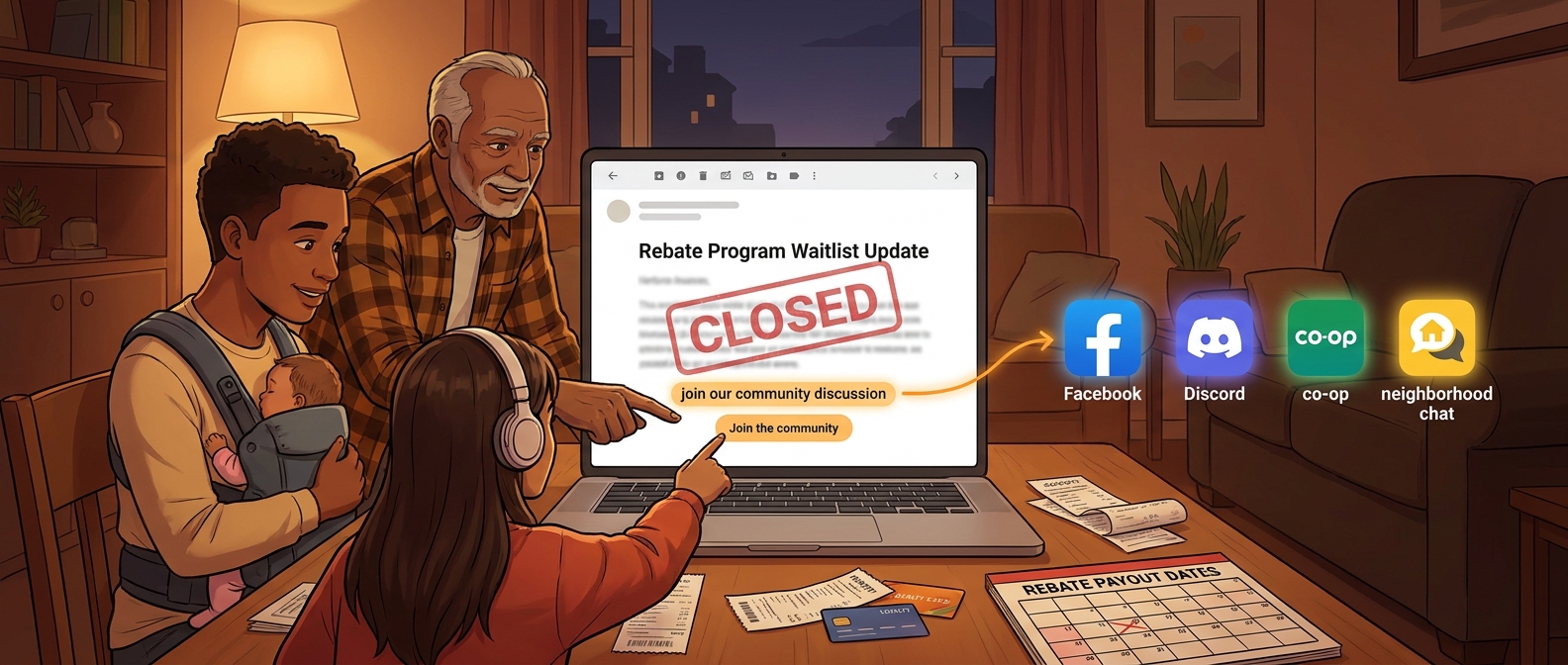
    You finally find a rebate program that looks worth your time, click apply, and get hit with the same dead-end message. Waitlist full. Applications paused. Pilot only. That is maddening, especially when you are trying to save real money, not just collect a few random coupon wins. The good news is that a closed public signup page does not always mean the trail is over. Quite often, it means the real action moved somewhere smaller and less obvious. If you want to know how to join invite only rebate groups from closed programs, start with the leftovers most people ignore. Waitlist emails, FAQ pages, help center articles, member comments, and status updates often point to side doors like private Facebook groups, Discord servers, local buying clubs, or partner organizations. The public form may be closed. The community around it often is not. That is the shortcut smart rebate hunters use, and it is a lot more realistic than waiting months for a public spot to reopen.

    ⚡ In a Hurry? Key Takeaways

    • Closed rebate programs often still connect to invite-only groups through waitlist emails, FAQ pages, and community links.
    • Search for hidden paths like Discords, Facebook circles, alumni groups, union perks, and local buying alliances tied to the program.
    • Stick to legit communities, protect your personal info, and avoid any group asking for upfront fees or account sharing.

    Why “Waitlist Full” Is Not Always the End

    Most people treat a closed application like a locked door. Fair enough. That is what it looks like.

    But companies and buying groups often cap public intake because they are testing supply, managing fraud, or trying to keep a community small enough to moderate. When that happens, they still need places to talk to current members, referrals, and approved partner audiences.

    That is where the backdoor comes in. Not a shady trick. Just basic detective work.

    The public signup page may be frozen, but the program’s side channels may still be active. Those side channels are often where real invites move around.

    Start With the Waitlist Email

    If you joined a waitlist, go back and actually read the email. I mean the whole thing.

    Look for lines like these:

    • “Join our community for updates”
    • “Follow program announcements here”
    • “Members often hear first in our group”
    • “Check our partner communities”
    • “Referral access may return before public access”

    These phrases are easy to skim past. They matter.

    Sometimes the email footer includes a Facebook group, a Discord invite, a brand community, or a support portal where members swap tips. Even if it does not hand you an invite directly, it tells you where the people already inside are hanging out.

    What to do next

    Search the sender name, the program name, and any odd phrase from the email in Google, Facebook, Reddit, and Discord directories. Put quotation marks around exact phrases if needed. You are trying to find where that wording shows up again.

    Mine the FAQ and Help Center Like a Member Would

    This is where a lot of hidden paths show up.

    FAQ pages often answer questions for current users, not just new applicants. That means they may mention:

    • member referral rules
    • community guidelines
    • partner eligibility
    • regional rollout groups
    • approved organizations or associations

    If you see a sentence like “access may be available through approved partner groups,” stop there. That is your clue.

    Now click every linked term. “Partner groups,” “community,” “eligible members,” “local chapter,” and “pilot region” can all lead somewhere useful.

    This is also a smart place to dig into cached pages, older support articles, and update logs. Sometimes a page was rewritten, but old versions still mention the names of clubs or communities that were once used for onboarding.

    Look for the Semi-Hidden Communities Around the Program

    This is the part big deal blogs often miss. They focus on the public signup page because that is easy to link. Real shoppers should care about the surrounding community.

    1. Discord servers

    Some rebate and testing programs move fast, so members gather in Discord to post openings, product drops, and referral windows. Search the program name plus “Discord,” “server,” “invite,” or “community.”

    Also check social bios. A brand or moderator may not put the invite on the main site, but they will stick it in a profile link.

    2. Facebook groups

    Facebook is still full of regional coupon groups, mom groups, side-hustle groups, and buyer circles that quietly share rebate club openings. Search by program name and related phrases like “insiders,” “beta testers,” “savers,” “deal group,” and your city or state.

    Private groups can be especially useful because members often know which programs are quietly taking referrals even when public forms are paused.

    3. Union, alumni, and association perks

    This one surprises people. Some invite-only buying clubs are offered through teacher groups, employee perk portals, alumni networks, neighborhood associations, and local business groups.

    If a help page mentions “partner organizations” or “member communities,” think broader than the rebate brand itself. You may not need to know someone. You may just need to belong to a qualifying group you already forgot you had access to.

    4. Local buying alliances

    Search your town, county, or metro area with terms like “buying club,” “bulk buy group,” “community deals,” or “discount coalition.” These groups sometimes get first dibs on pilot programs because they are easier to manage than the general public.

    Use Status Threads and Comment Sections as Clue Boards

    Whenever a program pauses new applications, people talk about it somewhere.

    Check:

    • Reddit threads
    • Facebook comments
    • Instagram comments under announcement posts
    • X or Threads replies
    • blog comment sections

    You are not just looking for complaints. You are looking for patterns.

    For example:

    • “I got in through my local group.”
    • “Public signup is closed, but referrals still work.”
    • “Check the members server.”
    • “Our chapter had invites last week.”

    That tells you the route still exists. You just need the right doorway.

    How to Join Invite Only Rebate Groups From Closed Programs

    Here is the practical version.

    Step 1: Save every message

    Keep the waitlist email, confirmation page, and any support replies. Tiny details matter.

    Step 2: Search the exact wording

    Paste unusual phrases into Google inside quotation marks. Add terms like “Discord,” “Facebook,” “community,” “referral,” and “partner.”

    Step 3: Check the brand’s side channels

    Look at Instagram bios, Linktree pages, Facebook pages, YouTube descriptions, and older posts. Invite links often live there longer than on the main site.

    Step 4: Read the FAQ like you are already a member

    Ignore the obvious beginner stuff. Hunt for references to referrals, pilots, chapters, organizations, and member communities.

    Step 5: Join adjacent groups

    If the closed program connects to product testing, ambassador work, or reviewer panels, join those too. They often overlap.

    That is why it is worth reading The ‘Brand Insider Gate’ Shortcut: Join Rebate Communities Hiding Inside Ambassador & Reviewer Programs. A lot of the same brands and moderators show up across both worlds.

    Step 6: Ask one simple question

    Do not send a giant message. Ask, “Is public signup closed only, or are referrals/partner invites still active?”

    That gets better answers than “Can someone get me in?”

    Step 7: Be patient and useful

    Many private groups admit people who follow rules, fill out profiles, and contribute. If you act like a spammer, you will get ignored fast.

    What Counts as a Good Sign, and What Should Worry You

    Good signs

    • The group is linked from an official email, support page, or moderator profile.
    • Rules are clear and realistic.
    • Members talk about actual purchases, payouts, and timelines.
    • There is a visible admin or moderator team.

    Red flags

    • Someone asks for an upfront fee just to “unlock” rebate access.
    • You are told to share store accounts, Amazon logins, or payment details.
    • The only proof is screenshots with no context.
    • The group pushes rushed buying with no written terms.

    If it feels off, walk away. Savings are important. So is keeping your accounts safe.

    Why This Works Better Than Chasing Public Links

    Public links get crowded first. That is the whole problem.

    By the time a giant coupon blog or deal page posts a program, the easiest spots are usually gone. Smaller communities move differently. They share openings by referral, by region, by member status, or by partner access.

    That does not mean they are fake or exclusive in some fancy way. It just means they are organized around trust and capacity.

    If you are willing to dig a little, you can often find a real path in while everyone else assumes it is over.

    At a Glance: Comparison

    Feature/Aspect Details Verdict
    Public signup page Easy to find, but often capped, paused, or flooded with applicants. Good first stop, poor final answer.
    Waitlist emails and FAQ pages Often contain clues about referral routes, partner access, and member communities. Best place to start digging.
    Private groups and local alliances Harder to spot, but more likely to share real openings and invite paths. Most promising route if you stay careful.

    Conclusion

    When rebate programs are capped, paused, or marked pilot only, it is easy to feel shut out at exactly the wrong time. But closed does not always mean gone. If you mine the waitlist emails, FAQ pages, help centers, and status threads for clues, you can often find the semi-hidden communities that still have movement. That might be a Discord server, a private Facebook circle, a union or association perk, or a local buying alliance. Those are the places many big blogs skip because they focus on public links, not the communities behind them. So if you have been stuck wondering how to join invite only rebate groups from closed programs, do not stop at the closed form. Follow the breadcrumbs. That is often where the real savings start.

  • The ‘Brand Insider Gate’ Shortcut: Join Rebate Communities Hiding Inside Ambassador & Reviewer Programs

    The ‘Brand Insider Gate’ Shortcut: Join Rebate Communities Hiding Inside Ambassador & Reviewer Programs

    You did the cashback apps. You joined the coupon sites. You stacked loyalty points like a pro. And yet it still feels like you are arriving after the good stuff is gone. That frustration is real. A lot of the best “buy it, try it, get rebated” offers never hit public deal boards at all. They start inside small brand-run groups, where companies hand out samples, cashback offers, and review opportunities to people they already know and trust. If you have been wondering how to join brand ambassador and product reviewer rebate communities, the good news is this is not reserved for influencers with ring lights and huge followings. Regular shoppers get in too. The trick is knowing where these programs live, what brands call them, and how to make your profile look useful instead of random. Once you know the signs, you stop hunting scraps and start finding the source.

    ⚡ In a Hurry? Key Takeaways

    • Many of the best rebate offers now begin inside private brand ambassador, reviewer, and insider communities, not public coupon pages.
    • Start by checking a brand’s website footer, FAQ, Instagram bio, and email signup flow for words like ambassador, tester, panel, review club, insiders, or community.
    • Do not pay to join a “review club” unless you have checked it carefully. Legit programs usually want your feedback, profile, and participation, not an upfront fee.

    Why the Best Rebates Feel Hidden

    Brands have changed how they spend promo money. Instead of blasting the same coupon to everyone, many now prefer smaller groups they can manage more closely. It makes sense from their side. They get cleaner feedback, more predictable reviews, and a pool of shoppers who actually respond.

    For the rest of us, this creates a weird problem. The best deals look invisible. You might see the leftovers posted in a forum days later, while members inside a review club already claimed the full rebate or free product slot.

    That is why these communities matter. They are often the first stop for product tests, receipt rebates, trial bundles, early launch discounts, and “post your honest review” campaigns.

    What These Communities Are Usually Called

    Not every brand uses the same label. One company says “ambassador program.” Another says “insider panel.” Another calls it a “consumer testing community.” Same basic idea.

    Common names to watch for

    • Brand Ambassador Program
    • Product Reviewer Program
    • Insider Community
    • Testing Panel
    • Creator Club
    • Rewards Community
    • Sampling Program
    • Advocate Network
    • Review Crew
    • VIP or Founders Club

    If you see language about “try products,” “share feedback,” “earn rewards,” “apply to campaigns,” or “receive exclusive offers,” you are probably looking at one of these gates.

    How to Find Them Before Everyone Else

    This is the part that saves time. You do not need to search the whole internet blindly. Start with the brands you already buy, especially in categories that often use rebates. Think beauty, personal care, food, baby products, pet supplies, cleaning products, supplements, and household gadgets.

    Check the brand’s own website

    Open the homepage and scroll straight to the footer. That is where many companies hide links like:

    • Ambassador
    • Affiliates
    • Community
    • Reviews
    • Beta Program
    • Testers Wanted
    • Rewards

    Then check the FAQ, Contact page, and careers or community pages. Some brands never put the program in the main menu, but they still mention it in support pages.

    Watch the brand’s social media carefully

    Instagram and TikTok bios often link to a form or program page. Stories and pinned posts are another clue. Look for phrases like “join our insiders,” “apply now,” or “limited tester spots.”

    Facebook groups can matter too, especially for food, parenting, and lifestyle brands. Sometimes the public page is just marketing, while the real offers happen in a private member group.

    Read the email welcome sequence

    A plain old newsletter signup still works. After you join, watch the first few emails. Brands often invite their own email subscribers into trial panels before posting anywhere public.

    Search smarter

    Use direct searches like:

    • [brand name] ambassador program
    • [brand name] product tester
    • [brand name] insider community
    • [brand name] review club
    • [brand name] sampling program

    That will get you much further than searching “free stuff” or “rebates” alone.

    The Platforms Behind the Curtain

    Many brands do not build these communities from scratch. They use third-party platforms that host campaigns, applications, review tasks, and reward tracking. Once you spot a few of these networks, you begin seeing the pattern everywhere.

    What to look for

    When you click into an application page, check the branding and URL. If the page looks different from the main brand site, it may be powered by a community platform. That is useful, because if one brand uses it, others often do too.

    Common signs include:

    • A separate portal with a profile dashboard
    • Campaign applications with screening questions
    • Tasks like uploading receipts, posting reviews, or answering surveys
    • A points or tier system for participation
    • Mentions of community guidelines and member conduct

    Once you find one good platform, create a strong profile and keep it updated. You may be able to join more than one brand community on the same system or at least recognize similar setups faster.

    How to Build a Profile That Actually Gets Accepted

    This is where many people lose out. They fill in the basics, skip the details, and wonder why they never get picked. Brands are not just looking for “someone who wants free stuff.” They want believable, consistent people who fit a target customer profile and can follow instructions.

    Use a real, complete identity

    Fill out your profile fully. Age range, household size, shopping habits, pets, kids, diet, beauty routine, home type, and favorite stores can all matter depending on the campaign.

    Do not exaggerate. If you claim to be the perfect customer for every category under the sun, you can look fake fast.

    Add social accounts if asked

    You do not need a giant audience. That is a common myth. Some programs care about social reach, but many just want active, normal users who can post an honest review or share a simple photo.

    If you connect social accounts, make sure they look alive. A profile with a photo, a little activity, and normal posts is much better than an empty account created yesterday.

    Write like a real person

    Application questions often ask why you want to join or what products you use now. Keep your answers clear and natural. Mention actual habits. For example, “I buy stain removers monthly because I have two kids and a dog” is stronger than “I love trying new products.”

    Show that you follow through

    If the platform tracks completed tasks, do the small ones well. Submit reviews on time. Upload receipts clearly. Answer surveys completely. The people who keep getting picked are often the ones who proved they are dependable, not the loudest.

    Green Flags and Red Flags

    Private communities can be valuable, but not every “insider program” is worth your time.

    Good signs

    • Clear explanation of what members do
    • Straightforward privacy policy and terms
    • No promise that everyone gets every campaign
    • Specific reward details such as rebate amount, product value, or points
    • Reasonable expectations for reviews or feedback

    Warning signs

    • High upfront fee just to access offers
    • Vague claims of guaranteed free products forever
    • No brand names listed anywhere
    • Poorly written pages with broken forms
    • Requests for sensitive information that makes no sense for product testing

    A little skepticism goes a long way. If it feels off, pause and verify before handing over data.

    How to Stay in the Good Graces of These Communities

    Getting in is only half the game. Staying active matters more.

    Be honest in reviews

    Good programs usually want honest feedback, not fake praise. If a product is great, say so. If it misses the mark, say that politely and clearly. Brands value useful comments more than cheerleading.

    Meet deadlines

    If the task says review by Friday, do not wait until next month. These systems notice.

    Do not apply for everything

    Pick campaigns that fit you. If you never drink protein shakes, do not force your way into every supplement test. Better matches lead to better selection later.

    Keep records

    Save screenshots, confirmation emails, receipts, and shipping notices. It makes rebate follow-up much easier if something stalls.

    A Simple Starter Plan for This Week

    If you want a practical way to start, do this:

    1. Pick 10 brands you already buy regularly.
    2. Search each one for ambassador, tester, insider, panel, and review club terms.
    3. Join their newsletter and follow their main social account.
    4. Create a clean email folder just for applications and campaign notices.
    5. Complete your profiles fully on any portal you join.
    6. Apply only to campaigns that genuinely fit your life.
    7. Track which brands and platforms actually send offers.

    After a month, patterns start to show. Some brands talk a lot and offer nothing. Others quietly send excellent rebate opportunities to active members.

    Why Rebate Clubs Members Have an Edge

    This is where a community helps. One person might notice that a pet brand moved its sampling offers into a private Facebook group. Another might spot a household cleaner brand using a hidden tester portal linked from an Instagram story. Put those clues together, and everyone saves time.

    That shared map is a real advantage. Instead of each person starting from zero, the group can compare which brands are worth the effort, which platforms are reliable, and which programs actually lead to rebates instead of busywork.

    At a Glance: Comparison

    Feature/Aspect Details Verdict
    Public coupon and cashback sites Easy to join, but offers are widely shared and often picked over fast. Good for basics, not usually where the best early rebates start.
    Brand ambassador and reviewer communities Smaller groups, targeted offers, product tests, and better odds of meaningful rebates if you stay active. Best long-term value for consistent shoppers.
    Your application profile Complete, honest profiles with timely participation tend to get selected more often than bare-bones accounts. Worth the effort. This is where many people quietly win or lose.

    Conclusion

    The big shift is already happening. Brands are moving promo budgets into closed communities where they can decide who sees offers first, who gets the rebate, and who gets invited back. For regular shoppers, that can feel unfair at first. But it is also a big opening if you know where to look. Learn the signals on brand sites and social pages. Watch for the platforms behind the programs. Build a complete, believable profile and show that you can follow through. Do that, and you move closer to the source instead of chasing leftovers on public deal threads. Better yet, when Rebate Clubs members share what they find, everyone gets smarter faster. Less random scrolling. More targeted savings. And a much better shot at getting into the rooms where the best rebate deals actually begin.

  • The “Invite‑Only Trail” Shortcut: Turn Quiet Referral Links Into Real Rebate Clubs You Can Actually Join

    The “Invite‑Only Trail” Shortcut: Turn Quiet Referral Links Into Real Rebate Clubs You Can Actually Join

    You spot it in a comment thread. “DM me for the code.” Or, “I got in through a friend’s link.” That is how a lot of the best rebate clubs work now, and yes, it can feel a little ridiculous when you are ready to save money but cannot even find the front door. The frustrating part is that the real groups often stay quiet on purpose. They are trying to avoid spam, copycats, and deal killers. Meanwhile, fake groups are getting better at looking real. If you have been wondering how to join invite only rebate groups through referral links, the trick is not chasing every mystery link you see. It is following a clean trail. You want to check who shared it, where it leads, what kind of access it gives, and whether the group has a real history of payouts, rules, and active members. Done right, referral links can open the door to long term savings, not just one lucky coupon.

    ⚡ In a Hurry? Key Takeaways

    • Yes, you can join invite only rebate groups through referral links, but only after checking the source, the landing page, and the group’s track record.
    • Start with a public breadcrumb, verify the referrer, and use a fresh email or account before handing over any personal details.
    • The best referral trails lead to stacked rebates and active communities. Bad ones lead to spam, data grabs, or fake “VIP” groups.

    Why the best rebate clubs are hard to find

    Public groups get crowded fast. Once a deal goes fully public, it often dies faster too. Sellers cap promo budgets. Platforms crack down. Resellers flood the chat. So many of the better communities moved into a semi private setup. Think Telegram channels with invite approvals, Discord servers with referral gates, and private Facebook groups where a member has to vouch for you.

    That sounds exclusive, but it is often more about keeping the group usable than keeping people out. A good invite-only group wants real shoppers, not bots and not drive-by scammers.

    If you are still stuck at the search stage, it helps to first find the places where these communities leave breadcrumbs. A useful companion read is The ‘Directory Leapfrog’ Shortcut: Use Hidden Group Indexes To Jump Straight Into Real Rebate Communities. That approach helps you find the map. Referral trails help you open the gate.

    What a legit referral trail looks like

    It starts with a real person, not just a random link drop

    A solid trail usually begins with someone who has a visible history. Maybe they post deal screenshots over time. Maybe other members reply to them by name. Maybe their social profile has been around for years, not three days.

    That does not make them perfect. It does mean you have something to check.

    The link points somewhere expected

    A referral link should lead to one of three things:

    • A known platform signup page
    • A group invite page on Telegram, Discord, Facebook, or WhatsApp
    • A landing page that clearly explains the program and who runs it

    If it bounces through multiple shorteners, asks you to install odd apps, or drops you on a blank form asking for your phone number and payment details, stop there.

    The group has signs of real life

    Look for posting history, moderator names, updated rules, member conversations, and proof that deals actually happened. Real rebate clubs usually have structure. They explain limits, timelines, payout methods, and what gets you removed.

    How to join invite only rebate groups through referral links safely

    Step 1: Start with the breadcrumb, not the link

    Before you click, look at where you found it. Was it in a Reddit thread with decent discussion? A comment section where others mention being paid? A niche shopping forum where the same names keep coming up?

    You are not just checking the link. You are checking the neighborhood.

    Step 2: Check the person behind the referral

    Search their username on the platform and outside it. Do they have a pattern of normal activity? Do people thank them? Do they explain how the club works, or do they just yell “join now”?

    Green flags include:

    • Older account age
    • Consistent posting history
    • Replies from real people
    • Specific answers about payout timing and rules

    Red flags include:

    • New account with no history
    • Only promotional posts
    • Pressure to act immediately
    • Requests for money to “unlock” access

    Step 3: Preview the link before signing up

    On desktop, hover over the link. On mobile, long press if your app allows it. You want to see the real destination. If the visible text says one thing and the URL says another, do not continue.

    Also check for obvious typo domains. A fake version of a known rebate platform may differ by one letter. That trick still catches plenty of people.

    Step 4: Use a clean signup setup

    If the group seems promising, join carefully. Use a fresh email address made for shopping communities. If the platform allows it, keep your profile light at first. Share the minimum needed to get in and understand the rules.

    This is a simple move, but it matters. Good groups may still expose your email to referral systems, newsletters, or partner offers. Keep your main inbox out of the blast zone.

    Step 5: Read the rules before chasing the deal

    Invite-only groups often have a rhythm. Some are built around Amazon rebates. Some focus on app cash back stacks. Some depend on lightning-fast claim windows. If you skip the rules, you may miss the format for posting proof, requesting reimbursement, or timing your purchase.

    The best members are not always the fastest. They are the ones who follow the process.

    How to tell if a “rebate club” is really worth joining

    Look for stacked savings, not just hype

    A good group gives you repeat value. That might mean:

    • Referral-only rebates plus store coupons
    • Cash back app stacks
    • Early access to capped offers
    • Brand tester programs with actual reimbursement history

    If all you see is one-off coupon spam, that is not much of a club. That is just noise with a cover charge.

    Check whether payouts are explained clearly

    Real groups usually spell out the money flow. You buy first. Then you submit a screenshot. Then the seller or moderator confirms and pays through a listed method. Or the platform applies a credit automatically after a set number of days.

    Vague language is a problem. “Rewards may come later” is not a process. It is a shrug.

    Watch how moderators handle problems

    Scroll through old messages. Do moderators answer questions? Do they remove bad links? Do they warn members when a seller turns unreliable?

    This tells you more than the sales pitch ever will.

    Common traps hiding inside referral-only groups

    Fake scarcity

    “Only 3 spots left” means nothing if they post it every day. Scarcity can be real in rebate circles, but fake urgency is one of the oldest tricks online.

    Pay-to-enter scams

    Be very careful with “VIP access fees.” Some legitimate communities charge for premium deal tools or admin time, but that should be clearly branded, explained, and reviewable. If a stranger wants payment before you can even see the group rules, walk away.

    Data harvesting

    Some fake clubs are just lead funnels. They collect your email, phone number, shopping habits, and maybe even your payment details, then sell the data or hit you with endless offers.

    That is why it is smart to join with a separate email, avoid sharing your main phone number when possible, and never send ID documents unless you are dealing with a known, established platform that truly requires verification.

    Referral farming with no community behind it

    This one is sneaky. You click a link, sign up, and realize there is no actual group. The “host” just wanted the referral credit. There are no moderators, no rebate instructions, no member support, and no real path to savings.

    If there is no club behind the link, it is not your shortcut. It is theirs.

    A simple system you can repeat every time

    Here is the friendly version of the checklist I would use myself:

    1. Find the mention in a credible place.
    2. Check the poster’s history.
    3. Inspect the destination URL.
    4. Join with a shopping-only email.
    5. Read the rules and payout steps.
    6. Test with one small deal first.
    7. Stay active only if the group proves itself.

    That last step matters. Do not go all in on day one. Start small. A $10 or $15 test run can tell you a lot about how organized the group really is.

    Where referral trails usually appear first

    If you are trying to find how to join invite only rebate groups through referral links, look in places where members chat casually, not just where they advertise. That includes:

    • Reddit comment threads about shopping apps and cash back
    • Facebook comments under deal posts
    • Niche Discord servers for budgeting or reselling
    • Telegram communities tied to specific brands or marketplaces
    • Private newsletter footers and member-only roundups

    The key is that the referral link is usually not the first thing you find. The hint comes first. The invite comes second.

    How to avoid oversharing once you get in

    Joining the club is only part of the job. Staying safe after you join matters just as much.

    Keep your profile basic

    Use first name only if the platform allows it. Skip extra bio details. Do not connect more social accounts than necessary.

    Do not post order screenshots with everything visible

    Blur order numbers, home address, and full email whenever possible. In many groups, moderators only need enough to confirm the item, amount, and date.

    Separate your payment methods

    If you use payment apps for rebates, keep records. Label transactions. That makes it easier to spot missing payouts and easier to avoid mixing rebate money with personal transfers.

    What success actually looks like

    The win here is not joining the most secret group on the internet. It is finding two or three reliable communities that fit how you shop, pay out as promised, and give you repeat access to stacked savings.

    That is where referral trails shine. A public coupon might save you once. A trusted invite can keep paying off for months.

    At a Glance: Comparison

    Feature/Aspect Details Verdict
    Referral source Known member with posting history, replies, and clear instructions beats a random “join fast” account every time. Trust only after basic verification.
    Type of invite Direct platform invite or branded signup page is safer than a chain of shortened links and mystery forms. Clean links are a good sign.
    Group value The best clubs offer repeat deals, clear payout steps, active moderators, and ways to stack rebates with other savings tools. Join for long-term value, not hype.

    Conclusion

    The best deal spaces are not always sitting out in public anymore. They are moving into semi private chats, invite codes, and low key referral links, which is great for serious shoppers and a headache for everyone else. The good news is you do not need insider magic to get in. You need a repeatable method. Check the person behind the link. Check where the link goes. Check whether the group has real history, real rules, and real payouts. Then start small and protect your data while you test it. That is the smart way to use referral trails in July 2026, when savings matter and scams are multiplying just as fast. Learn to spot the legit path, and you can unlock stacked rebates instead of settling for one-off coupons, all while keeping control of your money and your information.

  • The ‘Neighborhood Thread’ Shortcut: Turn Quiet HOA Chats Into Real Rebate Groups You Can Join

    The ‘Neighborhood Thread’ Shortcut: Turn Quiet HOA Chats Into Real Rebate Groups You Can Join

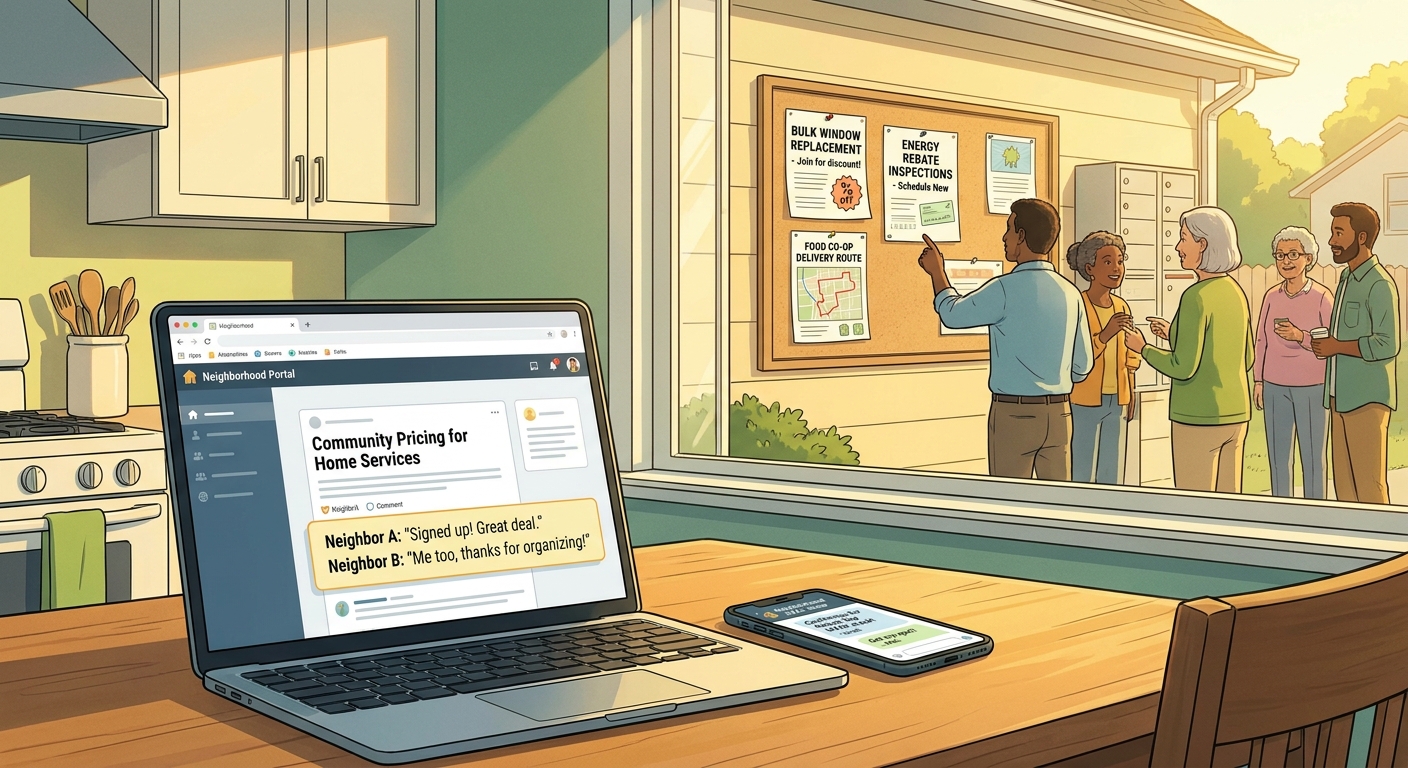
    Most people ignore HOA emails and neighborhood posts for the same reason they ignore airline terms and conditions. It looks boring, vague, and not worth the effort. That is fair. The frustrating part is that those quiet little updates often hide the easiest answer to how to join neighborhood rebate groups. The clue usually is not a big sign-up button. It is a throwaway line about “preferred vendors,” “resident pricing,” “bulk service week,” or “approved contractor specials.” That is often your opening. If you know what to look for, those one-off notices can lead to invite-only savings groups for energy audits, HVAC tune-ups, internet deals, lawn care, solar consultations, grocery co-ops, and more. Better yet, once you spot the pattern, you can help turn a random discount into an ongoing rebate circle for your block or building. That means lower prices, less paperwork confusion, and actual group buying power instead of endless promo-code hunting.

    ⚡ In a Hurry? Key Takeaways

    • Neighborhood rebate groups are often hidden inside HOA emails, resident portals, and community posts under labels like “community pricing” or “preferred rate for residents.”
    • Ask one simple follow-up question: “Is this a one-time discount, or is there a resident group or coordinator I can join?” That is usually the fastest path in.
    • Stick with transparent vendors, clear rebate terms, and group organizers who can explain pricing, deadlines, and privacy rules before you share your info.

    Why these rebate groups stay hidden

    Search engines are great at finding big public offers. They are terrible at finding neighborhood-only deals.

    A lot of local rebates live inside HOA newsletters, Facebook groups, condo portals, Nextdoor threads, email chains, bulletin boards, and resident meeting notes. Some are handled by a board member. Some by a property manager. Some by that one neighbor who somehow knows every contractor in town.

    So when people ask how to join neighborhood rebate groups, they often assume the answer is “Google it.” Usually, that is the wrong starting point.

    The better starting point is to read neighborhood messages like they are hiding a coupon in plain sight. Because often, they are.

    The code words that usually signal a real group offer

    These offers rarely say, “Click here to join the rebate club.” They use softer language.

    Watch for these phrases

    If you see any of these, slow down and read the full post:

    • Preferred vendors
    • Community pricing
    • Resident rate
    • Bulk discount
    • Seasonal signup window
    • Group service day
    • Neighborhood package
    • Board-approved contractor
    • Special pricing for residents
    • Cluster scheduling
    • Minimum homes required

    Those phrases usually mean one of three things. There is already a group deal. A group deal almost exists but needs more households. Or there is a vendor relationship that can be turned into a rebate circle with a little coordination.

    How to join neighborhood rebate groups without sounding pushy

    You do not need to become the neighborhood sales captain. You just need to ask the right questions.

    Start with one reply

    When you see a post or email, send a short message:

    “Hi, is this just a one-time resident discount, or is there a neighborhood group, coordinator, or mailing list for future rebates too?”

    That one question does a lot of work. It tells you whether there is an actual group behind the offer. It also tells organizers that residents want something more ongoing.

    Ask who manages the deal

    You want to know where the thread leads. Ask:

    • Who is the contact person?
    • Is there a resident signup list?
    • How many homes are already participating?
    • Does the discount repeat each season or quarter?
    • Is there paperwork for rebates or utility credits?

    If nobody can answer those questions, the “deal” may just be a vendor ad with a neighborhood label on it.

    Turn a one-off discount into a real rebate circle

    This is where things get interesting.

    Let’s say your HOA mentions discounted HVAC tune-ups for spring. Nice. But instead of treating it like a single coupon, you can help turn it into an ongoing neighborhood rebate group.

    Step 1: Find out if the vendor will reward volume

    Ask whether pricing improves at 10, 20, or 30 homes. Many vendors already think this way. They just do not advertise it publicly.

    Step 2: Create a simple resident list

    This can be a shared email thread, a Google Form, or a message list approved by the community manager. Keep it basic. Name, address, service interest, and best contact method.

    Step 3: Track repeat categories

    The best neighborhood rebate circles are built around services people need again and again:

    • Lawn care
    • Snow removal
    • Pest control
    • Window washing
    • Driveway sealing
    • HVAC maintenance
    • Solar consultations
    • Internet or utility switching help
    • Grocery co-op ordering

    If the same need keeps coming up, that is not a random discount. That is a group buying opportunity.

    If you want a related example of how local platforms can turn into organized savings, read The ‘Local Loop Key’ Shortcut: Turn Neighborhood Service Apps Into Real Rebate Circles. It fits the same idea. The deal often starts with a practical local service, not a flashy rebate ad.

    Best places to look before the offer disappears

    Some of these deals have short signup windows. So check the places people usually skim.

    Neighborhood sources worth checking

    • HOA newsletters
    • Condo resident portals
    • Property management emails
    • Meeting minutes
    • Nextdoor neighborhood posts
    • Community Facebook groups
    • Clubhouse bulletin boards
    • Pool or gym notice boards
    • Email lists for block captains or committee leads

    One useful habit is to search your inbox for words like “resident pricing,” “vendor,” “special rate,” “bulk,” “service day,” or “approved contractor.” You may already have the invite sitting there.

    How to tell the difference between a real rebate group and a dressed-up ad

    Not every neighborhood offer is worth joining.

    Green flags

    • Clear pricing or discount terms
    • A named community contact
    • A minimum participant number
    • Repeat scheduling or seasonal rounds
    • Shared instructions for rebate forms or utility claims

    Red flags

    • Vague promises with no actual numbers
    • Pressure to sign immediately
    • No explanation of who collected resident info
    • No written terms for cancellations or follow-up service
    • Claims that sound exclusive but cannot be verified

    If the organizer cannot explain how the pricing works, pause. Group buying should reduce confusion, not add to it.

    Use neighborhood trust to get better results

    The biggest benefit is not just saving a few dollars. It is reducing risk.

    When neighbors compare notes, bad vendors get exposed quickly. Good vendors earn repeat business. Rebate paperwork gets easier because somebody has already done it once and can say, “Here is the form. Here is the deadline. Here is what they asked for.”

    That is a big deal, especially for utility rebates, appliance upgrades, insulation work, and home energy programs where the forms can be annoying.

    Simple questions to ask the group

    • Did the vendor honor the resident rate?
    • How long did the rebate take?
    • What documents were needed?
    • Were there surprise fees?
    • Would you use them again?

    If your HOA is quiet, start small anyway

    Some boards are active. Some are basically silent unless the mulch color changes. That does not mean you are stuck.

    If there is no official rebate channel, start with three to five interested households. That is enough to test demand.

    A simple starter plan

    1. Pick one category people already need.
    2. Ask two or three vendors for neighborhood pricing.
    3. Request written group terms.
    4. Share the best option with neighbors.
    5. Keep a list for future rounds.

    You do not need a fancy platform at first. You need a clear offer, a trusted contact, and a way to keep the list alive after the first deal closes.

    Good rebate categories to target first

    Some categories are easier than others because vendors like clustered work and repeat customers.

    • Energy audits
    • Smart thermostat installation
    • HVAC service
    • Pest control plans
    • Lawn and landscaping bundles
    • Roof and gutter inspections
    • Pressure washing
    • Internet and wireless community plans
    • Grocery co-op or produce box discounts
    • Solar education sessions with resident incentives

    These are easier to organize because they solve a common neighborhood need. That makes it easier to keep the group going after the first round.

    At a Glance: Comparison

    Feature/Aspect Details Verdict
    Where to find groups HOA emails, resident portals, neighborhood apps, meeting notes, and community bulletin posts often mention resident-only pricing without a public signup page. Best starting point for how to join neighborhood rebate groups.
    Best way to get in Reply and ask whether the deal is one-time or tied to a resident list, coordinator, or recurring program. Simple, low-pressure, and usually effective.
    Long-term value Ongoing neighborhood circles help members compare vendors, share rebate steps, and negotiate better terms as a group. Much stronger than chasing random promo codes alone.

    Conclusion

    The quiet HOA post you almost deleted might be the front door to a real savings network. Right now, energy, utilities, home services, and even grocery co-ops are quietly organizing resident-wide rebates through neighborhood coordinators and HOA boards, but most of those groups never get indexed by search engines. Once you learn to spot phrases like “community pricing,” “preferred rate for residents,” or “group service days,” it gets much easier to find the real opportunities. Better still, you can help turn one-time discounts into recurring neighborhood rebate circles that save money again and again. That means faster access to collective buying power, better vendor accountability, and a stronger local network where people share trusted recommendations and rebate paperwork tips. That is the kind of strength-in-numbers setup Rebate Clubs is built to support, and it is often hiding in the neighborhood thread you almost scrolled past.

  • The ‘Local Loop Key’ Shortcut: Turn Neighborhood Service Apps Into Real Rebate Circles

    The ‘Local Loop Key’ Shortcut: Turn Neighborhood Service Apps Into Real Rebate Circles

    You can spend years chasing coupon codes and still miss the easiest savings sitting right on your block. That is the frustrating part. Most people hear “rebate group” and think of cereal boxes, warehouse clubs, or cashback apps. They do not think about neighbors bundling gutter cleaning, lawn care, snow removal, pest control, driveway sealing, or even bulk Wi-Fi installs. But that is exactly where some of the best quiet savings live now. If you have been wondering how to use neighborhood buying groups for rebates, the trick is simple. Look for local service apps, HOA forums, neighborhood message boards, and resident groups where people already compare quotes. Those small circles can turn one-off jobs into mini bulk buys. When a few homes book together, vendors often offer lower rates, waived fees, or referral-style credits that work a lot like rebates. It is not flashy. It is just smart, local, and surprisingly effective.

    ⚡ In a Hurry? Key Takeaways

    • Neighborhood buying groups can create rebate-like savings by pooling home service jobs and negotiating group rates, credits, or cash-back style rewards.
    • Start with local apps, HOA pages, Facebook neighborhood groups, and street chats where residents already ask for vendor recommendations and quotes.
    • Stick with trusted vendors, clear written pricing, and simple payment rules so the savings do not get wiped out by confusion or scams.

    Why neighborhood buying groups work so well

    Home services have one big thing going for them. Vendors want clustered jobs.

    If three houses on the same street need leaf cleanup, the crew saves time on travel, setup, and scheduling. If six homes want pest treatment on the same Saturday, the company can fill a route in one shot. That efficiency is worth money to them.

    And that is where your “rebate” comes from.

    Sometimes it shows up as a lower per-home price. Sometimes it is a waived visit fee. Sometimes one organizer gets a referral credit and shares it back with the group. Other times everyone gets a gift card, account credit, upgrade, or seasonal discount that would not be offered to a single customer.

    This is the part many big deal sites miss. Product rebates get the headlines. Service-based rebate circles are happening quietly in neighborhood tools people already use.

    How to use neighborhood buying groups for rebates

    1. Start where neighbors already gather

    You do not need a fancy platform first. Begin with places where local trust already exists.

    • Neighborhood apps like Nextdoor
    • HOA portals or email lists
    • Community Facebook groups
    • Apartment or condo resident boards
    • Block text threads or group chats

    Search recent posts for phrases like “any recommendations,” “bulk discount,” “group rate,” “shared service day,” or “who else needs this done?” If you find even two or three people asking the same thing, you may already have the start of a rebate circle.

    2. Pick services that are easy to bundle

    Not every service is a good fit. The best ones are simple, repeatable, and easy for a vendor to price across multiple homes.

    Good examples include:

    • Lawn mowing and cleanup
    • Snow removal
    • Pest control
    • Pressure washing
    • Gutter cleaning
    • HVAC tune-ups
    • Window washing
    • Driveway sealing
    • Trash bin cleaning
    • Internet installation in new developments

    Roof replacement or major remodeling can still be negotiated as a group, but those jobs are more complex. For beginners, start small.

    3. Ask for three kinds of savings, not just one

    Most people only ask, “Can you do a discount?” That is fine, but it is too narrow.

    Ask vendors about:

    • Group pricing. A lower rate if several homes book at once.
    • Referral credits. A rebate or account credit for each booked neighbor.
    • Added value. Free upgrades, waived fees, or extra service visits.

    That mix matters because a vendor may not cut the sticker price much, but may happily throw in a waived trip charge or future service credit. That still saves real money.

    4. Keep the group simple

    The fastest way to kill a neighborhood deal is to overcomplicate it.

    Pick one service. One time frame. One contact person. One written offer.

    Try something like this:

    “We have 5 households on Elm Street interested in gutter cleaning during the second week of October. Please quote your normal price, your group price, and any referral or booking credits if all 5 confirm.”

    That is clean. Easy to answer. Easy to compare.

    The “Local Loop Key” shortcut

    Think of a local loop as a small circle of nearby people who can repeat savings over time.

    That is the real shortcut here. Do not build a one-and-done bargain hunt. Build a reusable neighborhood loop.

    If your street already worked together on mulch delivery or mosquito treatment, you have proof that people will join again. The next time you need tree trimming or carpet cleaning, you are not starting from zero. You already have a trusted mini network.

    This is similar to the idea behind The ‘Micro‑Circle Scanner’ Shortcut: Use Niche Hobby Groups To Slip Into Serious Rebate Communities. The best savings often come from smaller, more focused communities, not giant public deal feeds. In neighborhoods, that same pattern shows up with local services.

    What counts as a rebate in these groups?

    It does not always look like the classic mail-in rebate.

    In neighborhood buying groups, your rebate-style savings might be:

    • A direct discount off the invoice
    • A prepaid card or gift card after the group books
    • A referral payout shared among participants
    • A future account credit
    • A free add-on service with cash value
    • A waived setup, fuel, or travel fee

    If you like to stack deals, this gets even better. You may be able to pay with a rewards card, use a bank offer, book through a cashback portal for gift cards, or combine a manufacturer promo with the service booking. That is where sharp readers can get a first-mover edge.

    How to spot the best neighborhood apps and groups

    Look for activity, not size

    A giant local group with thousands of members can still be useless if every post goes unanswered. A smaller group with active neighbors is often better.

    Good signs include:

    • Recent recommendations for service providers
    • People posting real photos of completed work
    • Back-and-forth comments about pricing
    • Admins who remove spam
    • Residents willing to coordinate service days

    Watch for “repeat vendors”

    If the same local company gets praised again and again, that is useful. Vendors who already know the neighborhood are more likely to offer route-based discounts because they can picture the work and the logistics.

    Check whether the app supports direct messaging or polls

    This makes organizing much easier. A quick poll like “Who wants a quote for fall gutter cleaning?” can tell you in one day whether you have enough interest to negotiate.

    A simple script you can use

    If asking vendors for group pricing feels awkward, use this:

    “Hi, I am organizing interest from several homes in our neighborhood for the same service. We are looking for pricing if 4 to 8 homes book in the same week. Do you offer a group rate, referral credit, waived fee, or any kind of neighborhood booking discount?”

    That works because it gives the vendor options. You are not cornering them. You are opening the door.

    Common mistakes that wipe out the savings

    Letting one person handle all the money

    Try to avoid this unless there is a very clear reason. It is usually safer if each household pays the vendor directly.

    Not getting the terms in writing

    A phone promise is not enough. Ask for the group rate, minimum number of homes, service scope, and deadline in writing.

    Mixing too many different needs

    If one person wants a basic lawn cut and another wants a full landscape redesign, that is not a clean group buy. Keep the offers comparable.

    Ignoring trust signals

    Check reviews. Confirm licensing if needed. Make sure the company has a real local presence. A discount is not a bargain if the work is a mess.

    Best use cases for first-time organizers

    If you want fast wins, start with jobs that have three traits. They are recurring, not too expensive, and easy to compare.

    Good first projects include seasonal yard cleanup, pest treatment, gutter cleaning, and HVAC maintenance. These tend to get quick replies from neighbors because people already know they need them. You are not convincing anyone to invent a new expense. You are just helping them pay less for one they already planned.

    At a Glance: Comparison

    Feature/Aspect Details Verdict
    Best place to start Neighborhood apps, HOA groups, and active local Facebook communities with real service discussions Best for finding trusted people fast
    Best type of rebate Group pricing, waived fees, referral credits, and account credits on repeat services Often easier to get than a flashy coupon
    Biggest risk Loose terms, unclear payment rules, or a vendor no one has really vetted Fixable if you keep the group small and the rules clear

    Conclusion

    If you have only been looking for rebates in retail apps and coupon forums, you are probably leaving money on the table. Right now, group-buying is growing far beyond the usual deal sites, and regular neighbors are using simple local tools to pool jobs and get better rates together. That gives you a chance to stack old-school product rebates with newer service-based savings that most big tech blogs are barely talking about. Start with one practical job, one trusted neighborhood channel, and one clear ask. Done right, these local loops can turn into small, dependable rebate circles in the place that matters most, the street where you actually live.

  • The ‘Pinned Post Ladder’ Shortcut: Climb From Public Deal Posts Into Real Rebate Communities

    The ‘Pinned Post Ladder’ Shortcut: Climb From Public Deal Posts Into Real Rebate Communities

    You are not imagining it. You see someone post a screenshot of a huge rebate haul, then you tap into the comments and it turns into a maze. One person says “DM me.” Another drops an expired link. A third sends you to a giant promo group full of noise, fake urgency, and coupons that are barely worth the effort. It is frustrating, and it makes rebate hunting feel much harder than it should be.

    The good news is that the real path is often hiding in plain sight. If you want to learn how to find real community rebate groups from social media posts, stop chasing every deal one by one. Start with the pinned or featured posts at the top of public groups. Those posts often act like a front door. They point to side chats, spin-off groups, trusted admins, and the smaller circles where the best rebate offers actually get organized. Once you know how to read those clues, the search gets a lot less random.

    ⚡ In a Hurry? Key Takeaways

    • Real rebate communities are usually found through pinned or featured posts, not buried in comment threads.
    • Track repeating admin names, linked groups, and group rules, then send one short, specific join request to a trusted organizer.
    • Avoid random invite links and “pay first” messages. The safest groups show clear structure, real moderation, and consistent names across platforms.

    Why comment threads usually waste your time

    Most public deal posts are bait for attention, not a clean map to the real group.

    That does not always mean scam. Sometimes it just means the public post is the billboard, and the actual community is somewhere else. Organizers use the big public space to attract interest. Then they move serious buyers into smaller spaces where instructions are easier to manage and spam is lower.

    If you only read comments, you are standing in the parking lot and wondering why you cannot find the meeting room.

    The “Pinned Post Ladder” idea

    Think of public rebate groups as the first rung of a ladder.

    The pinned post, featured post, or welcome post is often the next rung. It may contain rules, backup groups, Telegram channels, WhatsApp chats, admin tags, forms, or keywords that lead to the actual community. Your job is not to click everything. Your job is to read it like a map.

    What a doorway post often looks like

    It may say things like:

    • “Read this before posting”
    • “Official group links”
    • “Backup channel”
    • “Contact admins only through…”
    • “Approved sister groups”
    • “Apply here for premium rebate list”

    That is your clue. Public posts are noisy. Pinned posts are organized. Organized usually means closer to the real action.

    How to reverse-engineer a pinned post

    This is the part most people skip. Slow down for five minutes and look for patterns.

    1. Write down repeating names

    If the same admin name appears in a Facebook group, a Telegram channel description, and a Google Form contact line, that matters. Repetition suggests a real organizer with a system.

    If every link points to a different name, be cautious.

    2. Look for group families

    Many rebate communities are not one group. They are a small network.

    You might see:

    • Main Facebook group
    • Telegram alerts channel
    • Private chat for approvals
    • Backup group in case a platform removes posts

    When those pieces connect neatly, you are probably looking at a serious setup.

    3. Check the language in the rules

    Good organizer posts usually sound boring in a good way. They mention payment timing, proof of purchase, posting rules, limits, and how to contact mods. Scammers and fake coupon pushers usually go heavy on hype and light on process.

    4. Notice what is missing

    If a pinned post has no rules, no named admin, no history, and only one mystery invite link, that is not a ladder. That is a trapdoor.

    The practical method that works better than endless scrolling

    Here is a simple routine you can reuse every time.

    Step 1: Start with one public post that shows real activity

    Pick a post or group where people are sharing actual rebate results, not just “deal of the day” graphics.

    Step 2: Go straight to the pinned or featured section

    On Facebook, check Featured, Announcements, and About. On Telegram, check the channel description, pinned messages, and linked discussion groups. On Reddit, check the pinned posts, sidebar, wiki, and moderator comments.

    Step 3: Build a tiny map

    You do not need a spreadsheet unless you want one. Just note:

    • Admin names
    • Linked groups or channels
    • Application forms
    • Keywords used over and over
    • Whether the same names appear across platforms

    Step 4: Find one or two key people

    Not ten. One or two.

    The best contact is usually a moderator or organizer mentioned in the pinned post, not a random commenter saying “I can add you.”

    Step 5: Send a short join request

    Keep it plain and specific. For example:

    “Hi, I found your group through the pinned post in [group name]. I’m looking for active rebate offers and I’ve read the group rules. If you are accepting new members for any related group, I’d appreciate the right link or next step. Thanks.”

    That message works because it shows you paid attention. You are easier to trust than someone who just says, “Add me.”

    What separates a real rebate community from a noisy promo feed

    The difference is structure.

    Real communities usually have:

    • Named admins or moderators
    • Clear rules
    • Proof or discussion of actual purchases
    • Consistent posting format
    • Backup channels or linked sub-groups
    • Some screening before invites are shared

    Noisy promo feeds usually have:

    • Endless reposts
    • Little moderation
    • Broken links
    • Lots of “message me privately” comments
    • Pressure to act before you can verify anything

    Safety checks before you join anything

    This part matters. Saving money is nice. Getting burned is not.

    Watch for fake urgency

    If someone says you must pay a fee right now to access rebates, stop. A good community may screen members, but panic tactics are a bad sign.

    Verify links through the pinned post itself

    If an invite link only appears in a comment from a stranger, treat it with caution. If that same link or group is mentioned by the admin in the official pinned post, that is much better.

    Check the age and consistency of the group

    A brand new group with no history can still be real, but it should have some visible structure. Older groups with a clear pattern are usually easier to trust.

    Protect your payment details

    Never hand over bank info, gift card codes, or login credentials just to “qualify” for a rebate club.

    Why this method works right now

    Platforms are pushing pinned, featured, and admin-made posts higher than ever. That means organizers use those spots as control centers. They know public comment threads are messy. So they place the useful instructions where they can keep updating them.

    That is why the old way feels broken. You are searching the chatter, while the actual directions are sitting at the top.

    Use this alongside other smarter search routes

    If you are tired of public deal-group chaos, this approach pairs nicely with other community-first methods. One good example is The ‘Co‑Cart’ Shortcut: Turn Bulk‑Buy Apps Into Real Rebate Communities You Can Actually Join, which looks at how people move from bulk-buy apps into smaller, more useful rebate circles. The common theme is simple. Stop chasing random offers. Follow the structure that organizers already built.

    At a Glance: Comparison

    Feature/Aspect Details Verdict
    Comment-thread hunting Fast to start, but full of expired links, random DMs, and weak signals about who is actually trusted. Poor long-term method
    Pinned post mapping Takes a few extra minutes, but reveals admin names, linked groups, rules, and the real community path. Best starting point
    Direct message to key admin Works well when your request is short, polite, and based on the official pinned information. High value if done carefully

    Conclusion

    Most people hunt rebates the hard way. They chase one post after another, get buried in promo noise, and still never reach the smaller groups where the real opportunities live. The better approach is to treat pinned and featured posts like a ladder. Those posts are often the doorway into the serious sub-groups, backup chats, and vetted communities that organizers actually use. When you reverse-engineer those doorway posts, track the repeating names and tags, and send a short join request to one or two real admins, you give yourself a repeatable system instead of a guessing game. That is the real value here. You stop clicking blindly, and you start finding communities with structure, history, and better odds of real rebates. Better yet, that habit makes the wider Rebate Clubs world smarter and safer for everyone.

  • The ‘Directory Leapfrog’ Shortcut: Use Hidden Group Indexes To Jump Straight Into Real Rebate Communities

    The ‘Directory Leapfrog’ Shortcut: Use Hidden Group Indexes To Jump Straight Into Real Rebate Communities

    You type “rebate group” into Facebook, Telegram, or Discord, and the results feel like a junk drawer. A few giant groups. A pile of dead links. Some channels that look active until you notice the last real post was a month ago. It is frustrating, and honestly, it can make you feel like the good groups are hidden on purpose. In a way, they are. The better communities often are not easy to find through built-in search. They get discovered through outside directories, catalogs, and curated indexes that sort groups by topic, activity, language, and size. That is the shortcut I call “directory leapfrog.” Instead of clicking through random search results and hoping for the best, you start with a list that already did some of the filtering for you. If you want to know how to find legit rebate groups using telegram and discord directories, this is one of the fastest and safest ways to do it.

    ⚡ In a Hurry? Key Takeaways

    • Built-in search tools often surface low-quality rebate groups first, while external directories make it easier to spot active and legit communities.
    • Start with directories that show member counts, recent activity, group descriptions, and topic tags before you join anything.
    • Using directories can save time and lower scam risk because you can screen groups before clicking invite links or sharing account details.

    Why built-in group search keeps letting people down

    Most platform search bars are made for broad discovery, not careful filtering. That is the real problem.

    If you search inside Facebook, Telegram, or Discord, you usually get a mix of giant public groups, abandoned communities, and a few results that are only loosely related to rebates. The platform is trying to show “popular” or keyword-matching results, not necessarily the best places for serious deal hunters.

    That is why casual shoppers often keep ending up in the same low-value circles. Meanwhile, better communities are sitting a layer deeper, listed in outside directories that regular users never think to check.

    What “directory leapfrog” actually means

    Directory leapfrog is simple. You skip the weak first step.

    Instead of starting inside the app and digging through messy results, you start with an external catalog or community directory that already groups channels by niche. That can include shopping, online deals, cashback, Amazon-style rebate communities, coupon stacking groups, and buyer networks.

    Think of it like looking for a good restaurant. You could walk down a random street and hope. Or you could check a guide that already tells you what is busy, what serves your kind of food, and what people keep going back to.

    How to find legit rebate groups using telegram and discord directories

    If your goal is to find solid communities without wasting an afternoon, follow this order.

    1. Start with directories, not search bars

    Look for Telegram and Discord directories that organize groups by category. Good directories usually show a short description, number of members, language, and sometimes whether the group is trending or recently active.

    This matters because you can screen a group before joining it. That alone saves a lot of time.

    2. Read the group description closely

    A legit rebate group usually explains what it does in plain language. You should see signs of structure, like what products are covered, whether the group focuses on Amazon, Walmart, software deals, or general shopping, and whether there are rules for posting.

    Vague descriptions are a warning sign. So are descriptions packed with hype but no specifics.

    3. Check member count, but do not stop there

    Bigger is not always better. A huge group can be noisy, chaotic, or full of bots. A smaller group with real moderation and recent deal activity may be far more useful.

    Member count is a clue, not proof.

    4. Look for signs of recent activity

    Some directories show freshness signals. If not, once you join, quickly check how often deals are posted, whether members reply to each other, and whether admins remove junk.

    If every post feels copy-pasted or nobody reacts to anything, move on.

    5. Watch for moderation and rules

    Good rebate communities usually have some structure. There may be posting rules, deal categories, verification steps, or guidance about how claims, reimbursements, or screenshots should be handled.

    Scammy groups often have the opposite feel. No rules. No moderation. Too many urgent messages. Too many “DM me now” posts.

    What makes a rebate group feel “high signal”

    You do not need fancy tools to spot a strong group. You just need to know what to look for.

    Clear focus

    The best groups know what they are. They are not trying to be everything for everyone.

    Maybe they focus on product testing. Maybe they specialize in cashback loops. Maybe they are built around organized buying cycles and fast reimbursement discussion. Clear focus usually means better information.

    Real conversation

    If members ask questions and get useful answers, that is a healthy sign. If every post is a one-way blast of links, be careful.

    Consistent posting

    You want steady activity, not random bursts followed by silence. Consistency usually means the group has an actual base of people using it, not just a list of names.

    Less noise, more detail

    The best communities often share deal terms, timing tips, product notes, and warnings about changes. That is far more valuable than endless “hot deal” spam.

    Why directories are safer than random searching

    They are not magic, but they give you a better starting point.

    External directories often let you preview groups before joining. You can compare categories, see if a group is active, and avoid clicking every mystery invite link you run across in social search results.

    That lowers your odds of landing in a sketchy community that is heavy on spam, fake urgency, or shady account requests.

    If you want to build a smarter discovery habit overall, The ‘Search Stack’ Method: Use Niche Group Finders To Unlock Hidden Rebate Communities Fast is a useful next read. It pairs nicely with directory leapfrogging because both methods help you get beyond the same tired built-in search results.

    A simple screening checklist before you join

    Use this quick filter any time you find a new Telegram or Discord rebate community.

    • Does the directory listing clearly explain the group’s purpose?
    • Is the member count believable for the kind of niche it serves?
    • Does the group appear active right now, not just historically?
    • Are there visible rules, moderators, or posting guidelines?
    • Do the deals look specific and organized, not vague and rushed?
    • Are members having normal conversations, not just posting referral bait?

    If you answer “no” to most of those, keep moving.

    How Rebate Clubs members can use this to their advantage

    This is where the shortcut becomes bigger than just finding one decent group.

    When Rebate Clubs members use directories to plug into active, high-signal communities, they can bring back what works. Better deal formats. Faster posting habits. Smarter ways to sort products. Cleaner rules. Fresh tactics for finding offers before they spread everywhere.

    That helps the whole ecosystem. Instead of everyone being scattered across random low-value chats, the community gets better at identifying where the serious buyers already gather and learning from those spaces.

    It is a much smarter use of your time than poking around the same built-in search bars over and over.

    At a Glance: Comparison

    Feature/Aspect Details Verdict
    Built-in platform search Easy to use, but often shows spammy, inactive, or overly broad results for rebate-related terms. Fine for a quick glance, not great for finding serious groups.
    External Telegram and Discord directories Often include categories, descriptions, member counts, language tags, and activity signals before you join. Best starting point for faster, cleaner discovery.
    High-signal rebate communities Usually focused, moderated, active, and filled with practical deal discussion instead of random link dumps. Worth joining and learning from, especially for Rebate Clubs members.

    Conclusion

    Most people still rely on built-in search bars in Facebook, Telegram, or Discord to find rebate groups, which is exactly why they keep landing in inactive or low-value circles while serious buyers gather somewhere else. External directories and catalogs quietly do the hard work for you. They sort communities by topic, language, and activity, and often show member counts and descriptions before you ever click join. For Rebate Clubs members, learning to directory leapfrog means you can plug into existing, high-signal rebate communities in minutes, then bring their best tactics and deals back into our own ecosystem. That saves time, cuts scam risk, and helps our whole community stack into the highest-paying, most organized buying groups instead of getting scattered across random low-value chats.

  • The ‘Quiet Discord Bridge’ Shortcut: Slip Into Real Rebate Circles Through Niche Server Channels

    The ‘Quiet Discord Bridge’ Shortcut: Slip Into Real Rebate Circles Through Niche Server Channels

    You are not wrong to feel locked out. A lot of the best rebate chatter really has moved off the big public coupon sites and into small Discord and Slack rooms where people trust each other, post screenshots fast, and explain the fine print before a deal dies. If you keep clicking public invite links and landing in dead servers, spam dumps, or rooms full of jargon, that is frustrating. It can make it seem like there is some secret club you missed. The good news is that most people do not get into these circles by hunting “secret Discord” links. They get there through side doors. A hobby group. A product fan server. A niche buying community. If you want to learn how to find Discord group buys and rebate communities, the trick is to start where people already gather around one item or interest, then watch for the quieter channels where the serious deal talk actually happens.

    ⚡ In a Hurry? Key Takeaways

    • To find Discord group buys and rebate communities, start with niche hobby or product servers, not random public coupon directories.
    • Look for channels like deals, restocks, group buys, referrals, receipts, cashback, and verified offers, then spend a few days reading before asking for invites.
    • Stick to communities with clear rules, proof requirements, and trusted moderators. Skip any group pushing shady payment methods or fake reviews.

    The quiet bridge most people miss

    People imagine private rebate circles as hidden caves with a password at the door. It is usually less dramatic than that.

    Most of these rooms grow out of another shared interest. Think coffee gear, gaming keyboards, baby products, skincare, camping, smart home gadgets, sneaker care, pet supplies, or even air fryers. Members first join because they like the product category. Then a smaller deals channel forms inside that community. Over time, the regulars start swapping rebate timing, cashback stack ideas, refund policies, and group purchase opportunities.

    That is the quiet Discord bridge. You do not charge straight at the “rebate room.” You enter through the normal community first.

    How to find Discord group buys and rebate communities without begging for invites

    1. Search by product interest, not by “rebate” first

    If you search only for “rebate Discord” or “group buy Slack,” you often get junk. Public list sites are full of abandoned links, low-quality servers, or rooms built to farm referrals.

    Try searches like these instead:

    • “mechanical keyboard Discord deals”
    • “baby formula Discord community”
    • “skincare Slack group deals”
    • “smart home Discord restock channel”
    • “camping gear community cashback”
    • “pet supplies server coupons”

    You are looking for communities built around a category where people buy often. Frequent buyers talk. And where people talk, deals get shared.

    2. Check Reddit, Facebook groups, forums, and YouTube comments for the doorway

    The invite itself may not be easy to find on Google. But the trail often starts in plain sight.

    Look in:

    • Subreddits for the product category
    • Facebook hobby groups
    • Independent forums
    • YouTube channels that review those products
    • Newsletter archives from niche creators

    A creator might say, “Our Discord has a deal alerts channel,” or a forum signature may link to a community. That is often your best entry point.

    If you liked the idea of finding better rooms through hobby spaces instead of giant coupon feeds, this is very close to what we covered in The ‘Micro‑Circle Scanner’ Shortcut: Use Niche Hobby Groups To Slip Into Serious Rebate Communities. Same basic idea. Smaller circles often beat louder ones.

    3. Once inside, ignore the main chat for a minute

    This is where many people blow it. They join a server and immediately ask, “Any rebate channels?” That is a fast way to look like a drive-by coupon hunter.

    Instead, scan the channel list quietly.

    Channels worth watching:

    • #deals
    • #deal-alerts
    • #restocks
    • #group-buys
    • #marketplace
    • #coupons
    • #cashback
    • #receipts
    • #proof-of-purchase
    • #haul-posts
    • #referrals
    • #price-mistakes
    • #off-topic-shopping

    Sometimes the real value is not in a channel named “rebates.” It is in screenshots posted under #deals, or a trusted member explaining which app cashback stacks with which store promo.

    What the serious groups usually look like

    Good rebate communities are rarely flashy. They are organized.

    Signs you found a useful room

    • Members post dated screenshots and order confirmations
    • There are pinned messages explaining terms and deadlines
    • Mods remove expired or misleading offers
    • People discuss what worked, not just what might work
    • There is a culture of following up after rebates are paid

    Signs to back out fast

    • Everyone is pushing the same referral link
    • No one posts proof
    • Mods are absent
    • Members ask you to buy gift cards or send crypto to join a deal
    • The group talks about fake receipts, fake reviews, or abusing returns

    A healthy community saves you money. A bad one can get your account banned or your card flagged.

    How to present yourself so people actually trust you

    This part matters more than most people think.

    Private rebate circles are not always trying to be exclusive for the sake of ego. A lot of them stay quiet because too many random people ruin good offers, leak links, or ignore terms and get programs shut down.

    So do not walk in acting like you are owed access.

    A better first-week approach

    • Read the rules fully
    • Set your profile so it looks like a real person, not a burner account
    • Introduce yourself if the server has an intro channel
    • Comment on the hobby or product itself, not just savings
    • Thank people who post useful info
    • Ask clear, small questions after you have read pinned messages

    Good example: “I’m mainly here for coffee gear and noticed a few people mentioned cashback stacks on grinders. Is there a pinned post I should read before I ask beginner questions?”

    Bad example: “Need invite to private rebate room ASAP.”

    One sounds normal. The other sounds like trouble.

    Which channels are worth your time once you get in

    Not every channel deserves your attention. Some are just noise.

    Best channels for actual savings

    Deal alerts. Good for speed. This is where limited-time offers often appear first.

    Proof or receipt channels. These are gold. You can see whether real members got the rebate and what paperwork was needed.

    Cashback stacking threads. This is where members combine store promo, card offer, app cashback, and manufacturer rebate.

    Group buy channels. Useful when a bulk order lowers cost or unlocks thresholds for free shipping or bonus credits.

    Expired deal follow-ups. Sounds boring, but it teaches you what failed, what terms changed, and which stores claw back rewards.

    Channels to treat carefully

    Referral channels. Fine in moderation, but these can drown out real deals.

    Off-topic shopping chat. Sometimes helpful, sometimes a time sink.

    Marketplace channels. Great if trusted. Risky if not moderated well.

    How group buys and rebate stacks usually work

    If you are new, the language can be intimidating. The basics are pretty simple.

    A group buy is just a coordinated purchase. Members may combine orders to hit volume discounts, free shipping minimums, or seller promos. In some communities, one organizer collects interest first, then posts the final cost breakdown.

    A rebate stack means combining more than one savings layer. For example:

    • Store sale price
    • Coupon code
    • Cashback app
    • Credit card offer
    • Manufacturer mail-in or digital rebate

    The reason private chat helps is timing. Someone spots the stack early, tests it, posts screenshots, and warns others if one piece breaks.

    Keep a simple system so you do not miss the good stuff

    You do not need to live in Discord all day.

    Set up a low-stress routine

    • Join 3 to 5 niche communities, not 30
    • Mute everything except deal-related channels
    • Turn on notifications only for keywords you care about
    • Save screenshots of rebate terms right away
    • Track purchase dates, claim deadlines, and payout dates in notes or a spreadsheet

    This matters because the best savings often come from consistency, not one lucky coupon. A calm system beats frantic scrolling.

    Why this works better than public coupon sites

    Public coupon sites are still useful. But they are late a lot of the time. By the time a deal hits a giant feed, the code may be dead, stock may be gone, or the rebate terms may already be tightened.

    Smaller Discord and Slack groups can move faster because members are focused on one category and actually test things. They also share context. That is huge. Not just “here is a deal,” but “this only tracks on desktop,” or “submit the receipt within 24 hours,” or “do not combine with subscribe-and-save because it voids the rebate.”

    That kind of real-time cleanup is what saves you from wasting money chasing a deal that looks good on paper but fails in practice.

    At a Glance: Comparison

    Feature/Aspect Details Verdict
    Public coupon sites Easy to access, but often crowded, delayed, and full of expired offers Good for casual browsing, weak for early rebate stacks
    Niche hobby Discord or Slack groups Smaller, more focused communities where deal channels grow naturally around shared product interests Best entry point for finding trustworthy rebate circles
    Private invite-only rebate rooms Fast updates, detailed proof, and experienced members, but access depends on trust and behavior Most valuable if you earn your way in and follow the rules

    Conclusion

    You do not need a magic link to get into better deal circles. You need a better path. Right now, more deal hunters are drifting into private Discord and Slack spaces where they coordinate group purchases, chase stackable rebates and share screenshots long before anything hits public feeds. The smart move is to piggyback on communities that already trust each other around a specific product or hobby, then pay attention to the channels where deal talk turns into real proof and real timing. That is how to find Discord group buys and rebate communities without looking lost or getting pulled into spam. Start small. Be useful. Watch the right channels. Over time, those semi-hidden rooms stop feeling hidden at all, and that can mean the difference between grabbing one tired public coupon and building a steady stream of savings all year.

  • The ‘Hidden GPO Door’ Shortcut: Slip Into Pro Rebate Buying Groups Through Member Testimonials

    The ‘Hidden GPO Door’ Shortcut: Slip Into Pro Rebate Buying Groups Through Member Testimonials

    You can waste a whole evening searching “rebates” and still end up nowhere useful. That is the annoying part. Instead of finding real buying groups, you get buried in credit card offers, power company rebate pages, and random coupon posts from 2021. It feels like the internet is hiding the good stuff on purpose. The trick is to stop searching for the group directly and start searching for proof that the group exists. Member testimonials, case studies, “we got back $12,000” posts, and vendor success stories are often much easier to find than the group’s join page. If you want to learn how to find and join buying groups for rebates, think like a detective, not a bargain hunter. Follow the public brag posts, screenshots, and member wins. Those success stories often lead you straight to the communities that actually have buying power, real administrators, and active rebate programs.

    ⚡ In a Hurry? Key Takeaways

    • To find and join buying groups for rebates, search for member testimonials and payout stories, not just the words “rebate group.”
    • Use phrases like “member savings,” “rebate check,” “group purchasing,” and “case study” plus your industry or niche.
    • Good groups show public proof, clear rules, and real contact paths. Be careful with invite-only pages that ask for money before explaining anything.

    Why normal searches fail

    Most people search too broadly. That is not a personal failing. It is just how search works now.

    Type in “rebates” and you attract giant ad budgets, affiliate pages, old forum threads, and companies trying to sell you a card, a browser extension, or a newsletter. None of that is the same as a member-based buying group.

    Real groups, especially niche GPOs for restaurants, small businesses, franchises, medical offices, or local operators, often do not market themselves like consumer deal sites. They grow by referrals, member wins, and word of mouth.

    So the front door is hard to spot. The side door is much easier.

    The hidden GPO door is public proof

    When a buying group wants new members, it often does not say, “Hello, we are a buying group, please join.” Instead, it says something more believable.

    • “Our members received $8,400 back this quarter.”
    • “See how one restaurant group cut supply costs.”
    • “Independent operators are earning rebates on products they already buy.”
    • “Client spotlight” or “member success story.”

    That is your clue.

    If you start with public success stories, you skip past a lot of junk and land closer to the real community. Think of testimonials as breadcrumbs. Each one can point to the group name, its supplier network, the industries it serves, and sometimes even the application page.

    How to find and join buying groups for rebates

    1. Search for outcomes, not offers

    Instead of searching “rebate group” or “best rebates,” try searches built around results.

    • restaurant buying group member rebates
    • small business GPO rebate testimonials
    • member savings group purchasing case study
    • rebate check supplier program testimonial
    • independent restaurant rebate program members
    • how members save with group purchasing organization

    This works because useful groups often publish stories about what happened for members. They do not always optimize their site for the exact phrase you typed.

    2. Add your niche or business type

    The more specific you are, the better the results get.

    Try adding terms like:

    • restaurant
    • cafe
    • dental
    • hotel
    • auto shop
    • nonprofit
    • church
    • multi-location business
    • franchise

    Niche groups are having a moment right now. That is good news for regular people and small operators, because the useful groups are no longer only for giant chains.

    3. Check LinkedIn before Facebook

    Facebook can still help, but LinkedIn is often cleaner for this kind of search. Why? Because group administrators, consultants, suppliers, and members tend to post business results there in plain sight.

    Look for:

    • Posts celebrating rebate payouts
    • Supplier partnerships
    • Member spotlights
    • Comments from real members asking how to join

    If a post has real discussion under it, that is often a better signal than a polished ad.

    4. Search the vendor side too

    Sometimes the easiest way to find a buying group is through the suppliers that work with it.

    A food distributor, office supplier, software vendor, or service company may publish something like, “Proud to partner with XYZ buying group.” That gives you a name to search directly.

    Once you have the group name, look for:

    • Official website
    • Membership page
    • Application form
    • Requirements by industry or location
    • Contact email for member onboarding

    5. Read testimonials like a skeptic

    Not every success story is gold. Some are vague on purpose.

    A real testimonial usually includes at least a few details:

    • Type of member
    • What they were buying
    • How savings or rebates were earned
    • A rough timeline
    • A named company, owner, or role

    If the story says, “Businesses saved big,” with no names, no categories, and no process, treat it like marketing wallpaper.

    What a trustworthy group looks like

    You do not need perfection. You do need signs of life.

    Good signs

    • Recent member stories or posts
    • Clear explanation of how rebates work
    • Named leadership or support contacts
    • A list of supplier categories
    • Simple membership terms
    • Real onboarding steps

    Warning signs

    • Instant pressure to pay before you understand the model
    • No supplier names at all
    • No public evidence of actual members
    • Broken links and dead social profiles
    • Overblown promises with no examples

    If it feels like a secret society and a lead-gen funnel had a baby, walk away.

    Use member stories to find the path in

    This is where people often get stuck. They find the testimonial, but not the join button.

    That is normal. Many groups still grow through soft referrals.

    Try this sequence:

    1. Find a testimonial or case study.
    2. Identify the group name, admin name, or supplier partner.
    3. Search that exact name in quotes.
    4. Check the website footer, About page, and contact page.
    5. Look for “membership,” “partners,” “for operators,” or “join our network.”
    6. If there is no form, send a short message asking if new members are being accepted.

    Keep your message simple. Something like: “I saw your member success story for independent restaurants. Are you currently accepting new members, and what are the requirements?”

    That works better than sending a giant paragraph about your life story.

    Do not confuse coupon groups with buying groups

    This matters more than it sounds.

    A coupon or deal forum helps you find one-off discounts. A buying group helps members get better pricing, rebates, or terms because they are part of a larger pool of buyers.

    That is a different animal.

    If you are still thinking small, this is a good time to read The ‘Bill Split Squad’ Shortcut: Turn Ordinary Rebates Into Tiny Buying Clubs You Can Actually Join. It is a helpful bridge between solo rebate chasing and the bigger group model.

    Where people waste the most time

    Usually in three places.

    Dead Facebook groups

    You join, answer five questions, and find the last post was from 18 months ago.

    Generic deal forums

    Lots of chatter. Very little structure. Almost no recurring buying power.

    Invite links with no context

    If a link is floating around with no official site, no group explanation, and no admin transparency, you may be stepping into spam or a data grab.

    Your best shortcut is still the paper trail. Find who is proudly talking about results. Then work backward.

    At a Glance: Comparison

    Feature/Aspect Details Verdict
    Searching “rebates” broadly Usually brings up ads, card promos, utility pages, and coupon clutter Low-value starting point
    Searching member testimonials and case studies Finds public proof of active buying groups and often reveals the group name or supplier network Best shortcut
    Checking trust signals before joining Look for real contacts, recent activity, clear rebate explanations, and named members or partners Important for safety and time savings

    Conclusion

    The easiest way to miss good rebate communities is to search the obvious words and stop there. Right now, there really is a surge of niche buying groups and restaurant or small business GPOs talking openly about what members get back, but many of them are oddly hard to find from the front page of search results. That is why the testimonial trail matters. Follow the wins, the case studies, the supplier shout-outs, and the member stories. That paper trail can lead you straight into groups that are active, useful, and worth your time. It is a much better path than getting stuck in low-value deal forums or chasing dead invite links. Start with proof, then work backward to the door.