Blog

  • The ‘Buy Nothing Shortcut’: Turn Quiet Gifting Groups Into Hidden Rebate Clubs You Can Actually Join

    The ‘Buy Nothing Shortcut’: Turn Quiet Gifting Groups Into Hidden Rebate Clubs You Can Actually Join

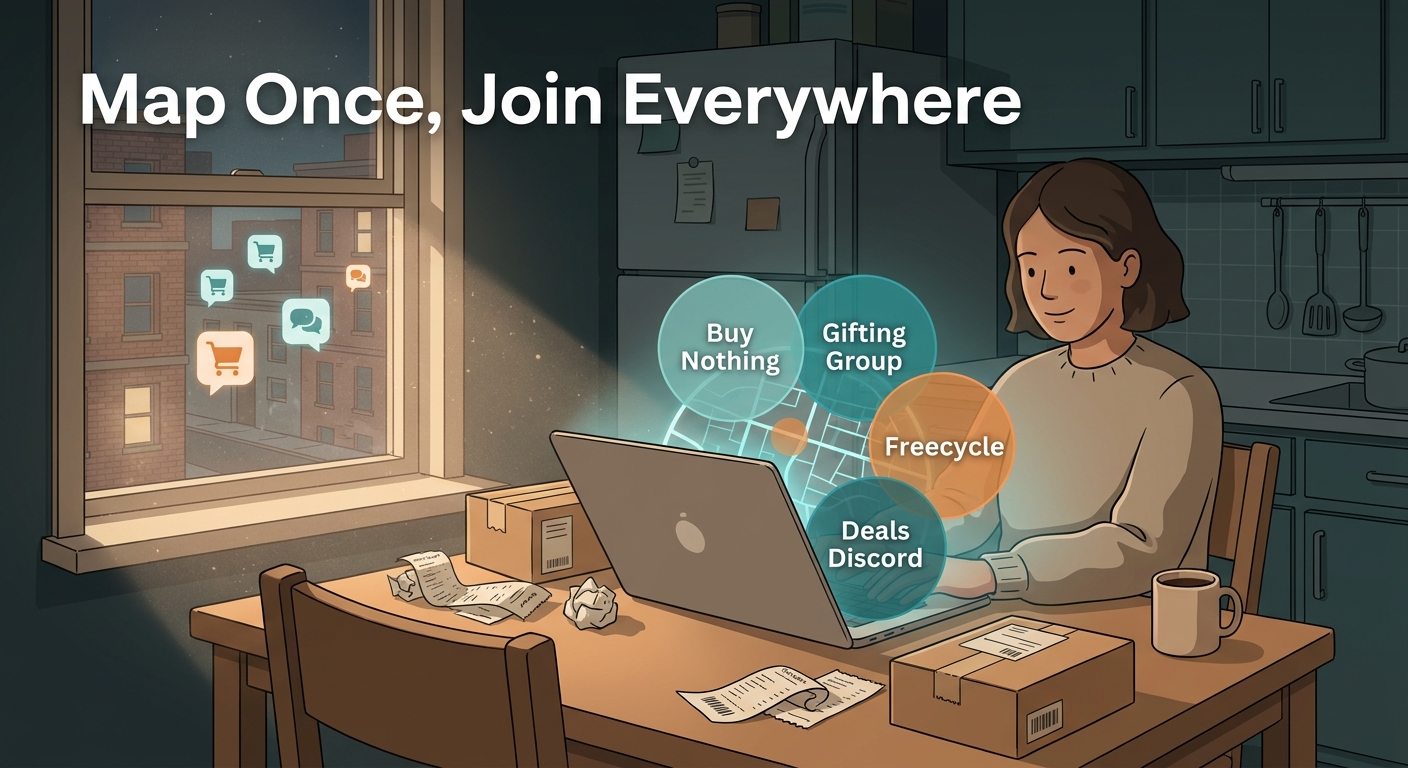
    You are not doing anything wrong if Buy Nothing feels weirdly hard to join. A lot of people search for it, find three abandoned Facebook groups, one app with unclear boundaries, and a pending request that never moves. Meanwhile, someone two streets over is getting a free air fryer, extra diapers, and a heads-up about a grocery gift card promo before it hits the big deal sites. That gap is real. The trick is that “Buy Nothing” is no longer the only name people use. Some groups split off, some moved platforms, and some quietly rebranded as community gifting, neighborhood sharing, or mutual aid swaps. If you want to know how to find and join buy nothing and local gifting groups, stop searching one exact phrase and start building a local map. Once you do that, these groups can act less like random free-stuff pages and more like hidden rebate clubs with real weekly savings.

    ⚡ In a Hurry? Key Takeaways

    • The fastest way to find active groups is to search by your neighborhood plus related names like “Buy Nothing,” “gifting,” “freecycle,” “mutual aid,” and “community sharing,” across Facebook, the Buy Nothing app, Nextdoor, Discord, and Reddit.
    • Join a few small local groups first, then watch for posts about store promos, surplus food, curb alerts, loyalty freebies, and neighborhood referrals that turn free sharing into real savings.
    • Skip any group pushing prepaid card “flips,” Telegram-only deals, or up-front payments. Good local gifting groups do not ask you to buy your way in.

    Why this feels harder than it should

    Ten years ago, you could search one phrase, join one Facebook group, and call it a day. Not anymore.

    Now there is the official Buy Nothing brand, unofficial spin-offs, neighborhood gift circles, school-parent swap groups, church pantry boards, apartment resident chats, and “community help” pages that function like gifting groups even if they never say so.

    That is why basic search results feel incomplete. You are looking for one label, but the real action is spread across five different labels and three platforms.

    It is similar to what happens in mutual aid spaces. If you want another angle on that overlap, The ‘Mutual Aid Shortcut’: Turn Quiet Help Groups Into Real Rebate Circles You Can Join Today explains how community help groups often become practical money-saving circles once you know what to watch for.

    How to find and join buy nothing and local gifting groups

    Step 1: Search your exact area, not just your city

    Start smaller than you think. Search your:

    • Neighborhood name
    • ZIP code
    • Apartment complex name
    • School district
    • Nearby town names

    Use combinations like:

    • “Buy Nothing [neighborhood]”
    • “gifting group [ZIP code]”
    • “community gifting [town name]”
    • “freecycle [city]”
    • “mutual aid [neighborhood]”
    • “free stuff [neighborhood] Facebook”
    • “pay it forward [town]”
    • “curb alert group [city]”

    This matters because many groups are hyper-local. If you search only your big city name, you may miss the active group that uses your subdivision or district instead.

    Step 2: Check more than Facebook

    Facebook still matters, but it is no longer the whole picture. Look in five places:

    • Facebook. Search Groups, not just regular posts.
    • Buy Nothing app. Useful in some areas, dead in others. Worth checking anyway.
    • Nextdoor. Good for curb alerts, food giveaways, and quick local referrals.
    • Reddit. Search your city subreddit for “Buy Nothing,” “free,” “mutual aid,” and “gifting.”
    • Discord. Local deal servers, parent swap servers, and college community servers often share freebies and loyalty promos.

    Do not ignore community bulletin sources either. Library calendars, church newsletters, school PTA pages, and apartment resident portals often point to private groups that search engines never show.

    Step 3: Look for alternate names

    This is the part most people miss.

    A group may do the exact same thing as Buy Nothing and never use those words. Search for:

    • Gifting with Integrity
    • Community Gifting
    • Neighborhood Share
    • Pay Nothing
    • Pay It Forward
    • Everything Free
    • Freecycle
    • Mutual Aid
    • Blessings Group
    • Curb Alert
    • No Sell Group
    • Local Swap

    If a group bans selling but encourages giving, borrowing, sharing leftovers, or posting needs, it can still be useful even if it does not carry the official Buy Nothing label.

    Step 4: Figure out if a group is alive before you apply

    Dead groups waste time. Before you request access, check:

    • How many posts appeared in the last 7 days
    • Whether admins have posted recently
    • How many comments active posts receive
    • Whether people actually mark items as picked up
    • Whether the rules mention a platform move

    If the latest post is from six months ago, move on.

    If the pinned post says “we moved to the app” or “join our Signal/Discord,” follow that trail. This is often where the real community went.

    Step 5: Answer membership questions carefully

    A lot of pending requests sit forever because people rush this part.

    Use your real neighborhood if asked. Agree to the rules clearly. If there is a prompt like “Why do you want to join?” keep it simple: “I live in the area and would like to give and receive locally.”

    Some groups reject profiles that look brand new, fake, or blank. If your Facebook account has no photo, no location, and no friends, that can slow things down.

    You do not need to overshare. Just look like a real local person.

    How these groups become “hidden rebate clubs”

    This is where things get interesting.

    Strictly speaking, gifting groups are not rebate sites. But in real life, they often create rebate-like savings because members pass along things that reduce what you would have spent anyway.

    Common examples include:

    • Unused grocery loyalty rewards
    • Restaurant birthday freebies someone cannot use
    • Baby formula checks and manufacturer coupons
    • Store credit from a return with no receipt
    • Buy one get one offers people want to split
    • Energy-saving kits from utility programs
    • Extra produce from CSA boxes or garden surplus
    • Referral bonuses for internet, power, and delivery apps
    • Free samples and promo bundles from brand ambassadors

    None of that shows up when you keep refreshing Marketplace for cheap furniture. It shows up when you are inside a trusted local group where people know who can use something this week.

    How to connect your local map to real savings this week

    Start with a simple savings map

    Make a note on your phone with five sections:

    • Facebook gifting groups
    • Buy Nothing app groups
    • Nextdoor neighborhoods
    • Local Discord or Reddit communities
    • Cashback and coupon communities

    Add links, membership status, and a quick note like “active,” “slow,” or “dead.”

    Within 30 minutes, you will usually spot which places are worth your time.

    Watch for three kinds of posts

    If your goal is practical savings, do not just look for random free lamps.

    Focus on posts that lower recurring costs:

    • Groceries. Pantry extras, coupon bundles, expiring meal kits, loyalty point giveaways.
    • Energy and home. Fans, blackout curtains, weather strips, free utility kits, spare air filters.
    • Family basics. Diapers, kids clothes, school supplies, unopened toiletries, pet food.

    Those are the items that make a real difference when bills are high.

    Pair local groups with active deal communities

    This is the shortcut.

    Use gifting groups for local trust and fast pickups. Use deal Discords and cashback groups for timing. If a Discord flags a grocery app promo or a utility referral bonus, your local group may be the best place to split extras, pass along bonus items, or find someone with matching loyalty perks.

    For example, if a store is running a “spend $50, get $10 back” promotion, local groups often help people bundle purchases, share category-specific coupons, or move the free extras quickly instead of letting them go to waste.

    What a good group looks like

    You do not need a perfect group. You need one that is active, local, and normal.

    Good signs include:

    • Clear rules about gifting and pickups
    • Regular posts with comments from real people
    • Admins who approve members and remove spam
    • Members posting both offers and requests
    • Specific pickup areas, not vague “DM me” chaos

    Bonus points if the group also shares local tips like which grocery store marks down produce at night, which pharmacy has monthly rewards, or where utility rebates are easiest to claim.

    What to avoid

    There are a few red flags that should send you in the other direction.

    • Anyone asking for money to access “exclusive” freebie channels
    • Telegram groups promising gift card multiplication
    • Posts that ask you to send a verification code
    • Admins who push crypto, prepaid card schemes, or fake mystery shopper offers
    • Groups with endless affiliate links and no real local exchanges

    A healthy gifting group is boring in the best possible way. It is neighbors giving away a toaster, extra tomatoes, and a coupon they cannot use. That is what you want.

    Best first message if you are new

    If you finally get in, do not overthink your first post.

    Try something like:

    “Hi neighbors, I’m new here and nearby. Happy to learn the group rules. I can offer a few unopened pantry items this week, and I’m also keeping an eye out for kids winter gear and any grocery savings tips.”

    That works because it shows you understand the give-and-take of the group. Even if you need more than you can offer right now, starting politely helps people trust you.

    If your area has no active Buy Nothing group

    That does happen.

    If so, build your own mix instead:

    • One local free group
    • One mutual aid group
    • One school or parent swap group
    • One apartment or neighborhood chat
    • One deal or cashback Discord

    Together, that often works better than waiting for one perfect Buy Nothing group to appear.

    At a Glance: Comparison

    Feature/Aspect Details Verdict
    Where to search first Facebook Groups, Buy Nothing app, Nextdoor, local Reddit, and neighborhood Discords searched by exact area name Best approach. Do not rely on one platform.
    Best savings potential Groups that share groceries, household basics, referral bonuses, store promos, and loyalty rewards Highest real-world value for weekly budgets
    Safety and scam risk Low in moderated local groups, much higher in Telegram-only “rebate” channels or pay-to-enter clubs Stick with verified local communities

    Conclusion

    If you have been frustrated trying to figure out how to find and join buy nothing and local gifting groups, the fix is not more searching of the same old phrase. It is a better map. Search by neighborhood, try alternate group names, check multiple platforms, and skip anything that looks dead or sketchy. Energy and grocery prices are still beating people up, and the fastest savings often come from small trusted communities sharing free goods, free upgrades, loyalty points, and local tips under names you would never think to search. Once you connect those groups to active deal Discords and cashback communities, you stop wasting time on dead pages and scammy channels and start finding practical savings you can use this week.

  • The ‘Niche Forum Shortcut’: Turn Quiet Hobby Boards Into Invite‑Only Rebate Clubs You Can Actually Join

    The ‘Niche Forum Shortcut’: Turn Quiet Hobby Boards Into Invite‑Only Rebate Clubs You Can Actually Join

    You can lose a whole evening chasing “rebate groups” on Facebook, Reddit, or TikTok and still come away with nothing but dead links, recycled coupon codes, and a weird feeling that half the comments are fake. That is the frustrating part. The best rebate deals often are not sitting in giant public groups at all. They are tucked inside small hobby forums where people know each other, follow strict posting rules, and share group buys before the deal gets blasted across the internet. If you have been wondering how to find niche forums for group rebate deals, the trick is not searching broader. It is searching narrower. Start with a hobby, product category, or store loyalty angle, then look for quiet boards with active threads, clear moderators, and members who actually report back after a deal works. Those are the places where real savings still happen, and where beginners can join if they know how to read the room first.

    ⚡ In a Hurry? Key Takeaways

    • To find niche forums for group rebate deals, search by hobby or product category, not by the generic phrase “rebate group.”
    • Look for active deal threads, visible moderators, member feedback, and clear rules before you join or post.
    • Small forums can save you more than big social feeds, but only if you avoid off-platform payment requests and sketchy “DM admin” setups.

    Why the best rebate clubs hide in plain sight

    Big platforms are noisy. A good deal gets flooded fast, then the code dies, the stock disappears, or scammers copy the post and swap in their own links.

    Small forums work differently. They are slower, more organized, and usually centered around a real shared interest. Think coffee gear, beauty boxes, board games, home electronics, couponing, baby products, or outdoor gear. A rebate thread inside one of those communities may look boring at first glance. That is often a good sign.

    These boards tend to reward people who read first, follow the rules, and contribute useful updates. That structure is exactly why some of the best collective buying still happens there.

    How to find niche forums for group rebate deals

    Start with the hobby, not the word “rebate”

    If you search only for “rebate forum” or “group buy forum,” you will often get junk results, abandoned sites, or affiliate pages.

    Instead, search like this:

    • “espresso forum group buy”
    • “skincare board coupon thread”
    • “deal forum bulk order beauty”
    • “parenting forum rebate thread”
    • “home theater forum promo code discussion”

    This works because many communities do not label themselves as rebate clubs. They may call it a deals thread, co-op order, vendor specials area, or member savings section.

    Use forum footprints in search

    A few search operators can help you cut through clutter:

    • site: to search within a specific forum domain
    • intitle:forum or inurl:forum to find older-style discussion boards
    • Quoted phrases like “group buy”, “vendor section”, “coupon thread”, or “rebate received”

    For example, searching “group buy” “headphones” forum is often more useful than searching best rebate club.

    Check live community directories too

    If you are tired of joining dead groups, it helps to start with places that track active communities. A useful companion read is The ‘Community Map Shortcut’: Use Live Group Directories To Join Rebate Clubs That Are Actually Active Today. That approach can help you spot communities that are still moving, not just sitting there with old member counts.

    What a trustworthy niche forum looks like

    Good signs

    Before you sign up, spend ten minutes just reading.

    • Recent posts from the past few days or weeks
    • Moderators with visible activity
    • Members reporting, “deal worked,” “rebate received,” or “vendor shipped”
    • A clear rules page
    • Long-running threads with normal back-and-forth discussion
    • Specific vendor names and detailed buying instructions

    The best boards usually feel a little strict. That is not a bug. It is often what keeps spam out.

    Red flags

    • Every thread pushes you to message an admin privately
    • No public feedback from buyers
    • Posts are mostly referral links with no discussion
    • The forum looks active, but all replies are generic
    • Payment is requested through hard-to-reverse methods for no clear reason
    • Members are pressured to act fast without proof

    If a forum has no memory, no regulars, and no receipts, walk away.

    Read the unwritten rules before you try to join the deals

    This is the part many people skip. Then they wonder why nobody answers them.

    Niche forums often have a quiet pecking order. Some deals are open to all members. Others are limited to people with a minimum post count, a paid membership tier, or a record of actual participation. That can feel exclusive, but it is usually there to stop drive-by scammers and resellers.

    So do this first:

    • Read the welcome post
    • Read the deal section rules
    • Check if links are hidden until you log in or post
    • See whether “new member” restrictions apply
    • Look at how experienced members ask questions

    Then keep your first post simple. Thank people. Ask one clear question. Do not jump in demanding codes or asking someone to spoon-feed the process.

    How group-buy threads usually work

    Most niche forum deals are not magical secret coupons. They are organized buying efforts.

    A member, vendor rep, or moderator may start a thread offering:

    • A discount once enough people join
    • A rebate link shared only with forum members
    • Stacking instructions using store coupons plus cashback
    • Early access to a temporary vendor promo
    • Bulk ordering to reduce shipping costs

    The thread usually tells you what to buy, where to buy it, what code to use, and how to claim the rebate. The comments are where the real value sits. That is where members post updates when terms change, stock drops, or a better stack appears.

    How to join without looking suspicious

    Do not arrive asking for the “secret link”

    That is the fastest way to get ignored.

    Instead:

    • Complete your profile if the board allows it
    • Make a couple of normal, on-topic posts
    • Read old deal threads to understand the format
    • Ask whether a thread is still active before placing an order
    • Report back after your purchase

    That last step matters. Communities trust people who close the loop. If you received the rebate, say so. If the code failed, say that too. It helps everyone.

    Simple safety rules that save you from expensive mistakes

    Collective buying can save real money. It also attracts copycats.

    Stick to verifiable steps

    • Use payment methods with buyer protection when possible
    • Screenshot the offer terms before buying
    • Save order numbers, coupon confirmations, and rebate forms
    • Check if the vendor is known inside the community
    • Be cautious with deals that move too quickly into private chat

    Watch for fake urgency

    Real forum deals can be time-sensitive, yes. But trustworthy threads still contain details, history, and follow-up. Scam posts lean heavily on panic. “Last chance.” “Send now.” “Only through me.” That is not how well-run communities usually talk.

    Why these smaller boards often beat mega-groups

    Public social feeds look bigger, but size is not the same as quality. A quiet board with 2,000 serious members can be far more useful than a group of 50,000 people sharing screenshots and broken links.

    Smaller forums often have:

    • Better moderation
    • More detailed deal instructions
    • Less repost spam
    • Stronger memory of which vendors paid out before
    • Members who care about long-term trust

    That is why smart shoppers keep circling back to them.

    At a Glance: Comparison

    Feature/Aspect Details Verdict
    Search method Searching by hobby, product type, and terms like “group buy” or “vendor specials” finds better forums than generic “rebate group” searches. Best starting point
    Forum quality check Look for active members, visible moderation, posted rules, and real buyer feedback in past threads. Worth your time
    Safety Avoid boards that rely on private payment requests, vague instructions, or “DM admin” as the whole process. Proceed carefully or skip

    Conclusion

    If you have been stuck in the social media coupon circus, this is your reminder to look smaller, not louder. Right now the smartest savings are often coming from compact, rules-heavy communities that organize group buys, stack coupons, and quietly share rebate links before the big platforms catch on. Once you know how to identify a trustworthy niche forum, read its unwritten rules, and join existing deal threads without barging in, you can tap into real collective buying power. That means fewer wasted hours, fewer spammy groups, and a much better shot at deals that actually work.

  • The ‘Chamber Shortcut’: Turn Boring Business Memberships Into Real Rebate Clubs You Can Join Locally

    The ‘Chamber Shortcut’: Turn Boring Business Memberships Into Real Rebate Clubs You Can Join Locally

    You have probably walked past your local Chamber of Commerce office, seen the logo on restaurant windows, or heard someone mention a “business association” and thought, good for them, not for me. Fair enough. Most of these groups look like breakfast mixers, ribbon cuttings, and people swapping business cards. Not exactly where a regular shopper would go looking for savings. But here is the part that gets missed. Many chambers, merchant groups, downtown alliances, and trade associations quietly run member-only discounts, preferred vendor deals, cashback offers, gift card promotions, and pooled buying programs. Those perks are often built for small businesses, but they can spill over to families, side hustlers, freelancers, nonprofit volunteers, and neighborhood supporters who know where to look. If you want to learn how to join local chamber buying groups for rebates, the trick is not to think like a corporate buyer. Think like a local. You are looking for shared savings hiding inside a membership wrapper.

    ⚡ In a Hurry? Key Takeaways

    • Yes, you can often access local chamber buying groups for rebates through low-cost memberships, affiliate programs, side-hustle status, or community partner offers.
    • Start by asking chambers and merchant groups one direct question: “Do you offer member discounts, rebate pools, group buying, or preferred vendor pricing for very small businesses or individuals?”
    • Always check the math before joining. A $75 membership that saves you $300 a year is useful. A “discount club” with vague promises is not.

    Why these boring memberships suddenly matter

    Prices are high. Everybody feels it.

    At the same time, local businesses are under pressure. They want repeat customers, not random foot traffic that disappears after one sale. Chambers know this too. They are being pushed to prove they offer something more than coffee meetups and plaques on the wall.

    That is why many of them have quietly added practical member benefits. Think office supply deals, shipping discounts, local gift card bonuses, fuel programs, insurance arrangements, seasonal rebate campaigns, and merchant-to-member specials that can work a lot like a neighborhood rewards club.

    This is not magic. It is just overlooked infrastructure.

    If you liked the idea of turning a dull system into actual savings, the same pattern shows up in utility programs too. A good example is The ‘Utility Portal Shortcut’: Turn Boring Rebate Finders Into Real Community Rebate Groups You Can Join In One Afternoon. The principle is similar. The public-facing page looks dry, but behind it sits a more useful savings network.

    What “chamber buying groups” actually look like in real life

    The phrase sounds more formal than it really is.

    A local chamber buying group might be any of these:

    • A chamber membership that includes discounts from participating local merchants
    • A small business alliance that negotiates lower rates for fuel, printing, internet, payroll, or office supplies
    • A downtown association that runs shop-local cashback events or bonus gift card promotions
    • A trade group that gives members preferred pricing with service providers
    • A merchant coalition that offers bundled rewards if you buy from several local businesses each month

    Some are direct rebates. Some are discounts at checkout. Some are account credits. Some are “buy local” bonuses funded by sponsors or local economic development grants.

    The point is simple. If a group can gather enough members, it can bargain for perks. You do not always have to be a big company to come along for the ride.

    How to join local chamber buying groups for rebates

    1. Stop assuming “business member” means big business

    This is the first mental block to get past.

    Many chambers have tiers for sole proprietors, home businesses, freelancers, independent contractors, nonprofits, retirees who consult part time, and “community supporters.” If you sell on Etsy once in a while, drive for a platform, tutor students, walk dogs, or do occasional bookkeeping, you may already qualify as a tiny business in the eyes of a local group.

    You do not need a skyscraper office and a blazer.

    2. Search wider than just the Chamber of Commerce

    Use searches like:

    • how to join local chamber buying groups for rebates
    • [your town] chamber member discounts
    • [your county] merchant association benefits
    • [your city] small business alliance group purchasing
    • [your town] downtown association member perks
    • [your region] business networking discounts

    Also check:

    • Downtown business associations
    • Main Street programs
    • Local independent business alliances
    • Women in business groups
    • Neighborhood merchant associations
    • Trade groups for hospitality, retail, food service, or contractors

    Sometimes the better savings are not with the biggest organization. They are with the scrappy local group trying hardest to grow.

    3. Ask the one question that gets real answers

    Do not ask, “What are the benefits?” You will get a brochure speech.

    Ask this instead:

    “Do you offer any member-only rebate pools, supplier discounts, local merchant rewards, or group buying programs that would save money for a very small business or household?”

    That wording matters. It pushes people past networking talk and into the practical stuff.

    4. Look for “affiliate” or “community partner” access

    Here is the back door.

    Not every useful perk requires full business membership. Some chambers let nonmembers take part in public shop-local campaigns, local gift card bonuses, co-op buying events, educational memberships, or sponsored discount plans. Others have partnerships with coworking spaces, neighborhood business groups, or nonprofit circles.

    If they say full membership is required, ask if there is:

    • A lower-cost associate tier
    • A nonprofit or home-business tier
    • A first-year discount
    • A seasonal promotion
    • An affiliate membership through another local group

    That is often where the deal gets good enough to make sense.

    5. Do the savings math before you join

    This part is boring. Do it anyway.

    If membership is $120 a year, write down the specific benefits you will actually use. Not the fantasy list. The real one.

    For example:

    • 10 percent off at two local restaurants you already visit
    • Bonus value on local gift card promotions
    • Discounted printing for your side hustle
    • Reduced shipping through a chamber partner
    • Seasonal shop-local cashback weekend

    If that adds up to clear savings, great. If not, skip it.

    The signs a chamber or trade group is worth your time

    You are looking for specifics, not buzzwords.

    Good signs

    • A public page listing actual member discounts
    • Named vendors and local merchant partners
    • Past rebate campaigns with dates and terms
    • Tiered membership prices
    • Clear contact info and someone who answers direct questions
    • Member directories that show active local businesses

    Bad signs

    • Lots of talk about exposure, very little talk about savings
    • No pricing listed anywhere
    • Vague “exclusive offers” with no examples
    • Pressure to join before they explain benefits
    • Perks that are mostly national ads you could find elsewhere

    If a group cannot explain where the value comes from, do not assume it is hidden genius. It may just be thin value.

    Best types of rebates and rewards to hunt for

    Some benefits are much better than others.

    Usually worth a close look

    • Local gift card programs with bonus credit
    • Frequent-shopper programs across several neighborhood businesses
    • Fuel, shipping, printing, and supply discounts for side hustlers
    • Restaurant and service discounts you will genuinely use
    • Seasonal rebate campaigns funded by local sponsors
    • Group insurance or service plans if you are self-employed

    Often less exciting than they sound

    • Generic travel portals
    • Coupon pages full of expired offers
    • National “member savings” sites with no local edge
    • Benefits that require large minimum spending

    The sweet spot is recurring local savings, not flashy one-time coupons.

    A simple strategy that works for regular people

    If you want a practical way in, try this.

    Option 1. Join as a tiny business

    If you have any side income at all, ask about sole proprietor membership. This is the cleanest route.

    Option 2. Join through a spouse, partner, or household business

    Many households already have one qualifying activity. Reselling, consulting, handyman work, tutoring, design work, rideshare driving, and seasonal event work can all count.

    Option 3. Use public-facing local campaigns without full membership

    Some of the best local reward programs are open to everyone during special periods. Think holiday gift card bonuses, restaurant week cashback, local receipt challenges, or “shop five stores and get a reward” events.

    Option 4. Build your own mini rebate club informally

    This is where things get interesting.

    If three or four households all use the same local businesses, ask whether the merchant group has a standing loyalty offer, bulk gift card bonus, or customer club. Local owners are often far more flexible than national chains. They may prefer giving regular customers a predictable reward instead of paying for ads that go nowhere.

    What to say when you contact them

    You do not need to sound fancy. Keep it plain.

    Try this:

    “Hi, I live locally and I also do a little freelance work. I am trying to find out whether your membership includes any rebate programs, group buying discounts, or local merchant rewards that would make sense for a very small business or household. Is there a low-cost tier, trial option, or partner program I should look at?”

    That usually gets you past the generic pitch.

    How local businesses benefit too

    This is not about gaming the system.

    Small businesses need repeat customers they can count on. A chamber-style rebate setup can give them exactly that. Instead of paying a giant app or ad platform every month and hoping strangers show up, they reward a pool of local people who are already nearby and likely to come back.

    That is healthier for everyone. You save on things you already buy. The business gets steadier demand. The chamber gets to prove it does something useful.

    Watch out for these common mistakes

    • Joining before you confirm the benefits are active
    • Paying for a full membership when a lower tier would do
    • Counting networking value if you only care about rebates
    • Ignoring merchant associations that may fit better than the chamber
    • Forgetting to ask whether family or household members can use the perks too

    And one more. Do not overlook old-fashioned phone calls. Some of the best local programs are barely described online.

    At a Glance: Comparison

    Feature/Aspect Details Verdict
    Low-cost chamber or affiliate membership Best if it includes specific merchant discounts, gift card bonuses, or supplier savings you will use often. Usually the smartest entry point
    Public shop-local rebate campaigns Open to nonmembers in many towns, but often seasonal or limited-time. Great bonus, less reliable year-round
    Generic “member savings” portals Can include national offers with weak local value and confusing terms. Worth checking, but do not join for this alone

    Conclusion

    The big idea here is simple. Treat chambers, merchant groups, and small business alliances less like suit-and-tie clubs and more like shared rebate infrastructure. Right now prices are high, small businesses want loyal local customers, and these organizations are under pressure to prove they are useful. That means there are more under-used rebate and rewards arrangements sitting on the table than most people realize. If you learn how to join local chamber buying groups for rebates, you can turn a boring membership into recurring savings that beat random one-off coupons. Better still, your spending stays local and helps businesses build predictable demand instead of throwing money at ads that rarely convert. Ask direct questions, check the math, and start small. There is a good chance your next practical rebate club is already sitting in plain sight on Main Street.

  • The ‘Hidden Wishlist Shortcut’: Turn Price‑Drop Alerts Into Real Rebate Clubs You Can Join Before Checkout

    The ‘Hidden Wishlist Shortcut’: Turn Price‑Drop Alerts Into Real Rebate Clubs You Can Join Before Checkout

    You did the work. You made the wishlist, set the price-drop alert, maybe even installed Honey or bookmarked a retailer’s watchlist. Then a deal finally hits and you rush to buy, feeling pretty smart. A day later, you find out a Facebook group, Discord server, or local buying club grabbed that same item together, stacked a rebate, used a store promo code, and even earned a bonus for buying in a batch. That stings.

    The good news is you do not need to become a full-time coupon hunter to keep up. The trick is to stop treating your alerts like private reminders and start using them as signals you can share with a small group. That is how to use wishlists and price drop alerts to join rebate groups in a way that feels simple, not chaotic. Think of it as turning your solo shopping list into a community watchboard. Once you do that, your alerts stop being just “Hey, this is cheaper now” and start becoming “Is this a deal our rebate pod should jump on together?” That small shift can lead to real savings.

    ⚡ In a Hurry? Key Takeaways

    • Use your wishlist and price alerts as a shared signal, not a solo shopping tool, so you can join rebate groups before you check out.
    • Start a simple watchboard in a group chat, spreadsheet, or Discord channel where people post item links, target prices, rebate options, and deadlines.
    • Stick to trusted groups, verify rebate terms yourself, and never prepay strangers just because a “group deal” sounds urgent.

    Why your current price alerts are only doing half the job

    Most shopping tools are built for one person. Amazon wishlists track items you want. Honey watches for price changes. Store apps send sale alerts. Useful, yes. Complete, not really.

    They tell you when something gets cheaper. They do not tell you whether a group is also buying it, whether the item qualifies for a rebate club push, or whether a bulk purchase unlocks extra rewards somewhere else.

    That gap is where the best savings often hide.

    Plenty of deal communities now watch patterns, not just prices. If several members already want the same air fryer, power station, diapers, or solar kit, the group can move fast when a price drops. One person spots the sale. Another finds a cashback portal. Someone else knows a manufacturer rebate. Suddenly the same deal is worth a lot more.

    What a “rebate club” really looks like

    This does not have to mean a shady online scheme or some giant membership club.

    A rebate club can be as simple as:

    • A family text thread that tracks household staples
    • A neighborhood Facebook group watching appliance deals
    • A Discord channel for tech and home gadget bargains
    • A parent group buying school supplies together
    • A niche hobby community sharing cashback and rebate promos

    The common thread is simple. People are not just posting random coupons. They are coordinating interest before purchase so they can act together when the numbers line up.

    How to use wishlists and price drop alerts to join rebate groups

    Step 1: Sort your list into “solo buy” and “group buy” items

    Not every product needs a club. A phone case or a cable, probably not. Bigger-ticket items and repeat-purchase products are where group coordination helps most.

    Good group-buy candidates include:

    • Small appliances
    • Cleaning products and household bundles
    • Baby gear and supplies
    • Outdoor equipment
    • Tools
    • Solar panels, batteries, or power stations
    • Bin-store or liquidation haul targets

    Once you label those items, you know which alerts should be shared right away instead of acted on alone.

    Step 2: Build a shared watchboard

    This is the hidden shortcut. Do not just forward random screenshots when prices drop. Make one place where people can quickly judge whether a deal is worth acting on.

    Your watchboard can be:

    • A shared Google Sheet
    • A pinned note in a group chat
    • A Discord channel with a simple format
    • A Trello board if your group likes cards and lists

    Keep the columns or fields basic:

    • Item name
    • Store link
    • Current price
    • Normal price
    • Target buy price
    • Rebate or cashback options
    • End date
    • How many people are interested
    • Who is verifying the deal

    That one change turns scattered alerts into something useful and shared.

    Step 3: Post the alert before you buy

    This part matters more than people think.

    When an alert comes in, your first instinct is to check out fast. Sometimes that is smart. But if you always buy first and tell people later, you miss the chance to stack anything extra.

    Instead, post the item to the watchboard with a short note:

    “Instant Pot down to $69 at Target. Usually $99. 15 percent cashback on one portal. Anyone else tracking this? Rebate deadline tonight.”

    Now the group can react. Maybe nobody cares. Fine, buy it yourself. But maybe three people say they were waiting too, and someone spots a same-day manufacturer rebate you missed.

    Step 4: Create a tiny “rebate pod” for fast action

    Big groups are noisy. Tiny pods get things done.

    A rebate pod is just a small set of people inside the larger group who want the same category of deals. Think:

    • Home and kitchen pod
    • Baby and family pod
    • Tech gadget pod
    • Solar and backup power pod

    When a relevant alert hits, you do not have to shout into a crowd of 500 people. You ping the 5 to 12 people who actually care.

    That keeps the process quick and sane.

    How buying clubs quietly get better deals than solo shoppers

    They combine different kinds of savings

    A price drop by itself is just one layer. Clubs often stack:

    • Store sale price
    • Coupon code
    • Cashback portal
    • Credit card offer
    • Manufacturer rebate
    • Loyalty points
    • Bulk or threshold bonuses

    One person rarely sees all of that in time. A group often does.

    They spot patterns early

    If a bunch of members have the same item on a wishlist, the group learns what categories are “hot” before the sale even starts. That means people know where to watch and what counts as a real buy point.

    This is especially useful for seasonal products, warehouse markdowns, and niche promos that come and go fast.

    They reduce panic buying

    Oddly enough, a good group can help you spend less, not more.

    Why? Because the watchboard gives context. Instead of thinking, “It dropped 18 percent, I must buy now,” you can see whether others think it is actually a strong deal or just a normal fake sale cycle.

    What tools work best for this

    Amazon wishlists

    Still handy for long-term tracking and sharing product intent. If several people keep adding similar items, that is a clue for a future group move.

    Honey, CamelCamelCamel, and retailer alerts

    Good for catching the drop itself. Not enough on their own, but very useful as your trigger.

    Google Sheets

    Honestly, this is still one of the best choices. It is boring, but boring works. Everyone can see the same information, and it is easy to sort by deadline or discount.

    Discord or Slack

    Best for active communities. You can create channels by category, pin rules, and tag pods when a rebate window is short.

    Cashback and rebate apps

    Apps like Rakuten, Ibotta, Fetch, Shopmium, or retailer-specific rewards can be the extra layer that turns a decent discount into a really good one. The group does not need to use the same app. It just helps if members compare what is available.

    Rules that keep a rebate group useful instead of annoying

    Every good deal group needs a few simple rules.

    Rule 1: Post facts, not hype

    Use the actual current price, normal price, expiration time, and rebate terms. “Run!!!!” is not data.

    Rule 2: Mark deals as verified or unverified

    If someone personally checked out with the stack working, label it verified. If it is only a possible combo, say that clearly.

    Rule 3: Track final cost

    The sticker price is not the same as the real price after rebate, shipping, taxes, or minimum spend requirements.

    Rule 4: Keep categories separated

    If your dishwasher pod has to read through gaming headset chatter, people will mute the group and miss the good stuff.

    Rule 5: Do not turn every deal into peer pressure

    A healthy buying club helps people save on things they already wanted. It should not push people into buying junk because everyone else is excited.

    Red flags to watch for

    This part is important. “Group savings” can attract nonsense.

    • Anyone asking you to send money to them personally for a shared order
    • Deals with vague rebate terms and no official landing page
    • Urgent claims that cannot be verified anywhere else
    • Groups that hide all details until after you join or pay
    • “Guaranteed profit” resale claims tied to bulk buys

    If it is a real rebate or cashback offer, you should be able to read the terms yourself. If you cannot, slow down.

    A simple example of the system in action

    Let’s say you have a price alert set for a countertop ice maker.

    Normally, your process is simple. Alert goes off. You buy.

    With a watchboard, it looks more like this:

    • Your Amazon or retailer alert says the item dropped from $129 to $89
    • You post it to the home appliance pod
    • Two other members say they were watching the same model
    • One member finds 10 percent cashback through a portal
    • Another spots a store card offer for $15 back on $75+
    • Someone else confirms the manufacturer has a mail-in rebate ending that night

    Now the final cost is far lower than the sale price alone. Same product. Same drop. Better result because the signal was shared before checkout.

    Why this matters more while prices are still high

    When money is tight, random coupon hunting gets exhausting fast. Most people do not need more noise. They need a cleaner system.

    That is what makes this approach so useful. You are not trying to become an extreme deal hunter. You are building a small process around things you already do. Keep a wishlist. Watch for drops. Share the signal. Let the pod check for extra layers. Buy only when the numbers make sense.

    It is practical. It saves time. And it helps normal people stop missing the deals that communities have been quietly catching together.

    At a Glance: Comparison

    Feature/Aspect Details Verdict
    Solo price alerts Fast and easy, but usually limited to the sale price you spot yourself Good starting point, but often leaves savings on the table
    Shared watchboard Combines alerts, target prices, interest levels, and rebate deadlines in one place Best low-stress upgrade for most shoppers
    Small rebate pods Category-focused mini groups that can verify stacks and act quickly Best for turning alerts into real savings before checkout

    Conclusion

    You are already closer than you think. If you have wishlists, price-drop alerts, or saved items in retailer apps, you already have the raw material. The next step is just to share those signals in a smarter way. Right now, deal communities, cook groups, and buying clubs are quietly using collective buying data and wishlists to decide what to pounce on together, from bin-store hauls to solar group buys and niche rebate promos. When everyday shoppers turn scattered alerts into a shared watchboard, then funnel those into small rebate pods, the result is immediate, practical savings. Just as important, it builds calmer, healthier communities around Rebate Clubs instead of the usual noisy one-off coupon posts. That is a much better way to shop when prices still feel stubbornly high.

  • The ‘Utility Rebate Squad’ Shortcut: Turn Boring Bill Inserts Into Real Community Rebate Groups You Can Join This Month

    The ‘Utility Rebate Squad’ Shortcut: Turn Boring Bill Inserts Into Real Community Rebate Groups You Can Join This Month

    You are not imagining it. Utility rebate sites really do feel like they were designed to make normal people give up by page two. One click takes you to a PDF. The PDF sends you to a contractor list. The contractor list is out of date. Then you find out there was a neighborhood heat pump campaign, a city insulation bonus, or a solar group buy that ended last month and somehow nobody told you. That is the frustrating part. The best deals are often not sitting in plain view on the official site. They are being used by organized local groups that already figured out which forms matter, which installers actually return calls, and which rebates can be stacked together. If you want to know how to join local utility rebate group buy programs without spending your weekend decoding fine print, the shortcut is simple. Follow the paper trail from those boring bill inserts and utility notices to the real people already doing it together.

    ⚡ In a Hurry? Key Takeaways

    • To join a local utility rebate group buy, start with your utility, city sustainability office, and neighborhood energy groups, then look for terms like “bulk purchase,” “community campaign,” “heat pump challenge,” or “solarize.”
    • The fastest route is not filling out every form alone. It is finding an existing local organizer, webinar, Facebook group, or sign-up page where neighbors share approved contractors and rebate steps.
    • Always confirm who handles permits, rebate paperwork, and payment terms before you sign. A real group buy should make the process clearer, not murkier.

    Why the boring utility insert is sometimes the gold mine

    Most people toss bill inserts without reading them. Fair enough. They look like filler.

    But tucked inside those mailers, account alerts, and “efficiency updates” are often the first signs of something better than a one-off rebate. You might see a line about a pilot program, a limited-time neighborhood campaign, a workshop, or a partner organization running outreach in specific ZIP codes.

    That matters because many of the best savings do not work like a coupon. They work like a club. A city, utility, nonprofit, or clean-energy group rounds up interested homeowners, negotiates pricing with a short list of installers, and helps everyone move through the rebate paperwork together.

    If this sounds familiar, it connects nicely with The ‘Utility Portal Shortcut’: Turn Boring Rebate Finders Into Real Community Rebate Groups You Can Join In One Afternoon. The same basic idea applies here. The official portal is rarely the destination. It is the trailhead.

    How to join local utility rebate group buy programs without guessing

    1. Start with the utility, but do not stop there

    Go to your electric or gas utility website and search for these phrases:

    • community solar
    • heat pump campaign
    • group purchase
    • bulk buy
    • solarize
    • home electrification program
    • neighborhood rebate
    • approved contractor network

    Then check the “events,” “partners,” and “energy efficiency” sections. That is where group programs often hide.

    If the utility page looks thin, move to your city or county website. Sustainability offices, housing departments, and climate action teams often promote local campaigns better than utilities do.

    2. Look for the organizer, not just the rebate

    This is the key step. A rebate by itself is just a discount with homework attached. A group buy has an organizer.

    That organizer may be:

    • a neighborhood association
    • a local nonprofit
    • a city energy office
    • a clean-energy co-op
    • a community Facebook group
    • a library workshop host

    Once you find the organizer, you usually find the real value. That is where people share installer experiences, compare quotes, and explain which forms were approved.

    3. Search by program style, not just by product

    If you only search “heat pump rebate near me,” you will mostly get generic landing pages.

    Try searches like:

    • how to join local utility rebate group buy
    • [your town] heat pump group buy
    • [your county] solarize campaign
    • [your utility name] community rebate pilot
    • [your city] bulk insulation program
    • [your state] neighborhood electrification campaign

    The wording matters. Group offers are often described as campaigns, cohorts, challenges, or community purchasing programs.

    What a real rebate group buy usually looks like

    A legitimate local group buy is usually pretty easy to spot once you know the signs.

    Good signs

    • A clear list of participating contractors
    • Published deadlines and ZIP code eligibility
    • A webinar, info session, or FAQ page
    • Step-by-step rebate instructions
    • Contact information for a local coordinator
    • Pricing language such as “pre-negotiated,” “discounted tiers,” or “bulk rate”

    Red flags

    • Pressure to sign immediately
    • No written explanation of pricing
    • No mention of permits or inspections
    • Vague claims about “maximum rebates” with no program names
    • Contractors who are not listed by the utility or city partner when they claim to be

    A good group buy should make things simpler. It should not feel like another layer of confusion.

    Why neighbors often get better deals than solo shoppers

    This is the part many people miss.

    Installers like predictable work. If a neighborhood group can bring in ten heat pump leads instead of one, or twenty solar consultations instead of three random calls, the installer may offer:

    • lower pricing
    • faster scheduling
    • reduced site visit fees
    • standardized package options
    • extra help with forms

    Sometimes the bonus is not even in the sticker price. It is in the reduced friction. Fewer missed documents. Fewer surprise change orders. Fewer people getting stuck at the “pending approval” stage because someone in the group already knows what the utility actually wants attached.

    Best places to find active local rebate clubs this month

    Utility newsletters and account dashboards

    Check the messages inside your online account, not just the rebate page. Pilot campaigns are often announced there first.

    City sustainability departments

    These teams often run seasonal electrification events and group sign-ups. Search your city name plus “sustainability heat pump” or “solarize.”

    Libraries and community centers

    Not glamorous, but effective. Local info sessions happen here all the time, especially for energy audits, weatherization, and solar education nights.

    Neighborhood social groups

    Facebook, Nextdoor, and local email lists can be surprisingly useful if you search the group history for “rebate,” “heat pump,” “solar,” or “insulation.” You are looking for the person who already posted, “We just did this and here’s how.”

    Nonprofits and co-ops

    Many areas have energy co-ops or climate nonprofits that run campaigns with vetted installers. They are often better at hand-holding than official agencies.

    Questions to ask before you join

    You do not need to be an expert. You just need to ask a few plain-English questions.

    • Is this a real group purchase, or just a referral list?
    • Which rebates are included, and which ones are my job to apply for?
    • Are the contractors pre-vetted by the utility, city, or organizer?
    • Who handles permits and inspections?
    • Can I still get multiple quotes?
    • Are there income-based bonuses or stackable incentives?
    • What happens if the rebate funds run out before my install date?
    • Is there a deadline to reserve pricing?

    If the organizer can answer these clearly, that is a very good sign.

    How to keep the paperwork from taking over your life

    Here is the practical part.

    Make one simple rebate folder

    Use a physical folder or a cloud folder with these items:

    • utility account number
    • photos of current equipment
    • quotes and contracts
    • proof of purchase
    • AHRI or model numbers for equipment
    • permit and inspection documents
    • screenshots of rebate pages and deadlines

    Get promises in writing

    If a contractor says “we handle the rebate,” ask exactly which rebate, which form, and when it gets submitted.

    Save the program page

    Rebate terms change. Deadlines move. Bonus incentives disappear. Save a PDF or screenshot of the offer you joined.

    Who benefits most from these local group buys

    They are especially useful for:

    • busy homeowners who do not want to compare twelve random contractors
    • first-time solar or heat pump shoppers
    • people in older homes who need insulation, air sealing, or panel upgrades
    • neighbors in towns running short-term pilot programs
    • anyone who gets overwhelmed by rebate fine print

    If you enjoy doing every detail yourself, you may still prefer a solo route. But for many households, joining a local group buy is the difference between “we should do this someday” and actually getting it done.

    At a Glance: Comparison

    Feature/Aspect Details Verdict
    Going solo through rebate portals You control every step, but you also do all the searching, quote-checking, and paperwork interpretation yourself. Works for detail-oriented shoppers, but often slower and more frustrating.
    Joining a local utility rebate group buy Neighbors share installers, group pricing, deadlines, and rebate tips. Some programs include organizer support. Usually the best mix of savings, speed, and less admin.
    Using random contractor ads Easy to find online, but quality and rebate knowledge can vary a lot. Many ads are lead generators, not local experts. Use caution. Verify claims before signing anything.

    Conclusion

    You do not need to become a rebate detective to save real money. Right now, energy and home-upgrade costs are hammering household budgets, and at the same time utilities, cities, and climate programs are quietly rolling out pilot rebates, group-purchase bonuses, and community heat pump or solar campaigns that most people never make it far enough to find. The smart move is not just “search the portal harder.” It is to piggyback on organized neighbors who already know the path, already have installer lists, and already understand the paperwork. That means faster approval, less admin, and a better shot at bigger savings. For readers in the Rebate Clubs community, that is the real shortcut. Find the people behind the program, join the group, and let the maze get smaller.

  • The ‘Hidden Hashtag Shortcut’: Turn Random Social Posts Into Invite‑Only Rebate Clubs You Can Join Tonight

    The ‘Hidden Hashtag Shortcut’: Turn Random Social Posts Into Invite‑Only Rebate Clubs You Can Join Tonight

    You are not imagining it. You see someone on X, TikTok, or Facebook showing off a near-free order, a stack of rebate receipts, or a “crazy haul” they got for pennies, and when you try to follow the trail, it goes cold fast. The public post is there. The code might be there. But the real group behind it seems to have vanished. That is the frustrating part. It feels like everyone else got a side door and you got stuck pressing your face against the glass. The good news is that these groups usually are not invisible. They are just hiding in plain sight behind small hashtag patterns, repeated phrases, and comment trails most people never think to search. If you know what to look for, you can often trace a random flex post back to the invite-only rebate circle that planned it, then introduce yourself in a way that gets a reply instead of a block.

    ⚡ In a Hurry? Key Takeaways

    • The fastest way to find private rebate groups through social media hashtags is to track repeated tags, phrases, and commenter overlap across several deal posts, not just copy the coupon code.
    • Search the same 2 or 3 hashtags on each platform, then filter by recent posts, groups, live videos, and comments to find the host chat or feeder community.
    • Be careful with any group that asks for upfront payment, account logins, or gift cards. Real rebate crews usually want active contributors, not blind trust.

    The trick is not the hashtag by itself

    Most people type one hashtag into search, find a mess of unrelated posts, and give up.

    The better move is to treat hashtags like breadcrumbs. One tag rarely tells the whole story. Two or three repeated together usually do.

    Here is what often happens. A small rebate club coordinates a buy in a private Facebook group, Telegram chat, Discord server, or group DM. One or two members then post the results publicly on TikTok, X, or a local deals thread. To avoid flooding the group with strangers, they do not name the club directly. Instead, they leave little tells.

    Those tells are what you are hunting.

    The 3 signs a post probably came from a real rebate crew

    1. The same odd hashtag mix shows up more than once

    Look for combinations, not single tags.

    Generic tags like #deals, #couponing, or #rebate are too broad to help much. But a stack like #clearancefinds + #rebatehaul + #runwalkdonotrun, or #dealdump + #stackedoffer + #receiptapproved, is much more useful.

    If you keep seeing the same unusual mix across different accounts, that is a signal. It often means people are copying the language of the same private group.

    2. The caption sounds like insider shorthand

    Watch for phrases such as:

    • “Round 2 went live”
    • “Check comments for host”
    • “Same stack as last night’s live”
    • “Ask before posting stores”
    • “Crew already cleared this one”
    • “Waiting on receipt wave”

    Normal bargain hunters do not usually talk like that. Groups coordinating a buy often do.

    3. The same people keep appearing in comments

    This is the easiest clue to miss.

    If three or four usernames show up under multiple rebate-flex posts saying things like “mine tracked,” “host said limit 3,” or “next round tomorrow,” click those profiles. You are not stalking. You are following a public comment trail back to the source.

    Your Hidden Hashtag Shortcut for tonight

    If you want a simple answer to how to find private rebate groups through social media hashtags, use this four-step pattern.

    Step 1. Save one suspiciously good post

    Pick a post that looks coordinated, not random. Good examples:

    • A TikTok haul with exact totals and multiple matching receipts
    • An X post showing a rebate screenshot with comments full of “approved”
    • A Facebook clearance post where several people say they got the same deal in different stores

    You want a post with activity, not just a brag.

    Step 2. Pull out the repeat signals

    Write down:

    • 2 or 3 hashtags
    • Any odd phrase in the caption
    • Usernames that keep commenting
    • A product name plus a store name

    This takes two minutes. It saves a lot of random searching later.

    Step 3. Search the signals separately, then together

    This is where most people get better results fast.

    Do not just search #rebatehaul. Try these combinations:

    • #rebatehaul + “round 2”
    • #dealdump + store name
    • product name + “receipt approved”
    • commenter username + hashtag

    You are trying to find the feeder post, the live stream, or the community thread where the public flex first started.

    Step 4. Check where the conversation gets more specific

    Public posts are vague. Real groups get specific.

    When you find a thread where people mention limits, timing, zip codes, host approval, store matchups, or “next drop,” you are getting warm. That usually means there is a private organizing space nearby.

    How to search each platform without wasting an hour

    TikTok

    TikTok is great for discovering new rebate circles because people post hauls quickly, often right after a live shopping session.

    Use Search, then:

    • Search hashtag pairs, not one hashtag alone
    • Tap Videos, then filter by This Week if available
    • Check captions for phrases like “live tonight,” “comment club,” or “message host”
    • Open the creator’s profile and look for link-in-bio tools, backup accounts, or recent lives
    • Read pinned comments. They often hint at the real gathering place

    One useful clue on TikTok is when several creators use almost the same wording in different videos. That usually means they got the deal instructions from the same source.

    X

    X is messy, but it can still be good for tracing a rebate wave.

    Search for the hashtag, then switch to Latest. After that:

    • Search the exact caption phrase in quotes
    • Search replies, not just main posts
    • Click profiles with repeated deal posts and look for Telegram, Discord, or private group invites in bios
    • Check quote posts. People often reveal more there than in the original thread

    X is especially useful for finding overlap. If the same five accounts boost one another’s deals, there is a good chance they are in a shared chat somewhere.

    Facebook

    Facebook is still one of the best places for local “deal dump” threads and hidden rebate groups.

    Use the main search bar, then filter by:

    • Groups
    • Posts
    • Recent date ranges
    • Your local area, if the deal looks store-specific

    Search the hashtag, but also search the phrase itself without the hashtag. Many group admins strip hashtags from titles but keep the same wording in post descriptions.

    If a public post says “details in group” or “approved in sister group,” click the poster’s profile and see which public groups they interact with. Private groups often have public feeder groups attached to them.

    The DM that gets you welcomed instead of ignored

    This part matters more than people think.

    If you message “Invite?” or “Add me plz,” you sound like someone who wants the discount without helping the group. That is the fastest way to get skipped.

    A better message is short, polite, and shows you did your homework.

    Try this DM template

    “Hi, I found your post from the [hashtag/phrase] thread and noticed a few people mentioning the same rebate round. I do store deal hunting in [your area] and can share stock finds and receipt results if your group is taking new members. If not, no worries. Thanks for posting the lead.”

    Why this works:

    • It explains where you found them
    • It shows you noticed the pattern
    • It offers value back
    • It does not sound entitled

    That last part is huge. Private rebate clubs are often flooded with lurkers. They tend to open up for people who can contribute local store checks, timing updates, or proof that a rebate tracked correctly.

    How to tell the difference between a real group and a sketchy one

    Not every invite-only circle is worth joining.

    Green flags

    • Members share timing, stock updates, and receipt results openly inside the group
    • Admins explain basic rules clearly
    • No one asks for your shopping account password
    • People discuss failed rebates too, not just wins
    • The group has some normal conversation, not just hype

    Red flags

    • They ask for an upfront fee before you can even see what the group does
    • They want gift cards, crypto, or direct transfers for “guaranteed” deals
    • They pressure you to use someone else’s account
    • Every post sounds urgent and vague at the same time
    • No one will explain how the rebate actually works

    If a group seems built around secrecy more than savings, walk away.

    Why small local threads are gold mines

    The biggest national coupon pages get all the attention. But many of the best rebate groups start smaller.

    Look at:

    • Neighborhood Facebook deal threads
    • Regional clearance groups
    • TikTok creators who focus on one store chain in one state
    • X accounts that post store-specific markdowns

    These communities often coordinate faster because members are shopping the same stores. If you can report back on what is in stock in your town, you become useful fast. That is often what turns one invite into several more.

    What to do after you get in

    Do not join and go silent.

    The easiest way to stay in good standing is to contribute something small within the first few days:

    • Post a shelf photo
    • Share whether a rebate tracked correctly
    • Report a store limit
    • Confirm whether a live-shopping item matched the posted deal

    You do not need to be the hero of the group. You just need to be helpful.

    That is how you move from outsider to regular, and regulars are the people who hear about the next round before it hits the public feed.

    At a Glance: Comparison

    Feature/Aspect Details Verdict
    Hashtag searching Best when you search pairs of tags and combine them with insider phrases or commenter names Useful starting point, but only if you go beyond one broad tag
    Platform filters Recent posts, groups, live videos, and comments help surface the host community much faster Very effective. This is where the real shortcut happens
    Direct messages to hosts Short, respectful messages that offer local info or receipt feedback get better responses than blunt invite requests Worth doing, especially after you have traced the right group

    Conclusion

    The real trick is to stop treating those social posts like the deal itself. They are usually just the tip of it. Right now, the fastest-growing rebate and buying groups are spinning up out of live shopping streams, clearance-haul posts, and local deal-dump threads, not from official portals or brand websites. Most people scroll past, maybe copy a code, and move on. The smarter move is to trace the post back to the small, invite-only circle that coordinated the buy in the first place. Once you know how to spot the recurring hashtags, insider phrasing, and commenter overlap, you can use platform search filters to find the host group or chat and send a DM that makes you sound helpful, not nosy. That shift matters. It moves you from chasing random discounts in your feed to joining the small communities where prices are coordinated, quantities are tracked, and the next rebate round gets planned before it goes public. That means better savings, earlier access, and a much better shot at getting invited back.

  • The ‘Utility Portal Shortcut’: Turn Boring Rebate Finders Into Real Community Rebate Groups You Can Join In One Afternoon

    The ‘Utility Portal Shortcut’: Turn Boring Rebate Finders Into Real Community Rebate Groups You Can Join In One Afternoon

    Most people use a utility rebate portal once, grab a coupon for a smart thermostat or efficient washer, and forget it exists. I get it. Those sites are usually dull, clunky, and about as inviting as a tax form. But that boring little portal is often the front door to something much more useful. It is where utilities, state energy offices, approved contractors, and local nonprofits quietly gather people who all want the same thing. Lower bills, better equipment, and a discount that actually feels worth the paperwork. If you have been wondering how to find local rebate groups through utility portals, the trick is not just searching for products. It is following the sign-up trails around webinars, contractor lists, pilot programs, and community partner pages. In one afternoon, you can turn a lonely one-time rebate search into a real local savings group with enough people to ask for better deals, faster installs, and access to limited programs before they fill up.

    ⚡ In a Hurry? Key Takeaways

    • Utility rebate portals can help you find real local rebate groups if you look beyond the one-time discount and join related webinars, waitlists, and partner lists.
    • Start by searching your utility site for words like “community,” “contractor network,” “pilot program,” and “workshop,” then connect with other applicants through those channels.
    • Stick with utility-approved programs and local organizers. You get safer, more legit group-buy options than you usually find on random social media posts.

    Why the rebate portal is more useful than it looks

    Most utility portals are built to move lots of households through the same process. That sounds boring because it is boring. But it also means one important thing. There is a steady stream of people in your area looking at the same heat pumps, insulation upgrades, water heaters, EV chargers, or small-business energy improvements.

    That traffic creates a quiet meeting point.

    Utilities and their partners often need enrollment numbers to make programs work. Contractors want full calendars in one neighborhood. Community groups want enough interest to host an info session. Program managers want pilot programs to fill quickly. That is where you come in.

    Instead of treating the portal like a vending machine for one coupon, treat it like a map. The rebate itself is only one marker. The real gold is in the side paths.

    How to find local rebate groups through utility portals

    1. Start with the rebate finder, then click past it

    Search your electric, gas, water, or state energy portal for the item you care about. Fine. Do that first. But once you land on the rebate page, stop thinking like a shopper and start thinking like a neighbor.

    Look for links and labels like:

    • Approved contractor network
    • Upcoming webinar
    • Program orientation
    • Neighborhood pilot
    • Income-qualified assistance
    • Community partner
    • Trade ally list
    • Waitlist or interest form
    • Multifamily or small-business outreach

    These are often the places where real groups form.

    2. Join every legit list connected to your upgrade

    If you are interested in a heat pump, do not just download the rebate PDF. Join the heat pump webinar. Fill out the contractor referral form. Add your name to the “notify me” list for future rounds. Sign up for the utility newsletter if it is specific to energy upgrades, not just general marketing.

    Why? Because those emails often mention local events, installer shortages, bonus incentives, or “limited enrollment” programs before the wider public sees them.

    That is also where organizers quietly invite people to coordinate.

    3. Look for community partner pages

    This is the part many people miss. Utilities often work with libraries, town sustainability offices, neighborhood associations, chambers of commerce, and nonprofit energy groups. A “community partners” page may look like boilerplate. It is not.

    It tells you who is already helping residents sign up in batches.

    If one nonprofit is hosting a home-energy workshop and another is collecting interest in appliance swaps, those groups already have your future rebate buddies.

    4. Check event pages, not just rebate pages

    Sometimes the best rebate group does not appear under “rebates” at all. It shows up under “events,” “education,” or “ways to save.”

    That is where you find:

    • Virtual Q&A sessions with approved installers
    • Bulk-purchase campaigns for smart thermostats or LEDs
    • Small-business energy coaching sessions
    • Town-by-town building electrification workshops
    • Enrollment drives for weatherization or demand-response programs

    Every one of those is a chance to find people who are already halfway to joining a group buy.

    5. Use contractor waitlists as a signal

    This sounds backward, but a long waitlist can be useful. If two or three utility-approved contractors are booked in your area, that usually means strong local demand. Ask whether they are scheduling by neighborhood, building type, or product category.

    Then ask a simple question: “If a few nearby households wanted quotes at the same time, do you offer group pricing or priority scheduling?”

    You are not asking for anything weird. Contractors hear this all the time in better-organized programs. They like efficient routing and larger blocks of work.

    The one-afternoon method

    If you want a simple plan, here it is.

    Hour 1: Build your local list

    • Visit your electric and gas utility websites
    • Search for your target rebate, such as heat pump, EV charger, insulation, fridge, or lighting
    • Open every related page in a new tab
    • Save names of approved contractors, webinar pages, and community partners
    • Write down deadlines and “interest form” links

    Hour 2: Join the side channels

    • Register for upcoming webinars or workshops
    • Join contractor waitlists
    • Subscribe to upgrade-specific newsletters
    • Fill out interest forms for pilot or early-access programs
    • Check whether your town or county sustainability office appears on any page

    Hour 3: Start the group

    • Email one or two community partners and ask if they know of current neighborhood sign-up efforts
    • Ask approved contractors whether they do multi-home estimates or block scheduling
    • Post a short note in your HOA, local parent group, neighborhood email list, or small-business association saying you are collecting interest from people using the same utility program
    • Create a simple shared form with name, ZIP code, upgrade interest, and utility provider

    That is enough to go from solo rebate hunter to organizer of a very practical local rebate group.

    What makes this better than social media hunting

    Social media is noisy. Utility-connected channels are boring, but clean. People coming through a utility portal already trust the provider, already live nearby, and already have some interest in the same upgrade.

    That matters.

    You are not trying to convince random strangers that a rebate is real. You are gathering people who have already started the paperwork. That saves time and cuts down on the usual “is this a scam?” mess.

    If you want another route that works in a similar way, take a look at The ‘City Rebate Roundtable’ Shortcut: Turn Boring Public Purchasing Co‑ops Into Real Rebate Clubs You Can Join. It shows how other dull public systems can also hide very useful group-saving paths.

    Where the best group-buy opportunities usually show up

    Heat pumps and HVAC

    These are big-ticket upgrades, so people are highly motivated. Utilities often run webinars, preferred installer programs, and seasonal enrollment drives. If enough homes in one area sign up, installers may be more flexible on pricing, audit fees, or scheduling.

    Appliances

    Refrigerators, washers, dryers, and induction ranges often have rotating rebates. Community workshops and retailer partnerships can reveal times when bonus offers stack. A local group can compare approved models and avoid buying the one that looks good but does not qualify.

    EV chargers

    These programs often connect homeowners, condo boards, and small businesses. That makes them ideal for group planning, especially if several neighbors need electricians at once.

    Small-business energy upgrades

    This is a sleeper category. Many local businesses are dealing with higher utility bills and are suddenly interested in lighting, refrigeration, controls, and HVAC rebates. Chambers of commerce and business improvement groups sometimes work directly with utilities. That can turn into a very effective local rebate cluster fast.

    How to tell if a rebate group is legit

    Not every “energy savings club” is worth your time. Keep it simple.

    • Does the group point back to a real utility, state, or municipal program?
    • Are the contractors listed as approved or participating vendors?
    • Are deadlines, terms, and rebate amounts easy to verify on an official page?
    • Is the organizer a known local nonprofit, town office, library, business association, or neighborhood group?
    • Can you apply directly through the official program if you want to?

    If the answer to most of those is yes, you are in much safer territory.

    Small moves that make your group more useful

    Pick one upgrade first

    Do not start with “all rebates for everyone.” That gets messy fast. Start with one category, like heat pumps or smart thermostats.

    Use a shared deadline

    If a bonus incentive ends next month, use that as your rally point. Deadlines get people moving.

    Collect only basic information

    Name, contact info, ZIP code, utility provider, and upgrade interest are enough at first. You do not need anyone’s account number or income documents just to gauge interest.

    Stay local

    A group spread across three counties sounds bigger, but it is usually less useful. Contractors and community organizers prefer tighter clusters.

    At a Glance: Comparison

    Feature/Aspect Details Verdict
    One-time rebate search Fast and simple, but usually ends with a single discount and no ongoing connection to other savers. Fine for quick savings, weak for bigger group opportunities.
    Utility portal plus webinars and partner lists Takes a little more clicking, but helps you find local organizers, approved contractors, and people with the same upgrade goals. Best path for finding legit local rebate groups.
    Random social media deal hunting Can surface tips, but often full of outdated offers, vague claims, and hard-to-check organizers. Use with caution. Verify everything through official program pages.

    Conclusion

    The nice thing here is that you do not need to invent a community from scratch. It is already forming inside those utility and state rebate systems. Right now energy, appliance and small-business rebate traffic is spiking as bills rise and new incentives roll out, which means your local and state portals are full of motivated savers who already trust the same providers. Instead of digging through spammy social feeds, you can piggyback on outreach that already exists. Join the webinars. Get on the contractor waitlists. Put your name on pilot programs and community partner lists. That gives your group a better shot at bulk-rebate deals, priority access to limited-fund programs, and stronger bargaining power, all while keeping things local and legit. For a site that looks dull on the surface, the utility portal can be a surprisingly good shortcut to real-world savings with real neighbors.

  • The ‘Pre‑Approved Club’ Shortcut: Turn Hidden Membership Questions Into Real Rebate Groups You Can Join Fast

    The ‘Pre‑Approved Club’ Shortcut: Turn Hidden Membership Questions Into Real Rebate Groups You Can Join Fast

    You tap Join. You answer a question or two. Then nothing. Or worse, instant decline. If that keeps happening with rebate clubs, buying groups, or private bulk deal communities, you are not imagining it. A lot of admins have become much stricter in 2026 because they are drowning in spam, fake accounts, flippers, and people who only show up to grab one deal and vanish. The good news is that these groups are usually not secret in the dramatic sense. They are filtered. That means your approval often comes down to looking like a real person, answering the membership questions like a grown-up human, and showing that you fit the group’s purpose. Once you know what admins are actually checking for, the process gets much easier. If you want to know how to get approved for private rebate and buying groups, start by thinking less like an applicant begging for access and more like a future member proving you will not make the place worse.

    ⚡ In a Hurry? Key Takeaways

    • Private rebate and buying groups usually approve people who look real, answer every question clearly, and match the group’s stated purpose.
    • Before you request access, clean up your profile, read the rules, and use short honest answers that show you are there to participate, not spam or resell.
    • Never overshare personal or financial details just to get in. Good groups want trust signals, not your sensitive data.

    Why your join request keeps going nowhere

    Most people assume the problem is bad luck. It usually is not. Admins are scanning for risk.

    They are looking for signs of fake accounts, deal harvesters, coupon resellers, bots, serial complainers, and people who never read the rules. If your profile is half-empty, your answers are one word long, or your request feels copied and pasted, you can get ignored even if you are completely genuine.

    That is why the old one-click approach is failing. These communities are trying to protect real members and keep deals clean.

    What admins are actually checking

    1. Does your profile look like a real person?

    You do not need a polished online brand. You just need to look normal. A clear profile photo, a real name, basic location info if the platform allows it, and some everyday activity all help.

    If your profile was created last week, has no photo, no posts, and no friends or connections, an admin may assume it is a burner account.

    2. Did you answer every membership question?

    This sounds obvious, but many people skip questions, type “yes,” or paste the same answer into every group. That is a quick way to get declined.

    Admins use those questions as a filter. They want proof that you read them and understand what the group is for.

    3. Do you match the group’s purpose?

    A local appliance rebate group wants different members than a national bulk-buy club. Some communities want homeowners. Some want side hustlers who follow strict posting rules. Some only want local pickup buyers. If your answers do not match the group’s focus, approval gets harder.

    4. Do you sound safe to admit?

    That means no drama, no entitlement, no vague “just curious” answers. Admins prefer people who sound cooperative and specific.

    The fastest way to improve your approval rate

    If you want a practical answer to how to get approved for private rebate and buying groups, use this four-step routine before you hit Join.

    Step 1: Fix the easy profile issues

    Spend ten minutes here. It matters.

    • Add a recognizable photo.
    • Use your real first and last name if the platform allows.
    • Fill in your city or region if the group is location-based.
    • Make sure your profile has at least a little normal activity.
    • Remove anything that screams spam, fake giveaways, or nonstop sales posts.

    You are not trying to impress anyone. You are trying to remove reasons to doubt you.

    Step 2: Read the About section and rules first

    This is where the hidden test usually lives. Many admins repeat the answer they want right in the description.

    For example, if the group says “for personal use only, no resellers,” your request should reflect that. If the group says “must be willing to share receipt timelines and rebate results,” mention that you are happy to follow the format.

    Step 3: Answer membership questions like a person, not a chatbot

    Short is fine. Cold is not. You want answers that are clear, calm, and specific.

    Bad answer: “Deals.”

    Better answer: “I am looking for household and utility rebates for personal use, and I am happy to follow posting rules.”

    Bad answer: “Friend invited me.”

    Better answer: “I found the group while searching for local rebate and bulk-buy communities. I am especially interested in appliance and energy-saving offers.”

    Step 4: Do not oversell yourself

    You do not need a life story. You also do not need to promise the moon. Admins are not hiring you. They are screening for fit.

    Think clean, simple, trustworthy.

    A safe template bank you can adapt

    These are not magic words. They are just admin-friendly starting points you can edit to match the group.

    If the question is: “Why do you want to join?”

    “I am looking for legitimate rebate and bulk-buy opportunities for personal use. I like groups with clear rules, and I am happy to follow them.”

    If the question is: “How did you find us?”

    “I found the group while searching for local buying and rebate communities and saw that members share organized, real-world deal information.”

    If the question is: “Will you follow the rules?”

    “Yes. I have read the rules and understand the group is focused on [local pickup/personal use/rebate tracking/no reselling].”

    If the question is: “What kinds of deals are you interested in?”

    “Mainly household, grocery, utility, and home-upgrade rebates. I am interested in practical savings, not flipping inventory.”

    If the question is: “Are you a reseller?”

    “No. I am joining for personal and household savings, and I understand the group’s limits on resale posts.”

    Notice what these answers do. They reduce admin anxiety. That is the whole game.

    What not to say

    Some answers raise red flags right away.

    • “Need free stuff.”
    • “I join lots of groups.”
    • “Just checking it out.”
    • “I can bring in customers.”
    • “I resell sometimes but only a little.”
    • Blank answers, emojis only, or copy-paste text that does not match the question.

    Even if you mean well, these make you sound like noise.

    How to find better groups in the first place

    Part of the frustration is that many weak groups are abandoned, sketchy, or poorly moderated. Better groups tend to have clearer rules and slower, more careful approvals.

    One smart place to look is not where most people start. Community calendars, workshops, and local resource pages often lead to real people who know which clubs are active. If you have not tried that route, this guide on The ‘Library Noticeboard Shortcut’: Turn Boring Community Calendars Into Real Rebate Clubs You Can Join This Week is worth a look. It is a surprisingly good way to find groups that are connected to actual communities instead of random deal churn.

    When to follow up, and when to move on

    Follow up if:

    • The group says approvals may take a few days.
    • You have a legitimate referral from an existing member.
    • The admin page gives a clear contact method.

    Keep the message short. Something like: “Hi, I sent a join request and just wanted to confirm I answered everything correctly. I am happy to resend if needed.”

    Move on if:

    • The group looks abandoned.
    • There are no rules, no moderation, and lots of scammy posts.
    • You are asked for sensitive personal data before approval.
    • The only activity seems to be vague “DM me” offers.

    A decline is not always a loss. Sometimes it saves you from a messy group.

    Safety checks before you join any “exclusive” group

    Good communities screen members. Bad communities farm them.

    Here are a few quick checks:

    • Look for visible rules and active moderation.
    • Check whether posts include real details, dates, and member discussion.
    • Be cautious if every deal pushes you off-platform right away.
    • Never send ID, bank details, or full account screenshots just to get approved.
    • If membership feels rushed or secretive in a manipulative way, walk away.

    At a Glance: Comparison

    Feature/Aspect Details Verdict
    One-click join request Minimal effort, often no profile prep, weak or blank answers Fast to send, poor approval odds
    Human, tailored application Reads rules, matches group purpose, uses clear honest answers Best approach for real private rebate and buying groups
    Sketchy “exclusive” groups Poor moderation, vague offers, asks for too much personal info Avoid, even if approval is easy

    Conclusion

    Getting into the good groups is less about cracking a secret code and more about showing you are a real, useful member. That matters more now because group admins for buy-and-sell, bulk buy and rebate communities are tightening entry rules in 2026 to fight spam, scams and resellers. Casual one-click join requests are getting declined more often for that reason. The fix is simple, even if it takes a little effort. Clean up your profile. Read the room. Answer membership questions with short, calm, specific responses that fit the group’s purpose. Keep a few safe templates handy and adapt them instead of pasting the same line everywhere. Do that, and your odds of getting approved for high-value rebate circles go up fast. Better still, you help those communities stay useful, trustworthy, and worth joining in the first place.

  • The ‘Library Noticeboard Shortcut’: Turn Boring Community Calendars Into Real Rebate Clubs You Can Join This Week

    The ‘Library Noticeboard Shortcut’: Turn Boring Community Calendars Into Real Rebate Clubs You Can Join This Week

    You know the listings I mean. “Energy savings workshop.” “Utility assistance clinic.” “Rebate information night.” They sound like the kind of events you scroll past while looking for something actually useful. That is fair. Most people assume these are one-and-done meetings where you grab a brochure, nod politely, and head home. But that is exactly why they are such a hidden gem. The people in those rooms are not random internet strangers. They are local residents, utility staff, nonprofit helpers, and city workers who are all trying to solve the same money problem at the same time. If you treat these events as the front door to a small rebate club, not just a class, you can build a steady stream of local tips, reminders, and real examples of what forms worked, which programs are active, and where people are actually saving money this month.

    ⚡ In a Hurry? Key Takeaways

    • Yes, you can use library and city rebate workshops to find local rebate groups, and they are often better than online deal groups.
    • Stay after the session, swap contact info with 2 to 5 motivated people, and start a simple text thread focused on one rebate category.
    • Stick to public programs, verify deadlines and paperwork together, and avoid anyone pushing “secret” deals or upfront fees.

    Why boring community calendars are secretly useful

    If you are trying to figure out how to find local rebate workshops and turn them into buying clubs, the trick is simple. Stop treating the event itself as the prize.

    The event is the filter.

    A Facebook group can have 8,000 members and still be useless. Most people are lurking, half the posts are old, and nobody lives near you. A library workshop on weatherization or appliance rebates might only have 12 people. But those 12 people already passed three tests. They live nearby. They care enough to show up. And they are probably dealing with the same utility company, contractor list, and local rules you are.

    That is gold.

    These rooms also tend to be safer. The host is usually a library, city department, utility partner, nonprofit, or adult education center. That does not make every tip perfect, but it cuts way down on the nonsense.

    What a “rebate pod” actually looks like

    Do not imagine a formal club with dues, bylaws, and matching tote bags.

    A rebate pod can be very small. Three neighbors texting each other about heat pump deadlines. Five parents sharing e-bike voucher updates. A few apartment renters comparing power bill credit programs. One librarian, one city staffer, and four residents on a monthly Zoom.

    The point is not socializing for the sake of it. The point is shared progress.

    What people in a good rebate pod share

    Useful rebate pods trade specific, local information such as:

    • Which program is actually open right now
    • What documents the portal asked for
    • How long approvals are taking
    • Which contractors understand the rebate paperwork
    • Whether bulk pickup, shared delivery, or ride-sharing makes sense
    • What mistakes caused delays

    That is a lot more useful than somebody online posting, “I heard there’s free money for appliances,” with no details and no follow-up.

    Where to find local rebate workshops this week

    You do not need a secret database. Start with the places that already publish public calendars.

    Best places to check

    • Public library events pages
    • City and county sustainability offices
    • Utility company community events calendars
    • Community action agencies
    • Nonprofit housing and energy counseling groups
    • Parks and recreation adult classes
    • Neighborhood association newsletters
    • Community college continuing education calendars

    Search terms that work better

    Many people search too narrowly. Do not just search for “rebate workshop.” Try terms like:

    • home energy workshop
    • utility assistance night
    • weatherization clinic
    • electrification class
    • e-bike voucher info session
    • water-saving rebate event
    • home repair assistance workshop
    • income-qualified energy help

    Some of the best rebate gatherings are hiding under boring labels.

    How to spot the right event before you go

    Not every workshop will be worth your time. You want the ones that put real applicants in the same room.

    Green flags

    • The event includes Q&A time
    • It is hosted by a library, utility, local government, or known nonprofit
    • The description mentions current programs or application help
    • There is registration, which usually means people are serious
    • It is tied to a specific topic like insulation, appliances, EV chargers, solar, or water-saving upgrades

    Skip or be cautious if

    • The event is really a hard sell for one contractor
    • No host organization is clearly named
    • It promises “exclusive” rebates nobody else knows about
    • It asks for payment just to access public rebate information

    How to turn one workshop into a real local group

    This is the part most people miss. They attend, collect a handout, and leave. Instead, use a simple three-step approach.

    Step 1: Arrive with one clear goal

    Pick a lane before you go. Maybe you want appliance rebates. Maybe home insulation. Maybe low-income utility bill help. Maybe e-bike vouchers.

    When your goal is clear, it is easier to find your people.

    Step 2: Listen for the repeat questions

    Pay attention to who asks practical questions.

    • “Which proof of income did they accept?”
    • “Do renters qualify?”
    • “Has anyone gotten approved yet?”
    • “Can we combine this with a utility rebate?”

    Those are your potential pod members. They are not just curious. They are trying to act.

    Step 3: Make a tiny, low-pressure ask

    Do not say, “Let’s start a club.” That sounds like homework.

    Try this instead:

    “I’m applying for the same thing. Want to swap numbers and keep each other posted if one of us figures out the paperwork?”

    Or:

    “A few of us seem to be chasing the same rebate. I can start a text thread if that helps.”

    That feels easy. Because it is.

    The best format for your rebate pod

    Keep it boring. Boring works.

    Start with one communication channel

    • Group text for fast updates
    • WhatsApp if people prefer it
    • Email if the group includes older residents or volunteers
    • A monthly Zoom if the workshop itself was virtual

    Do not set up six apps. That is how small groups die.

    Use one simple message to kick things off

    Try something like this:

    “Great meeting everyone at the library energy workshop. This thread is just for local rebate updates on heat pumps and insulation. If you apply, get approved, hit a snag, or hear a deadline changed, post it here.”

    That gives the group a job.

    How buying-club behavior saves more than just paperwork time

    The phrase “buying club” can sound old-fashioned, but the idea still works.

    Once a handful of people in the same area are upgrading the same type of thing, they can compare prices, contractor availability, delivery options, and pickup logistics. Even if you never formally negotiate as a group, you still save time by sharing real quotes and local experiences.

    Examples

    • Three households ordering approved smart thermostats during the same rebate window
    • Neighbors coordinating a shared ride to an appliance pickup event
    • A renter group trading notes on portable efficiency upgrades that qualify
    • Homeowners comparing which contractors correctly filed rebate documents

    One successful claim becomes the template everyone else can copy.

    Questions to ask at the event so you find the right people

    If you are shy, use the workshop itself to do the heavy lifting. Ask smart, open questions out loud. The people who come talk to you afterward are often the exact people you want in your group.

    • “Has anyone here already completed this rebate?”
    • “Is there a local contractor list people trust for this program?”
    • “Does this stack with the utility rebate?”
    • “Would the library ever host a follow-up session for people mid-application?”
    • “Are people interested in a shared contact thread for deadline updates?”

    That last one is especially useful because it gives the room permission to connect.

    How to keep the group helpful instead of messy

    Small groups go wrong in predictable ways. They drift off-topic. One person starts forwarding random rumors. Another turns it into a sales pitch.

    You can prevent most of that with a few ground rules.

    Good rules for a rebate pod

    • Stick to one or two rebate topics at a time
    • Share links to official sources when possible
    • Label personal experience clearly, like “This worked for me in May”
    • No pressure to buy from any one contractor
    • No posting full personal documents in the group
    • Do not pay anyone in the group to “guarantee” approval

    Safety matters more than saving 20 extra dollars

    Most community workshops are perfectly ordinary, but use common sense.

    Keep these boundaries

    • Meet in public places for follow-ups
    • Use a separate email if you want more privacy
    • Redact account numbers and ID details before sharing screenshots
    • Verify every rebate at the agency or utility site before spending money
    • Be wary of anyone who wants control of your login or application

    Real rebate groups save money by sharing information, not by handing a stranger your identity.

    How libraries can become your unofficial rebate headquarters

    Libraries are especially good for this because they already know how to host low-pressure public gatherings. Staff can point you to bulletin boards, meeting rooms, community partners, and follow-up classes. Some libraries will even let residents reserve space for a small discussion group.

    If the first workshop is useful, ask a librarian or host:

    “Would there be interest in a monthly drop-in for people applying to local rebate programs?”

    You do not need a giant turnout. Six regulars is enough to make this worthwhile.

    What to do if there are no workshops near you

    Then build from the nearest thing available.

    • Attend a virtual utility webinar and connect with people in the chat
    • Ask the host if attendee follow-up is possible through an optional email list
    • Start with a neighborhood Facebook post, but move good prospects into a smaller private thread fast
    • Ask your library if they would host a rebate basics session with a city or nonprofit speaker

    Sometimes the shortcut is not finding the perfect event. It is using one decent event to make a better next one.

    At a Glance: Comparison

    Feature/Aspect Details Verdict
    Library or city workshop Smaller turnout, local attendees, official speakers, current forms and deadlines Best starting point for a trustworthy rebate pod
    Big social media deal group High volume, mixed quality, broad geography, lots of stale or vague tips Fine for ideas, weak for verified local action
    Small local text or email thread Fast updates, real accountability, easy to compare experiences and timing Best format once you have 3 to 8 serious people

    Conclusion

    The next time you see a sleepy-looking community listing for a rebate class, do not dismiss it. Treat it like a doorway. Local governments, utilities and nonprofits are pumping out new rebate programs right now, and they are funneling real humans who care about saving money into the same physical rooms and Zoom calls. That is an insanely valuable filter you do not get on Facebook or Telegram, where half the deal groups are dead, scammy or filled with lurkers. If you use these workshops to build a small real-world rebate pod, you skip the noise and start getting verified, hyper-local intel from people with skin in the game. That leads to faster approvals, fewer form mistakes, shared rides and pickups, and a nice compounding effect where one person’s win becomes the roadmap for everyone else. In other words, the boring noticeboard might be the smartest money-saving tool in town.

  • The ‘Neighborhood Flyer Shortcut’: Turn Random Door Hangers Into Local Rebate Pods You Can Actually Join

    The ‘Neighborhood Flyer Shortcut’: Turn Random Door Hangers Into Local Rebate Pods You Can Actually Join

    You have probably done it a hundred times. Grab the yard-service flyer off the doorknob, glance at the cartoon mower, and toss it straight into the trash. Fair enough. Most of those ads look cheap, vague, and easy to ignore. But here is the frustrating part. Some of them are basically early warning signs that a local company wants a whole cluster of houses, not just yours. That matters because if three, five, or ten neighbors book together, the provider can save time, fuel, and scheduling hassle. Those savings can turn into lower prices, free add-ons, or recurring credits for everyone in the group. If you have been wondering how to join neighborhood group buying rebate clubs without signing up for another random app, your own block may already be halfway set up. The flyer is not always junk. Sometimes it is the invitation.

    ⚡ In a Hurry? Key Takeaways

    • Those door hangers and mailbox flyers can be the starting point for a small neighborhood rebate pod that gets better pricing than a single-house booking.
    • Start by checking whether the company already serves nearby homes, then ask neighbors if they want a shared quote for the same service window.
    • Only join pods with clear pricing, written terms, and a simple contact trail so nobody gets surprised by fees or automatic renewals.

    Why random flyers can be more useful than they look

    Local service companies do not blanket a street by accident. Very often, they are testing demand on one route. If enough homes respond, they can batch the work. That is good for them, and it can be good for you.

    Think about lawn care, pest control, gutter cleaning, house cleaning, snow removal, pressure washing, or HVAC tune-ups. These are route-based services. A company makes more money when jobs are close together. That gives you something to work with.

    Instead of reading a flyer as, “Do I want this company?” read it as, “Could this become a group quote for the block?” That simple shift is where the savings often start.

    What a “local rebate pod” actually means

    A rebate pod does not need to be fancy. It can be as small as three neighbors who agree to ask for one shared deal. The rebate can show up in a few different ways:

    • Lower per-house pricing if several homes sign up
    • A free extra service, like edging, filter replacement, or a seasonal check
    • Account credits that apply to future visits
    • A referral-style bonus spread across the group
    • A locked-in rate for recurring service

    This is one reason people searching for how to join neighborhood group buying rebate clubs often miss the easiest answer. You do not always need a formal club first. Sometimes you create the first version of one from a flyer, a group text, and a shared quote request.

    How to spot a flyer that is worth acting on

    Not every door hanger deserves your time. Some are just one-off promotions. Others are better signs of real neighborhood pricing potential.

    Good signs

    • The company lists “neighbor discounts,” “route pricing,” or “multiple-home discounts”
    • There is a local phone number and a real service area
    • The ad mentions nearby streets, a subdivision, or current local customers
    • There is a QR code leading to a quote page, not just a generic homepage
    • The service is repeatable, seasonal, or route-based

    Red flags

    • No business address or no online presence at all
    • Prices that seem unrealistically low without any details
    • Pressure tactics like “today only” with no written terms
    • Requests for upfront payment before a quote or visit
    • Vague promises of “free service” that depend on referrals you cannot verify

    The weekend play: turn one flyer into a rebate group

    You do not need a homeowners association meeting or a startup app. You just need a simple process.

    Step 1: Check the company in five minutes

    Look up reviews. Confirm the business license if that is standard in your area. Visit the website. Make sure the phone number, service list, and location match what is on the flyer.

    Step 2: Ask one smart question

    Call or message and say, “A few homes on our street may be interested. Do you offer route pricing, multi-home discounts, or account credits for a group booking?”

    That wording matters. It gets right to the point and tells the company you understand the value of grouped service.

    Step 3: Get the offer in writing

    Ask for a short written breakdown. You want to know:

    • Minimum number of homes needed
    • Exact discount or rebate structure
    • Whether the deal is one-time or recurring
    • What happens if someone drops out
    • Whether each house is billed separately

    Step 4: Float it to neighbors privately

    Send a short text to trusted neighbors, post in a small street group, or knock on two or three doors. Keep it low pressure. Something like: “We got a flyer from a local lawn company. They will cut the price if 4 homes book together. Want me to send the details?”

    That is a lot more effective than posting a giant public thread that turns into side chatter.

    Step 5: Pick one organizer, not a committee

    One person should collect interest and pass along the quote. That person is not taking payments or playing middleman. They are just helping the group hit the threshold.

    Step 6: Keep the pod small at first

    Three to six homes is usually enough to test whether this works. If the first round goes well, you can expand later.

    Where people get tripped up

    The biggest mistake is treating this like a coupon hunt. It is not. It is a routing and scheduling negotiation.

    The second mistake is getting too ambitious. If you try to organize 20 households right away, people drift off, ask endless questions, or forget to reply. Small wins beat big plans.

    The third mistake is ignoring service fit. A neighborhood pod works best when homes need roughly the same thing at roughly the same time. Lawn mowing is easy. Custom tree removal is not.

    Best services for neighborhood rebate pods

    • Lawn care and mowing
    • Pest control
    • HVAC seasonal tune-ups
    • House cleaning
    • Gutter cleaning
    • Leaf removal
    • Snow removal
    • Pressure washing
    • Window cleaning
    • Mulch or seasonal yard refreshes

    These are predictable, repeatable, and easy for providers to stack on one route. That is exactly where group buying has the best shot of producing rebates or lower prices.

    If there is no app in your area, use the offline signal anyway

    This is the part many people miss. You do not need to wait for some polished neighborhood savings platform to appear in your ZIP code. The flyer itself is the signal that a provider is fishing for density. Your job is to turn that signal into a small buying group.

    And if you like this kind of practical, neighbor-first approach, the same idea works outside home services too. A good example is The ‘Bulk Run RSVP Shortcut’: Turn Local Pickup Posts Into Community Rebate Groups You Can Actually Join, which shows how casual local pickup posts can become shared savings opportunities when people move fast and organize clearly.

    How to stay safe and keep it simple

    Do not collect money for the group

    Each household should pay the company directly. That avoids confusion and keeps the organizer from becoming the complaint department.

    Do not overshare neighbor info

    Ask people before sending their address or phone number to a provider.

    Read renewal terms

    Some “discounts” are really auto-renew plans. That is not always bad, but it should be obvious.

    Take screenshots

    Save the flyer, the quote, and any text about minimum homes or rebates. If the offer changes later, you have a record.

    Start with one service cycle

    Do one mow, one treatment, one cleaning round, or one tune-up batch before committing to a season-long setup.

    How to ask neighbors without sounding pushy

    Most people are open to saving money. They just do not want drama. Keep your message short, specific, and easy to ignore if they are not interested.

    Try this:

    “A local company left flyers on the block for gutter cleaning. I asked if they do group pricing. They said yes if 4 homes join. Each house would book and pay separately. Want the details?”

    That works because it answers the big questions fast. What is it, how many homes, how billing works, and whether there is any pressure. There is not.

    How this turns into a standing savings engine

    Once a few neighbors see one successful group booking, the next one gets easier. You now have a mini network. Maybe the lawn group turns into a spring mulch group. Maybe the HVAC tune-up pod becomes a fall filter and inspection pod.

    That is when this stops being a one-time discount trick and starts acting more like a real neighborhood rebate club. Not branded. Not flashy. Just useful.

    Providers like it too. If they know your street responds as a cluster, they are more likely to send targeted offers, hold route days, or offer credits to keep the group active.

    At a Glance: Comparison

    Feature/Aspect Details Verdict
    Door hanger from a local provider Best when the service is route-based and the company is clearly trying to build density on your street or subdivision. Strong starting point for a small rebate pod.
    Neighborhood group booking Works well with 3 to 6 homes, written pricing, and separate billing for each household. Usually the easiest way to save without using a new app.
    Anonymous coupon or deal app Can offer discounts, but often lacks local route context, neighbor coordination, or recurring credits tied to your block. Fine for one-off deals, weaker for ongoing neighborhood savings.

    Conclusion

    You do not have to wait for a shiny new platform to learn how to join neighborhood group buying rebate clubs. In many cases, the opening move is already hanging on your doorknob. Right now local service aggregators and neighborhood group-buy startups are quietly organizing homeowners into clusters so they can negotiate better pricing and, in many cases, recurring rebates for basics like lawn care, cleaning, HVAC tune-ups, pest control and seasonal yard work. With inflation still squeezing household budgets, providers are often more willing than before to lock in a route of nearby homes in exchange for lower pricing or credits they can spread across the group. If you treat door hangers, mailbox stuffers, and QR-coded postcards as signals instead of junk, you can build a small private rebate pod this weekend. That is the real value here. Less waiting, less app fatigue, and a repeatable community-first way to turn boring flyering into steady neighborhood savings.