Blog

  • The ‘City Rebate Roundtable’ Shortcut: Turn Boring Public Purchasing Co‑ops Into Real Rebate Clubs You Can Join

    The ‘City Rebate Roundtable’ Shortcut: Turn Boring Public Purchasing Co‑ops Into Real Rebate Clubs You Can Join

    You pay retail. Your city probably does not. That is the annoying part. Local governments, school districts, utilities, nonprofits and trade groups often join public purchasing co-ops that negotiate better pricing, preferred vendors, and sometimes rebate structures on things like lighting, HVAC, solar, office tech, playground gear, fleet fuel, and energy upgrades. Regular residents and small businesses usually never hear about it. The deal exists, the vendor is approved, the paperwork is already mapped out, and yet the savings stop at the office door. The good news is you do not need to build a giant community movement from scratch to change that. If you want to learn how to join local buying groups for rebates, start by finding the co-ops your city, county, or local association already uses. Then contact the program manager and ask a simple question. Can this contract, rebate, or vendor program be opened, mirrored, or adapted for neighborhood groups, nonprofits, small firms, or residents?

    ⚡ In a Hurry? Key Takeaways

    • Yes, you can often find rebate-ready buying groups by checking city, county, school district, utility, and trade association purchasing pages.
    • Ask the listed contact whether existing contracts or vendor programs can include nonprofits, neighborhood associations, HOAs, or small businesses through a pilot or affiliate path.
    • Do not assume a public contract automatically applies to you. Confirm eligibility, pricing rules, rebate deadlines, and any legal limits before you spend money.

    Why this works better than starting from zero

    Most people think rebates begin with a coupon code, a newsletter, or a flashy ad. A lot of the real savings start somewhere much duller. Procurement pages. Bid tabs. Cooperative purchasing agreements. Approved vendor lists.

    That sounds painfully bureaucratic, because it is. But it is also where negotiated buying power lives.

    When a city joins a purchasing consortium, it is not just shopping smarter. It is joining a larger crowd that can push vendors for lower prices, service terms, volume discounts, and sometimes rebate support. If your goal is to bring savings to a neighborhood, church, parent group, chamber of commerce, or local small-business circle, this is a much faster starting point than begging every vendor for a fresh deal.

    What a public purchasing co-op actually is

    A public purchasing co-op is a group-buying setup used by government agencies, schools, nonprofits, and other institutions. Members buy from pre-negotiated contracts instead of running a separate full bidding process every time.

    You may see names like:

    • Cooperative purchasing program
    • Purchasing consortium
    • Joint powers authority
    • Shared services alliance
    • Approved contract vendor network

    These groups often cover products and services that matter to regular people too, such as:

    • LED lighting and weatherization
    • HVAC replacement
    • Solar and battery systems
    • Internet and communications gear
    • Appliances and kitchen equipment
    • Janitorial and safety supplies
    • Electric vehicle charging
    • Water-saving equipment

    How to join local buying groups for rebates, without sounding like a pest

    The trick is not to ask, “Can I have your city discount?” That usually goes nowhere.

    Ask instead, “Is there a path for community partners to participate in a related vendor program, rebate campaign, or aggregated purchase using this existing structure?”

    That sounds more formal because it needs to. You are not asking for a favor. You are showing that you understand they already did the hard part, which is vendor selection and pricing negotiation.

    Step 1: Search the boring pages first

    Look on websites for your:

    • City or county purchasing department
    • School district procurement office
    • Municipal utility or local power authority
    • Regional council of governments
    • Chamber of commerce
    • Trade associations
    • State cooperative purchasing office

    Search for terms like:

    • cooperative purchasing
    • purchasing contracts
    • approved vendors
    • piggyback contracts
    • energy rebate program
    • member benefits
    • procurement consortium

    If you already liked the idea of turning overlooked local information into savings, this pairs nicely with The ‘Neighborhood Flyer Shortcut’: Turn Boring Community Notices Into Real Rebate Groups You Can Join. Same mindset. Ignore the ugly wrapper and look for the useful deal inside.

    Step 2: Find the human being attached to the program

    You are looking for a name, title, email, and phone number. Usually this will be a procurement manager, cooperative purchasing coordinator, energy program manager, supplier diversity officer, membership director, or facilities contact.

    Do not stop at the PDF. PDFs do not answer questions.

    Step 3: Ask partner-style questions

    Here is the kind of note that gets better responses:

    Hello, I noticed your agency participates in [program/co-op/vendor contract]. I am part of a local [neighborhood group/nonprofit/small-business network/association] trying to organize a community purchase around [product or upgrade]. We are not asking to bypass your rules. We want to understand whether there is an existing path for affiliated groups, nonprofit partners, or community pilots to use similar pricing, vendor relationships, or rebate support. If not, is there a vendor contact or program manager you recommend we speak with?

    That works because it is respectful, specific, and easy to route.

    What you are really looking for

    Not every contract can be opened to the public. Some absolutely cannot. But several useful things can still come from the conversation.

    A vendor already set up for bulk orders

    Even if the exact city contract is restricted, the vendor may be willing to create a parallel group offer for residents, landlords, nonprofits, or small firms because the pricing framework already exists.

    A rebate structure you can copy

    Sometimes the public agency has a template. For example, a lighting upgrade campaign, appliance replacement push, or electrification incentive with pre-approved products and installer standards. That can save you weeks of trial and error.

    An affiliate or membership route

    Some cooperatives allow nonprofits, schools, libraries, faith groups, or quasi-public organizations to join directly. Others permit participation through an association.

    A better contact than the one you started with

    This matters more than people realize. One good introduction to the utility efficiency manager or contract vendor rep can unlock far more than random cold emails ever will.

    Where residents and small businesses get stuck

    The usual problem is not that savings do not exist. It is that nobody translates them.

    A county might have an approved contract for heat pumps. A school district might belong to a national purchasing network with strong equipment pricing. A utility might have rebate add-ons for bulk installations. A trade association might have member discounts hidden in a benefits page. But nobody turns that into a simple neighborhood offer like, “If 25 homes sign up, this approved installer will honor volume pricing and bundle the rebate paperwork.”

    That translation step is where regular people win.

    A simple playbook any community can run

    Pick one category

    Do not try to organize discounts on ten products at once. Start with one thing people already need, such as insulation, LED upgrades, smart thermostats, EV chargers, office printers, or water-saving fixtures.

    Map the institutions already buying it

    List local agencies, schools, utilities, hospitals, housing authorities, and associations that might already purchase that item in volume.

    Identify the co-op or vendor contract behind it

    You are trying to answer one question. Who already negotiated this?

    Build a small demand group

    You do not need 10,000 followers. You might need 15 interested homes, six small businesses, or one neighborhood association with a mailing list.

    Ask for a mirror offer

    Use the public contract as proof that there is already a stable pricing and service structure. Then ask the vendor for a community-facing version.

    Keep paperwork simple

    Use a one-page interest form. Gather names, email addresses, estimated quantity, and timeframe. That is enough to show demand without creating chaos.

    Red flags to watch for

    Not every “group discount” is a real deal. Some are just marketing dressed up as community savings.

    No clear baseline price

    If the vendor cannot show what the normal price is, the “discount” may be meaningless.

    Pressure to pay upfront before terms are clear

    A real program should explain eligibility, timeline, and rebate process before asking for money.

    Claims that sound too broad

    “This city contract means everyone gets 40 percent off” is usually not how public purchasing works.

    Missing rebate fine print

    Ask who submits the rebate, what documentation is needed, and whether funds are limited or first-come, first-served.

    Best places to find hidden co-op clues

    If the main procurement page is a maze, check these corners of a website too:

    • Board meeting agendas and attachments
    • Capital improvement plans
    • Facilities department pages
    • Sustainability or climate action pages
    • Bid award notices
    • Vendor registration portals
    • Member benefits pages for associations

    You are looking for the names of programs, contract numbers, vendors, and participating organizations. Once you have those, your search gets much easier.

    How to make your ask more likely to succeed

    Officials and association staff are busy. Help them help you.

    • Be specific about the product or service.
    • Mention your estimated group size.
    • Explain the public benefit, such as energy savings or local business support.
    • Ask for the right next step, not a giant custom program on day one.
    • Be open to a pilot.

    A pilot is often the sweet spot. It is less scary than “open this to the whole city,” and more useful than a vague maybe.

    Small businesses should pay attention here too

    This is not only a homeowner story.

    Small businesses often get squeezed because they buy too little to command serious discounts and too much to ignore rising costs. If you are part of a local merchant group, business association, downtown district, or trade network, you can use the same approach to organize around shared needs. Think HVAC maintenance, lighting retrofits, point-of-sale hardware, cleaning supplies, internet service, or energy upgrades.

    In plain English, this is how smaller players can act like bigger buyers.

    At a Glance: Comparison

    Feature/Aspect Details Verdict
    Starting point Using an existing public co-op or vendor contract is usually faster than building a fresh rebate club from scratch. Best first move
    Access for regular people Residents and small businesses are not always directly eligible, but parallel offers, pilots, or affiliate paths are sometimes possible. Promising, but verify
    Savings potential The biggest value often comes from pre-negotiated pricing, approved vendors, and easier rebate paperwork, not just a lower sticker price. Very worthwhile

    Conclusion

    The big lesson is simple. A lot of useful rebate power is already out there, quietly sitting inside city, county, school, utility, nonprofit, and trade association buying groups. Most of it never gets translated into street-level savings that regular households or small businesses can actually use. That is the gap. If you learn how to spot these co-ops on public websites, find the right contact, and approach them like a partner instead of a complainer, you can skip months of starting from zero. You may not get direct access to every contract, but you can often uncover vendor pathways, copyable rebate structures, or community pilots that turn institutional buying power into real local savings. That means faster discounts, more bargaining power for smaller players, and a repeatable system your neighborhood can run without needing a giant platform, a viral post, or a tech startup to make it happen.

  • The ‘Zip Code Snowball’ Shortcut: Turn Boring Assistance Lookups Into Real Rebate Groups You Can Join

    The ‘Zip Code Snowball’ Shortcut: Turn Boring Assistance Lookups Into Real Rebate Groups You Can Join

    You are not doing anything wrong if rebate and assistance sites feel weirdly unhelpful. Most people type in a zip code, click the first program that looks promising, fill out one form, and move on. Then they wonder why neighbors seem to hear about extra weatherization slots, utility discounts, appliance swaps, and “pilot” offers first. The missing step is simple. Those zip code tools are not just search boxes. They are maps to the same few community groups that keep showing up again and again. If you spot those repeat names, you can stop acting like a one-person applicant and start joining the crowd that gets repeat notices, shared tips, and sometimes better group deals. That is the zip code snowball. One lookup turns into three local organizations. Three organizations turn into one email list, one workshop, one WhatsApp chat, or one church basement sign-up table. That is where the real savings usually start.

    ⚡ In a Hurry? Key Takeaways

    • Use zip code search tools to find repeat community organizations, not just one rebate.
    • Write down the same agency names that appear on utility, LIHEAP, and city rebate pages, then contact them and ask about workshops, waitlists, and group sign-ups.
    • Never pay to join a rebate group, and always confirm any program through your utility, city, county, or state energy office before sharing documents.

    Why the “one-and-done” search leaves money on the table

    Most rebate programs do not look like shopping apps. They look like bland county pages, utility PDFs, and directory listings with names you have never heard before. That makes people treat them like one-time aid. Search. Apply. Done.

    But many of the best offers now move through community-based organizations. These groups host enrollment events, collect interest lists, help with paperwork, and sometimes bundle demand from a neighborhood so contractors or program managers pay attention faster.

    That means the real trick is not just finding a rebate. It is finding the people who keep showing up around that rebate.

    How to use community organizations and zip code tools to join rebate groups

    If you want the direct answer to how to use community organizations and zip code tools to join rebate groups, here it is: search by zip code, spot the same host organizations across multiple pages, contact those hosts, and ask how to join their next outreach list, workshop, or neighborhood signup group.

    Think less like a shopper. Think more like a local reporter. You are collecting names and patterns.

    Step 1: Start with three boring places

    Open these in separate tabs:

    • A findhelp-style directory or local assistance finder
    • Your utility company’s rebates or bill-help page
    • Your city, county, or state energy-assistance page, including LIHEAP if available

    Now enter your zip code on each one.

    Step 2: Look for repeat names

    You are hunting for overlap. Maybe “Neighborhood Action Partnership” appears in the assistance directory. Then the same group is listed on the utility’s home-energy page. Then you see it again on the county weatherization list.

    That is not a coincidence. That is a local hub.

    Write down:

    • Organization name
    • Phone number
    • Email
    • Programs mentioned
    • Any workshop, intake day, or waitlist notes

    If three different pages point to the same group, that group is often where the action is.

    Step 3: Call with better questions

    Most people call and ask, “Do I qualify?” That is fine, but it is too narrow.

    Ask these instead:

    • Do you host sign-up events for this program?
    • Is there an email list or text list for future rebates?
    • Do you work with neighborhood groups, churches, tenant associations, or schools?
    • Are there bulk sign-ups for insulation, heat pumps, appliance swaps, or bill-reduction programs?
    • What other programs do people in my zip code usually pair with this one?

    That last question is gold. Staff members often know which benefits stack together and which community events fill up first.

    The “three names” method that builds a rebate crew fast

    Here is the easiest playbook.

    Find three names

    Pull three repeat organization names from your searches. They might be a community action agency, a nonprofit housing group, and a neighborhood development office.

    Contact all three in one afternoon

    Call, email, or use the web form. Keep your message simple:

    “I found your organization on several local rebate and assistance pages for my zip code. I’m interested in utility rebates, weatherization, appliance help, and any community sign-up groups. Do you have a mailing list, workshop calendar, or neighborhood contact I should join?”

    Track who answers like a real person

    The fastest responder is often your best first anchor. Not always the biggest agency. The one that actually replies.

    Turn one contact into a group

    Once someone tells you about an event, workshop, library table, church intake day, tenant meeting, or neighborhood energy fair, show up and ask one more question: “Is there a group chat or email loop for people following these programs?”

    If there is one, join it.

    If there is not, offer to start a basic one.

    Where real rebate groups usually form

    People imagine organized “clubs” with logos and websites. In real life, rebate groups often begin in very ordinary places.

    • Church and temple community boards
    • Library workshops
    • Tenant association meetings
    • Facebook neighborhood groups
    • WhatsApp chats for apartment buildings
    • School parent email lists
    • Community action agency intake days
    • Utility-sponsored webinars

    The magic is not the platform. The magic is that one person says, “I found three agencies that all handle this. Let’s compare notes.”

    What “group bonuses” actually look like

    This does not always mean a flashy coupon for joining a crowd. Sometimes the benefit is less obvious, but still valuable.

    Faster awareness

    Someone in the group hears that a waitlist opened, a contractor added appointments, or a city pilot quietly launched in your zip code.

    Stacked savings

    One member learns that a utility rebate can pair with a city appliance program and a weatherization grant. Alone, you might only apply for one.

    Bulk interest

    If ten households on one block want the same type of upgrade, a community group or contractor may be more willing to host an info session or prioritize outreach there.

    Paperwork help

    This matters more than people admit. Group members share what documents were needed, which forms were confusing, and which office actually answers the phone.

    How to turn a list of agencies into your first neighborhood rebate crew

    Let’s make it practical.

    Week 1: Build your list

    Search your zip code on a directory, your utility page, and your local government portal. Save every repeat organization.

    Week 1: Send one short message

    Email or call those groups and ask about rebate workshops, upcoming sign-up events, and any public mailing lists.

    Week 2: Create one simple shared space

    If you get even two interested neighbors, start a tiny group chat, text thread, or email list. Nothing fancy. Name it after your zip code plus “rebates” or “home savings.”

    Week 2: Share only verified links

    Drop in the official utility page, city page, or program PDF. Avoid random screenshots without sources.

    Week 3: Pick one program to chase together

    Do not try to solve everything at once. Start with one clear target, like bill assistance, appliance rebates, air sealing, or water heater help.

    Week 3: Assign tiny jobs

    One person calls the utility. One checks the county page. One asks the local nonprofit about workshop dates. This keeps the group alive without turning it into a second job.

    Red flags to watch for

    Not every “energy savings” offer is worth your time. A few checks will keep you out of trouble.

    Be cautious if someone asks for money upfront

    Legit public rebates and nonprofit enrollment help usually do not charge a membership fee just to access the application.

    Double-check contractor claims

    If a sales rep says your whole block qualifies for a special deal, confirm it through the official utility or city program page.

    Guard your documents

    Only send income records, utility bills, or ID through official portals or directly to verified program administrators.

    Watch for fake urgency

    Real programs do have deadlines, but scammers love lines like “today only” or “claim your guaranteed rebate now.” Public programs are usually more boring and more documented than that.

    What to say when you contact an organization

    If phone calls make you freeze up, use this script.

    “Hi, I’m in zip code [your zip]. I found your name on a few local assistance and rebate pages. I’m trying to understand what programs are active for residents here, especially utility savings, home upgrades, or community sign-up events. Is there a mailing list, workshop, or neighborhood group I can join?”

    That one sentence does two things. It shows you found them through real channels, and it signals that you want the network, not just one application.

    Why this works better than waiting for a perfect app

    A lot of people are waiting for one clean website that finds every rebate, checks eligibility, files the paperwork, and texts reminders. Nice idea. Not how it works in most places.

    Right now, the system is patchy. Utilities run one piece. counties run another. nonprofits handle intake. cities launch pilots quietly. Community action agencies know the backstory. That is messy, but it also means there are real humans in the loop who can point you toward the next opening.

    If you treat every zip code tool like a dead-end form, you miss that human layer. If you treat it like a map, you start finding the same connectors over and over.

    At a Glance: Comparison

    Feature/Aspect Details Verdict
    Solo zip code lookup Good for finding one program fast, but easy to miss follow-up offers and local support networks. Useful starting point, weak finish.
    Repeat organization tracking Shows which community groups keep hosting or managing programs across utility, city, and aid pages. Best way to find real local hubs.
    Joining a simple group chat or email loop Helps neighbors share deadlines, paperwork tips, workshops, and stacked savings opportunities. Small effort, big payoff.

    Conclusion

    The big shift is this. Stop seeing assistance finders and zip code tools as vending machines that spit out one rebate. Start seeing them as trail markers that point to the same community organizations again and again. Right now, the most active rebate programs are routing residents through community-based organizations and zip-code search tools instead of splashy consumer apps. That is great for people who know how to plug into those networks, but confusing if you only ever see them as one-off aid. Once you mine findhelp-style directories, local LIHEAP and utility pages, and city rebate portals for repeat hosts, you can pivot into group chats, email loops, and bulk-upgrade cohorts. That is how a fragmented system starts to make sense. And that is how you go from “Where do I even start?” to “I found three local groups in my zip code, and now I know who to call, what to join, and how to build a rebate crew that keeps paying off.”

  • The ‘Neighborhood Flyer Shortcut’: Turn Boring Community Notices Into Real Rebate Groups You Can Join

    The ‘Neighborhood Flyer Shortcut’: Turn Boring Community Notices Into Real Rebate Groups You Can Join

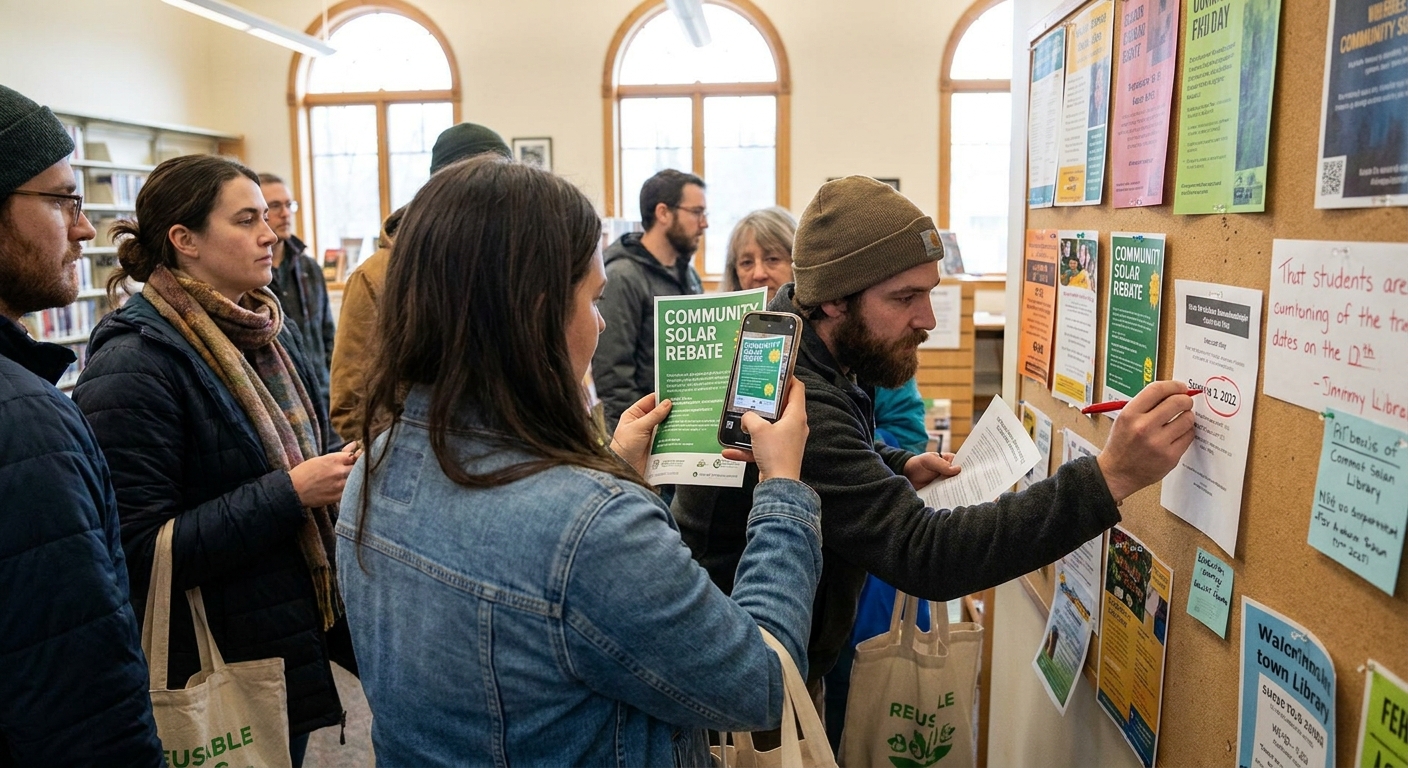
    You are not lazy if community flyers make your eyes glaze over. Most of them are packed with tiny print, vague promises, and a web address that looks like it was typed in 2009. Meanwhile, the real value is often hiding in plain sight. A utility rebate, a city energy program, a bulk-buy for rain barrels, a neighborhood solar co-op, or a weatherization group that already knows how to handle the paperwork. If you have been wondering how to find local rebate groups in my community, the trick is not to read every flyer like a school assignment. It is to scan for clues that lead to actual people. A church bulletin board, library hallway, rec center wall, or city hall lobby can be the first breadcrumb. Once you know what to pull from those notices, you can turn one forgotten piece of paper into a live group chat, an info night, or a local buying club that saves you real money.

    ⚡ In a Hurry? Key Takeaways

    • To find local rebate groups in your community, start with physical notice boards and pull out program names, sponsor names, dates, URLs, and contact people.
    • One flyer can lead to a real joinable group if you search the exact keywords on Facebook, Nextdoor, Meetup, Eventbrite, and your utility or city website.
    • Stick with groups tied to cities, utilities, nonprofits, churches, libraries, and co-ops, and never pay a fee or share personal info until you verify who runs it.

    The flyer is not the point

    This is the part most people miss. The flyer is rarely the whole program. It is usually just the public crumb.

    The real action tends to happen somewhere else. A monthly meetup. A neighborhood email list. A nonprofit intake form. A utility workshop. A co-op waiting list. A volunteer who already knows which forms matter and which ones you can ignore.

    So if you are trying to figure out how to find local rebate groups in my community, stop treating the notice board like a reading test. Treat it like a map.

    What to grab from a boring flyer in 30 seconds

    You do not need a full photo archive of the wall. You just need the pieces that help you track the people behind the program.

    Look for these specific clues

    When you spot a flyer about rebates, energy savings, appliance upgrades, home repair help, water conservation, solar, insulation, EV charging, composting, or neighborhood buying programs, pull out these details:

    • The exact program name
    • The sponsoring group, such as the city, utility, nonprofit, or co-op
    • A person’s name, if listed
    • An email address or phone number
    • A website or short URL
    • A QR code
    • An event date or workshop date
    • Any unusual phrases like “bulk buy,” “community partners,” “pilot program,” or “income qualified”

    Those odd little phrases matter. They are often better search terms than the big headline.

    Take a clean photo, then crop it

    Stand close. Get a straight photo. Then crop it down later so the text is readable. This sounds basic, but blurry photos are one reason people never follow through.

    The best keywords that turn a paper notice into a real group

    Once you get home, start with the exact words from the flyer. Put quotation marks around the program name if it is specific.

    Then mix in one of these group-finding words:

    • workshop
    • co-op
    • partners
    • community meeting
    • waitlist
    • interest form
    • group buy
    • volunteer
    • FAQ
    • webinar

    For example, if the flyer says “Clean Heat Now” from your local utility, try searches like:

    • “Clean Heat Now” workshop
    • “Clean Heat Now” community partners
    • “Clean Heat Now” interest form
    • [your town] heat pump group buy
    • [your utility name] rebate workshop

    This is usually where the hidden stuff appears. Event pages, church-hosted signups, PDF agendas with staff names, Facebook posts from last month, or nonprofit pages that explain the process in plain English.

    Where the real people usually are

    Most rebate groups do not call themselves “rebate groups.” That is why they are hard to find.

    Check these places after you spot a flyer

    • Facebook groups for your town, neighborhood, or mutual aid network
    • Nextdoor posts tied to the exact program name
    • Eventbrite listings for workshops and sign-up events
    • Meetup pages for sustainability, home improvement, or community resilience groups
    • Your city calendar and utility events page
    • Local nonprofit newsletters
    • Library event pages and church community pages

    If the flyer includes a contact person, search that name with the town and the program. If the person is real and active, you will often find a webinar listing, a partner page, a council meeting document, or a posted presentation.

    How to tell if it is a real program or just another dead end

    This part matters. Some flyers point to active, well-run programs. Others lead to expired pilot projects or pages that were abandoned two years ago.

    Good signs

    • The sponsor is a city department, utility, nonprofit, credit union, church, school, or co-op
    • There is a recent date on the flyer or webpage
    • There is a named contact person
    • There is an event, intake form, or office phone number
    • Other local groups mention the same program

    Warning signs

    • The flyer only points to a generic homepage with no mention of the offer
    • The program asks for upfront money before explaining the rebate
    • No dates, no sponsor, no real names
    • Broken links and QR codes that redirect somewhere unrelated
    • Pressure to act fast without giving written details

    If the program branches into private messaging apps, be cautious and verify first. If that side of the hunt interests you, The ‘Telegram Trailhead’ Shortcut: Turn Deal Alert Channels Into Real Rebate Clubs You Can Join Safely is a smart next step for checking groups without clicking yourself into trouble.

    Turn a flyer into a joinable group in four moves

    1. Find the organizer

    Do not just visit the homepage. Find the human. That could be a program manager, outreach coordinator, volunteer captain, librarian, or church office.

    2. Ask the simplest useful question

    Send a short note like this:

    “Hi, I saw your flyer for the rebate program at the library. Is there a local group, workshop, or email list for people joining this program?”

    That question does two things. It tells them you are real, and it pushes them to reveal the part that is not on the flyer.

    3. Ask who already helps people with the forms

    This is the gold. Many programs have one person or partner group that quietly walks residents through applications. Ask:

    “Is there a partner organization or community group that helps people apply?”

    That is often how you find the real rebate club, even if it is not called that.

    4. Save the chain, not just the deal

    If you find one active group, save all the connected names and pages. Utility partner. Nonprofit host. Rec center event page. Volunteer list. This chain helps you find future offers before they spread widely.

    The best places to look in person

    Not all bulletin boards are equal. Some are full of guitar lessons and lost-cat notices. Others are quietly excellent for rebates and group-buy opportunities.

    Best offline spots

    • Public libraries
    • Parks and rec centers
    • Senior centers
    • Church foyers and fellowship halls
    • City hall and county offices
    • Food co-ops and farmers market boards
    • Community colleges
    • Neighborhood health clinics

    These places often host programs for weatherization, water-saving kits, transit passes, appliance recycling, and low-cost home upgrades. They are local, practical, and often tied to funding windows that do not stay open forever.

    Why this works better than coupon apps

    Big savings apps are fine for mainstream discounts. They are not great at finding local programs that have a human gatekeeper, income rules, neighborhood quotas, or a community sign-up night.

    Offline flyers are often early signals. They show up before the offer gets polished, crowded, or advertised to death.

    That is why this shortcut works. You are not chasing viral deals. You are finding fresh local ones while there is still room.

    If the flyer leads nowhere, do this next

    Sometimes the link is dead. Sometimes the event already happened. That does not mean the opportunity is gone.

    Try the sponsor, not the flyer

    If a notice mentions your water utility, electric company, housing nonprofit, or city sustainability office, go straight to that group’s website and search the topic there.

    Use terms like:

    • rebate
    • assistance
    • community partners
    • upcoming events
    • energy efficiency
    • resident programs

    Then call or email. Yes, actually call. It is often faster than digging through PDFs.

    At a Glance: Comparison

    Feature/Aspect Details Verdict
    Offline flyer boards Great for finding early local programs, real contact names, workshop dates, and niche community offers before they spread online. Best starting point for fresh, local rebate leads.
    Searching the flyer keywords online Turns a vague notice into event pages, sign-up forms, partner organizations, and social posts where the real group activity happens. Best way to move from paper clue to active community.
    Big coupon and rebate apps Useful for broad consumer offers, but usually weak for hyperlocal utility, nonprofit, and co-op programs with human support and local meetings. Fine as a backup, not the best tool for neighborhood rebate groups.

    Conclusion

    If you have been frustrated by vague notices and endless PDFs, you are not doing anything wrong. The problem is that many of the best local rebate opportunities are barely advertised. Cities, utilities, nonprofits, and local co-ops are quietly rolling out new rebate and group-buy programs right now, and sometimes the only public sign is one lonely flyer at a rec center, church, or library. Once you know how to mine those boards for keywords, URLs, dates, and contact names, you can turn a boring paper notice into a live group you can actually join. That means faster access to fresh incentives, less form confusion, and more of the human help that big apps never seem to offer. Start with one bulletin board this week. You may be one photo away from your next useful local savings group.

  • The ‘Telegram Trailhead’ Shortcut: Turn Deal Alert Channels Into Real Rebate Clubs You Can Join Safely

    The ‘Telegram Trailhead’ Shortcut: Turn Deal Alert Channels Into Real Rebate Clubs You Can Join Safely

    You are not imagining it. Telegram deal channels can feel like walking into a crowded flea market where half the sellers are shouting, half the links look weird, and one bad click could cost you real money. That is exactly why so many people stay stuck on the outside, even after hearing that the best rebate stacks, coupon glitches, and buying-group drops often show up there first. The good news is you do not need to become a power user or join 50 mystery chats to get the upside. You just need a trailhead. Think of it like starting with one safe parking lot before hiking deeper. If you want to know how to find legit telegram deal and rebate groups, the trick is not random searching. It is starting with a tiny list of trusted channels, checking for a few easy signals, and then branching out through real people and repeat names instead of hype.

    ⚡ In a Hurry? Key Takeaways

    • To find legit Telegram deal and rebate groups, start from trusted communities and verified people, not from random Telegram search results.
    • Build a starter list of just 3 to 5 channels, mute them, watch for a week, and only act on deals that use normal checkout and normal payment methods.
    • If a group pushes deposits, off-platform payment, fake urgency, or vague “DM admin to pay” instructions, leave immediately.

    Why Telegram feels sketchy, even when real deals are there

    The problem is not your imagination. Telegram mixes legitimate communities with copycat channels, fake admins, and people who know shoppers are chasing fast savings.

    That creates a strange situation. Some of the best deal traffic really does move through chat apps now. But the first thing a normal person sees is chaos. Giant member counts. Endless alerts. Referral links everywhere. A stream of “hurry” posts with no context.

    So let’s simplify it. You do not need to judge the whole app. You just need a system for finding a few good rooms inside it.

    The safer way in starts outside Telegram

    If you want to know how to find legit telegram deal and rebate groups, start somewhere boring. That is usually the safest move.

    Use known communities as your entry point

    A legitimate Telegram deal channel often has fingerprints elsewhere. You might see it mentioned by a reputable deal blogger, a long-running coupon forum, a subreddit with active moderation, or a local shopping group where real people talk back.

    That matters because scam channels often live in isolation. They want you to discover them inside Telegram, act fast, and never check them against anything else.

    If you already like community-based deal hunting, you may also want to read The ‘Trusted Host Shortcut’: Turn Local Nonprofits Into Safe Rebate Buying Clubs You Can Actually Join. It follows the same idea. Start with a trusted host, not a mystery crowd.

    Search for people, not just channel names

    This is the shortcut most people miss. Instead of hunting for “best rebates” or “deal alerts” inside Telegram, search on the open web for the names of deal posters, admins, or community organizers that people mention positively more than once.

    Repeat names are useful. If the same moderator or channel owner keeps showing up in normal conversations, has a track record, and is known for posting screenshots, store links, and follow-ups, that is a better sign than a giant channel with no outside reputation.

    Your 5-point legit check for Telegram deal groups

    You do not need detective skills. Use these five checks.

    1. Look for normal shopping behavior

    A solid deal channel usually sends you to a normal retailer, brand site, cashback app, or coupon page. You click through, buy through standard checkout, and pay the store directly with a credit card or trusted payment system.

    If the group asks you to send money to a person first, pay in crypto, use gift cards as payment, or trust a “middleman,” stop there.

    2. Check whether old posts still make sense

    Scroll back. Do older deals show clear store names, prices, rebate steps, and comments or reactions from actual members? Or is it just a river of urgent commands with no details?

    Legit channels usually leave a readable paper trail. Scammy ones often feel disposable.

    3. Watch how the admin handles questions

    Good admins explain. They correct mistakes. They update expired posts. They say when a rebate is dead or risky.

    Bad admins dodge questions, pressure people to act now, and move money conversations into private messages.

    4. Notice the ratio of information to hype

    A healthy deal group gives you enough information to decide. Store. Item. Price. Coupon code. Rebate source. Limits. Timing.

    A risky group relies on adrenaline. “Crazy money.” “Guaranteed profit.” “Only for serious buyers.” “DM me fast.” That is not deal curation. That is pressure.

    5. See whether members talk like real shoppers

    Even in broadcast-heavy channels, legit communities usually have some signs of life. People mention shipping speed, rebate credit timing, store limits, substitutions, and whether a trick still works.

    If every reply sounds generic, overexcited, or oddly repetitive, treat that as a warning.

    Build a tiny starter list, not a giant feed

    The fastest way to get overwhelmed is to join too much at once.

    Start with 3 to 5 channels max

    Pick a small starter set. Ideally:

    • One broad deal-alert channel
    • One rebate-focused group
    • One niche group that matches your real shopping, like groceries, travel, tech, or household items

    That gives you enough variety to compare styles without drowning in noise.

    Mute everything first

    This is important. Join, then mute. Let the channels run quietly for a week while you observe. You are not there to buy yet. You are there to learn the rhythm.

    Who posts real stores? Who posts too often? Which links feel clean and predictable? Which channels keep repeating the same affiliate-heavy offers? You can spot a lot just by watching.

    Create a notes list

    Old-school works here. Keep a simple note on your phone:

    • Channel name
    • What it posts
    • Whether links go to known stores
    • Whether deals are explained clearly
    • Any red flags

    After a few days, the good channels start separating themselves from the noisy ones.

    How to branch out without getting burned

    This is where Telegram gets useful. Once you find one decent channel, it can lead you to better ones. But do it slowly.

    Follow human referrals, not random search

    If a trusted admin or long-time member says, “A lot of us also watch this other group for travel drops” or “This rebate host is reliable,” that is worth more than a search result.

    You are using social proof, not gambling.

    Look for overlap between communities

    One of the best signs is overlap. If the same channel gets mentioned by several unrelated deal hunters, or the same host appears in multiple trusted circles, risk goes down.

    Scam groups tend to have shallow roots. Legit groups tend to be connected to a wider network.

    Never treat exclusivity as proof

    Some of the worst channels sell themselves as secret clubs. “Private access.” “Inner circle.” “Members only rebates.” Maybe. Or maybe it is just a way to stop you from comparing notes.

    Real communities may be selective, but they do not need to hide basic safety information.

    What safe rebate participation actually looks like

    A legit rebate club or deal group does not eliminate risk. It reduces unnecessary risk.

    Here is what “safe enough to try” usually looks like:

    • You buy from a known retailer
    • You understand the rebate steps before paying
    • You keep screenshots of the offer and terms
    • You use a credit card, not irreversible payment
    • You start with a small order, not a giant one

    That last point matters. Your first test should be cheap. Think of it like trying a new mechanic with an oil change before trusting them with a transmission.

    Red flags that mean leave now

    Some warnings are strong enough that you do not need more research.

    • The admin asks for payment in DMs
    • The “deal” only works if you send money to a person, not a store
    • They want crypto, bank transfer, or gift cards
    • No one can clearly explain how the rebate works
    • There is pressure to act in minutes without time to verify
    • Posts disappear when people question them
    • The channel name mimics a better-known community

    If you see two or more of those, do not negotiate with yourself. Leave.

    How to manage the notification mess

    You do not need 200 pings an hour to get good deals.

    Use folders or separate chat tabs

    If Telegram offers folders on your device, make one just for deals. That keeps shopping chatter away from family and work messages.

    Mute by default, then whitelist

    Most channels should stay muted forever. If one proves consistently useful, give it exceptions. That way the best signal can come through without the rest of the noise.

    Set a deal-check routine

    Instead of watching all day, check your deal folder at set times. Morning. Lunch. Evening. That keeps deal hunting from turning into a part-time job.

    At a Glance: Comparison

    Feature/Aspect Details Verdict
    Random Telegram search result Fast to find, but often lacks outside reputation, context, and trust signals High risk. Avoid as your starting point
    Channel recommended by a known deal community Has references, repeat names, and usually clearer posting history Best starting option for most shoppers
    Private rebate group asking for direct payment Uses urgency, off-platform payment, and vague instructions instead of normal checkout Walk away immediately

    Conclusion

    You do not have to choose between missing all the good deals and jumping into a sketchy chat swamp. The middle path is better. Start small. Watch first. Trust repeat names, normal checkout, and communities with roots outside Telegram. Skip random searches, mystery admins, and anything that asks you to send money like a favor to a stranger. That is how to find legit telegram deal and rebate groups without turning the whole process into a stress test. It works right now because the best rebate traffic often hits chat apps first, but most people only ever see the loud, risky surface. Once you build a short, safer starting list and branch out through real human connections, the whole thing stops feeling like a secret club and starts feeling like a system you can actually use in one evening.

  • The ‘Code Word Comment’ Shortcut: Turn Random Reddit Rebate Threads Into Real Buyer Circles You Can Join

    The ‘Code Word Comment’ Shortcut: Turn Random Reddit Rebate Threads Into Real Buyer Circles You Can Join

    You know the feeling. You finally find a Reddit thread where people are sharing the exact rebate details you need for a heat pump, home battery, grow equipment, or some weirdly specific state program. One person knows which installer counts. Another has the utility PDF. A third says they already got approved. Then the thread just… stops. Everyone helped a little, but nobody turned it into a real group that could compare quotes, swap proof, and make sure nobody missed the deadline. That is the gap. If you want to know how to use Reddit to join rebate groups, the trick is not waiting for somebody else to organize it. You use a simple code word comment to find the serious people, then move them into a small buyer circle. It is fast, low pressure, and much more useful than leaving your savings buried in random replies.

    ⚡ In a Hurry? Key Takeaways

    • Use Reddit to find fresh local rebate threads, then post a clear code word comment so committed people can identify each other fast.
    • Move the useful replies into a small DM or off-platform chat where members can compare quotes, share screenshots, and track deadlines.
    • Keep it safe. Do not post personal info publicly, and verify rebate rules with the utility or state program before anyone spends money.

    Why Reddit Threads Keep Wasting Good Rebate Information

    Reddit is great at surfacing real-world tips. It is not great at finishing the job.

    You get bursts of useful local knowledge. Somebody says their installer found an extra incentive. Somebody else shares which form was accepted. Then the thread gets buried, people stop checking notifications, and the momentum disappears.

    That is a problem because rebates often reward speed and coordination. A small group can do things one person usually cannot. They can compare quotes from the same vendors, spot bad pricing, share approval screenshots, and push each other to submit before a program runs out of money.

    If this idea sounds familiar, it is close to the same community logic behind The ‘Co‑op Bulletin Shortcut’: Turn Old‑School Co‑ops Into Real Rebate Clubs You Can Join. The difference is that Reddit gives you fresh, live demand instead of a static bulletin board.

    What the “Code Word Comment” Shortcut Actually Is

    It is simple. You find a promising rebate thread and leave a comment with a very specific phrase that invites only serious people to reply.

    Not, “Anyone interested?”

    That is too vague.

    Instead, try something like this:

    “If you are in MA and actively pricing heat pumps this month, reply ‘compressor club’ and I will start a small quote-check group.”

    Or:

    “If you already applied for this battery rebate or plan to by Friday, reply ‘battery batch’ so we can compare steps and timelines.”

    The code word does two things at once. It filters out casual drive-by comments, and it makes it easy to spot the people who are ready now.

    How to Use Reddit to Join Rebate Groups

    1. Search for fresh, local, active threads

    You are not looking for giant national discussions first. You want recent posts with local details.

    Search combinations like:

    • “heat pump rebate [your state] site:reddit.com”
    • “utility rebate [city] Reddit”
    • “battery rebate [state] Reddit”
    • “group buy heat pump Reddit”
    • “cannabis grow rebate [utility name] Reddit”

    Fresh matters. A two-week-old thread with six useful comments is often better than a two-year-old viral post full of outdated advice.

    2. Look for proof signals

    Not every thread is worth your time. Good ones usually contain at least two of these:

    • People naming actual utilities, states, or program names
    • Comments about installer quotes
    • Someone mentioning approval, denial, or timeline
    • Links to forms, PDFs, or official pages
    • Signs that multiple people are dealing with the same deadline

    That is where a real buyer circle can start.

    3. Drop one clear code word comment

    Your comment should include four parts:

    • The location or program
    • The buyer type
    • The action window
    • The code word

    Example:

    “If you are in NJ, getting heat pump quotes this week, and want to compare installer pricing before applying, reply ‘pump pod.’ I can start a small group chat.”

    That is much better than “DM me.” It gives structure. It also makes other readers more comfortable joining because they know exactly what the group is for.

    4. Move fast once 3 to 5 people respond

    Do not wait for 20 people.

    Small groups work better. Once a few people reply with the code word, send each one a short, polite message. Ask if they want a Reddit DM group, a Signal chat, an email thread, or a private Discord channel.

    Keep the first goal narrow. For example:

    • Compare 3 installer quotes by Sunday
    • Share approved application screenshots
    • Track missing documents for the same state program
    • Confirm which products actually qualify

    That keeps the group useful instead of turning into another dead chat.

    Best Reddit Threads for This Tactic

    Some categories work especially well because they involve local rules, messy paperwork, and a lot of price variation.

    Heat pump rebates

    These are perfect for buyer circles because installer quotes can vary wildly. A group can quickly spot who got overpriced and which contractors know the program rules.

    Battery rebates

    Battery programs often have capacity requirements, approved equipment lists, and budget caps. A group helps people catch technical details before buying the wrong setup.

    Cannabis grow rebates

    This is more niche, but often very local and practical. People may share utility efficiency programs for lighting, HVAC, and controls. Threads like this usually attract people who already have real bills and real urgency.

    State energy programs

    These are often confusing enough that shared screenshots and plain-English notes can save everyone time.

    What to Say Once the Group Starts

    The first message matters. You want order, not chaos.

    Try this:

    “Goal for this group: compare quotes, confirm qualifying equipment, and share successful application steps for the [program name] rebate. Please share only what you are comfortable sharing. No personal account numbers. If you have an approved screenshot or installer quote range, that helps.”

    That sets a calm tone. It also reassures people you are not trying to sell them something.

    What to Share, and What Not to Share

    Helpful to share

    • Installer quote totals
    • Model numbers
    • Application status screenshots with private info blocked out
    • Program deadlines
    • Which documents were accepted

    Do not share publicly

    • Full address
    • Utility account number
    • Government ID
    • Full invoice with personal details visible
    • Banking info

    This is where people get sloppy. A rebate group should save money, not create a privacy mess.

    How to Tell if a Buyer Circle Is Actually Working

    A good group does not need to be huge. It just needs momentum.

    Here are the signs it is working:

    • Members are sharing real quotes, not vague opinions
    • People are posting deadlines and next steps
    • At least one person confirms progress each week
    • The group helps members avoid bad vendors or ineligible products
    • Someone successfully submits, gets approved, or gets paid

    If the chat turns into endless side talk, reset it. Bring the group back to one outcome.

    Common Mistakes People Make

    Using a generic comment

    “Anybody interested?” gets weak results. A code word plus a time window gets better ones.

    Starting too broad

    Do not launch a “national energy savings group” from one Reddit thread. Start with one rebate, one area, one deadline.

    Waiting too long to organize

    Reddit attention fades fast. If people reply today, message them today.

    Trusting every comment equally

    Some Reddit advice is excellent. Some is outdated or flat wrong. Always check the current official rules.

    At a Glance: Comparison

    Feature/Aspect Details Verdict
    Finding good threads Fresh, local posts with real quotes, deadlines, utility names, or approval details work best. Worth doing daily
    Code word comment A specific phrase like “pump pod” or “battery batch” filters for serious people and creates an easy reply signal. Best shortcut in the process
    Moving off-thread Small DM groups or private chats make it easier to compare quotes, share screenshots, and keep deadlines visible. Essential for real results

    Conclusion

    Reddit already has the raw material. People are posting fresh, hyper-local details about heat pump group buys, cannabis grow rebates, battery rebates, and state energy programs every day. The problem is that most of that value stays trapped in scattered one-off replies. A simple code word comment gives you a repeatable way to fix that. Find the right thread, signal for serious participants, and move the committed folks into a small buyer circle where they can compare quotes, share successful application screenshots, and hit deadlines before rebates disappear. You do not need a giant community. You need three to five people who are actually doing the same thing right now. That is where the real savings usually start.

  • The ‘Co‑op Bulletin Shortcut’: Turn Old‑School Co‑ops Into Real Rebate Clubs You Can Join

    The ‘Co‑op Bulletin Shortcut’: Turn Old‑School Co‑ops Into Real Rebate Clubs You Can Join

    It is annoying to feel like the best savings are happening somewhere behind a curtain. One group text knows about a utility rebate. A private Facebook circle is pooling an appliance order. Somebody on a deal forum got half off, and you are still clicking through apps, coupon pages, and government sites that read like tax paperwork. The weird part is that many towns already have a ready-made place for this. It is the local co-op. Food co-ops, housing co-ops, tool libraries, farm shares, buying clubs, and community markets already have one thing most savings groups struggle to build. Trust. If you want to learn how to use local co ops to join community rebate groups, start there. You do not need to launch a big organization. You just need to spot the right bulletin board, read the room, and ask one simple question that helps nearby shoppers find each other fast.

    ⚡ In a Hurry? Key Takeaways

    • Use local co-ops as your shortcut to real community rebate groups, especially for appliances, tools, and bulk household buys.
    • Check the co-op bulletin board, newsletter, or private Facebook group, then post a short message asking who else is chasing the same rebate this month.
    • Keep it safe and low-risk by sticking to public rebate terms, meeting in familiar co-op spaces, and never sending money to strangers first.

    Why co-ops work better than random deal groups

    Most online deal spaces are noisy. People post brag screenshots, half-finished tips, or offers that only worked in one zip code three weeks ago. A co-op is different.

    People already share information there. They already buy with a group mindset. They often have a manager, volunteer board, or active members who are used to organizing orders, pickups, and announcements. That makes co-ops a natural home for rebate pods.

    A rebate pod is just a small local group of people chasing the same savings at the same time. Maybe it is a utility rebate on induction stoves. Maybe it is a manufacturer rebate on power tools. Maybe it is a warehouse deal on paper goods if a group order hits a threshold.

    The point is simple. You are not trying to become a coupon celebrity. You are trying to find three to ten nearby people who want the same thing and can move this week.

    What counts as a co-op here

    Do not get hung up on the label. You are looking for community groups that already have a shared buying habit and some kind of bulletin culture.

    Good places to check

    Food co-ops are the obvious one, but they are not the only option. Also look at housing co-ops, farm co-ops, community markets, tool libraries, maker spaces, neighborhood buying clubs, church pantry groups, and local refill shops.

    Some of these have a corkboard near the door. Some have a weekly email. Some run everything in a private Facebook group. All of those can work.

    Why the bulletin matters

    The bulletin board tells you how people in that group talk to each other. Is it formal. Casual. Very local. Heavy on volunteers. Focused on family budgets. You want to match that tone when you post.

    If you skip this step, your message can sound pushy or salesy. That is the fastest way to get ignored.

    How to find a nearby co-op this week

    Here is the practical part. Search your city name with terms like “food co-op,” “buying club,” “community market,” “tool library,” “housing cooperative,” or “farm share.” Check Google Maps, Facebook, local Reddit groups, and the event pages at libraries or community centers.

    Once you find one, look for three things.

    1. A place where members actually talk

    You want signs of life. Fresh bulletin posts. Recent Facebook comments. A newsletter archive. Upcoming member meetings.

    2. A group that already coordinates purchases

    If they mention bulk orders, volunteer pickups, produce boxes, shared deliveries, or vendor discounts, that is a strong sign.

    3. A culture that feels welcoming

    You do not need instant best friends. You do need a place where asking a practical money-saving question will not feel strange.

    Read the bulletin before you post

    This is the step most people skip, and it matters more than it seems.

    Spend ten minutes reading what is already posted. Are people asking for recommendations. Trading tips. Organizing pickups. Looking for neighbors to split costs. If yes, good. You are in the right place.

    If the space is mostly event flyers and lost keys, you may need to ask a staff member or admin where member deal chatter usually happens.

    What you are looking for

    You want clues about format. Short posts or long ones. First names only or full contact details. Public comments or direct messages. Whether people prefer “anyone interested in joining” or “I am organizing a list.”

    This is less about tech and more about manners. Read the room first.

    The message that gets replies

    Your first post should be short, specific, and easy to answer.

    Use this template

    “Anyone else in the co-op looking at the city dishwasher rebate this month? I am checking if a few of us can compare approved models, delivery costs, and installer quotes. Not selling anything, just trying to make the rebate easier to use. Comment here or message me.”

    That works because it does four things fast. It names the rebate. It gives a timeframe. It explains the purpose. It lowers suspicion.

    What not to do

    Do not post a giant wall of rules. Do not paste ten affiliate links. Do not ask people to send money up front. Do not sound like a reseller pretending to be a neighbor.

    If your note feels simple and local, people are much more likely to answer.

    Best rebate categories for co-op groups

    Some rebates are too individual to organize around. Others are perfect for a local pod.

    Appliances

    Think refrigerators, induction ranges, washers, dryers, heat pumps, air purifiers, and water-saving devices. These often involve utility rebates, model restrictions, installation questions, and delivery timing. A group can help everyone sort the details faster.

    Tools and equipment

    Power tools, lawn equipment, battery platforms, workshop gear, and seasonal machines often have manufacturer promotions or store gift-card offers. A local group can compare stores and bundle pickups.

    Bulk household buys

    Paper goods, cleaning supplies, pantry staples, pet food, filters, and refill products work well when there is a threshold discount or a delivery fee to split.

    If you also want another route for everyday savings, The ‘Penny Drop Route’ Shortcut: Turn Hidden Clearance Schedules Into Real-Life Rebate Crews You Can Join is useful because it shows how local chatter and timing can beat endless app scrolling.

    How to turn replies into a real rebate pod

    Once two or three people respond, move from vague interest to a simple plan.

    Step 1. Pick one offer

    Do not try to organize five deals at once. Start with one rebate that has a clear deadline and easy terms.

    Step 2. Make one shared info post

    List the eligible products, rebate link, purchase deadline, claim deadline, and any local installer or store notes people have confirmed.

    Step 3. Keep communication boring

    That is a compliment. Boring is good. Use a shared email thread, a Facebook group post, or a simple group chat. Keep the discussion focused on dates, stores, documents, and pickup plans.

    Step 4. Let each household submit its own rebate

    This avoids a lot of trouble. The group helps people compare and coordinate. Each person still buys their own item and files their own claim unless the co-op has an official group purchase process.

    Safety rules that save headaches

    Community savings should feel helpful, not risky.

    Stick to published rebate terms

    If the rebate says one per household, do not get creative. If it needs a licensed installer, do not guess. Read the actual rules.

    Meet in familiar places

    If you are swapping information or coordinating pickups, use the co-op space, a public cafe, or a community center. Keep it normal.

    Be careful with money

    If a group order is needed, ask whether the co-op can process it through its normal system. If not, avoid sending money to someone you do not know well. A good shortcut should reduce friction, not create trust problems.

    Protect personal details

    Do not post utility account numbers, full addresses, or rebate claim documents in a public thread.

    What to say if you are nervous about posting

    A lot of people worry they will sound cheap, awkward, or out of place. You will not. Co-ops exist because people know shared effort can lower costs and improve access.

    If you want a softer opener, try this:

    “I am new to this group and trying to figure out whether anyone here tracks appliance or household rebates together. I found one for energy-efficient washers and wondered if others are looking too.”

    That is friendly, clear, and easy to answer.

    Signs you found a good fit

    You do not need a perfect system. You just need momentum.

    Good signs

    People reply with useful specifics. Someone knows a store manager. Someone has already filed the rebate before. A moderator points you to the right thread. A member offers to compare model numbers.

    Bad signs

    No one can verify the offer. The whole thing depends on one stranger collecting money. The deal only works if people bend the rules. Walk away from that.

    At a Glance: Comparison

    Feature/Aspect Details Verdict
    Finding people Co-ops already gather local members in person, by email, or in private social groups. Faster than starting from scratch on a deal forum.
    Posting your first message Short, specific posts about one rebate get better replies than broad “any deals?” requests. Best way to start a real rebate pod quickly.
    Risk level Lower risk when each person buys their own item, follows official terms, and avoids sending money to strangers. Safe enough for most shoppers if handled carefully.

    Conclusion

    You do not need to wait for an invite-only chat or spend another month refreshing deal apps. Right now there is a big push toward community benefits and collective savings, but most guides stop at theory and never tell you who to talk to this week. Co-ops already do the hard part. They bring together people who trust each other, share buying habits, and meet in real spaces or private online groups. That makes them perfect for fast rebate pods around appliances, tools, and bulk household buys. If you learn how to spot a nearby co-op, read the culture of its bulletin, and post one clear “who else is chasing this rebate?” message, you can join a real local rebate group in days instead of months. That is the shortcut. Not more scrolling. Better neighbors.

  • The “Utility Bill Side Chat” Shortcut: Turn Comment Sections Into Real Rebate Clubs You Can Join

    The “Utility Bill Side Chat” Shortcut: Turn Comment Sections Into Real Rebate Clubs You Can Join

    You have probably seen the post. Your utility company announces a “limited-time rebate” for insulation, heat pumps, smart thermostats, or EV chargers. The comments fill up fast. One neighbor asks if renters qualify. Another says a contractor quoted double what they expected. Someone else cannot figure out whether the rebate comes before or after installation. It gets messy in a hurry, and most people do the same thing. They read a few comments, feel more confused than before, and move on. That is exactly how good rebate money slips away.

    The better move is to treat that comment section like the start of a local club, not the end of a social post. If three, five, or ten households are all trying to decode the same program, compare the same quotes, and hit the same deadline, they should not do it alone. A small private group can turn scattered frustration into better questions, cleaner records, and stronger contractor calls. If you are wondering how to join community rebate groups from utility posts, the answer is usually much simpler, and safer, than people think.

    ⚡ In a Hurry? Key Takeaways

    • Start with the comments under utility or city rebate posts, then move interested neighbors into a small private chat with a clear goal and deadline.
    • Use the group to compare quotes, approved contractors, paperwork steps, and rebate deadlines before anyone books alone.
    • Never share full account numbers, utility login details, or IDs in the group. Keep it to public program info and quote comparisons.

    Why utility comment sections are secretly useful

    Most public comment threads look like noise. Some of it is noise. But hidden inside that mess is a real pattern. People in the same area are running into the same problems at the same time.

    That matters.

    If your city announces a home energy rebate, your neighbors are often trying to answer the exact same questions you have. Which contractors are actually approved? How long are rebates taking? Do you need a pre-inspection? Is the “up to $8,000” number realistic, or marketing fluff?

    One person asking those questions gets a partial answer. Six households asking together usually get a much clearer picture.

    How to join community rebate groups from utility posts

    You do not need a fancy app or a formal neighborhood committee. You just need a simple process that gets the right people out of the public thread and into a focused private space.

    1. Look for signals in the comments

    Start with posts from your utility company, city government, county office, or local energy department. Read the comments for people who are:

    • Asking practical questions
    • Mentioning they already got a quote
    • Saying they are confused by the rules
    • Looking for contractor recommendations
    • Trying to meet a program deadline

    These are your people. They are not just browsing. They are trying to act.

    2. Reply publicly, then invite privately

    Do not jump straight into a random direct message asking for phone numbers. That feels sketchy, and honestly, it should.

    Instead, reply in the thread with something simple like:

    “A few of us seem to be trying to figure this out at the same time. If people want, we could start a small chat to compare approved contractors, deadlines, and paperwork.”

    That gives people context. It also lets them opt in.

    3. Move to one simple private space

    Once two or three people respond, pick one place to continue:

    • A small Facebook Messenger group
    • A WhatsApp chat
    • A group text
    • A private neighborhood app thread
    • A shared Google Sheet plus email thread

    Keep it boring. Boring is good. People are more likely to join something that feels familiar.

    4. Set the purpose right away

    Your first message should explain what the group is for.

    Try something like this:

    “This group is just for comparing rebate info for the utility heat pump program. Let’s share approved contractors, quote ranges, deadlines, and what paperwork each of us gets asked for.”

    That one message prevents the group from drifting into off-topic chatter.

    What a good rebate circle actually does

    A useful group is not just a place to vent. It should help members make better decisions faster.

    Compare apples to apples

    Contractor quotes can be wildly inconsistent. One installer may include permit fees and electrical work. Another may not. One may promise to “handle the rebate” but not say how. A group helps people notice those differences before signing.

    Create a simple list:

    • Contractor name
    • Quoted price
    • Equipment model
    • What is included
    • Estimated rebate amount
    • Timeline
    • Whether they are utility-approved

    That one list can save people thousands.

    Catch fine print early

    Rebate programs love fine print. Sometimes the equipment has to be on an approved list. Sometimes the work must start after approval. Sometimes the home must meet income rules. Sometimes you only qualify if a participating contractor submits the paperwork.

    If one member of the group finds a rule buried on page seven, everyone benefits.

    Push contractors to be clearer

    Contractors tend to speak more carefully when they know customers are comparing notes. You do not need to be aggressive. You just need to be informed.

    Even a simple sentence helps: “A few households in our area are reviewing quotes this week. Can you confirm whether permit fees, rebate filing, and panel work are included?”

    That changes the tone fast.

    How to keep the group safe

    This is the part people skip, and it matters.

    A rebate group should make life easier, not expose your personal information.

    Do not share sensitive account details

    Never post:

    • Utility account numbers
    • Full address if you are not comfortable
    • Driver’s license photos
    • Tax returns
    • Utility login screenshots
    • Bank details

    If someone needs to show proof of a rebate step, crop the image first.

    Keep money decisions individual

    The group can compare quotes and discuss options. Each household should still sign its own contract, read its own paperwork, and confirm its own rebate rules.

    This is not a buying club with a treasurer. It is a shared research circle.

    Watch for fake helpers

    If a stranger appears and says “DM me, I can process your rebate” or asks for screenshots, slow down. That is a red flag.

    If you have seen this kind of thing on social platforms before, you might also like The “Brand DM Shortcut”: Turn Tiny Instagram Rebate Posts Into Real Buyer Groups You Can Join Today. It covers the same basic problem in a different setting. Public posts attract real opportunities, but also confusion and a few shady shortcuts.

    A simple script you can copy

    If you want to start or join one of these groups, here is a low-pressure message that works:

    “I’m also trying to figure out this rebate. A few of us could make a small private chat to compare approved contractors, quote ranges, deadlines, and paperwork. No personal account info, just notes so we don’t all have to sort through this alone.”

    That message is clear, useful, and not pushy.

    What to do in the first 48 hours

    Once the group starts, momentum matters. People lose interest fast if nothing happens.

    Day 1

    • Post the official program link
    • Post the deadline if there is one
    • Ask each member what rebate they are trying to use
    • Make a list of approved contractors

    Day 2

    • Start the shared quote comparison sheet
    • List open questions no one can answer yet
    • Assign one member to call the utility help line
    • Ask members to report back on response times and quote details

    That is enough to turn a loose chat into something that actually saves people money.

    When a rebate circle works best

    These small groups are especially helpful when:

    • The program is new
    • The rebate amount is large
    • There are only a few approved contractors
    • Application windows are short
    • Equipment and eligibility rules are confusing

    In other words, exactly the kind of utility posts people are seeing right now.

    When to skip the group idea

    Not every situation needs this much effort.

    If the rebate is simple, the amount is small, and the process is basically “buy item, upload receipt, done,” a private group may be overkill.

    But if it involves home upgrades, contractor bids, financing offers, inspections, or multiple forms, group notes can make a big difference.

    At a Glance: Comparison

    Feature/Aspect Details Verdict
    Public comment section Good for spotting interest, common questions, and active neighbors, but information gets buried fast. Useful starting point, not the best place to finish.
    Small private rebate group Best for comparing quotes, deadlines, contractor lists, and paperwork steps in one place. Best option for bigger home rebate programs.
    Going alone Simpler at first, but easier to miss fine print, overpay, or accept a weak quote without context. Fine for small rebates. Riskier for major installs.

    Conclusion

    Right now, utility and city social feeds are full of “free money” posts that make people feel rushed, confused, and on their own. That is why so much rebate money goes unclaimed, or gets scooped up by installers talking to each household one at a time. The fix is not complicated. Start in the comments, find the neighbors asking the same questions, and move into a small private rebate circle with a clear purpose. When regular households walk into contractor calls with shared quote data, better questions, and real deadlines, they have a much better shot at getting the full rebate instead of whatever scraps are left. People are already comparing notes in public. They just need a safe, simple next step that turns chatter into action.

  • The “Brand DM Shortcut”: Turn Tiny Instagram Rebate Posts Into Real Buyer Groups You Can Join Today

    The “Brand DM Shortcut”: Turn Tiny Instagram Rebate Posts Into Real Buyer Groups You Can Join Today

    You are not imagining it. Those tiny Instagram and TikTok posts promising “100% cashback” or “free after rebate” often look half-helpful and half-sketchy. One story disappears in 24 hours. Another account tells you to “DM for the link.” Then a stranger wants your email, your PayPal, maybe even a screenshot of your order. That is usually the moment smart people back away, and honestly, that instinct is doing its job. The good news is that some of these deals are real. Brands, utility companies, and rebate platforms really do use social posts to push short-window offers, especially on household products, water-saving gear, and energy-efficient upgrades. The trick is not to trust the post. The trick is to verify the offer, move the conversation into a safer channel, and only join buyer groups that act like organized deal communities, not secret little DM clubs.

    ⚡ In a Hurry? Key Takeaways

    • Yes, you can safely join rebate groups from social media, but only after you verify the offer outside the original post or DM.
    • Ask for a public link, the rebate terms, and the brand or utility source before you buy anything or share personal details.
    • Real groups focus on receipts, timelines, and rules. Fake ones push urgency, private payments, and vague “review club” promises.

    The “Brand DM Shortcut” really means this

    When people talk about a shortcut, they usually mean this: a brand posts a tiny promo on social media, someone spots it fast, then a small group helps each other confirm the rebate and buy before the offer expires.

    That can be useful. It can also go wrong fast.

    The safest version of this shortcut is not “trust the person in your DMs.” It is “use the social post as a clue, then verify everything in the open.” That is the heart of how to safely join rebate groups from social media.

    Start with the post, but do not stop there

    A social post should be treated like a tip, not proof.

    Look for a trail you can follow

    If an Instagram reel says a faucet aerator, smart thermostat, or appliance is free after rebate, you should be able to find at least one of these:

    • A brand website mentioning the offer
    • A utility company rebate page
    • A retailer listing with matching product details
    • Official rebate terms, dates, limits, and submission rules

    If the only path is “DM me for details,” slow down.

    Check whether the account looks real

    You do not need detective-level skills here. Just use common sense.

    • Does the account have normal posting history?
    • Do comments look real, or are they all copied hype?
    • Is the username close to a real brand, but slightly off?
    • Does the account link to a real website?

    A real offer can come from a small affiliate or deal hunter, sure. But even then, they should be able to point you to a real source.

    Move the conversation out of private DMs

    This is where a lot of people get trapped. The post itself may be harmless, but the private message is where the pressure starts.

    If someone says, “Send me your info and I’ll add you,” do not treat that as the next normal step.

    What to ask instead

    Reply with simple questions:

    • Can you send the public product link?
    • Where are the rebate terms posted?
    • Is this through the brand, a utility, or a rebate platform?
    • What group platform do you use, and are the rules posted publicly?

    If they dodge basic questions, that tells you plenty.

    If you want a simple screening method, the guide The ‘Safe Signal Test’ Shortcut: Join Real Rebate Groups Without Getting Burned By Scams is worth reading. It explains the small signs that separate a real savings group from a phishing trap or fake “send money first” hustle.

    Know the difference between a rebate crew and a fake review club

    This is the part many people miss.

    A real rebate group usually talks about process

    Legit buyer groups tend to share boring but useful information:

    • Exact item SKU or model number
    • Store link and price
    • Rebate deadline
    • How many per household
    • Whether tax or shipping is covered
    • When members actually got paid

    Boring is good here. Boring means organized.

    A fake review club usually talks about easy money

    That is where you see lines like:

    • “Buy now, we reimburse privately”
    • “Leave a 5-star review first”
    • “Only a few spots left, act this second”
    • “Use this weird payment app and trust me”

    That is not a rebate system. That is a mess waiting to happen.

    Use a three-step safety check before you buy

    1. Verify the source

    Find the brand, retailer, utility, or rebate processor on your own. Do not rely only on the link someone sent. Search for the company yourself and compare details.

    2. Verify the terms

    Read the fine print. Yes, really. You want to know:

    • Purchase dates
    • Eligible products
    • Submission deadline
    • Rebate method, prepaid card, check, bill credit, or digital payout
    • Whether you must be a customer of a certain utility or live in a certain area

    3. Verify the group

    Before joining a buyer group, look for signs that members discuss actual outcomes. Are there screenshots of approved rebates with personal data hidden? Are admins clear about rules? Is there pressure to pay a membership fee before you even see anything useful?

    If a “group” is really just one person funneling everyone into private chats, walk away.

    Why brands and utilities are posting these deals quietly

    Some of the best rebates are not in giant ads. They show up in stories, local promos, creator posts, and short campaigns because brands want quick bursts of attention. Utility companies do this too, especially with products tied to efficiency goals.

    That is why you may see real offers on:

    • Low-flow showerheads
    • Smart thermostats
    • LED lighting bundles
    • Air purifiers or dehumidifiers
    • Energy-efficient appliances
    • Water-saving fixtures

    The problem is simple. Scammers know these offers look believable. So they copy the style and try to harvest trust before the real deal expires.

    Build or join a community rebate crew the smart way

    If you find one verified deal, that is nice. If you find a small community that checks deals together, that is better.

    What a good rebate crew does

    • Posts the source link, not just a screenshot
    • Confirms region limits and household limits
    • Shares timestamps, deadlines, and updates
    • Warns members when an offer changes
    • Keeps discussion in a visible group, not hidden one-to-one messages

    What you should contribute

    You do not have to be the expert. Just be the person who helps keep the group clean.

    • Share the original source when you can
    • Post whether your rebate was approved
    • Note if shipping killed the deal
    • Flag suspicious accounts or fake duplicates

    That is how a real rebate crew becomes useful instead of chaotic.

    Red flags that mean “close the app”

    Here are the biggest warning signs:

    • You must pay to access the “special rebate”
    • You are told to buy first and trust a stranger for reimbursement
    • You are asked for banking details in DM
    • There is no public terms page anywhere
    • The deal requires posting fake reviews
    • The account keeps changing usernames or deleting posts

    Any one of these should make you pause. Two or more should end the conversation.

    Best practice for payments, receipts, and privacy

    Even with a real offer, stay tidy.

    Use a credit card if possible

    That gives you better dispute options than a debit card or person-to-person payment app.

    Save everything

    Keep the screenshot of the original offer, the product page, the receipt, and the rebate confirmation email. Limited-time promos have a funny way of “changing” later.

    Share less in group chats

    When you post proof for the group, block out your order number, address, and anything that could be used against you.

    At a Glance: Comparison

    Feature/Aspect Details Verdict
    Social media post Useful as a tip, but not enough on its own. You still need official terms and a real source. Good starting point, not proof
    Private DM invite High-risk if it skips public links, pushes urgency, or asks for personal or payment details. Proceed carefully, often a red flag
    Verified rebate group Clear rules, public sourcing, member feedback, and documented rebate outcomes. Best option for safe repeat savings

    Conclusion

    The real win here is not just finding one lucky post before it disappears. It is learning how to safely join rebate groups from social media without getting pulled into the junk that travels alongside real deals. Brands and utilities really are using posts and stories to move limited-time rebates on practical items people want right now, from water-saving fixtures to efficient appliances. But scammers are riding the same wave. If you verify the source, move the deal out of private DMs, and stick with a community rebate crew that shares public links, rules, and real outcomes, you can grab the savings without signing up for the drama. That helps everyone. More people get legitimate rebates, fewer people fall for fake “review club” traps, and the whole group gets smarter with every verified deal shared.

  • The ‘Utility Email Shortcut’: Turn Boring Rate Hike Notices Into Real Rebate Clubs You Can Join

    The ‘Utility Email Shortcut’: Turn Boring Rate Hike Notices Into Real Rebate Clubs You Can Join

    You know the email. “Important update to your electric service.” Or worse, “upcoming rate adjustment.” Most people groan and delete it. Fair enough. Utility messages are famous for sounding boring, vague, and slightly threatening. But here is the weird part. Those same emails often hide the good stuff, like early rebate pilots, community solar offers, off-peak discount plans, appliance incentives, and limited enrollment programs that never seem to show up in your social feeds.

    If you have been wondering how to find hidden utility rebate programs, start with the messages you usually ignore. Utilities often announce real savings in low-attention places: auto-emails, bill inserts, account alerts, and tiny homepage banners. The trick is not to read every word. It is to scan for the right phrases, click through fast, and save the signup path before the offer fills up. Once one person finds a live deal, others can follow the same path and turn a lonely rate-hike notice into a real rebate club.

    ⚡ In a Hurry? Key Takeaways

    • Yes, utility emails about rate changes often contain links to hidden rebate programs, pilots, and discount offers.
    • Scan for phrases like “community program,” “pilot,” “limited enrollment,” “bonus rebate,” and “group discount” in emails and your online utility account.
    • Only sign up through your utility’s official site or verified partner pages, and save screenshots because these offers can change fast.

    Why the boring emails matter

    Utilities are trying to lower strain on the grid, calm down customer complaints about high bills, and nudge people into cheaper energy habits. One way they do that is with small, targeted programs. Think community solar subscriptions, smart thermostat bonuses, time-of-use plans, EV charging discounts, weatherization help, and test-run rebate pilots.

    The problem is the marketing is often terrible. Instead of a big ad campaign, the offer lands in a billing email or a tiny account notice. If you are not looking for it, you will miss it.

    That is why this shortcut works. You are not treating every utility email like a novel. You are treating it like a flyer with clues.

    The Utility Email Shortcut

    Here is the simple system.

    Step 1: Stop deleting on sight

    You do not have to love these emails. Just stop auto-ignoring them. Create a quick “Utility” folder in your email and move power, gas, and water messages there. This keeps them searchable later.

    Step 2: Search for trigger phrases

    Open the message and scan for these terms:

    • community program
    • group discount
    • pilot
    • bonus rebate
    • limited enrollment
    • new offering
    • income-qualified
    • bill credit
    • renewable choice
    • community solar
    • demand response
    • peak savings

    You are not trying to understand the whole rate notice. You are hunting for signs that a side program exists.

    Step 3: Click into your online account

    Many of the best offers are not fully explained in the email itself. The message might only say something like “learn about new savings opportunities” or “see available programs.” Annoying, yes. But that link can lead to pages with actual money on the table.

    Once you log in, check these sections:

    • Programs and rebates
    • Energy savings
    • Special offers
    • My account alerts
    • Marketplace
    • Clean energy or solar

    Step 4: Look for the quiet urgency words

    Utilities rarely write, “Hurry, this deal is amazing.” They say things like “pilot,” “select customers,” “new option,” or “limited capacity.” That usually means early-stage and under-subscribed. In plain English, fewer people know about it yet.

    Step 5: Save the exact signup path

    When you find something useful, do not just bookmark the homepage. Save the exact page, take screenshots, and note the eligibility rules and deadline. These programs move around. Links break. Pages get updated.

    What kinds of hidden programs show up this way?

    More than most people expect.

    Community solar discounts

    In some areas, you can subscribe to a shared solar project and receive credits on your power bill without putting panels on your roof. These can be quietly listed under renewable programs or community options.

    Group-buy style appliance deals

    Some utilities or partner groups offer discounted smart thermostats, induction cooktops, air purifiers, water heaters, or efficient window AC units. The language may sound dry, but the savings can be real.

    Limited rebate pilots

    This is where things get interesting. Pilot programs often test a bigger rebate before a wide launch. Translation: better odds, less competition, and sometimes easier signup.

    Time-of-use or peak-hour rewards

    These plans are not right for everyone, but some come with bill credits, free devices, or one-time enrollment bonuses. If your household can shift laundry, EV charging, or dishwashing to cheaper hours, the math can work.

    Income-based bonuses hidden inside standard offers

    Sometimes the public rebate is modest, but a deeper incentive exists for households under certain income levels. The trick is noticing the extra tab, PDF, or fine print.

    How to tell if a “deal” is actually worth your time

    Not every utility program is a winner. Some save pennies. Some ask for too much data. Some lock you into a plan that only works if your schedule is predictable.

    Use this simple test.

    Check the real dollar value

    Look for exact wording like “$50 bill credit,” “20% discount,” or “up to $500 rebate.” If the page is vague, keep digging.

    Read the enrollment rules

    Watch for ZIP code limits, income requirements, equipment brand restrictions, landlord approval, or “available to select customers” language.

    See if it changes your rate plan

    A free thermostat is nice. A bad rate plan is not. If the offer shifts how you are billed, compare your past usage first.

    Check whether it stacks

    The best deals often stack with state programs, tax credits, or manufacturer promos. If you are already exploring bigger home energy upgrades, this is where it can snowball. For example, if heating and cooling is on your radar, The ‘Heat Pump Huddle’ Shortcut: Turn Free Rebate Webinars Into Real-Life Savings Circles You Can Join is a smart next read.

    A repeatable weekly routine that takes five minutes

    If you want this to work without becoming a part-time job, keep it simple.

    Monday scan

    Search your inbox for the name of your electric, gas, and water utility. Open anything from the last 30 days.

    Keyword sweep

    Use your browser’s find tool and check for words like “program,” “pilot,” “enrollment,” “bonus,” and “community.”

    Account check

    Log in once a week or once a month. Look at the banner area, the rebates page, and any notifications panel.

    Save and share

    If you find a live offer, save the page, note the deadline, and write down the exact clicks it took to get there. That last part matters. Many utility sites are confusing, and a clear signup path helps other people copy what worked.

    Why sharing finds turns this into a real rebate club

    One person finding a hidden program is good. A group finding and documenting them is much better.

    Say you discover a utility email that leads to a community solar discount with limited enrollment. If you share the exact page, the ZIP codes accepted, whether renters qualify, and the signup deadline, you save everyone else from starting from zero. That is how a “hidden” program stops being random luck and becomes a repeatable community win.

    This same group approach works especially well when the offer is confusing or technical. If one member figures out the terms and another checks whether it stacks with a state rebate, suddenly dozens of people can move faster with less frustration.

    Red flags to watch for

    A little caution goes a long way.

    Do not trust random links in forwarded emails

    Go to your utility’s official website or type the address yourself. Scammers know people are nervous about bills.

    Be careful with third-party enrollment pages

    Some are legitimate partners. Some are lead-gen machines dressed up as savings programs. Read who runs the program and how your data will be used.

    Do not assume “solar” means rooftop panels

    Community solar usually does not require roof work. But some ads blur the line. Read the details before giving out your info.

    Watch the auto-renew and cancellation terms

    Especially for subscription-style programs. A good discount should still be easy to leave.

    If you never find anything, try this wider search

    Sometimes the utility email is only the first clue. Search your utility name plus these terms:

    • community solar
    • pilot program
    • rebates
    • bill credit
    • energy marketplace
    • income-qualified
    • limited enrollment

    Also check your state energy office, city sustainability page, and public utility commission site. But start with the utility itself, because that is often where the earliest notices appear.

    At a Glance: Comparison

    Feature/Aspect Details Verdict
    Utility email scan Fast way to spot hidden offers using trigger phrases in messages you already receive. Best first step
    Utility account dashboard Often reveals rebate pages, pilot enrollment links, and banners not fully explained in email. Most reliable source
    Community sharing Lets others reuse the exact signup path, eligibility notes, and deadlines once one person finds a deal. Best for turning one find into many savings wins

    Conclusion

    The next time your utility sends a dull email about rates, do not assume it is only bad news. Right now, utilities are quietly rolling out new rebate pilots, community solar discounts, and group-buy style programs to fight high energy bills, but they often announce them in low-engagement places like bill inserts, auto-emails, and tiny website banners. If you systematically scan those emails and your online account for phrases like “community program,” “group discount,” “pilot,” “bonus rebate,” and “limited enrollment,” you give yourself a repeatable way to find early-stage, under-subscribed deals before they fill up. And when one person shares the exact signup path, eligibility rules, and deadlines, dozens of others can piggyback on the same opportunity. That is the real trick here. You are not just reading a bill notice. You are turning it into a rebate club opening.

  • The ‘Trusted Host Shortcut’: Turn Local Nonprofits Into Safe Rebate Buying Clubs You Can Actually Join

    The ‘Trusted Host Shortcut’: Turn Local Nonprofits Into Safe Rebate Buying Clubs You Can Actually Join

    You are not wrong to be cautious. “Community group buy” can sound like either a smart local deal or the first line of a scam story. One person posts a discount link in a Facebook group, another asks for deposits in a chat app, and suddenly you are wondering if your money is about to disappear into the internet. The good news is that many of the best rebate buying clubs are not run by random organizers at all. They are quietly hosted by local nonprofits, city partners, clean-energy groups, credit unions, and neighborhood organizations that already have a real reputation to protect. That is the shortcut. Instead of trusting a stranger, you look for a trusted host. These groups often line up vetted installers, pre-negotiated pricing, instant rebates, and paperwork help before the public even hears about the offer. If you know where to look, you can join the crowd without taking a wild risk.

    ⚡ In a Hurry? Key Takeaways

    • Safe community rebate group buy programs near you are most often hosted by local nonprofits, city sustainability offices, utilities, and known community groups, not random chat admins.
    • Search your city plus terms like “group buy,” “bulk purchase,” “rebate program,” “heat pump campaign,” “EV co-op,” and “community solar,” then join the host’s email list.
    • If the organizer cannot show named partners, a real website, clear rebate rules, and a normal payment process, walk away.

    Why the safest group buys usually have a “host”

    Here is the simple version. A trusted host is an organization that already exists in your area and puts its name on the deal.

    That might be a neighborhood nonprofit, a city climate office, a local energy alliance, a housing group, or a county sustainability program. Sometimes it is a chamber of commerce or a credit union. Sometimes it is a school district or faith-based community network helping members get access to lower-cost upgrades.

    What matters is not the label. What matters is that they are visible, reachable, and accountable.

    These hosts usually do a few things that random online organizers do not:

    • They screen installers or vendors before inviting the public in.
    • They negotiate better pricing based on volume.
    • They help explain rebates and tax credits in plain English.
    • They use normal signup forms and official email domains.
    • They have staff, office hours, or public events you can verify.

    That is why this approach works so well for people searching for how to find safe community rebate group buy programs near me. You are not trying to become your own deal detective from scratch. You are piggybacking on a structure that is already built.

    What these programs usually cover

    The biggest action right now is around expensive home and transportation upgrades where people need both a discount and some hand-holding.

    Common examples

    • Heat pumps and weatherization
    • Electric vehicles and home chargers
    • Induction stoves and electrical-panel upgrades
    • Solar and battery projects
    • Window replacements and insulation
    • E-bikes or shared mobility programs in some cities

    The pattern is the same. A host builds a local campaign, finds approved contractors or retailers, then fills the pipeline with neighbors who are all looking for the same thing.

    If you have been eyeing a heating upgrade, you may also like The ‘Heat Pump Huddle’ Shortcut: Turn Free Rebate Webinars Into Real-Life Savings Circles You Can Join, which covers another low-stress way to get into the right room without having to decode every rebate page yourself.

    How to find safe community rebate group buy programs near you

    This is the part most people miss. The best programs are often not advertised like big retail sales. They are buried in newsletters, city pilot pages, community calendar listings, or nonprofit email blasts.

    Start with these search terms

    Search your city, county, or region along with combinations like these:

    • “[Your city] group buy heat pump”
    • “[Your county] bulk purchase energy upgrades”
    • “community rebate program [your city]”
    • “nonprofit home energy campaign [your area]”
    • “EV group buy [your area]”
    • “clean energy co-op [your city]”
    • “solarize [your city]”
    • “electrification campaign [your county]”
    • “city sustainability rebates [your city]”
    • “home upgrade program nonprofit [your area]”

    Also try less flashy wording. Many legitimate programs avoid the phrase “group buy” and instead use terms like “campaign,” “community offer,” “bulk discount,” “preferred contractor network,” or “neighborhood program.”

    Check these places in order

    1. City and county sustainability pages. Look for climate action, clean energy, housing, resilience, or environmental services sections.
    2. Local nonprofit websites. Search for community development groups, energy alliances, housing nonprofits, and environmental organizations.
    3. Utility newsletters. Utilities often promote partner programs with vetted contractors and direct rebate pathways.
    4. Library and community center event pages. Real programs often run info sessions there.
    5. Regional clean-energy coalitions. These groups frequently host bulk-buy campaigns behind the scenes.
    6. School district, church, and neighborhood association newsletters. These are common referral channels.
    7. Rebate Clubs. This is where you can spot and join infrastructure that is already moving instead of trying to build your own list from zero.

    Join the email list even if the deal is not open yet

    This matters more than most people realize. A lot of funded programs open quietly, fill fast, and then close once the install pipeline is full. If you wait for a big public ad, you may already be late.

    Subscribe to:

    • Your city sustainability newsletter
    • County housing or energy office updates
    • Local nonprofit mailing lists
    • Utility rebate alerts
    • Rebate Clubs updates

    Think of this as getting on the guest list before everyone else hears the music.

    How to tell if a host is real or just wearing a friendly costume

    Scammers know people trust local language. So you still need a quick screening method.

    Green flags

    • A real website with an address, staff names, and past programs
    • An email address on the organization’s own domain, not just a generic Gmail
    • Named installer or vendor partners you can verify
    • Clear rebate terms, deadlines, and eligibility rules
    • Normal payment flow through a contractor, vendor, or secure portal
    • Public webinars, town halls, or community meetings
    • Partner logos from cities, utilities, or known local groups

    Red flags

    • Pressure to pay a deposit before you get a written quote
    • Only a Telegram, WhatsApp, or Facebook chat link with no official page
    • No list of who is actually providing the product or service
    • Pricing that is promised but never written down
    • Vague claims like “government approved” with no links or program details
    • Dead websites, broken forms, or no phone number

    A real host does not mind basic questions. In fact, they usually expect them.

    Questions to ask before you join

    You do not need to interrogate anyone. Just ask the things a careful neighbor would ask.

    • Who is hosting this program?
    • Which contractors or vendors are approved?
    • Is the discount already negotiated, or does it depend on a minimum number of signups?
    • Are rebates instant, post-purchase, or tax-credit based?
    • Who helps with paperwork if I get stuck?
    • What happens if the program fills up or funding changes?
    • Do I pay the host, or do I pay the installer or seller directly?

    If the answers are clean and boring, that is usually a good sign. Safe programs are often a little boring. That is what you want.

    Why this shortcut saves more than just money

    The obvious benefit is price. Group buying can cut costs through volume discounts and stacked rebates.

    But the bigger benefit for many people is friction reduction. You are not chasing five contractors. You are not trying to figure out whether one rebate page contradicts another. You are not guessing which installer will ghost you after the first visit.

    A good host reduces decision fatigue. They narrow the field, explain the options, and often help residents move from “I think I should do this someday” to “I booked the assessment.”

    What Rebate Clubs does well in this mix

    Rebate Clubs makes the whole process more practical because it helps you tap into community-backed programs that are already operating. That is the important part. You are not being asked to invent a neighborhood campaign from scratch or convince strangers to join your spreadsheet. You are stepping into existing infrastructure.

    That can mean pre-negotiated discounts, instant rebates, approved vendors, and someone else handling the messy paperwork path. For non-techies, or honestly anyone tired of half-finished internet offers, that is a huge relief.

    If you cannot find a program in your exact town

    Do not stop at your ZIP code.

    Many campaigns run at the county, metro, or utility-territory level. A nonprofit two towns over may still serve your area. A regional energy alliance may host one landing page for several communities. Some city pilot programs also publish their vendor list and educational materials even if enrollment is temporarily closed.

    That still helps. You learn who the active players are, which terms they use, and where the next round is likely to appear.

    At a Glance: Comparison

    Feature/Aspect Details Verdict
    Trusted host vs random organizer Nonprofits, city offices, utilities, and known community groups usually provide real websites, named partners, and public accountability. Trusted host is far safer.
    Discounts and rebates Strong programs often combine pre-negotiated pricing with instant rebates or guided paperwork for later credits. Best value comes from stacked savings, not just a coupon code.
    How to find them Use city and county pages, nonprofit newsletters, utility alerts, and Rebate Clubs instead of relying on social posts alone. Search smarter, then join email lists early.

    Conclusion

    You do not have to choose between going it alone and trusting a sketchy online group. There is a middle path, and right now it is getting better. Local nonprofits, city partners, and community organizations are building real rebate buying clubs around big-ticket items like heat pumps, EVs, and home upgrades. Because they work with vetted installers and use their own reputation and mailing lists to fill a crowd order, the deals tend to be safer, clearer, and easier to act on. Many bundle instant rebates, pre-negotiated discounts, and help with paperwork. That means if you join through Rebate Clubs, you can ride on top of that existing setup instead of trying to create your own. Start with the right search terms, check city and nonprofit pages, join the newsletters, and look for the host behind the offer. That one habit can help you skip scams, avoid wasted weeks, and plug into rebate deals already running in the background.