You pay retail. Your city probably does not. That is the annoying part. Local governments, school districts, utilities, nonprofits and trade groups often join public purchasing co-ops that negotiate better pricing, preferred vendors, and sometimes rebate structures on things like lighting, HVAC, solar, office tech, playground gear, fleet fuel, and energy upgrades. Regular residents and small businesses usually never hear about it. The deal exists, the vendor is approved, the paperwork is already mapped out, and yet the savings stop at the office door. The good news is you do not need to build a giant community movement from scratch to change that. If you want to learn how to join local buying groups for rebates, start by finding the co-ops your city, county, or local association already uses. Then contact the program manager and ask a simple question. Can this contract, rebate, or vendor program be opened, mirrored, or adapted for neighborhood groups, nonprofits, small firms, or residents?
⚡ In a Hurry? Key Takeaways
- Yes, you can often find rebate-ready buying groups by checking city, county, school district, utility, and trade association purchasing pages.
- Ask the listed contact whether existing contracts or vendor programs can include nonprofits, neighborhood associations, HOAs, or small businesses through a pilot or affiliate path.
- Do not assume a public contract automatically applies to you. Confirm eligibility, pricing rules, rebate deadlines, and any legal limits before you spend money.
Why this works better than starting from zero
Most people think rebates begin with a coupon code, a newsletter, or a flashy ad. A lot of the real savings start somewhere much duller. Procurement pages. Bid tabs. Cooperative purchasing agreements. Approved vendor lists.
That sounds painfully bureaucratic, because it is. But it is also where negotiated buying power lives.
When a city joins a purchasing consortium, it is not just shopping smarter. It is joining a larger crowd that can push vendors for lower prices, service terms, volume discounts, and sometimes rebate support. If your goal is to bring savings to a neighborhood, church, parent group, chamber of commerce, or local small-business circle, this is a much faster starting point than begging every vendor for a fresh deal.
What a public purchasing co-op actually is
A public purchasing co-op is a group-buying setup used by government agencies, schools, nonprofits, and other institutions. Members buy from pre-negotiated contracts instead of running a separate full bidding process every time.
You may see names like:
- Cooperative purchasing program
- Purchasing consortium
- Joint powers authority
- Shared services alliance
- Approved contract vendor network
These groups often cover products and services that matter to regular people too, such as:
- LED lighting and weatherization
- HVAC replacement
- Solar and battery systems
- Internet and communications gear
- Appliances and kitchen equipment
- Janitorial and safety supplies
- Electric vehicle charging
- Water-saving equipment
How to join local buying groups for rebates, without sounding like a pest
The trick is not to ask, “Can I have your city discount?” That usually goes nowhere.
Ask instead, “Is there a path for community partners to participate in a related vendor program, rebate campaign, or aggregated purchase using this existing structure?”
That sounds more formal because it needs to. You are not asking for a favor. You are showing that you understand they already did the hard part, which is vendor selection and pricing negotiation.
Step 1: Search the boring pages first
Look on websites for your:
- City or county purchasing department
- School district procurement office
- Municipal utility or local power authority
- Regional council of governments
- Chamber of commerce
- Trade associations
- State cooperative purchasing office
Search for terms like:
- cooperative purchasing
- purchasing contracts
- approved vendors
- piggyback contracts
- energy rebate program
- member benefits
- procurement consortium
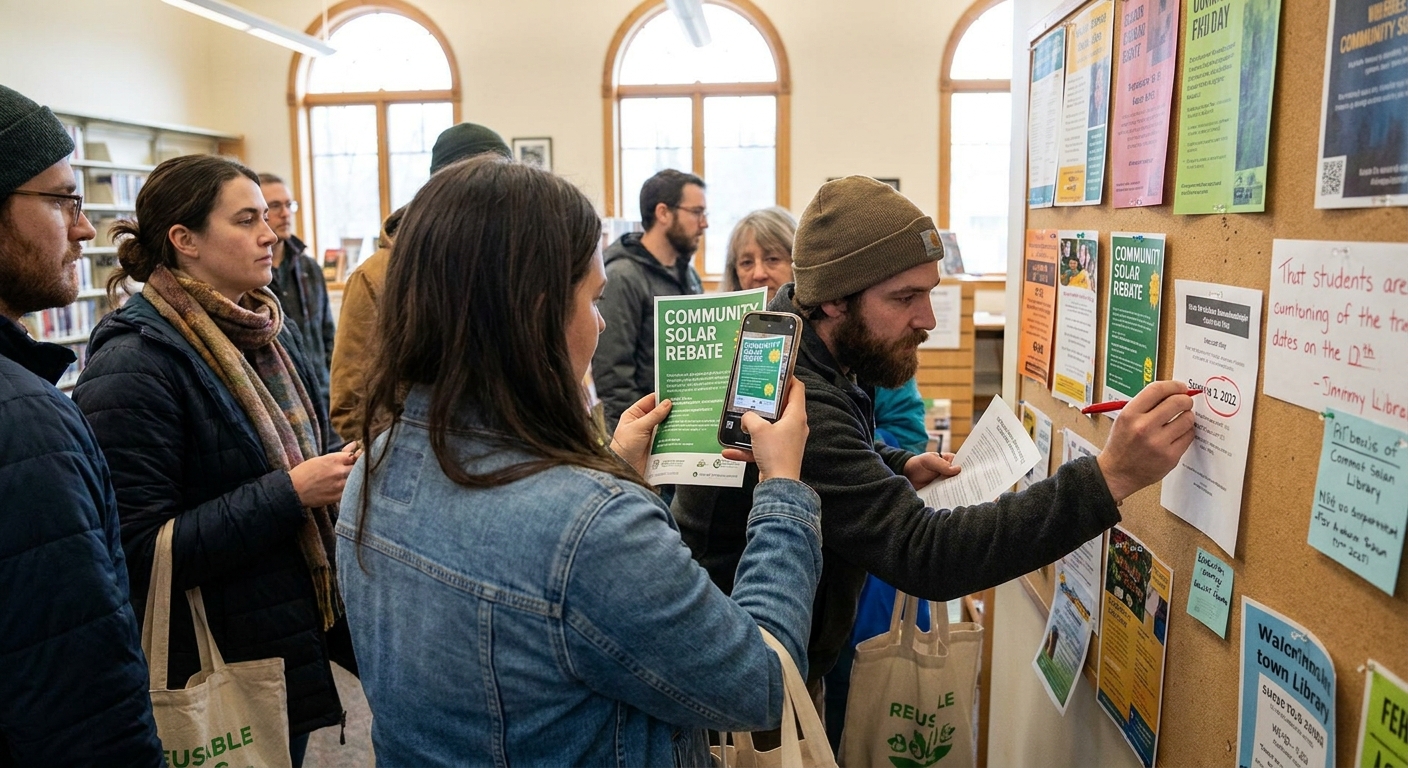
If you already liked the idea of turning overlooked local information into savings, this pairs nicely with The ‘Neighborhood Flyer Shortcut’: Turn Boring Community Notices Into Real Rebate Groups You Can Join. Same mindset. Ignore the ugly wrapper and look for the useful deal inside.
Step 2: Find the human being attached to the program
You are looking for a name, title, email, and phone number. Usually this will be a procurement manager, cooperative purchasing coordinator, energy program manager, supplier diversity officer, membership director, or facilities contact.
Do not stop at the PDF. PDFs do not answer questions.
Step 3: Ask partner-style questions
Here is the kind of note that gets better responses:
Hello, I noticed your agency participates in [program/co-op/vendor contract]. I am part of a local [neighborhood group/nonprofit/small-business network/association] trying to organize a community purchase around [product or upgrade]. We are not asking to bypass your rules. We want to understand whether there is an existing path for affiliated groups, nonprofit partners, or community pilots to use similar pricing, vendor relationships, or rebate support. If not, is there a vendor contact or program manager you recommend we speak with?
That works because it is respectful, specific, and easy to route.
What you are really looking for
Not every contract can be opened to the public. Some absolutely cannot. But several useful things can still come from the conversation.
A vendor already set up for bulk orders
Even if the exact city contract is restricted, the vendor may be willing to create a parallel group offer for residents, landlords, nonprofits, or small firms because the pricing framework already exists.
A rebate structure you can copy
Sometimes the public agency has a template. For example, a lighting upgrade campaign, appliance replacement push, or electrification incentive with pre-approved products and installer standards. That can save you weeks of trial and error.
An affiliate or membership route
Some cooperatives allow nonprofits, schools, libraries, faith groups, or quasi-public organizations to join directly. Others permit participation through an association.
A better contact than the one you started with
This matters more than people realize. One good introduction to the utility efficiency manager or contract vendor rep can unlock far more than random cold emails ever will.
Where residents and small businesses get stuck
The usual problem is not that savings do not exist. It is that nobody translates them.
A county might have an approved contract for heat pumps. A school district might belong to a national purchasing network with strong equipment pricing. A utility might have rebate add-ons for bulk installations. A trade association might have member discounts hidden in a benefits page. But nobody turns that into a simple neighborhood offer like, “If 25 homes sign up, this approved installer will honor volume pricing and bundle the rebate paperwork.”
That translation step is where regular people win.
A simple playbook any community can run
Pick one category
Do not try to organize discounts on ten products at once. Start with one thing people already need, such as insulation, LED upgrades, smart thermostats, EV chargers, office printers, or water-saving fixtures.
Map the institutions already buying it
List local agencies, schools, utilities, hospitals, housing authorities, and associations that might already purchase that item in volume.
Identify the co-op or vendor contract behind it
You are trying to answer one question. Who already negotiated this?
Build a small demand group
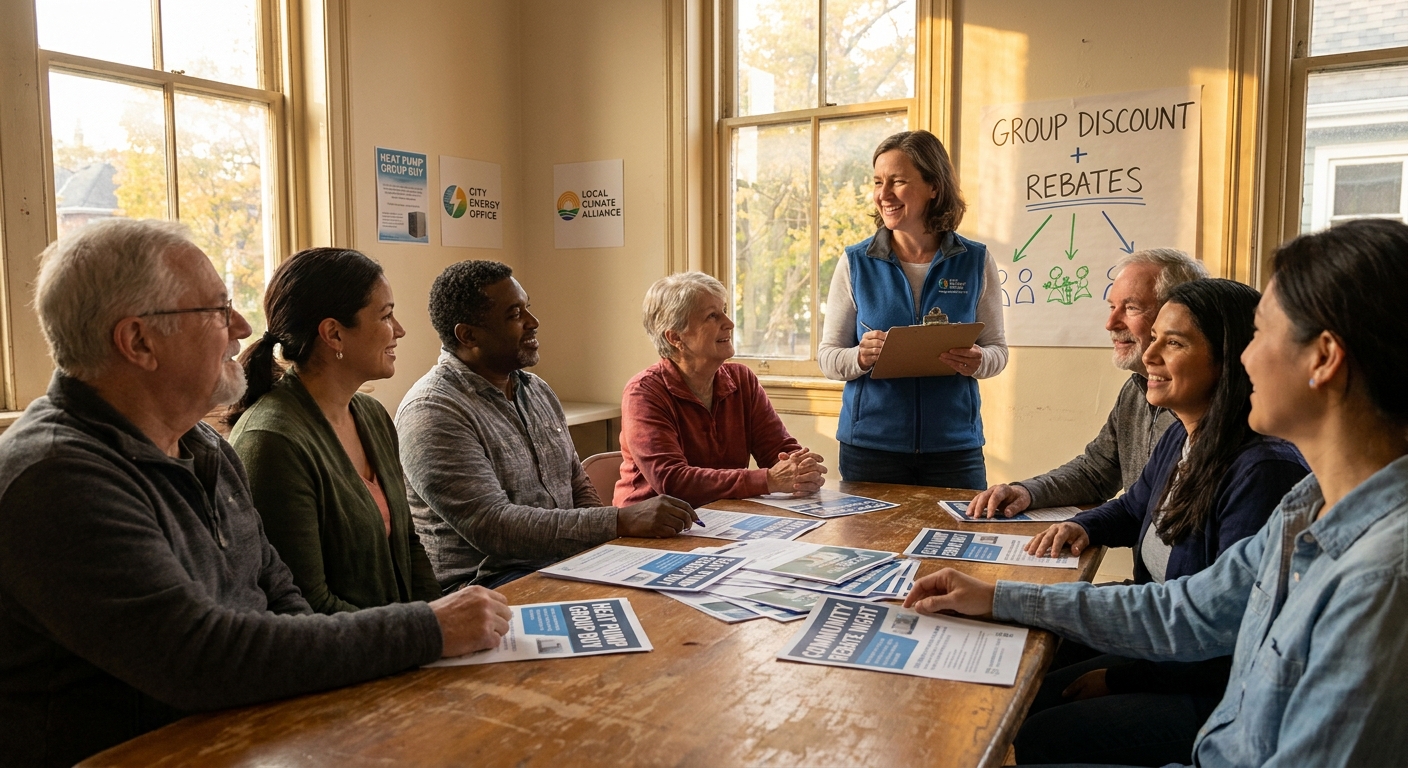
You do not need 10,000 followers. You might need 15 interested homes, six small businesses, or one neighborhood association with a mailing list.
Ask for a mirror offer
Use the public contract as proof that there is already a stable pricing and service structure. Then ask the vendor for a community-facing version.
Keep paperwork simple
Use a one-page interest form. Gather names, email addresses, estimated quantity, and timeframe. That is enough to show demand without creating chaos.
Red flags to watch for
Not every “group discount” is a real deal. Some are just marketing dressed up as community savings.
No clear baseline price
If the vendor cannot show what the normal price is, the “discount” may be meaningless.
Pressure to pay upfront before terms are clear
A real program should explain eligibility, timeline, and rebate process before asking for money.
Claims that sound too broad
“This city contract means everyone gets 40 percent off” is usually not how public purchasing works.
Missing rebate fine print
Ask who submits the rebate, what documentation is needed, and whether funds are limited or first-come, first-served.
Best places to find hidden co-op clues
If the main procurement page is a maze, check these corners of a website too:
- Board meeting agendas and attachments
- Capital improvement plans
- Facilities department pages
- Sustainability or climate action pages
- Bid award notices
- Vendor registration portals
- Member benefits pages for associations
You are looking for the names of programs, contract numbers, vendors, and participating organizations. Once you have those, your search gets much easier.
How to make your ask more likely to succeed
Officials and association staff are busy. Help them help you.
- Be specific about the product or service.
- Mention your estimated group size.
- Explain the public benefit, such as energy savings or local business support.
- Ask for the right next step, not a giant custom program on day one.
- Be open to a pilot.
A pilot is often the sweet spot. It is less scary than “open this to the whole city,” and more useful than a vague maybe.
Small businesses should pay attention here too
This is not only a homeowner story.
Small businesses often get squeezed because they buy too little to command serious discounts and too much to ignore rising costs. If you are part of a local merchant group, business association, downtown district, or trade network, you can use the same approach to organize around shared needs. Think HVAC maintenance, lighting retrofits, point-of-sale hardware, cleaning supplies, internet service, or energy upgrades.
In plain English, this is how smaller players can act like bigger buyers.
At a Glance: Comparison
| Feature/Aspect | Details | Verdict |
|---|---|---|
| Starting point | Using an existing public co-op or vendor contract is usually faster than building a fresh rebate club from scratch. | Best first move |
| Access for regular people | Residents and small businesses are not always directly eligible, but parallel offers, pilots, or affiliate paths are sometimes possible. | Promising, but verify |
| Savings potential | The biggest value often comes from pre-negotiated pricing, approved vendors, and easier rebate paperwork, not just a lower sticker price. | Very worthwhile |
Conclusion
The big lesson is simple. A lot of useful rebate power is already out there, quietly sitting inside city, county, school, utility, nonprofit, and trade association buying groups. Most of it never gets translated into street-level savings that regular households or small businesses can actually use. That is the gap. If you learn how to spot these co-ops on public websites, find the right contact, and approach them like a partner instead of a complainer, you can skip months of starting from zero. You may not get direct access to every contract, but you can often uncover vendor pathways, copyable rebate structures, or community pilots that turn institutional buying power into real local savings. That means faster discounts, more bargaining power for smaller players, and a repeatable system your neighborhood can run without needing a giant platform, a viral post, or a tech startup to make it happen.