You are not imagining it. Trying to figure out how to find legit community rebate buying groups can feel weirdly shady. One minute you see a screenshot of a receipt with a payout note. The next minute someone wants you to join a private Discord, download an app you have never heard of, or send money to a stranger “to hold your spot.” That is where most normal people tap out. Fair enough.
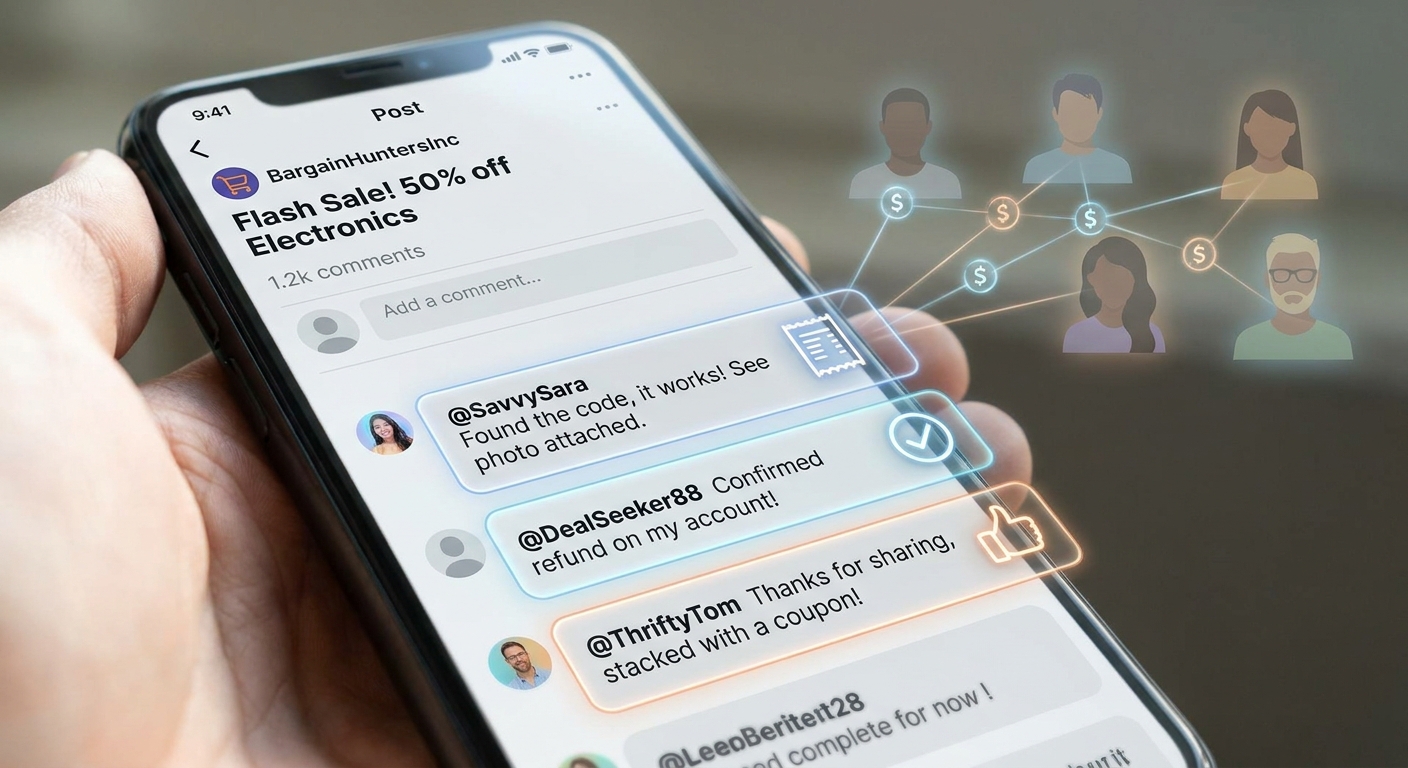
A safer shortcut is to start with the screenshots people already post. Not the polished promo graphics. The messy, everyday proof shots. A receipt, a rebate confirmation, a payout screenshot, a chat thread where several members confirm they got paid this week. Those little bits of proof can lead you to real, active rebate communities that already have trust built in. Instead of asking, “What group is promising the most?” ask, “What group has recent proof from regular people, clear rules, and low-risk entry?” That simple switch can save you time, money, and a lot of headaches.
⚡ In a Hurry? Key Takeaways
- Start with user-posted screenshots of recent payouts and receipts, not flashy landing pages or vague promises.
- Join groups that let you observe first, read pinned rules, and test one small rebate before doing anything bigger.
- If a group hides proof, pressures you to pay upfront, or rushes you off-platform, skip it.
The Screenshot-to-Invite Shortcut, in Plain English
Here is the basic idea. When you spot a random receipt screenshot, order confirmation, or payout post in a Facebook group, Reddit thread, Discord server, or comment section, treat it like a breadcrumb.
Do not focus only on the product. Focus on the community around the screenshot.
Ask simple questions. Who posted it? Did other people reply with their own results? Is there a visible pattern of recent activity? Does the post mention a server, club, app, or organizer by name?
If yes, you may have found something much more useful than a one-off deal. You may have found a working rebate circle with real members.
Why This Works Better Than Searching Official Pages
Official sites tell you what a group wants to be. Community proof shows you what it actually is.
That matters because many new buying groups look polished. Nice logo. Clean sign-up page. Big earnings claims. But when you dig a little deeper, there is no visible member chatter, no recent proof of payouts, and no clear trail showing that normal people are actually using it.
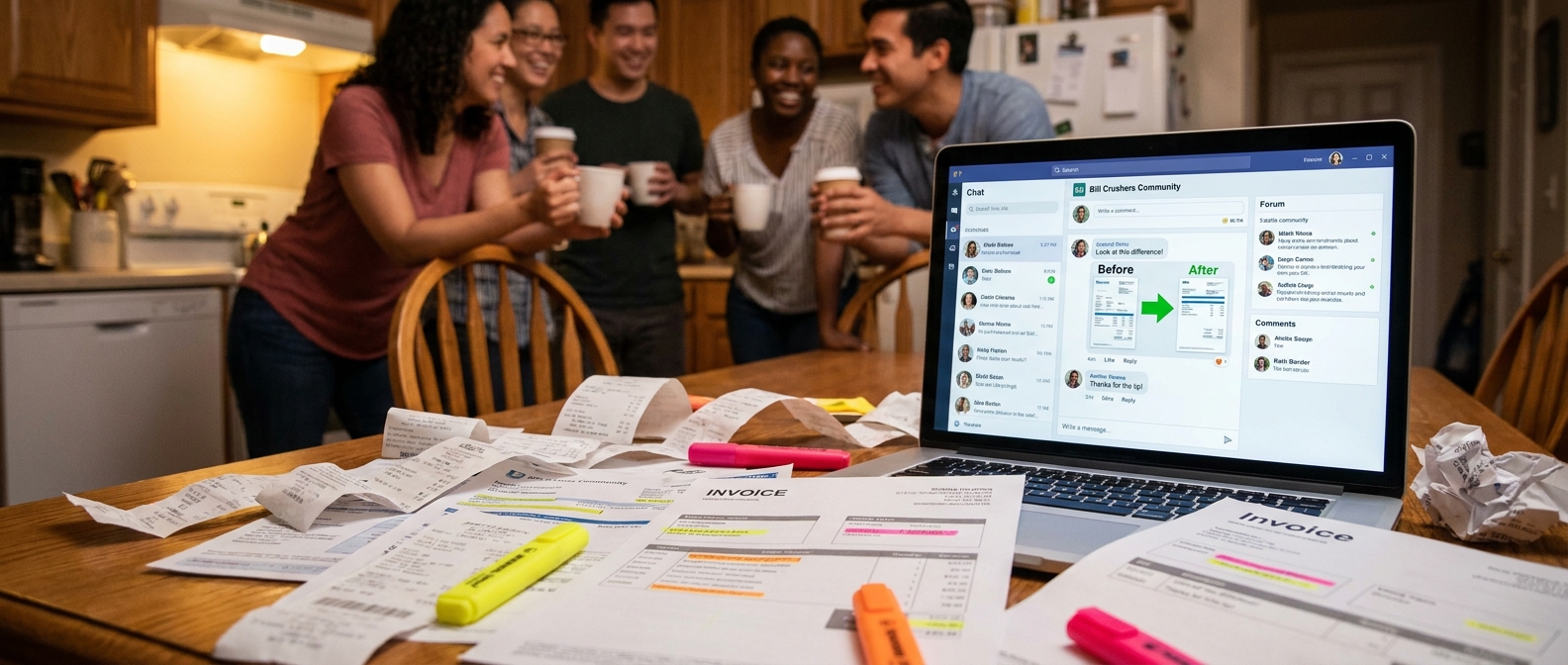
Receipts and payout screenshots posted by members are harder to fake at scale, especially when they show up over time from different people. One screenshot proves very little. Ten screenshots across two weeks, with comments, follow-ups, and timestamps, start to tell a real story.
How to Find Legit Community Rebate Buying Groups Step by Step
1. Start where people casually share wins
Look in places where users brag a little. Small deal forums, Facebook comments, subreddit threads, Discord channels, and niche shopping groups are all fair game.
You are looking for unpolished proof. Think “Got my rebate today” or “This one cleared in 48 hours,” not “Join now for massive passive income.”
2. Zoom in on recent screenshots
Recency matters. A screenshot from eight months ago is basically ancient history in rebate-land.
Look for posts from the last few days or weeks. If a group paid people recently, that is a strong sign it is still functioning.
3. Follow the invite trail carefully
Sometimes the screenshot itself mentions the group name. Sometimes it is in the comments. Sometimes the poster says, “DM me for the invite.”
That is your next step, but go slow. Ask for the group name and rules first. You do not need to hand over money or personal details just to look around.
4. Lurk before you leap
A good community will usually let you read, watch, and get a feel for how things work before asking you to do much.
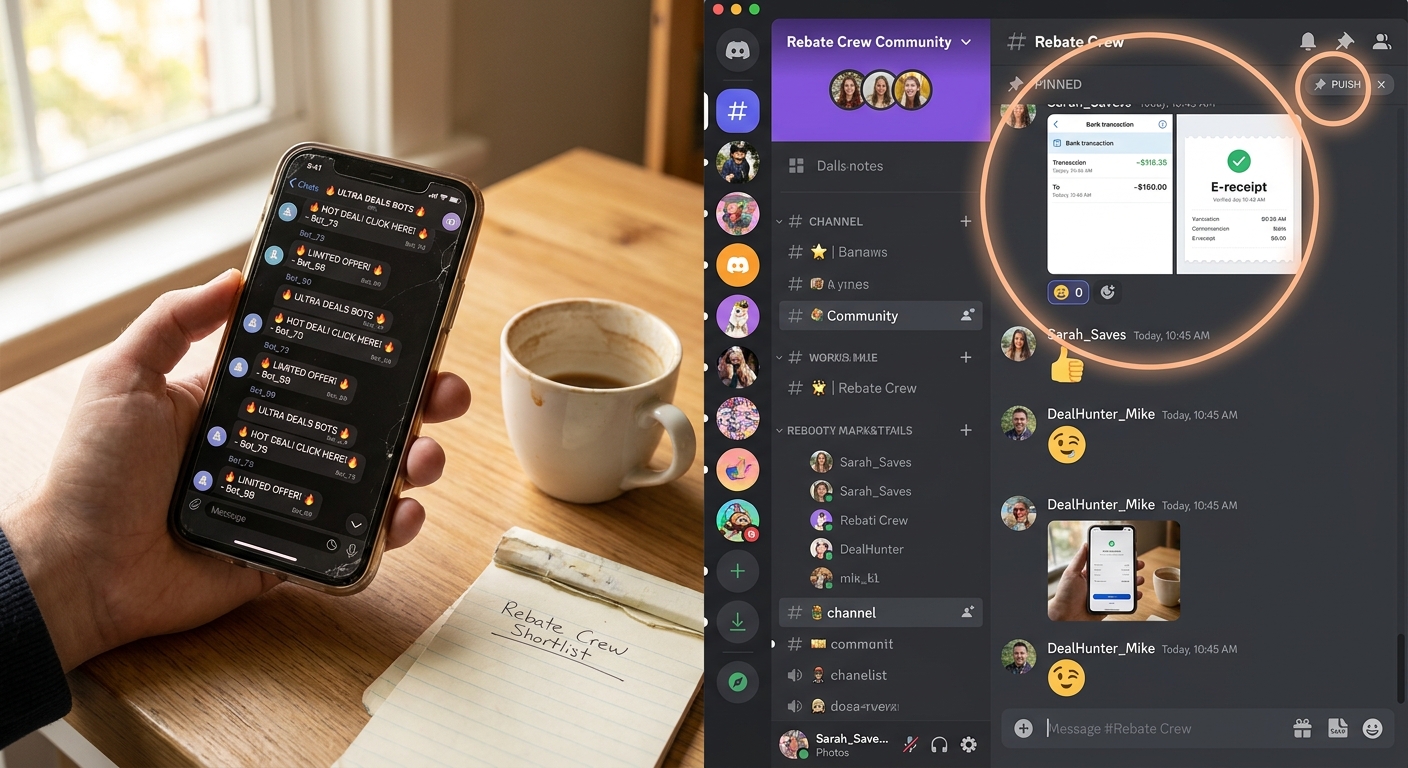
Read the pinned posts. Scan recent deal threads. Check whether moderators answer beginner questions without getting defensive.
This is also where our guide on The ‘Pinned Proof Shortcut’: Turn Random Deal Servers Into Real Rebate Crews You Can Trust fits nicely. If screenshots get you in the door, pinned proof helps you decide whether to stay.
5. Test with one tiny transaction
Never start big. Pick the smallest, simplest offer you can.
Maybe that means one low-cost item with a clear rebate path. Maybe it means a club with no upfront fee where you can try one order and wait for payout. Either way, your first goal is not profit. It is verification.
What Good Rebate Communities Usually Have in Common
Legit groups are rarely perfect, but they tend to share a few traits.
Visible proof from multiple members
You want to see more than one success story. Better still, you want a trail of them.
Clear rules
How do offers work? When do rebates pay? What gets you disqualified? If the rules are fuzzy, that is a problem.
Moderators who answer normal questions
If every basic question gets brushed off with “Just trust the process,” move on.
Low-pressure onboarding
Healthy groups do not need to trap you. They know people will stay if the deals are real.
Recent activity
An active group leaves fingerprints everywhere. New posts. New payout confirmations. New member questions. Ongoing chatter.
Red Flags You Should Treat Like a Stop Sign
Some warning signs are subtle. Others are basically neon.
Upfront payment to a person, not a platform
If someone wants Venmo, Cash App, or crypto before you can even see how the system works, be careful.
No proof beyond testimonials
Words are cheap. Screenshots can be faked too, but a total lack of proof is worse.
Constant urgency
If every message sounds like “Join in the next 10 minutes or lose out forever,” that is pressure, not community.
Off-platform pressure
If a group immediately pushes you into private messages and avoids public questions, that is a bad sign.
Messy payout explanations
If nobody can clearly explain when money arrives, where it comes from, or why members sometimes do not get paid, step back.
What to Screenshot Yourself Before Joining
This part is easy to overlook, but it helps a lot.
Before you try any offer, take your own screenshots of the rules, payout terms, item requirements, and chat instructions. Save invite links too.
If something changes later, you have a record. That protects you if there is confusion and helps you compare one group against another.
Think of it as making your own paper trail, just with your phone.
A Low-Risk Way to Compare Two or Three Groups
If you are choosing between communities, keep it simple. Compare them on three things only.
- How much recent user proof can you see?
- How easy is it to understand the rules?
- Can you start small without sending money to a stranger?
That is enough to weed out a lot of junk.
You do not need a giant spreadsheet. You just need a calm head and a willingness to skip anything that feels rushed or murky.
Why Small Communities Can Be Better Than Big Public Hype
The biggest groups get attention first, but that is not always where the best opportunities live.
Smaller rebate communities often have tighter moderation, more recognizable members, and a stronger culture of posting proof because trust matters more there. You can see who is helping, who is getting paid, and who has been around for a while.
That kind of visible history is often more useful than a slick app store listing.
At a Glance: Comparison
| Feature/Aspect | Details | Verdict |
|---|---|---|
| Recent screenshot proof | Multiple members show recent receipts, rebates, or payout confirmations in public channels. | Strong positive sign |
| Entry process | You can read rules, observe chats, and test a small offer before making any bigger commitment. | Safer and more beginner-friendly |
| Pressure level | Low-pressure groups explain clearly. Risky groups rush you, hide details, or ask for direct payment fast. | High pressure is a warning sign |
Conclusion
If you have been wondering how to find legit community rebate buying groups without stumbling into something sketchy, the easiest place to start is not a fancy homepage. It is the humble screenshot. Real receipts, real member chatter, and real recent payouts tell you far more than glossy promises do. In a market crowded with new buying groups, apps, and private servers all asking for your attention, this approach helps you spot the communities that already have trust and momentum. That keeps you safer from bad actors, gets you into working rebate circles faster, and helps you grow from a cautious deal lurker into someone who can recognize a solid rebate club before everyone else piles in.