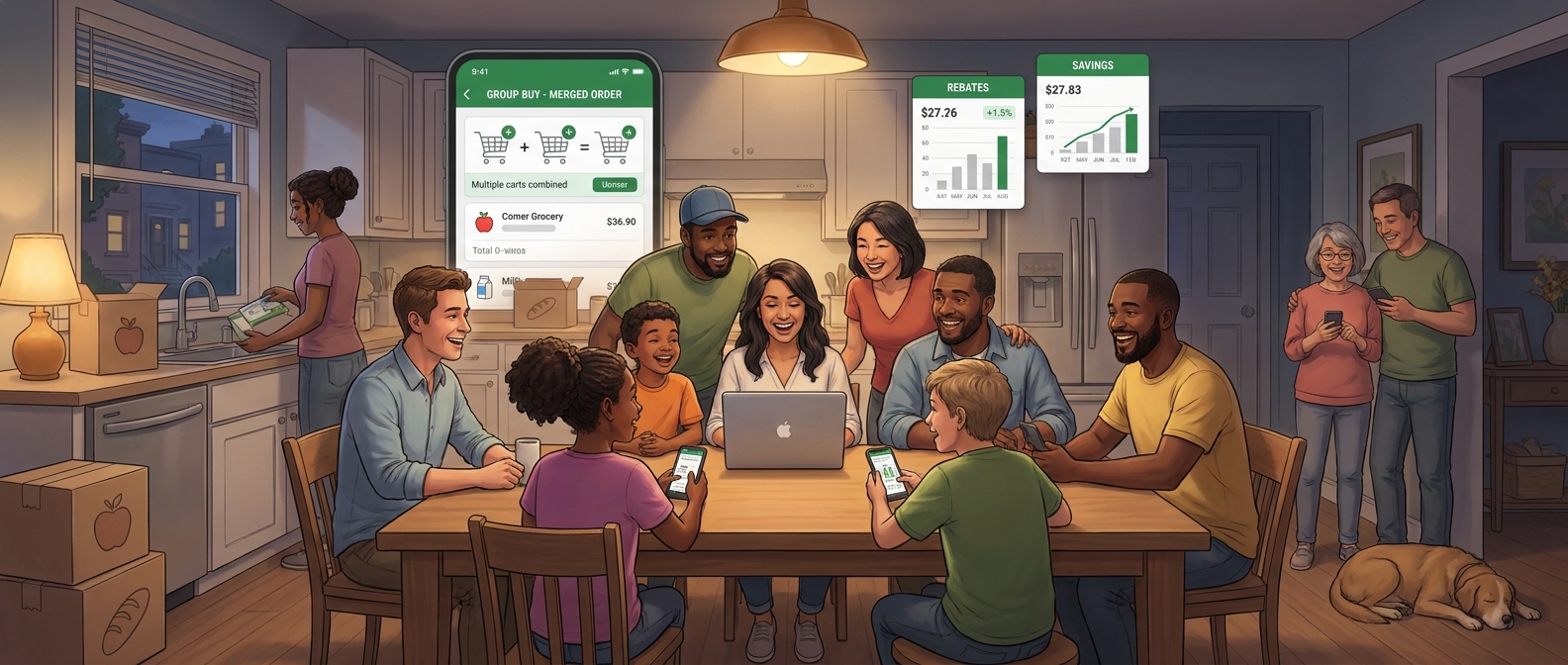
You are not wrong to feel burned out by “deal groups.” You join one on Facebook, scroll past ten spam posts, three expired coupons, and one sketchy payment request, then wonder why saving money suddenly feels like a part-time job. The good news is the better discounts have not disappeared. They have moved. A lot of the real action now sits inside quieter bulk buying apps used by neighborhoods, parent groups, school communities, apartment buildings, and small business circles. That is where repeat orders happen, and repeat orders are what make real rebates possible. If you want to learn how to use bulk buying apps to join rebate groups, the trick is not just finding any app. It is finding an active buying pod, seeing whether orders happen on a schedule, and asking one simple question: “If we place this order every month, can we get standing pricing or a recurring rebate?” That question changes everything.
⚡ In a Hurry? Key Takeaways
- Bulk buying apps work best when you join active private groups that order regularly, not noisy public deal channels.
- Before joining, check for repeat purchases, clear payment rules, and a group organizer who posts deadlines and order history.
- The biggest savings often come when you ask for recurring group pricing or a standing rebate, which is safer and more useful than chasing random one-off coupons.
Why the old deal-group method stopped working
The problem with big public groups is simple. They are built for attention, not trust.
Anyone can drop in. Posts get buried fast. The “deals” are often affiliate links, referral bait, or offers that expire before most people even see them. Worse, there is usually no real group buying happening. Just a bunch of people looking at the same post by themselves.
That is not collective buying power. That is crowd noise.
Real rebate communities work differently. They buy together, often on the same schedule, from the same vendors, through the same organizer or app workflow. That consistency matters because sellers care less about one big order and more about repeat volume.
What a bulk buying app actually does
Think of a bulk buying app as a digital sign-up sheet with payment tools attached.
Instead of fifty people texting “I’m in,” the app tracks who wants what, how much is needed to unlock a price break, when the order closes, and how pickup or delivery works. Some are built for neighborhood buying clubs. Others are used by schools, offices, churches, sports teams, and local business networks.
The useful part for regular shoppers
You do not need to own a business to benefit from business-style pricing. You just need to be part of a group that buys enough of the same things often enough to matter.
That might mean pantry staples, cleaning supplies, printer paper, snacks for school events, pet food, produce boxes, or household basics. Boring items, honestly. But boring is where savings get steady.
How to use bulk buying apps to join rebate groups
Start with places where people already have a reason to trust each other. That is your best shortcut.
1. Look for communities, not “deal hunters”
Your best bets are:
- Neighborhood associations
- Apartment or condo resident groups
- PTA and school parent circles
- Church and community center groups
- Small business networks
- Local sports team parent chats
If the group already coordinates anything, meals, events, supplies, fundraising, it is much easier to turn that into a repeat buying pod.
2. Check whether the app supports group ordering clearly
You want tools that make these things obvious:
- Order deadlines
- Minimum quantity targets
- Price changes when volume increases
- Named organizer or admin
- Pickup or delivery details
- Payment method inside the app or through a trusted invoicing system
If the process feels vague, that is a warning sign. Good group buying tools reduce confusion. They do not add more of it.
3. Watch one order before jumping into five
Do not go all in on your first day. Join the group, read the last few posts or order notes, and see how it operates.
Ask yourself:
- Are people actually completing orders?
- Does the organizer post updates on time?
- Are members talking about past deliveries, not just future promises?
- Do prices look realistic?
A healthy rebate group has history. Not hype.
4. Ask the question that turns a one-off order into a rebate club
This is the move most people miss.
Once a group successfully places one or two bulk orders, ask: “If we do this every month, can we get recurring group pricing, account credit, or a standing rebate?”
That is the real shortcut.
Vendors often say yes to repeat business in some form, even if they do not advertise it publicly. They may offer:
- A fixed monthly discount tier
- Credit after every third or fourth order
- Free delivery once a spending threshold is reached
- Member-only pricing for returning groups
- Seasonal bonus rebates tied to order volume
You are not begging for a coupon. You are asking for terms based on reliable demand.
How to spot an active buying pod
Not every private group is worth your time. Some are just quieter versions of the same mess.
Here is what a solid group usually has:
Regular rhythm
Weekly, biweekly, or monthly ordering is a great sign. Random “maybe next month” activity is not.
Clear organizer
Someone should be responsible for deadlines, vendor contact, and updates. If nobody seems in charge, things fall apart fast.
Shared purpose
The best groups are built around a need, not just a love of discounts. Parents need snack packs. Neighbors need household staples. Offices need coffee and paper goods. Need keeps the group alive.
Simple money rules
Payment should be upfront, documented, and easy to verify. Avoid groups where one person asks everyone to send money to a personal account with no records.
Safety checks that keep you away from scams
This matters. A lot.
Social media “deal” culture trained people to move fast. Scammy sellers love that. Real group buying should feel organized, not rushed.
Green flags
- Known members or locally connected members
- Past order screenshots or invoice history
- Named supplier with real contact info
- Order summaries visible to members
- Clear refund or substitution policy
Red flags
- Pressure to pay immediately through gift cards or unusual apps
- Deals that sound wildly cheaper than normal retail
- No mention of vendor name or delivery timeline
- Admin accounts with little history
- Constantly changing terms
If it feels slippery, walk away.
Where many people find these groups now
You may not find the best rebate communities by searching “best coupon group.” Try searching by function instead.
Look for phrases like:
- community purchasing group
- neighborhood bulk order
- school supply buying club
- co-op order app
- group ordering for residents
- local wholesale club for families
The language is often less flashy because these groups are built to run, not to go viral.
If you like this smaller, trust-based approach, you may also like The ‘Micro‑Niche Meetup’ Shortcut: Turn Tiny Interest Groups Into High‑Power Rebate Communities, which gets into why smaller circles often beat giant public groups for repeat savings.
What to say when you want to join
You do not need a perfect script. Keep it simple and normal.
Good questions to ask
- How often does this group place orders?
- What items usually hit the best price breaks?
- How do payments work?
- Is there a minimum order to join?
- Has the vendor offered repeat-order discounts before?
That last question is especially useful. It tells you whether the group is thinking long term or just chasing one lucky deal.
If there is no rebate club yet, you can help start one
This sounds bigger than it is.
Sometimes all you need is one successful group order and a little follow-up. If your neighborhood, school, or parent group already buys the same things over and over, suggest a trial order for a product everyone recognizes and uses.
Keep it boring. Keep it practical.
Then track:
- How many people joined
- Total order size
- How much each person saved
- Whether the vendor seemed open to repeat pricing
After that, ask for a standing arrangement. That is how casual coordination turns into a real rebate community.
At a Glance: Comparison
| Feature/Aspect | Details | Verdict |
|---|---|---|
| Public deal groups | High volume of posts, low trust, lots of expired offers and little repeat buying structure | Good for browsing, weak for stable rebates |
| Private bulk buying apps | Structured orders, clear quantities, recurring schedules, easier to build vendor relationships | Best option for joining real rebate groups |
| Standing rebate clubs | Built on repeat orders, trusted organizers, and negotiated recurring discounts or credits | Most reliable way to save month after month |
Conclusion
The big shift right now is simple. Real collective buying power is moving into quieter tools used by neighborhoods, schools, small businesses, and local communities, not loud public deal groups full of noise. If you learn how to spot those tools, join a buying pod that actually orders on a schedule, and ask for recurring group pricing or a standing rebate, you can tap into savings that used to feel reserved for businesses and formal co-ops. It is a smarter, calmer way to save. And best of all, it keeps you far away from the scammy side of social media deals.