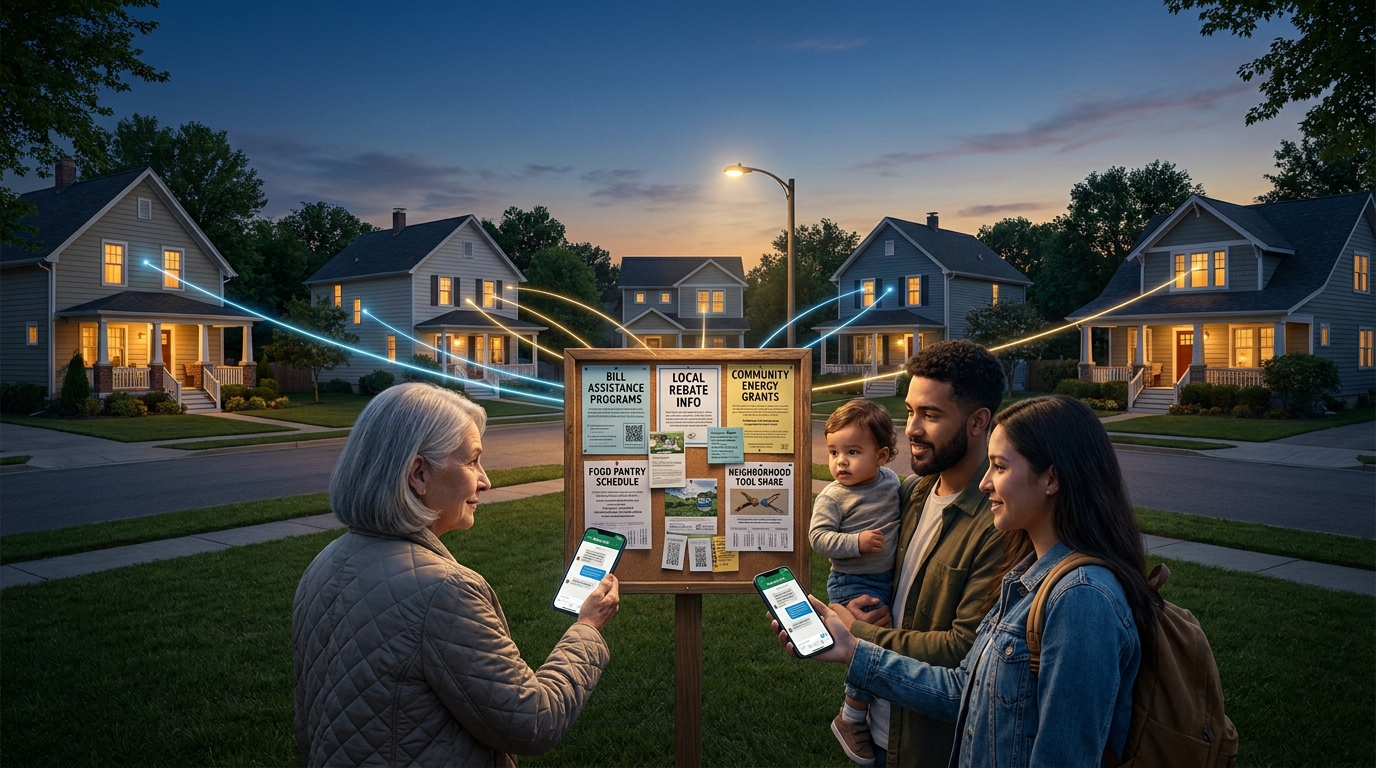
You are not wrong to feel like these utility-help posts are impossible to pin down. One day it is a church bulletin about power-bill relief. The next day it is a Facebook post about a city energy credit. Then it disappears, and you are left wondering who was actually behind it. That is the frustrating part. The public post is usually just the tip of the iceberg. Underneath it, there is often a real person, a nonprofit, a city office, a utility partner, or a neighborhood coordinator quietly putting a group together so more people can qualify for better rebates, payment help, or rewards. If you want to know how to find local community rebate groups, stop treating these posts like one-time announcements. Start treating them like clues. Once you do that, random bill-help messages become a map to the real organizers you can contact, join, and stay connected with long after the original post is gone.
⚡ In a Hurry? Key Takeaways
- The fastest way to find local community rebate groups is to trace every utility-help post back to the human organizer, department, or nonprofit behind it.
- Save the flyer, screenshot the post, then call or email the listed office and ask what partner groups, signup lists, or recurring programs are connected to it.
- Stick with city agencies, utility websites, churches, libraries, and known nonprofits first. That helps you avoid scams while finding the real long-term programs.
The shortcut is simple. Follow the organizer, not the post.
Most people stop at the ad. That is understandable. The ad feels like the offer. But in a lot of cases, the offer is just the front door.
A church flyer about emergency bill help may be funded by a local nonprofit. A city page about smart thermostat rebates may be tied to a community enrollment program. A utility post about demand-response rewards may run through neighborhood ambassadors, senior centers, or housing groups.
That means the question is not just, “Can I get this discount?”
The better question is, “Who is organizing this, and what else are they running?”
Why this works better now than it used to
There has been a real spike in cost-of-living relief programs, energy savings campaigns, weatherization drives, and local rebate partnerships. Utilities want lower peak demand. Cities want residents to use available assistance. Nonprofits want to reach more households. Vendors want group signups.
So a lot of organizations are teaming up in ways that are not obvious from a single post.
You may only see “Free home energy workshop Tuesday” or “Apply for shutoff protection help.” Behind that, there may be a mailing list, a neighborhood enrollment group, a bulk-purchase program, or a referral network that keeps sending new rebate offers.
That is the hidden value. You are not just chasing one bill credit. You are finding the people who hear about the next one first.
How to find local community rebate groups from a single flyer or post
1. Screenshot everything before it disappears
Do this first. Save the Facebook post, flyer, Eventbrite page, city calendar entry, or church bulletin image.
Look for these clues:
- Organization names
- Staff names
- Phone numbers
- Email addresses
- Partner logos
- Event location
- Utility account requirements
- Words like “in partnership with,” “hosted by,” or “funded through”
Those little details matter. They tell you who is doing the real work.
2. Find the official version of the offer
If the post was on social media, search the exact program name plus your city or utility name. If the flyer mentions “energy relief,” “bill assistance,” or “share the light,” search those words with the names of any listed organizations.
Your goal is to find the official page, not just a repost.
That is usually where you will spot the connected departments, sponsors, and signup forms.
3. Call and ask the one question that opens doors
Use plain language. Say this:
“I saw your post about bill help. Is this part of a larger community program or partner group I can join to hear about future rebates and energy-saving offers?”
That question works because it moves the conversation from a one-time application to an ongoing relationship.
Often the answer will be something like:
- “Yes, we have a neighborhood workshop list.”
- “Yes, our nonprofit works with the utility on other programs too.”
- “Yes, the city sustainability office sends updates.”
- “Yes, our housing partner handles group signups.”
4. Ask who else they work with
This is the part people skip. Do not.
After you confirm the program is real, ask:
- Who are your community partners?
- Do you host events with libraries, churches, or neighborhood groups?
- Is there a mailing list for future offers?
- Are there other rebate or assistance programs you recommend?
That is how one small post turns into three or four useful contacts.
The best places to trace these groups
City government pages
Check sustainability offices, community services, housing departments, senior services, and emergency assistance pages. These often link to nonprofit partners and pilot programs that do not show up in a normal search.
Utility company websites
Go beyond the main “rebates” page. Check sections for bill assistance, energy savings, demand response, community outreach, and low-income support. Utilities often work through local enrollment partners.
Churches and faith groups
Many churches help distribute emergency utility funds or host sign-up events. Even if you are not a member, they may know which agency or coalition is coordinating help in your area.
Libraries and community centers
These are underrated. Staff often know about workshops, enrollment days, and city outreach events before they get broad attention.
Local news sites and radio stations
Small local outlets often mention the organizer name even when social posts do not. That can give you the exact nonprofit or office to contact.
Look for signs that a “one-time” offer is really a group program
Here are some tells:
- The post mentions registration windows or waitlists
- There is a workshop, webinar, or in-person signup day
- Multiple logos appear on the flyer
- The language mentions “participants,” “cohort,” “residents,” or “enrollment partners”
- The program bundles products or services, like thermostats, insulation, internet, or solar consultations
Those usually mean there is some structure behind it. Structure means people. People mean a group you can likely reconnect with later.
What to say when you reach a real person
You do not need insider language. Keep it simple.
Try this script:
“Hi, I saw your post about utility bill help. I’m interested in the current offer, but I also wanted to ask whether you run a community group, email list, workshop series, or partner program for future rebates and savings programs.”
If they sound rushed, ask just one follow-up:
“Who is the best person or office to contact about ongoing programs like this?”
That is often enough to get the real lead.
How this connects to other rebate-group shortcuts
Sometimes the organizer you find through a utility-help post is the same kind of local connector you would meet at an expo, a trade event, or a neighborhood fair. If that sounds familiar, you may also like The ‘Event Piggyback’ Shortcut: Slip Into Real-World Rebate Groups Hiding Inside Local Sales & Trade Events. It covers another practical way to meet the people behind offers that seem random from the outside.
Red flags to watch for
Requests for upfront payment
Real assistance or rebate programs do not usually ask for an application fee through cash apps or gift cards.
No traceable organization
If you cannot find a utility, city office, nonprofit, church, or business with a real address and phone number, be careful.
Pressure to act before you can verify
Urgency is common in scams. A real program may have deadlines, but staff should still be willing to explain who they are.
Generic forms asking for too much
Be cautious if a random link asks for your Social Security number, banking information, or full account access before you have confirmed the program is real.
Build your own mini contact list
Once you find one legitimate organizer, do not let that trail go cold.
Make a short list on your phone or in a notes app with:
- Program name
- Organizer name
- Department or nonprofit
- Email and phone number
- Partner organizations
- When the next signup window opens
After a month or two, you will often have a much clearer map of who really runs local savings programs in your area.
That is how you stop starting from zero every time a new post appears.
At a Glance: Comparison
| Feature/Aspect | Details | Verdict |
|---|---|---|
| Random social post | Good for spotting an offer, but often missing organizer details and follow-up paths. | Useful clue, not the finish line. |
| Official city, utility, or nonprofit contact | Usually reveals partner programs, mailing lists, workshops, and related rebates. | Best route to real community rebate groups. |
| One-time aid vs ongoing group access | Emergency help may solve today’s bill, while group connections can lead to future savings and repeated offers. | Aim for both, if you can. |
Conclusion
The next time you see a half-clear post about utility help, do not shrug and move on. Treat it like a breadcrumb. Right now there is a sharp rise in community programs tied to energy costs, bill relief, demand-response rewards, and service rebates. That means more organizers, coordinators, and partner nonprofits are quietly bundling people together to unlock better deals. Most people only see the public ad and never step through the door. You can. If you start viewing every utility-help post, church flyer, and city rebate page as a path to a real human contact, you will be much better at how to find local community rebate groups. And once you find the people behind the post, you are not just chasing one offer. You are building access to the next one too.