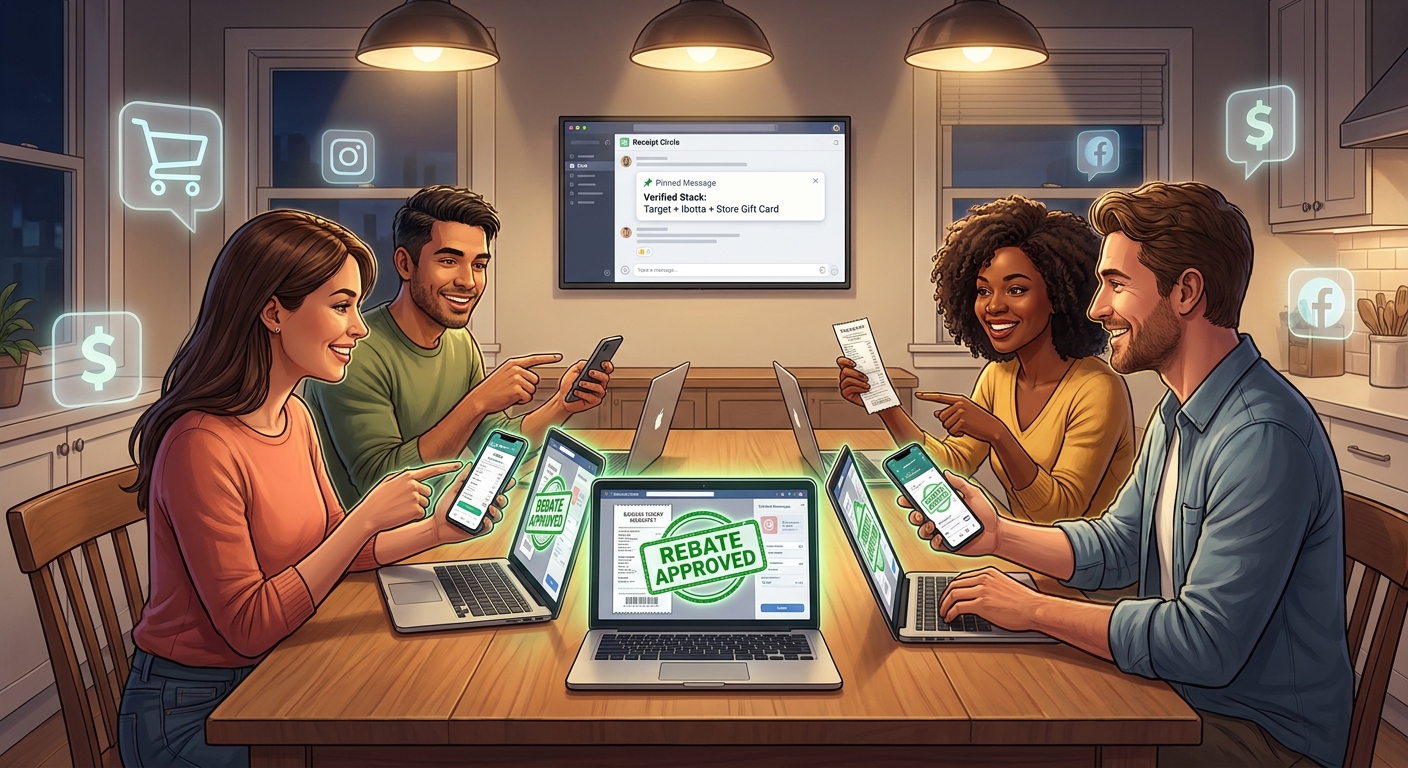
You are not imagining it. Those “I paid $4 for all this” videos can make you feel like you missed the secret meeting. You clip the coupon, open the rebate app, type in the code, and somehow your total is still nowhere close. Or worse, the code died three hours ago. That is usually because the real work is not happening in the video. It is happening in small private chats where a few sharp shoppers test the stack first, compare receipts, and warn each other before everyone wastes money. If you want to know how to join coupon influencer communities for rebate deals, stop thinking like a viewer and start acting like a useful regular. The goal is not to chase every viral haul. It is to find one creator with a style that matches your stores, then build or join a tight receipt circle around their best deals.
⚡ In a Hurry? Key Takeaways
- The best rebate deals often live in small creator-centered groups, not public coupon pages.
- Join by becoming helpful first. Share tested results, clear screenshots, and honest deal math.
- Keep circles small, require proof, and avoid anyone asking for money, logins, or sketchy “guaranteed” hacks.
Why the public version of the deal keeps failing
By the time a deal hits your For You page, it may already be old news.
A lot of coupon influencers post after they know something worked. That sounds obvious, but it matters. The creator or their closest followers often tested the coupon stack, checked store pricing, confirmed the rebate app still recognized the item, and figured out whether it was regional.
You, on the other hand, are walking in cold.
That is why the math falls apart. Maybe your store has a different shelf price. Maybe the item size changed. Maybe the rebate limit was reached. Maybe one app stopped accepting the receipt five minutes ago.
The fix is not “follow more coupon accounts.” The fix is getting closer to the testing group.
What a receipt circle actually is
A receipt circle is a small group of shoppers who swap real-time proof about rebates and coupon stacks.
Think of it as a neighborhood watch, but for deal math.
The group usually shares:
- Store location and date
- Item size, flavor, or barcode details
- Screenshots of clipped coupons and rebate offers
- Final out-of-pocket cost
- Whether the rebate actually paid
That last part is huge. Plenty of deals look good at checkout but fail when you submit the receipt. A good circle cares about confirmed payouts, not just exciting screenshots.
How to find the right influencer community
Pick creators who match your actual shopping life
Do not start with the biggest name. Start with the one who shops where you shop.
If you mostly use Walgreens, Dollar General, Target, Kroger, or Walmart, look for creators who post there again and again. A creator who makes amazing CVS hauls is not very useful if you never go near CVS.
Also watch for style. Some creators focus on beginner-friendly digital coupon deals. Others go deep on rebate stacking with multiple apps. You want the second kind if your goal is repeatable rebates.
Look in the boring places
The best invite paths are often hidden in places people skip:
- Instagram broadcast channels
- Link-in-bio pages
- YouTube description boxes
- Telegram or Discord mentions in Stories
- Pinned comments under haul videos
- Email newsletters with “subscriber-only” deal notes
If a creator says, “My insiders already knew this one,” that is your clue. They have a smaller channel somewhere.
Watch who keeps showing up in the comments
This is one of the easiest shortcuts.
Every creator has a few regulars who comment with useful updates like “worked in Ohio,” “barcode matters,” or “Ibotta rejected the peach flavor.” Those are not random fans. They are often part of the real testing loop.
Follow them too. Sometimes the community is more visible around the repeat followers than the influencer.
How to join without looking like a deal leech
This is where most people blow it.
They show up and immediately ask, “Can someone send me all the codes?” That is the fastest way to get ignored.
Start by contributing proof
If you find a deal and test it, share:
- The store
- Your subtotal
- Your receipt image with personal info blocked out
- Which coupon or app worked
- Which part failed, if it failed
Useful beats enthusiastic. Every time.
Ask narrow questions
Bad question: “Any good deals today?”
Better question: “Did anyone test the 12-count version at Walmart, or only the 8-count?”
Specific questions show you understand the game. They also make it easier for experienced shoppers to answer quickly.
Be honest about your region
Pricing and rebates are often local. Tell people your store chain and state if it matters. That saves everyone time.
How to build your own invite-only rebate circle
If the creator does not already have a serious side group, you can make one.
Keep it small at first. Five to ten people is enough.
Start with the most reliable commenters
Message the people who consistently post actual results, not just fire emojis. Say you want a small group for confirmed rebate tests only. Keep the pitch simple.
Something like this works:
“A few of us keep testing the same creator’s deals after the post goes live. Want to join a tiny group where we only share confirmed rebate results and dead-offer warnings?”
Pick a simple home base
Use whatever people will actually check:
- Instagram group chat for quick creator-adjacent circles
- Telegram for fast alerts and easy media sharing
- Discord if you want channels by store or app
- Facebook Messenger if your group skews older and wants easy setup
Do not overbuild this. Fancy structure kills momentum early.
Set three rules on day one
These rules keep the group useful:
- Post proof, not rumors.
- Say whether a deal is tested, pending, or dead.
- No reselling referral links in the main chat.
That last one matters. Too many groups turn into spam pits.
How to make the group actually useful in real time
Create a simple tagging system
You do not need complicated tools. Just agree on labels:
- CONFIRMED
- FAILED
- YMMV
- REGIONAL
- DEAD
When someone drops a deal, everybody immediately understands the status.
Track stores and apps separately
A deal can succeed at checkout and still fail in the rebate app.
So separate the report into two parts:
- Store stack worked?
- Rebate app paid?
This is the difference between a fun coupon chat and a serious rebate circle.
Use shared templates
Have members post in the same format:
Store: Walmart
Item: Brand X 16 oz, strawberry only
Coupon: $2 digital clipped at 9:05 a.m.
Rebate apps: Ibotta approved, Shopkick pending
Final cost: $1.84 plus tax
Status: CONFIRMED
Neat posts save everyone from scrolling through chaos.
How to stay scam-resistant
Small groups are better, but they are not magic. You still need a few guardrails.
Never share account logins
No legit rebate circle needs your rebate app password, store account login, or email access. Ever.
Be careful with payment requests
If someone wants money for “premium codes” or “guaranteed glitch access,” walk away.
Real deal groups usually trade information, not mystery subscriptions.
Watch for screenshot theater
Some people post dramatic hauls without enough detail to repeat them. That is entertainment, not a system.
If nobody can explain the store, item size, and app payout path, treat it as unverified.
When brand programs can help your rebate circle
Sometimes the next step is not another influencer at all. It is getting closer to the brands behind the offers.
If your circle keeps spotting deals tied to sampling programs, ambassador clubs, or reviewer campaigns, read The ‘Brand Insider Gate’ Shortcut: Join Rebate Communities Hiding Inside Ambassador & Reviewer Programs. It is a smart next move when public cashback apps start feeling picked over.
That approach works especially well if your group likes trying new products before the broader coupon crowd catches on.
Signs you found a good community
- People post failed deals, not just wins
- Receipts are shared with private info blocked out
- Members correct old information quickly
- There is little to no pressure to buy unnecessary stuff
- The same people keep proving they test before they hype
If a group only celebrates giant hauls and never talks about misses, be careful. Good circles care about accuracy more than bragging rights.
At a Glance: Comparison
| Feature/Aspect | Details | Verdict |
|---|---|---|
| Public coupon forums | Lots of volume, but deals are often late, messy, or missing local details. | Good for browsing. Weak for fast rebate action. |
| Creator-centered receipt circles | Small groups testing deals in real time with receipts, screenshots, and dead-offer alerts. | Best option for repeatable, verified rebate stacks. |
| Paid “secret deal” groups | Can be useful, but many are heavy on hype and light on proof. | Proceed carefully. Demand clear evidence before joining. |
Conclusion
If you have been wondering how to join coupon influencer communities for rebate deals, the answer is simpler than it looks. Stop hovering at the edge of viral haul posts and move closer to the small groups that test the math before everyone else shows up. The fastest-moving rebate action is happening in little pockets around individual creators, not giant public forums. When you join or build a focused receipt circle, you get better data, fewer failed deals, and bigger rebates you can actually repeat. Keep the group small, useful, and proof-driven, and you will spend a lot less time chasing dead coupons and a lot more time getting the deal you thought you were getting in the first place.