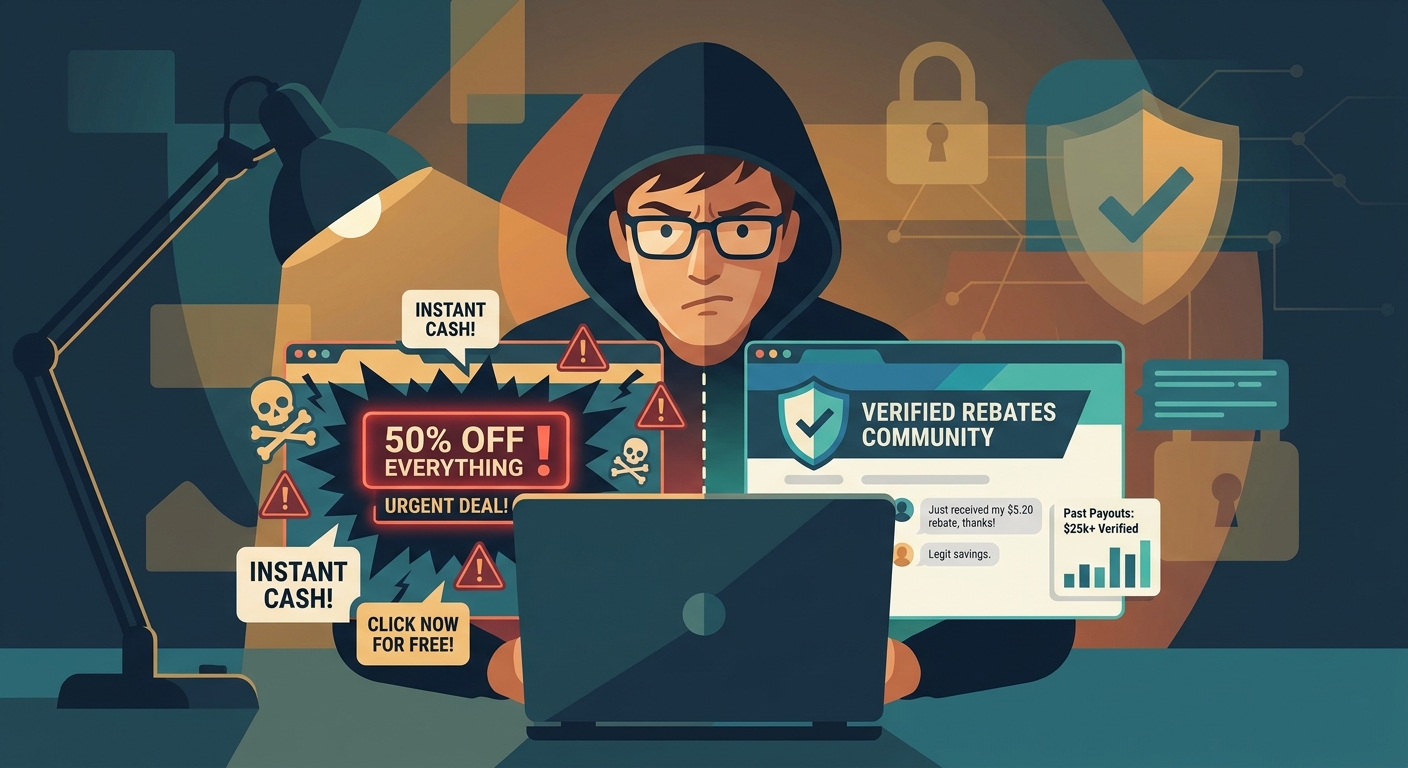
You are not silly for being tempted by a “private” rebate group. Prices are up, everyone wants a break, and those screenshots showing half-off gadgets or lower utility bills can look very convincing. The problem is that scam groups know exactly how to press that pain point. They copy real rebate language, borrow legit store names, and rush people into paying a fee, sharing account details, or handing over personal info before anyone stops to ask one basic question. Where is the proof? If you want to know how to avoid scam rebate groups and find legit community rebate clubs, start there. The safest groups do not act mysterious about how savings happen. They show recent wins, explain the steps clearly, and let new members watch before they spend a dime. That proof-first shortcut can save you money, time, and a whole lot of regret.
⚡ In a Hurry? Key Takeaways
- Legit rebate communities lead with proof, not pressure. They show real screenshots, timelines, and clear rules before asking for money or personal data.
- Ask three questions first. Who pays the rebate, how long does it take, and what exact steps do members follow?
- If a group hides details, demands upfront cash, or pushes you to move fast, walk away. Quiet, well-run clubs do not need panic tactics.
The “proof-first” shortcut is simple
Most scam screening advice gets too complicated. You do not need to become a fraud investigator. You need one filter that works fast.
Before you join, buy, subscribe, or share anything, look for proof in public view or inside the group itself. Not hype. Not testimonials with blurry names. Proof.
A legit community rebate club usually has three things:
- Recent screenshots with dates, amounts, and enough detail to make sense
- A plain-English explanation of how the rebate works
- A visible history of members asking questions and getting normal answers
That last one matters. Scam groups love one-way communication. Admin talks. Everyone else claps. Real communities look messier, because real people are involved.
What legit rebate communities usually look like
Good groups are often less flashy than fake ones. That surprises people.
The scammy version promises “50 percent off everything” or “guaranteed utility credits today.” The legit version usually sounds more boring. It may focus on one type of savings, certain vendors, certain regions, or a repeat process that members understand well.
They explain where the money comes from
This is the biggest clue. If a group cannot explain who funds the rebate, stop right there.
Real answers might include:
- Manufacturer promotions
- Cashback platforms
- Bulk purchase discounts
- Referral-sharing programs
- Utility company efficiency rebates
- Store-specific refund or credit programs
Bad answers sound like this:
- “Our supplier handles it”
- “It is private, you do not need to know”
- “Just trust admin”
- “Method only shared after payment”
They are specific about timing
Legit savings programs have a delay. Maybe it is 24 hours. Maybe 30 days. Maybe a utility credit shows up on your next bill. Specific timing is normal.
Scam groups often stay vague on purpose. They say “fast payout,” “same-day most times,” or “depends on volume.” That gives them room to stall you later.
They let you observe first
A healthy group does not panic if you lurk for a while. In fact, that is often the best sign.
If admins are pushing you to pay a membership fee in the first five minutes, that is not community buying power. That is a sales funnel.
The five red flags that matter most
1. Upfront payment before any verifiable proof
This is the classic move. You are asked to pay a setup fee, verification fee, admin fee, or “unlock” fee just to access deals.
Some legit communities do charge memberships. But they can still show proof first. If they cannot show working examples before collecting money, move on.
2. They want sensitive account access
Be very careful if a group asks for:
- Your Amazon login
- Your utility account password
- Your email verification codes
- Your banking login
- Your ID photo before any clear reason is given
A rebate club should not need the keys to your digital life.
3. Every comment looks too perfect
If every member says “got paid instantly” in the exact same tone, you may be looking at fake engagement. Check for real back-and-forth. Do people ask follow-up questions? Do admins answer with useful detail? Are there occasional complaints that get handled normally?
Real groups have texture. Fake groups feel staged.
4. They dodge basic questions
Ask simple things. Which stores? Which states? How often does it work? Are there limits? If answers get slippery, that tells you plenty.
5. They pressure you with fake scarcity
“Only 10 slots left.” “Admin closing this method in 15 minutes.” “If you leave, you cannot come back.”
That is not how honest community savings usually work. Pressure is often covering for weak proof.
Your 3-question safety script
If you want a quick way to screen a group without sounding rude, use this:
- Who is funding the rebate or discount?
- Can I see a recent example with dates and steps?
- What information do I need to share, and why?
If the answers are clear, specific, and calm, keep looking. If the answers are defensive, vague, or rushed, leave.
How to test a group without getting burned
You do not have to go all-in on day one. Start small.
Watch before joining deeply
Spend a few days reading posts and comments. See whether proof is consistent or only appears when someone asks for refunds.
Use a low-risk first try
If you decide to test a legit-looking group, try the smallest possible offer first. Do not start with a giant order or your main utility account.
Use payment methods with buyer protection
Avoid direct crypto transfers, gift cards, wire transfers, or payment apps marked as “friends and family” for unknown admins. Those are scam favorites because they are hard to reverse.
Separate your main accounts from experiments
Use a unique password. Turn on two-factor authentication. Do not reuse your primary login on anything sketchy. If a rebate process really needs an account, make sure you understand exactly what access is being granted.
Good communities teach. Scam groups hide.
This is one of the cleanest lines between the two.
Well-run rebate communities usually explain the process because informed members are easier to work with. They want fewer chargebacks, fewer confused questions, and less drama.
Scam groups depend on confusion. The less you understand, the easier you are to control.
So pay attention to the teaching style. Are there pinned guides? FAQs? Step-by-step examples? Rules about what works and what does not? Those are green flags.
Where people get tripped up on Telegram, Facebook, and TikTok
Telegram
Telegram makes it easy to create a polished-looking channel fast. That means fake social proof is common. Large member counts do not mean much. Many are inflated with bots or inactive accounts.
Facebook groups can feel more trustworthy because profiles look more “real.” Still, hacked accounts, fake profiles, and copied screenshots are common. Check whether admins have a history in the group and whether member discussions feel natural.
TikTok
TikTok is great for hype and terrible for nuance. Short videos can make a rebate process look effortless while skipping all the risk details. Treat every viral “secret deal method” like a movie trailer, not the whole story.
What honest rebate communities usually ask from you
Reasonable asks might include:
- An email address for group updates
- A small membership fee with a clear refund policy
- Proof that you are in an eligible area for a utility offer
- Order confirmation details with sensitive info hidden
Unreasonable asks include:
- Your full login credentials
- Payment through untraceable methods only
- Your Social Security number without a clear legal reason
- A promise not to ask questions
If you already joined a shady group
Take a breath. It happens.
Do this next:
- Leave the group
- Change any password you shared
- Turn on two-factor authentication
- Check bank and card activity
- Revoke third-party app access where possible
- Save screenshots of chats, usernames, payment receipts, and promises made
- Report the account to the platform and your payment provider
If utility or retail account access was involved, contact that company directly and ask them to note the account for possible fraud.
At a Glance: Comparison
| Feature/Aspect | Details | Verdict |
|---|---|---|
| Proof of past rebates | Recent screenshots, dates, clear steps, member discussion, and an explanation of where the savings come from | Good sign. Keep checking, but this is what legit groups usually show. |
| Admin behavior | Answers questions calmly, allows lurking, does not push instant payment, and explains data needs clearly | Strong green flag. Honest groups do not need pressure tactics. |
| Payment and data requests | Asks for upfront cash with no proof, wants logins or verification codes, or insists on gift cards or crypto only | High risk. Leave immediately. |
Conclusion
The best way to avoid scam rebate groups and find legit community rebate clubs is not to become paranoid. It is to become proof-first. Scammy “deal” and rebate groups are exploding on Telegram, Facebook and TikTok right now, riding the wave of higher prices and desperate shoppers. A focused proof-first approach is the single fastest way to filter out bad actors and find the quiet, well-run communities that actually share rebate screenshots, explain how the money flows and show which vendors or utilities they really work with. That protects your wallet, your accounts, and your time. It also helps the honest groups, because better-informed members make those communities stronger. If a group cannot show you how it works before asking for your money or your data, that is your answer.