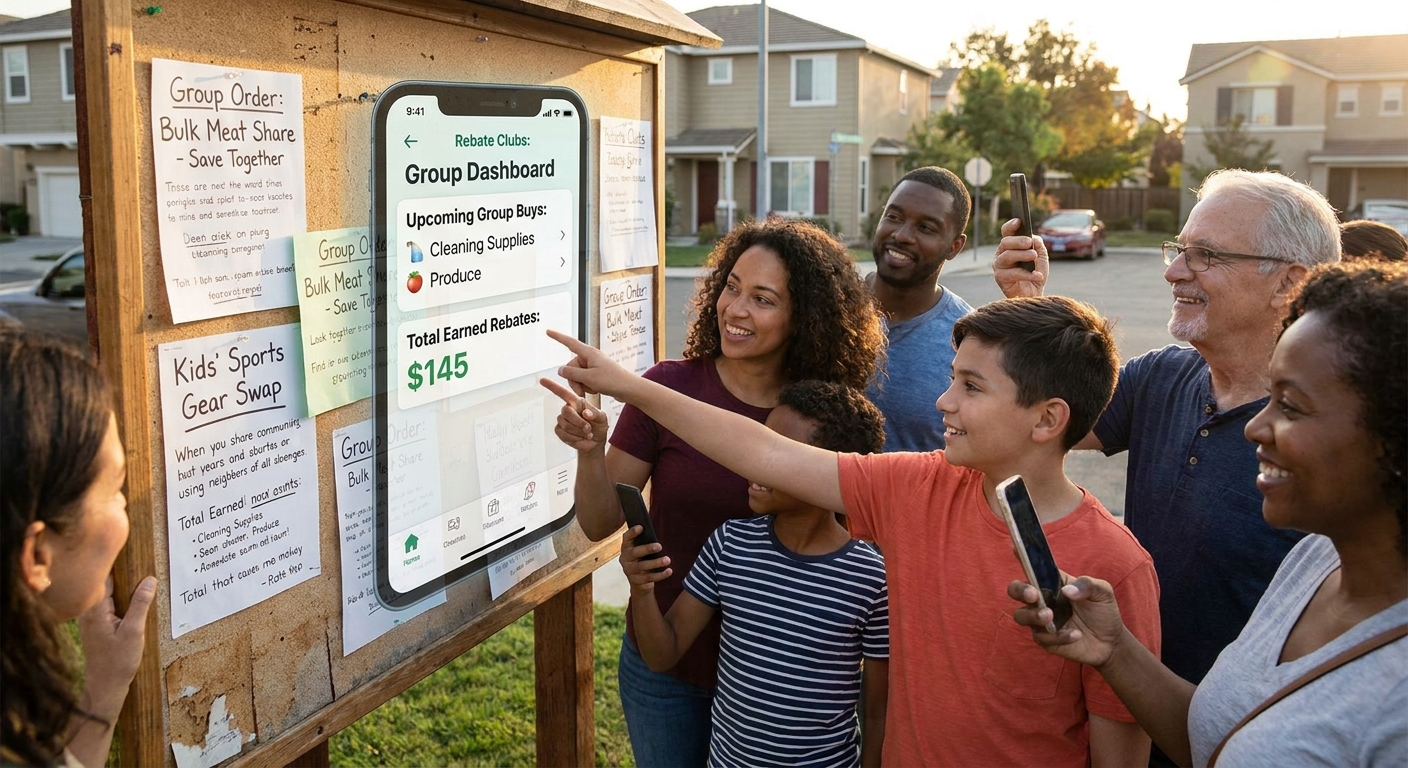
You have probably seen the post a hundred times. “I’m placing a bulk order from the restaurant supply store, anyone want in?” Or, “We found a cheaper soccer uniform source if enough families join.” Most people tap like, think “nice,” and keep scrolling. That is the frustrating part. The savings are right there, but they stay just out of reach because nobody turns the one-off post into an actual group. If you have been wondering how to find local rebate groups in my neighborhood, the answer is often much closer and much simpler than it looks. Neighborhood Facebook groups, HOA portals, PTA newsletters, school chats, church bulletins, and even the noticeboard at the pool are already full of tiny buying clubs in disguise. The trick is spotting the repeat organizers, asking the right low-pressure question, and giving the group a neutral place to keep future deals organized.
⚡ In a Hurry? Key Takeaways
- The easiest way to find local rebate groups is to watch neighborhood posts for repeat bulk buys, shared orders, and “who wants in?” offers.
- Don’t just comment “interested.” Message the organizer and ask if they’d like to make it a recurring group with a simple calendar and rules.
- Use a neutral home base like Rebate Clubs so receipts, rebate proof, order dates, and new members are not scattered across texts and comment threads.
Why neighborhood noticeboards are better than they look
People tend to think of local boards as places for lost cats, lawn recommendations, and complaints about parking. Fair enough. That is a lot of what shows up.
But mixed in with that everyday chatter is something more useful. Small groups of people trying to cut costs together.
One parent offers to add neighbors to a back-to-school supply order. Someone in the HOA forum has a line on discounted mulch, freezer beef, detergent, or paper goods. A church volunteer knows when a local vendor gives a better rate if ten families join at once. These are not formal “money-saving clubs.” They are often just one organized person trying to help.
That is exactly why they get missed.
If you are asking how to find local rebate groups in my neighborhood, stop looking only for groups with polished names and sign-up forms. Start looking for behavior instead. The behavior is what matters.
What hidden organizers look like
The person you want is rarely the loudest poster. They are usually the one who keeps quietly making things happen.
Signs you found the right person
Look for someone who:
- Posts more than once about shared orders or split deals
- Says things like “I can add a few more people”
- Keeps track of pickup times, quantities, or payment details clearly
- Gets thanked by neighbors for setting things up
- Seems practical, not pushy
That last one matters. A good neighborhood organizer does not sound like a salesperson. They sound like the friend who remembers the cutoff date and brings extra labels.
These people are often one step away from running a steady rebate crew. They just do not want the hassle of chasing everyone through five apps and comment sections.
How to approach without sounding awkward
This is where many people freeze. They do not want to sound needy, cheap, or like they are volunteering someone else for more work.
Keep it simple. You are not pitching a startup. You are asking whether there is interest in making a useful thing easier to repeat.
A message that works
You can send something like this:
“Hi, I noticed you’ve organized a few shared orders here. I’d definitely join future ones. If you ever want an easier way to keep repeat orders, dates, and rebate info in one place, I’d be happy to help set that up so it’s less work on you.”
That works because it does three things:
- Shows you noticed their effort
- Makes clear you want to join, not take over
- Offers help instead of dumping another task on them
Respect matters. Neighborhood groups run on trust and tone. If you come in sounding bossy, people back away fast.
Turn the one-time deal into a standing group
Once an organizer says yes, the next step is not complicated. In fact, the more low-tech it feels, the better.
Start with just four basic rules
- What kinds of deals belong in the group
- How often orders happen
- What the payment and pickup process is
- How rebate proof or savings confirmations get shared
That is enough to start.
You do not need bylaws. You do not need a giant spreadsheet with color coding on day one. You need a repeatable rhythm.
Good first categories for a neighborhood rebate crew
- Household basics like paper goods, cleaners, and pet supplies
- Kids’ gear like sports uniforms, dancewear, and school items
- Food purchases like meat shares, produce boxes, and freezer orders
- Seasonal buys like mulch, firewood, holiday items, or pool supplies
- Local services that give group discounts
Once people see one successful repeat order, they start suggesting others.
Why Rebate Clubs helps
The problem with neighborhood savings is not usually lack of interest. It is scattered information.
The original offer is in a Facebook post. Questions are in the comments. Final details happen in text. Someone sends a Venmo screenshot. A rebate confirmation gets buried in an email. Then next month, everyone has to start over from scratch.
That is where a neutral home base helps. Rebate Clubs can give the group one place for repeat orders, proof of rebates, savings notes, and new member info without making everyone learn some complicated system.
That “neutral” part is important. It keeps the group from feeling like one person’s private text chain. It becomes a shared place, which makes it easier for more neighbors to join later.
If you have seen this same pattern in other areas of household savings, that is because it shows up everywhere. For example, the logic is very similar in The ‘Community Solar Shortcut’: Turn Local Energy Programs Into Real Rebate Teams You Can Join. Different category, same problem. Good deals exist, but people need a simple, trusted way to act on them together.
How to find local rebate groups in my neighborhood, step by step
If you want the short answer, here it is. Follow the flow of local coordination, not the label “rebate group.”
1. Check the obvious places first
- Neighborhood Facebook groups
- Nextdoor
- HOA or condo portals
- PTA or school email lists
- Church, synagogue, or community center newsletters
- WhatsApp and group text threads
- Physical bulletin boards at pools, clubhouses, and libraries
2. Search for the right phrases
Search terms matter. Try:
- bulk order
- anyone want in
- group order
- shared order
- adding to my order
- discount if we have enough people
- pickup this weekend
3. Watch for repeat names
Do not judge by one post. Watch who pops up again and again.
4. Join one small deal first
Before you suggest making it recurring, join a live order if you can. It helps you understand the tone, pace, and reliability of the organizer.
5. Suggest structure only after trust exists
This is the part people rush. Do not lead with systems. Lead with participation, then offer a simple way to make the next round easier.
Safety and common-sense checks
Saving money is great. Saving money while avoiding neighborhood drama is even better.
Keep these guardrails in place
- Use clear payment deadlines
- Post pickup details in writing
- Do not prepay large amounts to strangers without references
- Start with lower-risk purchases first
- Save receipts and rebate confirmations where everyone can find them
- Be clear about who is responsible if someone backs out
You do not need to be suspicious of everyone. Just be organized enough that nobody has to rely on memory or vague promises.
What makes a group stick
Most neighborhood buying efforts fail for boring reasons, not bad ones. People forget dates. Nobody knows whether the discount was real. The organizer gets tired. New neighbors cannot tell how to join.
A standing rebate crew works when it feels easy.
The sweet spot
- Simple categories
- Regular timing
- Visible savings
- Light rules
- One shared home base
That is why this shortcut matters. You are not building something from zero. You are taking a habit your neighborhood already has and giving it just enough structure to last.
At a Glance: Comparison
| Feature/Aspect | Details | Verdict |
|---|---|---|
| One-off neighborhood post | Good for a quick deal, but details often get lost in comments, texts, and follow-up questions. | Useful starting point, weak for repeat savings. |
| Informal group text or chat | Fast and familiar, but hard to track receipts, deadlines, and who joined what. | Fine for small groups, messy over time. |
| Standing rebate crew using Rebate Clubs | Keeps repeat orders, rebate proof, and new member info in one neutral place. | Best option for ongoing neighborhood savings. |
Conclusion
If rising prices have you watching every receipt, you are not alone. More people are using micro-communities to stretch their budgets, from informal WhatsApp lists to local boards where somebody offers to add one more family to an order. The missed opportunity is that most of these deals stay temporary. They help once, then vanish into the scroll. If you can spot the quiet organizers in your neighborhood channels, approach them respectfully, and move the repeat parts into a neutral place like Rebate Clubs, you turn scattered local chatter into a dependable rebate group. That means less chasing, less guesswork, and real savings that can start this week. No coupon hobby required. No giant platform to learn. Just a practical, neighborly way to make good local deals stick.