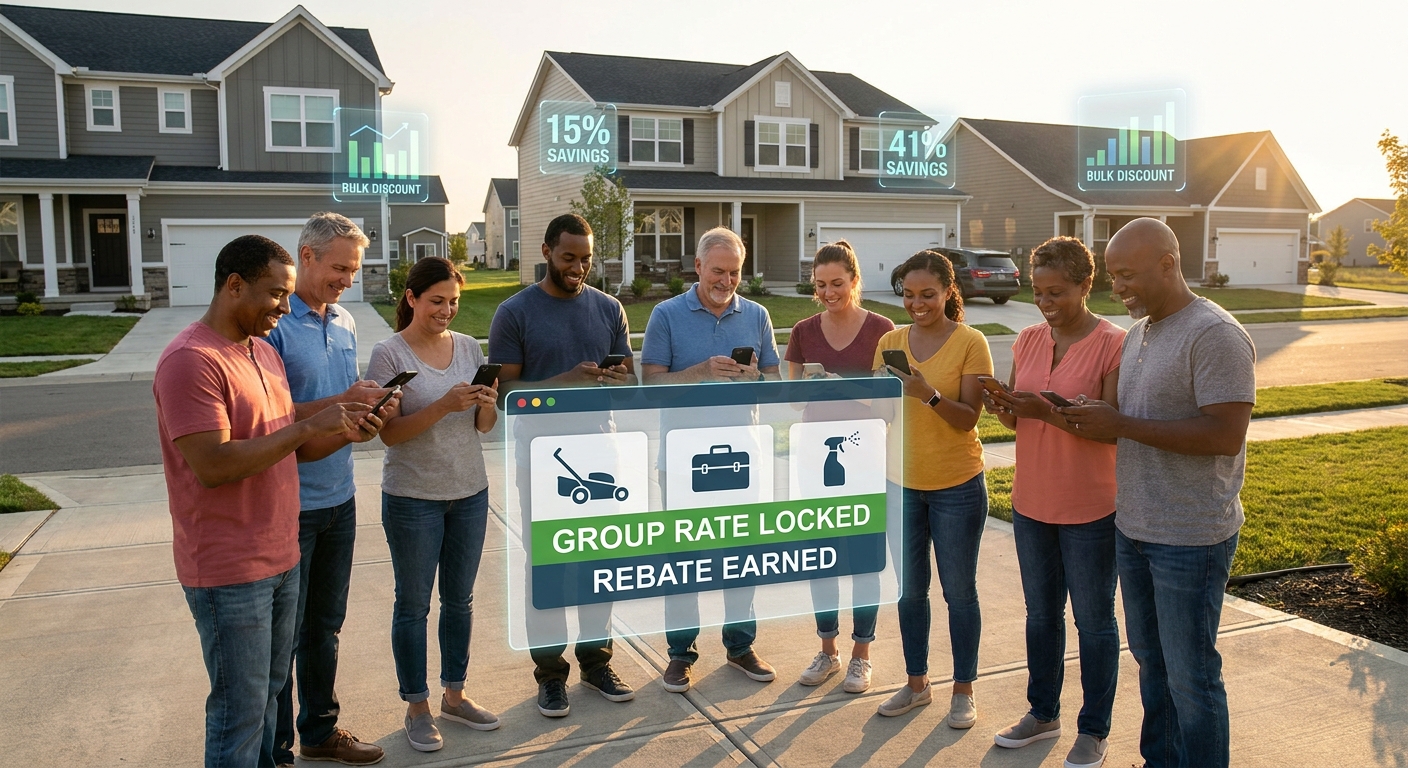
You can spend years chasing coupon codes and still miss the easiest savings sitting right on your block. That is the frustrating part. Most people hear “rebate group” and think of cereal boxes, warehouse clubs, or cashback apps. They do not think about neighbors bundling gutter cleaning, lawn care, snow removal, pest control, driveway sealing, or even bulk Wi-Fi installs. But that is exactly where some of the best quiet savings live now. If you have been wondering how to use neighborhood buying groups for rebates, the trick is simple. Look for local service apps, HOA forums, neighborhood message boards, and resident groups where people already compare quotes. Those small circles can turn one-off jobs into mini bulk buys. When a few homes book together, vendors often offer lower rates, waived fees, or referral-style credits that work a lot like rebates. It is not flashy. It is just smart, local, and surprisingly effective.
⚡ In a Hurry? Key Takeaways
- Neighborhood buying groups can create rebate-like savings by pooling home service jobs and negotiating group rates, credits, or cash-back style rewards.
- Start with local apps, HOA pages, Facebook neighborhood groups, and street chats where residents already ask for vendor recommendations and quotes.
- Stick with trusted vendors, clear written pricing, and simple payment rules so the savings do not get wiped out by confusion or scams.
Why neighborhood buying groups work so well
Home services have one big thing going for them. Vendors want clustered jobs.
If three houses on the same street need leaf cleanup, the crew saves time on travel, setup, and scheduling. If six homes want pest treatment on the same Saturday, the company can fill a route in one shot. That efficiency is worth money to them.
And that is where your “rebate” comes from.
Sometimes it shows up as a lower per-home price. Sometimes it is a waived visit fee. Sometimes one organizer gets a referral credit and shares it back with the group. Other times everyone gets a gift card, account credit, upgrade, or seasonal discount that would not be offered to a single customer.
This is the part many big deal sites miss. Product rebates get the headlines. Service-based rebate circles are happening quietly in neighborhood tools people already use.
How to use neighborhood buying groups for rebates
1. Start where neighbors already gather
You do not need a fancy platform first. Begin with places where local trust already exists.
- Neighborhood apps like Nextdoor
- HOA portals or email lists
- Community Facebook groups
- Apartment or condo resident boards
- Block text threads or group chats
Search recent posts for phrases like “any recommendations,” “bulk discount,” “group rate,” “shared service day,” or “who else needs this done?” If you find even two or three people asking the same thing, you may already have the start of a rebate circle.
2. Pick services that are easy to bundle
Not every service is a good fit. The best ones are simple, repeatable, and easy for a vendor to price across multiple homes.
Good examples include:
- Lawn mowing and cleanup
- Snow removal
- Pest control
- Pressure washing
- Gutter cleaning
- HVAC tune-ups
- Window washing
- Driveway sealing
- Trash bin cleaning
- Internet installation in new developments
Roof replacement or major remodeling can still be negotiated as a group, but those jobs are more complex. For beginners, start small.
3. Ask for three kinds of savings, not just one
Most people only ask, “Can you do a discount?” That is fine, but it is too narrow.
Ask vendors about:
- Group pricing. A lower rate if several homes book at once.
- Referral credits. A rebate or account credit for each booked neighbor.
- Added value. Free upgrades, waived fees, or extra service visits.
That mix matters because a vendor may not cut the sticker price much, but may happily throw in a waived trip charge or future service credit. That still saves real money.
4. Keep the group simple
The fastest way to kill a neighborhood deal is to overcomplicate it.
Pick one service. One time frame. One contact person. One written offer.
Try something like this:
“We have 5 households on Elm Street interested in gutter cleaning during the second week of October. Please quote your normal price, your group price, and any referral or booking credits if all 5 confirm.”
That is clean. Easy to answer. Easy to compare.
The “Local Loop Key” shortcut
Think of a local loop as a small circle of nearby people who can repeat savings over time.
That is the real shortcut here. Do not build a one-and-done bargain hunt. Build a reusable neighborhood loop.
If your street already worked together on mulch delivery or mosquito treatment, you have proof that people will join again. The next time you need tree trimming or carpet cleaning, you are not starting from zero. You already have a trusted mini network.
This is similar to the idea behind The ‘Micro‑Circle Scanner’ Shortcut: Use Niche Hobby Groups To Slip Into Serious Rebate Communities. The best savings often come from smaller, more focused communities, not giant public deal feeds. In neighborhoods, that same pattern shows up with local services.
What counts as a rebate in these groups?
It does not always look like the classic mail-in rebate.
In neighborhood buying groups, your rebate-style savings might be:
- A direct discount off the invoice
- A prepaid card or gift card after the group books
- A referral payout shared among participants
- A future account credit
- A free add-on service with cash value
- A waived setup, fuel, or travel fee
If you like to stack deals, this gets even better. You may be able to pay with a rewards card, use a bank offer, book through a cashback portal for gift cards, or combine a manufacturer promo with the service booking. That is where sharp readers can get a first-mover edge.
How to spot the best neighborhood apps and groups
Look for activity, not size
A giant local group with thousands of members can still be useless if every post goes unanswered. A smaller group with active neighbors is often better.
Good signs include:
- Recent recommendations for service providers
- People posting real photos of completed work
- Back-and-forth comments about pricing
- Admins who remove spam
- Residents willing to coordinate service days
Watch for “repeat vendors”
If the same local company gets praised again and again, that is useful. Vendors who already know the neighborhood are more likely to offer route-based discounts because they can picture the work and the logistics.
Check whether the app supports direct messaging or polls
This makes organizing much easier. A quick poll like “Who wants a quote for fall gutter cleaning?” can tell you in one day whether you have enough interest to negotiate.
A simple script you can use
If asking vendors for group pricing feels awkward, use this:
“Hi, I am organizing interest from several homes in our neighborhood for the same service. We are looking for pricing if 4 to 8 homes book in the same week. Do you offer a group rate, referral credit, waived fee, or any kind of neighborhood booking discount?”
That works because it gives the vendor options. You are not cornering them. You are opening the door.
Common mistakes that wipe out the savings
Letting one person handle all the money
Try to avoid this unless there is a very clear reason. It is usually safer if each household pays the vendor directly.
Not getting the terms in writing
A phone promise is not enough. Ask for the group rate, minimum number of homes, service scope, and deadline in writing.
Mixing too many different needs
If one person wants a basic lawn cut and another wants a full landscape redesign, that is not a clean group buy. Keep the offers comparable.
Ignoring trust signals
Check reviews. Confirm licensing if needed. Make sure the company has a real local presence. A discount is not a bargain if the work is a mess.
Best use cases for first-time organizers
If you want fast wins, start with jobs that have three traits. They are recurring, not too expensive, and easy to compare.
Good first projects include seasonal yard cleanup, pest treatment, gutter cleaning, and HVAC maintenance. These tend to get quick replies from neighbors because people already know they need them. You are not convincing anyone to invent a new expense. You are just helping them pay less for one they already planned.
At a Glance: Comparison
| Feature/Aspect | Details | Verdict |
|---|---|---|
| Best place to start | Neighborhood apps, HOA groups, and active local Facebook communities with real service discussions | Best for finding trusted people fast |
| Best type of rebate | Group pricing, waived fees, referral credits, and account credits on repeat services | Often easier to get than a flashy coupon |
| Biggest risk | Loose terms, unclear payment rules, or a vendor no one has really vetted | Fixable if you keep the group small and the rules clear |
Conclusion
If you have only been looking for rebates in retail apps and coupon forums, you are probably leaving money on the table. Right now, group-buying is growing far beyond the usual deal sites, and regular neighbors are using simple local tools to pool jobs and get better rates together. That gives you a chance to stack old-school product rebates with newer service-based savings that most big tech blogs are barely talking about. Start with one practical job, one trusted neighborhood channel, and one clear ask. Done right, these local loops can turn into small, dependable rebate circles in the place that matters most, the street where you actually live.