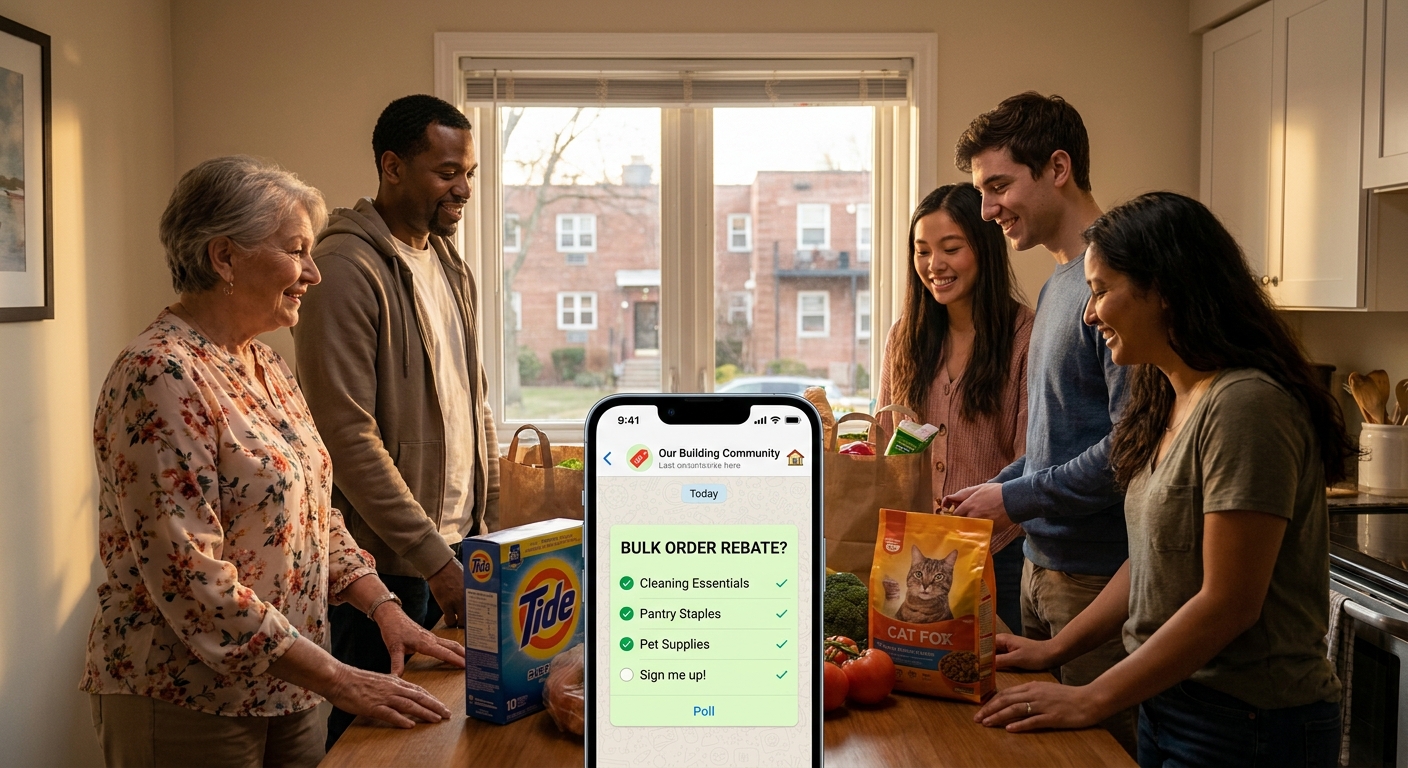
Your neighborhood group chat is probably noisy, useful, and a little exhausting. One minute it is a missing package. Next it is a coyote warning. Then somebody is upset about parking again. What it usually is not is a money-saving tool, which is a shame, because those same chats already have the one thing suppliers care about most. A ready-made group of nearby households who buy the same boring essentials every month. If you have ever wondered how to turn neighborhood WhatsApp group into rebate club mode without creating drama, extra apps, or a part-time job for yourself, the good news is this is much simpler than it sounds. You do not need to become the block treasurer. You just need a light system, a short message template, and one rule everyone understands. The goal is not to make the chat busier. It is to use the chat you already have to get better prices on things people already planned to buy.
⚡ In a Hurry? Key Takeaways
- Yes, you can turn an existing neighborhood WhatsApp or Signal group into a simple rebate club by organizing one item or service at a time.
- Start with things people already buy often, like pet food, cleaning supplies, lawn care, or a small home service, then collect interest before asking any seller for group pricing.
- Keep it safe and drama free by avoiding upfront money collection in the chat and using direct payment to the seller whenever possible.
Why neighborhood chats are better for this than you think
Most families on the same block buy a lot of the same stuff. Paper towels. Dishwasher pods. Mulch. Dog food. Window washing. Gutter cleaning. A quick HVAC tune-up before summer. The only reason people do not get group pricing is that nobody asks as a group.
That is the shortcut. Your WhatsApp or Signal chat already has trust, location, and attention. Not perfect trust, of course. It is still the internet with people you sort of know. But it is enough trust to ask a simple question like, “If we can get 12 percent off pet food with ten households, who is interested?”
That works because many local suppliers and service companies would rather close ten smaller sales at once than spend weeks chasing ten separate customers.
What a “micro rebate club” actually looks like
Forget the phrase if it sounds fancy. This is just a lightweight buying circle.
The simple version
One person posts a deal idea. Neighbors react with yes or no. If enough people want in, that person asks a seller for a group discount or rebate. The seller gives a code, special link, invoice option, or minimum order threshold. People buy. Savings happen. Then the chat goes back to lost dogs and school reminders.
What it is not
It is not a pyramid scheme. It is not a shared bank account. It is not one neighbor ordering $800 worth of groceries on their credit card and hoping everyone pays them back.
Keep it narrow. One product category or one service at a time.
Start with the right kinds of purchases
The fastest wins come from items that are boring, repeatable, and easy to compare.
Good first picks
- Cleaning supplies
- Paper goods
- Pet food and litter
- Coffee pods or beans
- Mulch, soil, or seasonal yard supplies
- HVAC filter packs
- Lawn mowing, pest control, or gutter cleaning
- Small home upgrades like smoke detectors or smart thermostats
Bad first picks
- Fresh groceries with lots of brand preferences
- Anything with complicated delivery windows
- Big-ticket items where people need financing
- Products with safety or liability concerns
If your neighborhood gets a lot of service flyers, you can pair this with The ‘Neighborhood Flyer Shortcut’: Turn Random Service Ads Into Real Rebate Clubs You Can Actually Join. It is a natural next step when those random ads are actually from decent local companies willing to cut a better group deal.
The easiest way to do this without making the chat hate you
This is where most well-meaning ideas die. Somebody gets excited, posts too much, asks people to fill out a weird form, then vanishes. Or worse, starts collecting money.
Do less.
Use a three-step rhythm
Step 1: Interest check.
Post one short message. Example:
“Quick savings check. If a local supplier gives us a discount on pet food for 10+ homes, who wants details? Just reply PET.”
Step 2: Confirm numbers.
If enough people reply, post a follow-up:
“We have 11 interested homes. I’m asking two local sellers for pricing on Brand A and Brand B, pickup or delivery. No payment needed yet.”
Step 3: Share the offer.
Then post the actual deal with deadline, minimums, and payment method.
That is it. Short, clear, and easy to ignore if someone is not interested.
The message template that works
Copy this into your group chat
Interest check:
“Anyone want to test a neighborhood bulk discount on [item/service]? Thinking [pet food / gutter cleaning / cleaning supplies]. If we get 10 to 20 homes, we may get a rebate or group rate. Reply with YES + item size or service type. No money now.”
Offer post:
“Group offer is live for [item/service]. Price: [price or percent off]. Minimum: [X homes/orders]. Deadline: [date]. Payment goes directly to [seller/link/phone]. I’m only organizing the list.”
Wrap-up post:
“We hit the minimum. Nice work. If this went smoothly, next month we can try [another everyday item].”
How to ask for the rebate without sounding like a corporate buyer
You do not need negotiation tricks. You need a plain-English message to a vendor.
Email or text script for local sellers
“Hi, I help manage a neighborhood chat with about 40 households nearby. We have 12 homes interested in buying [item/service] in the next two weeks. Do you offer a group discount, rebate, or special pricing if we bring the orders together? Ideally each household would pay you directly. If helpful, I can confirm the count before you send terms.”
That last line matters. It tells the seller this is real, but also keeps you from becoming the middleman.
Keep money out of the chat when possible
This is the biggest rule. It prevents most of the mess.
Best option
Each household pays the vendor directly through a payment link, invoice, promo code, or phone order.
Second-best option
If one combined invoice is required, use a seller-created payment page or ask the vendor to split invoices by address.
Worst option
One neighbor collects everyone’s money in Venmo or cash and promises to sort it out later.
That is how a simple paper-towel discount turns into a weird neighborhood trust exercise.
Pick one organizer, but make the role tiny
Somebody has to start the ball rolling. That person should not become the permanent “deal captain.”
A good organizer does three things
- Runs the interest check
- Gets the quote
- Posts the final instructions
A good organizer does not
- Handle everyone’s payments
- Store products in their garage for two weeks
- Argue with vendors on behalf of 19 households
Rotate the role. One month someone handles pet supplies. Next time someone else handles a yard service.
What kinds of rebates and discounts to ask for
Not every company uses the same language. If you ask only for a “bulk discount,” you may miss other options.
Ask about these instead
- Group rate
- Neighborhood special
- Referral bundle
- Volume rebate
- Free delivery at a minimum order count
- Waived setup fee
- Added bonus item for multiple households
Sometimes the best deal is not a lower sticker price. It might be free installation, a bonus month, or no delivery charge.
How to keep it drama free
Every neighborhood has one person who will ask 14 questions, one person who joins late, and one person who says they are in, then disappears.
Build around that reality.
Use these rules upfront
- One deal thread at a time
- Reply by deadline or wait for the next round
- Payment goes direct to vendor whenever possible
- The organizer shares info, not guarantees
- No debates about brands unless people asked for options
A useful line to post
“This is just a neighbor-organized discount, not an official club or endorsement. Please check the details and pay the seller directly if you want in.”
That one sentence sets expectations nicely.
Signal vs WhatsApp. Does it matter?
Not much for this purpose. Both work.
WhatsApp is better if
- Most neighbors already use it
- You want quick reactions and simple replies
- You need the least friction possible
Signal is better if
- Your group already prefers privacy-first apps
- You want a smaller, quieter group culture
- You are more careful about sharing phone numbers and metadata
The best app is the one your neighbors already check.
Easy first-win examples
Example 1: Pet food
Twelve homes buy from the same local pet store. The store offers 10 percent off and free delivery if orders hit a monthly threshold. Each home pays through a private link. The organizer just posts the code and deadline.
Example 2: Gutter cleaning
Eight homes on the same street need the service in the same month. A local company cuts the price because the truck only has to come to one area. Everyone books their own time slot.
Example 3: Cleaning supplies
A local janitorial supply business usually sells to offices, but agrees to a neighborhood case-order once a quarter. Families get lower per-unit pricing on basics they already use.
When to move the chat into a separate thread
If the main neighborhood chat is busy, do the interest check there, then move only the interested people into a temporary subgroup.
Create a pop-up group when
- More than 15 replies start cluttering the main chat
- People need to pick options or quantities
- You are repeating the same details over and over
Name it something obvious like “Maple St Pet Food Buy May” so it does not become another mystery thread on people’s phones.
How to spot a good vendor versus a headache vendor
Not every discount is worth the hassle.
Good signs
- Clear pricing
- Direct payment options
- Written terms by text or email
- Simple minimum order requirement
- Local references or decent reviews
Bad signs
- Pressure to pay one person fast
- Vague “special pricing” with no exact numbers
- Complicated membership language
- Refusal to put details in writing
What to track, and what not to bother tracking
You do not need spreadsheets worthy of a finance team.
Track only these basics
- Item or service
- Interested households
- Vendor name
- Minimum needed
- Deadline
- Actual savings
After two or three successful rounds, people will trust the process more. Then it gets easier.
At a Glance: Comparison
| Feature/Aspect | Details | Verdict |
|---|---|---|
| Best starting purchases | Repeat buys like pet food, paper goods, cleaning supplies, or simple local services | Strong choice for a first neighborhood rebate club test |
| Payment setup | Direct payment to vendor through a link, invoice, or phone order is safest | Avoid collecting money in the group if you can |
| Group management | Use one organizer, one item at a time, with a deadline and a minimum buyer count | Keeps the process simple and cuts down on drama |
Conclusion
If your neighborhood already has an active WhatsApp or Signal chat, you are closer to a working rebate club than you think. Families are feeling the squeeze on groceries, cleaning supplies, pet food, and small home upgrades, while suppliers, utilities, and local service companies are often happy to offer better pricing when ten or twenty buyers show up together. The trick is not to build a giant system. It is to start small, keep payment direct, and focus on things people already planned to buy. Done right, this turns an ordinary neighborhood thread into a practical money-saving tool that keeps value close to home instead of sending it off to another giant platform. One phone, one short message, one useful deal. That is enough to get started today.