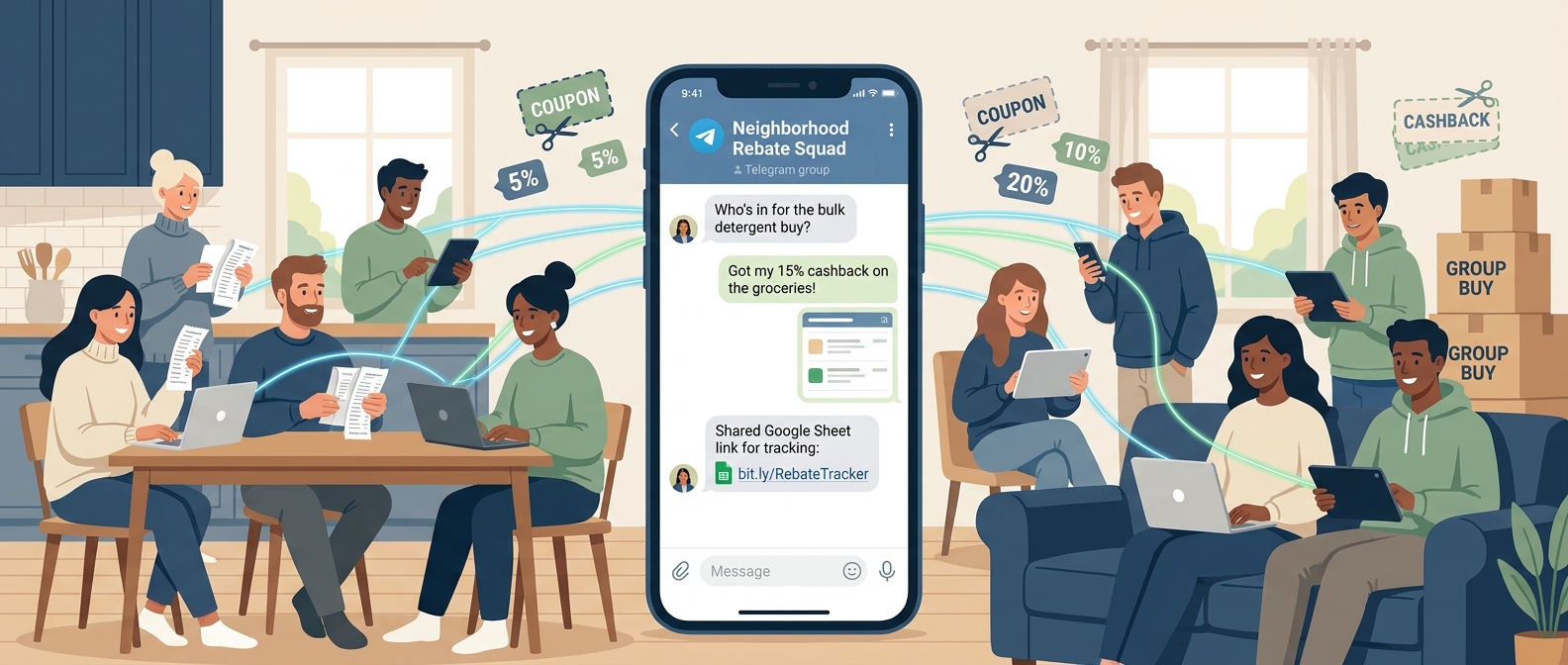
You are not wrong to feel a little burned out by Telegram. You hear people whisper about amazing rebate wins hiding in private channels, then you go looking and get hit with crypto hype, mystery admins, and links that look like they were built to steal your lunch money. That is the real problem. The good Telegram rebate groups do exist, but they usually do not look flashy. They look boring, organized, and full of actual people comparing notes, posting receipts, and coordinating bulk buys so everyone gets a better shot at the rebate.
If you want to know how to find legit Telegram rebate groups, the shortcut is simple. Stop searching for “best rebate group” in Telegram itself and start following trust signals outside the app first. The best groups are usually discovered through local saver communities, appliance and energy-efficiency forums, neighborhood chats, and invite links shared by members with a track record. Think of Telegram as the meeting room, not the front door. Once you treat it that way, the junk gets easier to spot and the useful communities stand out fast.
⚡ In a Hurry? Key Takeaways
- Legit Telegram rebate groups are usually found through trusted communities first, not random Telegram search results.
- Look for channels with receipts, shared spreadsheets, clear rules, and normal conversation instead of nonstop affiliate links.
- If a group pushes urgency, asks for upfront payment, or hides all proof behind private DMs, walk away.
Why Telegram is becoming the new home for rebate clubs
Big public groups on Facebook and other social platforms got noisy. Too many copy-paste deals. Too many fake experts. Too many posts that went stale before anybody could use them.
Telegram works better for some rebate circles because it is fast, searchable, and easy to organize around live alerts. One message can ping hundreds of members when a utility rebate opens, a retailer price drops, or a bulk order hits the minimum quantity needed for a better deal.
That matters because rebates often reward speed and coordination. A single person can chase them alone. A good group can do more. One member finds the form. Another confirms eligible models. Someone else calls the utility and posts the answer. Suddenly the whole group is moving smarter.
How to find legit Telegram rebate groups without stepping on a scam
1. Start outside Telegram
This is the biggest shift most people need to make. Telegram search is not a trust filter. It is just a search box.
The better route is to find communities where people already know each other, even loosely. That can include local energy-saving groups, neighborhood forums, appliance deal boards, EV owner communities, and library or civic tech meetups. If you liked the idea of finding saver communities in everyday places, The ‘Library Wi‑Fi Shortcut’: Turn Quiet Public Computer Labs Into Real Rebate Groups You Can Actually Join has a similar theme. Start with real people. Then follow the invite link.
2. Look for evidence, not excitement
A legit rebate group usually has a paper trail. Or at least a screenshot trail.
Good signs include:
- Members posting receipts or order confirmations
- Shared spreadsheets tracking deals, deadlines, and rebate terms
- Admins who explain the rules clearly
- Messages that include store names, item numbers, and rebate links
- Members correcting each other when details are wrong
Bad groups rely on hype. Great groups rely on proof.
3. Check whether the group acts like a club or a billboard
This one is easy once you know what to watch for.
A real rebate club has back-and-forth discussion. People ask questions. Others answer. Members compare which utility approved what. They share misses along with wins.
A fake or low-value group often looks like this:
- One admin posting links all day
- No comments or all comments turned off
- Endless “limited time only” language
- Random product mix with no rebate theme
- Lots of “DM for access” messages
If it feels like you are being marketed to, you probably are.
The easiest vetting checklist before you join
Ask these five questions
Before you spend any time in a Telegram group, do a quick gut check:
- Do members share real outcomes, not just links?
- Can you tell what kinds of rebates the group focuses on?
- Are there clear instructions for beginners?
- Does the group mention deadlines, exclusions, and failed submissions?
- Is there any pressure to pay, subscribe, or act immediately?
If the answer to the first four is no, and the last one is yes, move on.
See if the group has a specialty
The best Telegram rebate circles are usually narrow, not broad. One group may focus on home energy rebates. Another may center on appliances. Another may coordinate regional utility offers or seasonal insulation and HVAC deals.
That kind of focus is useful because members learn the fine print. They know which stores submit clean invoices, which brands are usually approved, and which rebate portals reject claims over tiny mistakes.
Common scam patterns in Telegram rebate channels
Upfront payment for “guaranteed rebate access”
This is one of the biggest red flags. No serious rebate club can guarantee approval, because rebates depend on your location, item eligibility, dates, and paperwork.
“Secret” links with no public proof
Private groups are normal. Zero proof is not. If nobody can show past wins, documented savings, or even basic discussion history, be careful.
Admin-only success stories
If only the admin seems to win, that tells you something. In a healthy group, regular members post results too.
Pressure to message off-platform
If every useful detail requires a direct message, the group may just be a lead funnel. Good communities put most of the process out in the open.
What legit Telegram rebate groups usually look like
They are not glamorous. Honestly, that is part of the charm.
You will often see pinned messages with basic rules, a shared Google Sheet for tracking offers, and threads full of boring but useful details like SKU numbers, state eligibility, invoice wording, and submission dates. That is exactly what you want.
Some of the best groups even have a rhythm:
- Morning deal pings
- Midday Q&A
- Evening receipt checks and follow-ups
- Weekly summaries of what actually paid out
That is not random chatter. That is a system.
How to be useful once you get in
Do not just lurk forever
You do not need to become the group hero on day one, but the best rebate clubs work because people contribute. Post your results. Confirm whether a deal worked in your area. Share if a rebate was denied and why.
Read the pinned messages first
This sounds obvious, but it saves everyone time. Most groups already have the answers to the first ten questions new members ask.
Respect regional limits
Many rebates are local. A deal that works in one utility territory may fail in the next county over. Good groups understand that. Helpful members always include location context.
Why smaller groups often beat giant public ones
Smaller groups have a stronger signal-to-noise ratio. Fewer random posts. More accountability. Better follow-up.
And when collective buying is part of the plan, size is not everything. You do not need fifty thousand strangers. You need a few dozen active people who trust each other enough to compare notes and move at the same time.
That is where Telegram shines. It is quick enough for live coordination but simple enough that even non-techy members can keep up once the group is set up well.
At a Glance: Comparison
| Feature/Aspect | Details | Verdict |
|---|---|---|
| Where you found the group | Invite came from a trusted forum, local community, or known member instead of random Telegram search. | Strong sign it is worth a look. |
| Type of posts | Receipts, spreadsheets, eligibility notes, and member follow-up versus nonstop hype links. | Practical posts usually mean a legit rebate club. |
| Money and pressure | No upfront fee, no “guaranteed approval,” no push to move to private DMs for basic details. | Much safer. Pressure is a red flag. |
Conclusion
If you have been wondering how to find legit Telegram rebate groups, the trick is not getting better at hunting inside Telegram. It is getting better at spotting real communities before you ever click Join. Right now, a lot of serious savers are moving away from giant public groups and into smaller chat-based circles where shared spreadsheets, bulk buying, and live deal pings make rebates feel like a team sport instead of a lonely side quest. Once you learn to vet those groups for proof, structure, and normal human conversation, you waste less time in dead channels, avoid the usual scam patterns, and give yourself a real shot at the kind of group buying power that can actually change the final price and the rebate payoff.