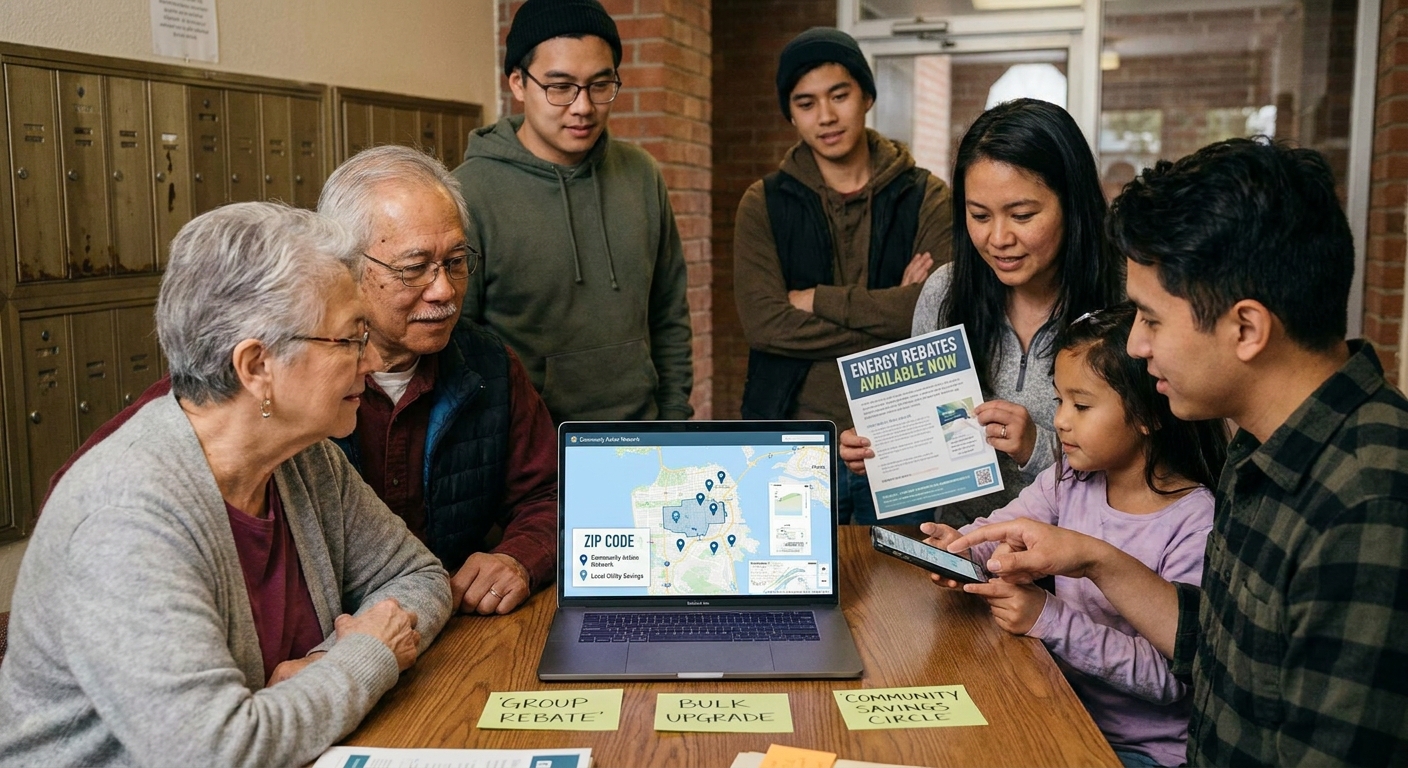
You are not doing anything wrong if rebate and assistance sites feel weirdly unhelpful. Most people type in a zip code, click the first program that looks promising, fill out one form, and move on. Then they wonder why neighbors seem to hear about extra weatherization slots, utility discounts, appliance swaps, and “pilot” offers first. The missing step is simple. Those zip code tools are not just search boxes. They are maps to the same few community groups that keep showing up again and again. If you spot those repeat names, you can stop acting like a one-person applicant and start joining the crowd that gets repeat notices, shared tips, and sometimes better group deals. That is the zip code snowball. One lookup turns into three local organizations. Three organizations turn into one email list, one workshop, one WhatsApp chat, or one church basement sign-up table. That is where the real savings usually start.
⚡ In a Hurry? Key Takeaways
- Use zip code search tools to find repeat community organizations, not just one rebate.
- Write down the same agency names that appear on utility, LIHEAP, and city rebate pages, then contact them and ask about workshops, waitlists, and group sign-ups.
- Never pay to join a rebate group, and always confirm any program through your utility, city, county, or state energy office before sharing documents.
Why the “one-and-done” search leaves money on the table
Most rebate programs do not look like shopping apps. They look like bland county pages, utility PDFs, and directory listings with names you have never heard before. That makes people treat them like one-time aid. Search. Apply. Done.
But many of the best offers now move through community-based organizations. These groups host enrollment events, collect interest lists, help with paperwork, and sometimes bundle demand from a neighborhood so contractors or program managers pay attention faster.
That means the real trick is not just finding a rebate. It is finding the people who keep showing up around that rebate.
How to use community organizations and zip code tools to join rebate groups
If you want the direct answer to how to use community organizations and zip code tools to join rebate groups, here it is: search by zip code, spot the same host organizations across multiple pages, contact those hosts, and ask how to join their next outreach list, workshop, or neighborhood signup group.
Think less like a shopper. Think more like a local reporter. You are collecting names and patterns.
Step 1: Start with three boring places
Open these in separate tabs:
- A findhelp-style directory or local assistance finder
- Your utility company’s rebates or bill-help page
- Your city, county, or state energy-assistance page, including LIHEAP if available
Now enter your zip code on each one.
Step 2: Look for repeat names
You are hunting for overlap. Maybe “Neighborhood Action Partnership” appears in the assistance directory. Then the same group is listed on the utility’s home-energy page. Then you see it again on the county weatherization list.
That is not a coincidence. That is a local hub.
Write down:
- Organization name
- Phone number
- Programs mentioned
- Any workshop, intake day, or waitlist notes
If three different pages point to the same group, that group is often where the action is.
Step 3: Call with better questions
Most people call and ask, “Do I qualify?” That is fine, but it is too narrow.
Ask these instead:
- Do you host sign-up events for this program?
- Is there an email list or text list for future rebates?
- Do you work with neighborhood groups, churches, tenant associations, or schools?
- Are there bulk sign-ups for insulation, heat pumps, appliance swaps, or bill-reduction programs?
- What other programs do people in my zip code usually pair with this one?
That last question is gold. Staff members often know which benefits stack together and which community events fill up first.
The “three names” method that builds a rebate crew fast
Here is the easiest playbook.
Find three names
Pull three repeat organization names from your searches. They might be a community action agency, a nonprofit housing group, and a neighborhood development office.
Contact all three in one afternoon
Call, email, or use the web form. Keep your message simple:
“I found your organization on several local rebate and assistance pages for my zip code. I’m interested in utility rebates, weatherization, appliance help, and any community sign-up groups. Do you have a mailing list, workshop calendar, or neighborhood contact I should join?”
Track who answers like a real person
The fastest responder is often your best first anchor. Not always the biggest agency. The one that actually replies.
Turn one contact into a group
Once someone tells you about an event, workshop, library table, church intake day, tenant meeting, or neighborhood energy fair, show up and ask one more question: “Is there a group chat or email loop for people following these programs?”
If there is one, join it.
If there is not, offer to start a basic one.
Where real rebate groups usually form
People imagine organized “clubs” with logos and websites. In real life, rebate groups often begin in very ordinary places.
- Church and temple community boards
- Library workshops
- Tenant association meetings
- Facebook neighborhood groups
- WhatsApp chats for apartment buildings
- School parent email lists
- Community action agency intake days
- Utility-sponsored webinars
The magic is not the platform. The magic is that one person says, “I found three agencies that all handle this. Let’s compare notes.”
What “group bonuses” actually look like
This does not always mean a flashy coupon for joining a crowd. Sometimes the benefit is less obvious, but still valuable.
Faster awareness
Someone in the group hears that a waitlist opened, a contractor added appointments, or a city pilot quietly launched in your zip code.
Stacked savings
One member learns that a utility rebate can pair with a city appliance program and a weatherization grant. Alone, you might only apply for one.
Bulk interest
If ten households on one block want the same type of upgrade, a community group or contractor may be more willing to host an info session or prioritize outreach there.
Paperwork help
This matters more than people admit. Group members share what documents were needed, which forms were confusing, and which office actually answers the phone.
How to turn a list of agencies into your first neighborhood rebate crew
Let’s make it practical.
Week 1: Build your list
Search your zip code on a directory, your utility page, and your local government portal. Save every repeat organization.
Week 1: Send one short message
Email or call those groups and ask about rebate workshops, upcoming sign-up events, and any public mailing lists.
Week 2: Create one simple shared space
If you get even two interested neighbors, start a tiny group chat, text thread, or email list. Nothing fancy. Name it after your zip code plus “rebates” or “home savings.”
Week 2: Share only verified links
Drop in the official utility page, city page, or program PDF. Avoid random screenshots without sources.
Week 3: Pick one program to chase together
Do not try to solve everything at once. Start with one clear target, like bill assistance, appliance rebates, air sealing, or water heater help.
Week 3: Assign tiny jobs
One person calls the utility. One checks the county page. One asks the local nonprofit about workshop dates. This keeps the group alive without turning it into a second job.
Red flags to watch for
Not every “energy savings” offer is worth your time. A few checks will keep you out of trouble.
Be cautious if someone asks for money upfront
Legit public rebates and nonprofit enrollment help usually do not charge a membership fee just to access the application.
Double-check contractor claims
If a sales rep says your whole block qualifies for a special deal, confirm it through the official utility or city program page.
Guard your documents
Only send income records, utility bills, or ID through official portals or directly to verified program administrators.
Watch for fake urgency
Real programs do have deadlines, but scammers love lines like “today only” or “claim your guaranteed rebate now.” Public programs are usually more boring and more documented than that.
What to say when you contact an organization
If phone calls make you freeze up, use this script.
“Hi, I’m in zip code [your zip]. I found your name on a few local assistance and rebate pages. I’m trying to understand what programs are active for residents here, especially utility savings, home upgrades, or community sign-up events. Is there a mailing list, workshop, or neighborhood group I can join?”
That one sentence does two things. It shows you found them through real channels, and it signals that you want the network, not just one application.
Why this works better than waiting for a perfect app
A lot of people are waiting for one clean website that finds every rebate, checks eligibility, files the paperwork, and texts reminders. Nice idea. Not how it works in most places.
Right now, the system is patchy. Utilities run one piece. counties run another. nonprofits handle intake. cities launch pilots quietly. Community action agencies know the backstory. That is messy, but it also means there are real humans in the loop who can point you toward the next opening.
If you treat every zip code tool like a dead-end form, you miss that human layer. If you treat it like a map, you start finding the same connectors over and over.
At a Glance: Comparison
| Feature/Aspect | Details | Verdict |
|---|---|---|
| Solo zip code lookup | Good for finding one program fast, but easy to miss follow-up offers and local support networks. | Useful starting point, weak finish. |
| Repeat organization tracking | Shows which community groups keep hosting or managing programs across utility, city, and aid pages. | Best way to find real local hubs. |
| Joining a simple group chat or email loop | Helps neighbors share deadlines, paperwork tips, workshops, and stacked savings opportunities. | Small effort, big payoff. |
Conclusion
The big shift is this. Stop seeing assistance finders and zip code tools as vending machines that spit out one rebate. Start seeing them as trail markers that point to the same community organizations again and again. Right now, the most active rebate programs are routing residents through community-based organizations and zip-code search tools instead of splashy consumer apps. That is great for people who know how to plug into those networks, but confusing if you only ever see them as one-off aid. Once you mine findhelp-style directories, local LIHEAP and utility pages, and city rebate portals for repeat hosts, you can pivot into group chats, email loops, and bulk-upgrade cohorts. That is how a fragmented system starts to make sense. And that is how you go from “Where do I even start?” to “I found three local groups in my zip code, and now I know who to call, what to join, and how to build a rebate crew that keeps paying off.”