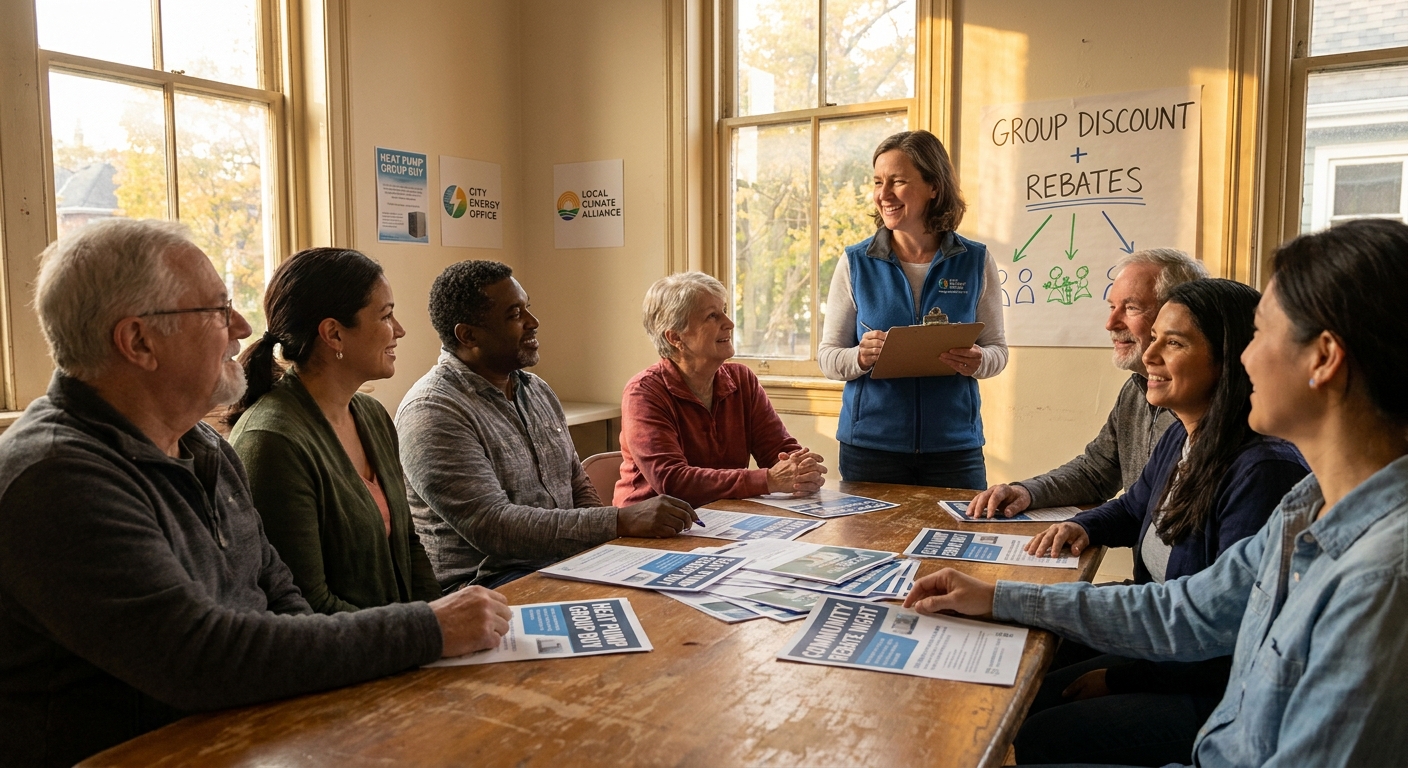
You are not wrong to be cautious. “Community group buy” can sound like either a smart local deal or the first line of a scam story. One person posts a discount link in a Facebook group, another asks for deposits in a chat app, and suddenly you are wondering if your money is about to disappear into the internet. The good news is that many of the best rebate buying clubs are not run by random organizers at all. They are quietly hosted by local nonprofits, city partners, clean-energy groups, credit unions, and neighborhood organizations that already have a real reputation to protect. That is the shortcut. Instead of trusting a stranger, you look for a trusted host. These groups often line up vetted installers, pre-negotiated pricing, instant rebates, and paperwork help before the public even hears about the offer. If you know where to look, you can join the crowd without taking a wild risk.
⚡ In a Hurry? Key Takeaways
- Safe community rebate group buy programs near you are most often hosted by local nonprofits, city sustainability offices, utilities, and known community groups, not random chat admins.
- Search your city plus terms like “group buy,” “bulk purchase,” “rebate program,” “heat pump campaign,” “EV co-op,” and “community solar,” then join the host’s email list.
- If the organizer cannot show named partners, a real website, clear rebate rules, and a normal payment process, walk away.
Why the safest group buys usually have a “host”
Here is the simple version. A trusted host is an organization that already exists in your area and puts its name on the deal.
That might be a neighborhood nonprofit, a city climate office, a local energy alliance, a housing group, or a county sustainability program. Sometimes it is a chamber of commerce or a credit union. Sometimes it is a school district or faith-based community network helping members get access to lower-cost upgrades.
What matters is not the label. What matters is that they are visible, reachable, and accountable.
These hosts usually do a few things that random online organizers do not:
- They screen installers or vendors before inviting the public in.
- They negotiate better pricing based on volume.
- They help explain rebates and tax credits in plain English.
- They use normal signup forms and official email domains.
- They have staff, office hours, or public events you can verify.
That is why this approach works so well for people searching for how to find safe community rebate group buy programs near me. You are not trying to become your own deal detective from scratch. You are piggybacking on a structure that is already built.
What these programs usually cover
The biggest action right now is around expensive home and transportation upgrades where people need both a discount and some hand-holding.
Common examples
- Heat pumps and weatherization
- Electric vehicles and home chargers
- Induction stoves and electrical-panel upgrades
- Solar and battery projects
- Window replacements and insulation
- E-bikes or shared mobility programs in some cities
The pattern is the same. A host builds a local campaign, finds approved contractors or retailers, then fills the pipeline with neighbors who are all looking for the same thing.
If you have been eyeing a heating upgrade, you may also like The ‘Heat Pump Huddle’ Shortcut: Turn Free Rebate Webinars Into Real-Life Savings Circles You Can Join, which covers another low-stress way to get into the right room without having to decode every rebate page yourself.
How to find safe community rebate group buy programs near you
This is the part most people miss. The best programs are often not advertised like big retail sales. They are buried in newsletters, city pilot pages, community calendar listings, or nonprofit email blasts.
Start with these search terms
Search your city, county, or region along with combinations like these:
- “[Your city] group buy heat pump”
- “[Your county] bulk purchase energy upgrades”
- “community rebate program [your city]”
- “nonprofit home energy campaign [your area]”
- “EV group buy [your area]”
- “clean energy co-op [your city]”
- “solarize [your city]”
- “electrification campaign [your county]”
- “city sustainability rebates [your city]”
- “home upgrade program nonprofit [your area]”
Also try less flashy wording. Many legitimate programs avoid the phrase “group buy” and instead use terms like “campaign,” “community offer,” “bulk discount,” “preferred contractor network,” or “neighborhood program.”
Check these places in order
- City and county sustainability pages. Look for climate action, clean energy, housing, resilience, or environmental services sections.
- Local nonprofit websites. Search for community development groups, energy alliances, housing nonprofits, and environmental organizations.
- Utility newsletters. Utilities often promote partner programs with vetted contractors and direct rebate pathways.
- Library and community center event pages. Real programs often run info sessions there.
- Regional clean-energy coalitions. These groups frequently host bulk-buy campaigns behind the scenes.
- School district, church, and neighborhood association newsletters. These are common referral channels.
- Rebate Clubs. This is where you can spot and join infrastructure that is already moving instead of trying to build your own list from zero.
Join the email list even if the deal is not open yet
This matters more than most people realize. A lot of funded programs open quietly, fill fast, and then close once the install pipeline is full. If you wait for a big public ad, you may already be late.
Subscribe to:
- Your city sustainability newsletter
- County housing or energy office updates
- Local nonprofit mailing lists
- Utility rebate alerts
- Rebate Clubs updates
Think of this as getting on the guest list before everyone else hears the music.
How to tell if a host is real or just wearing a friendly costume
Scammers know people trust local language. So you still need a quick screening method.
Green flags
- A real website with an address, staff names, and past programs
- An email address on the organization’s own domain, not just a generic Gmail
- Named installer or vendor partners you can verify
- Clear rebate terms, deadlines, and eligibility rules
- Normal payment flow through a contractor, vendor, or secure portal
- Public webinars, town halls, or community meetings
- Partner logos from cities, utilities, or known local groups
Red flags
- Pressure to pay a deposit before you get a written quote
- Only a Telegram, WhatsApp, or Facebook chat link with no official page
- No list of who is actually providing the product or service
- Pricing that is promised but never written down
- Vague claims like “government approved” with no links or program details
- Dead websites, broken forms, or no phone number
A real host does not mind basic questions. In fact, they usually expect them.
Questions to ask before you join
You do not need to interrogate anyone. Just ask the things a careful neighbor would ask.
- Who is hosting this program?
- Which contractors or vendors are approved?
- Is the discount already negotiated, or does it depend on a minimum number of signups?
- Are rebates instant, post-purchase, or tax-credit based?
- Who helps with paperwork if I get stuck?
- What happens if the program fills up or funding changes?
- Do I pay the host, or do I pay the installer or seller directly?
If the answers are clean and boring, that is usually a good sign. Safe programs are often a little boring. That is what you want.
Why this shortcut saves more than just money
The obvious benefit is price. Group buying can cut costs through volume discounts and stacked rebates.
But the bigger benefit for many people is friction reduction. You are not chasing five contractors. You are not trying to figure out whether one rebate page contradicts another. You are not guessing which installer will ghost you after the first visit.
A good host reduces decision fatigue. They narrow the field, explain the options, and often help residents move from “I think I should do this someday” to “I booked the assessment.”
What Rebate Clubs does well in this mix
Rebate Clubs makes the whole process more practical because it helps you tap into community-backed programs that are already operating. That is the important part. You are not being asked to invent a neighborhood campaign from scratch or convince strangers to join your spreadsheet. You are stepping into existing infrastructure.
That can mean pre-negotiated discounts, instant rebates, approved vendors, and someone else handling the messy paperwork path. For non-techies, or honestly anyone tired of half-finished internet offers, that is a huge relief.
If you cannot find a program in your exact town
Do not stop at your ZIP code.
Many campaigns run at the county, metro, or utility-territory level. A nonprofit two towns over may still serve your area. A regional energy alliance may host one landing page for several communities. Some city pilot programs also publish their vendor list and educational materials even if enrollment is temporarily closed.
That still helps. You learn who the active players are, which terms they use, and where the next round is likely to appear.
At a Glance: Comparison
| Feature/Aspect | Details | Verdict |
|---|---|---|
| Trusted host vs random organizer | Nonprofits, city offices, utilities, and known community groups usually provide real websites, named partners, and public accountability. | Trusted host is far safer. |
| Discounts and rebates | Strong programs often combine pre-negotiated pricing with instant rebates or guided paperwork for later credits. | Best value comes from stacked savings, not just a coupon code. |
| How to find them | Use city and county pages, nonprofit newsletters, utility alerts, and Rebate Clubs instead of relying on social posts alone. | Search smarter, then join email lists early. |
Conclusion
You do not have to choose between going it alone and trusting a sketchy online group. There is a middle path, and right now it is getting better. Local nonprofits, city partners, and community organizations are building real rebate buying clubs around big-ticket items like heat pumps, EVs, and home upgrades. Because they work with vetted installers and use their own reputation and mailing lists to fill a crowd order, the deals tend to be safer, clearer, and easier to act on. Many bundle instant rebates, pre-negotiated discounts, and help with paperwork. That means if you join through Rebate Clubs, you can ride on top of that existing setup instead of trying to create your own. Start with the right search terms, check city and nonprofit pages, join the newsletters, and look for the host behind the offer. That one habit can help you skip scams, avoid wasted weeks, and plug into rebate deals already running in the background.