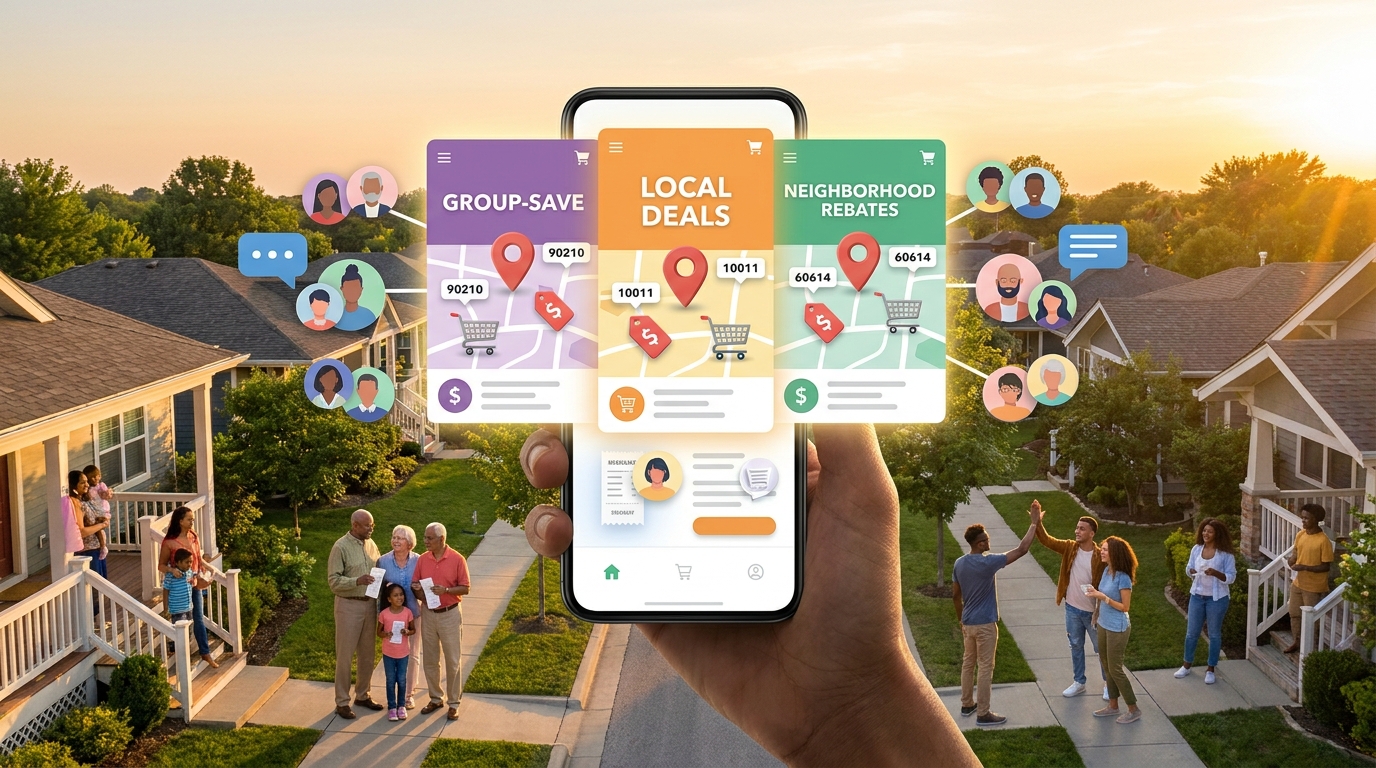
It is annoying to watch other people talk about giant local rebates while your phone keeps feeding you the same lonely coupon code and “ends tonight” sale. You are not imagining the gap. A lot of shoppers are not just better at finding deals. They are plugged into small local circles that notice the same offers, buy at the same time, and push group discounts further. That is the real trick behind the “Zip Code Switchboard” shortcut. Instead of treating discount apps like vending machines for random bargains, you treat every app that sorts offers by neighborhood, store radius, school district, or delivery zone like a map of future rebate partners. If you have been searching for how to find local rebate groups near me, this is the practical way to start. You already have the raw material on your phone. You just need a better method for spotting clusters, starting conversations, and turning one deal hunter into ten nearby people who are ready for the next run.
⚡ In a Hurry? Key Takeaways
- The fastest way to find local rebate groups near you is to use deal apps by ZIP code and look for repeated local interest, not just the discount itself.
- Start with one offer category, like back-to-school, groceries, or local services, then build a small chat list of nearby people who respond to the same deal.
- Stay careful. A real group shares details clearly and never rushes you into sending money first or clicking sketchy links.
What the “Zip Code Switchboard” shortcut really means
Think of your everyday discount apps as switchboards, not storefronts.
Most people open a deal app, tap around, maybe save a coupon, then move on. The smarter move is to ask a different question. Who else in my area is reacting to the same offer right now?
That matters because local rebate groups usually form around three things. Shared geography. Shared timing. Shared need.
If an app lets you filter by ZIP code, delivery area, pickup location, school zone, local merchant, or city page, it is already doing part of the sorting work for you. It is quietly grouping people who are likely to care about the same bargains.
That is why this works so well for anyone searching for how to find local rebate groups near me. You are not starting from zero. You are reading the crowd signals that are already there.
Why deal apps are turning into accidental community tools
Back-to-school offers, food bundles, cleaning services, kids’ activities, oil changes, lawn care, and local restaurant promos all have one thing in common. They only make sense when enough nearby people can use them.
Apps know this. That is why so many of them sort by location.
What they usually do not do is help you organize those people into a repeat buying club. That is your opening.
When you notice the same local bakery deal appearing every week, or the same school supply promo drawing comments from parents in your town, you are looking at a seed list. Not a finished rebate club, but the beginning of one.
Start with one category, not every app on your phone
The easiest mistake is trying to build a local rebate network from everything at once.
Do not.
Pick one category where people buy often and talk easily. Good starting points include:
- Groceries and meal deals
- Back-to-school supplies
- Household basics
- Kids’ activities and classes
- Local services like car wash, oil change, lawn care, or cleaning
These categories work because they are practical. People already discuss them with neighbors, coworkers, school parents, and local Facebook groups.
Why one category works better
It makes your outreach feel normal.
Saying “I’m putting together a small local list for grocery rebate runs in the 40205 area” is clear. Saying “I’m building a giant all-purpose savings club for every possible deal” sounds messy and a little suspicious.
How to spot a local cluster inside a discount app
You are looking for patterns, not perfection.
Watch for repeated ZIP code signals
If the app shows pickup stores, delivery neighborhoods, service areas, or city-specific pages, write down the spots that come up again and again. Those are your likely pockets of buyers.
Look for repeat merchants
A deal that keeps returning from the same local business is more useful than a one-day mystery sale. Repeat merchants give your group something familiar to rally around.
Notice the timing
If a lot of offers hit on Thursdays before the weekend, or at the start of the month, that tells you when people are most likely to join a group rebate run.
Pay attention to comments and saves
Some apps show popularity, review counts, claimed deals, or shopper comments. You do not need names from the app itself. You just need proof that a local pocket of interest exists.
The simple method: From deal to seed list
Here is the practical version.
- Open one app that sorts deals by your location.
- Choose one offer category that people near you use often.
- Track 3 to 5 offers in the same ZIP code or nearby area.
- Ask around in places where local people already gather, like school parent chats, neighborhood groups, church circles, workplace chats, or community boards.
- Create a tiny list of people who say, “Yes, send me the next one.”
That tiny list is your first rebate club. It does not need a fancy name. It needs consistency.
What to say without sounding salesy
Keep it plain.
Try something like: “I keep seeing good grocery rebates pop up for our area. I’m making a small text list for local deal alerts if you want in.”
Or: “A few of us are tracking school supply deals in this ZIP code. Want me to send you the next group offer?”
You are not pitching a business. You are organizing useful information.
Where to recruit your first ten people
This part surprises people. The best recruits are usually not inside the app.
They are in the real-life circles connected to the app’s offers.
- Parents from the same school
- Neighbors in the same apartment complex or subdivision
- Coworkers who live in the same part of town
- Members of local Facebook or WhatsApp community chats
- Regular customers of one local business
That is the switchboard idea in action. The app shows the signal. Your community turns it into a working group.
Keep the group small at first
Bigger is not better in the beginning.
A group of 6 to 12 nearby people is often the sweet spot. Small enough to stay active. Big enough to move quickly when a rebate or group-buy threshold appears.
If you start with 50 people, the chat gets noisy fast. People mute it. Then the whole thing dies.
A better setup
Start with a simple structure:
- One main chat for alerts
- One category only, at least for the first month
- One clear posting format, like store, ZIP code, deadline, and expected savings
That keeps trust high and confusion low.
How to know if a local rebate group is real or risky
If you are building or joining local groups, safety matters. A lot.
You want people who share clear details, not mystery links and pressure tactics. If a group seems fuzzy about who runs it, how the deal works, or where the money goes, stop there.
A good guide on this is The ‘Safe Signal Test’ Shortcut: Join Real Rebate Groups Without Getting Burned By Scams. It breaks down the warning signs in a very normal-person way.
Quick trust checks
- Does the deal link go to a real merchant or well-known app?
- Can members explain the savings in one or two sentences?
- Is there pressure to send money first to a stranger?
- Do admins answer basic questions without getting defensive?
If the answer to that last one is no, walk away.
Turn one successful run into a repeat system
The goal is not one lucky discount. The goal is rhythm.
Once your small group completes one successful rebate run, do not leave it there. Ask three things:
- What category got the fastest response?
- What day and time worked best?
- Which ZIP code or pickup zone had the strongest interest?
That tells you where to focus next.
Example
Maybe a school supply deal got six quick responses from families in one side of town. Great. Next week, you send one similar offer to the same group before expanding to anything else.
You are building a habit. Habit is what turns a loose chat into a real local rebate club.
Common mistakes that waste time
Chasing every shiny deal
If every message is a different category, people tune out.
Posting without location details
“Great deal on snacks” is weak. “Great deal on snacks at the Oak Street pickup zone for 60618” is useful.
Adding people without permission
Always ask first. Nothing kills trust faster.
Ignoring follow-up
If a deal worked, say so. That proof makes people stay.
How this helps if you are still asking, “How do I find local rebate groups near me?”
Here is the honest answer. Most local rebate groups are not sitting there with a giant sign on them.
They form around repeated local need.
That means you find them in two ways. You spot an existing pocket of people already reacting to local offers, or you start a small circle yourself from one app and one ZIP code.
That is why this shortcut works so well right now. The apps already sort buyers by area. You just connect the dots they leave scattered around.
At a Glance: Comparison
| Feature/Aspect | Details | Verdict |
|---|---|---|
| Using deal apps alone | Good for finding coupons and flash sales, but weak for repeat savings because there is no built-in local organizing. | Fine for solo shoppers, limited for group rebates. |
| Zip Code Switchboard method | Uses ZIP code filters, pickup zones, and repeat merchants to identify nearby people who are likely to join future rebate runs. | Best low-effort way to start or find local rebate groups near you. |
| Large random savings chats | Can be active, but often noisy, unfocused, and harder to trust if members are scattered everywhere. | Useful only if moderated well and tied to real local offers. |
Conclusion
You do not need a secret app or an insider code to get started. The “Zip Code Switchboard” shortcut works because it uses tools people already have and habits people already follow. Right now, deal and group-buy apps are packed with back-to-school, food, and local service offers that naturally gather buyers by area. Very few shoppers are treating those clusters like seed lists for rebate clubs. If you start doing that, you stop being the person who merely spots discounts and become the person who spots the next ten members of a strong local rebate run. That shift matters. It turns passive scrolling into active recruiting, helps your community save together, and gives Rebate Clubs a practical place to plug into real everyday behavior, today, not someday.