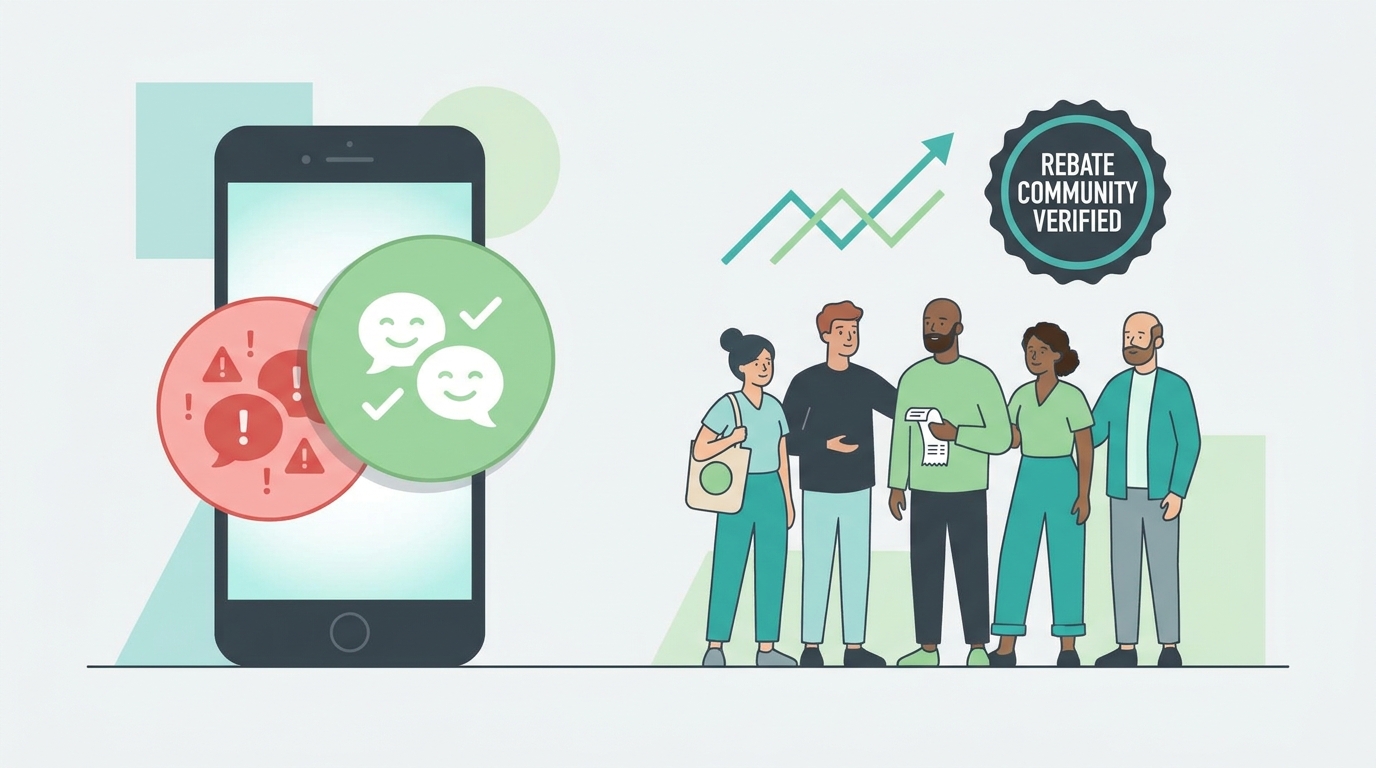
If every WhatsApp or Telegram deal invite now feels a little shady, that is a pretty normal reaction. Plenty of people joined what looked like a shopping group and ended up in a fake investing channel, a “bill payment discount” scam, or a pressure cooker full of mystery links and urgent messages. So yes, being suspicious is smart. The good news is that not every rebate group is fake. Some really are just communities sharing store promos, cashback stacks, coupon codes, and bulk-buy opportunities from known retailers. The trick is learning how to tell the difference fast, before you send money, hand over personal details, or click something you regret. If you want to know how to safely join WhatsApp and Telegram rebate groups, start with one simple rule. A legit savings group explains where the deal comes from. A scammy one wants you to act first and ask questions later.
⚡ In a Hurry? Key Takeaways
- Only join rebate groups that clearly show deals from known retailers, official apps, or explained group-buy discounts.
- Before trusting a group, verify one posted deal yourself on the retailer site or app instead of through the group link alone.
- If a group mixes shopping with investing, crypto, prepaid bill tricks, or “guaranteed returns,” leave immediately.
Why deal groups feel useful and risky at the same time
This is the weird moment we are in right now. Real promo communities do exist. They help members catch limited-time coupons, cashback offers, price drops, stackable codes, and referral bonuses they might miss alone.
At the same time, scammers know that people are hunting for savings. So they copy the look and language of legit deal groups. They use words like “rebate,” “VIP discounts,” “co-op pricing,” and “community savings.” Then they slide into fake payment schemes, fake jobs, fake investing, or fake wholesale offers.
That is why the safest mindset is this. Do not ask, “Is WhatsApp or Telegram safe?” Ask, “Can this group prove where its savings come from?”
The Safe Signal Shortcut
The quickest way to sort the good from the bad is to look for what I call the safe signal. A trustworthy rebate group can trace its deals back to something real and checkable.
Safe signals of a legit rebate community
Look for groups that do at least a few of these things:
- Name the retailer clearly, like Target, Walmart, Costco, Amazon, Walgreens, or a known cashback app.
- Explain the deal source, such as store coupon, clearance, cashback app, manufacturer rebate, loyalty rewards, or volume discount.
- Post screenshots that match what you can find yourself in the store app or website.
- Encourage members to verify deals independently.
- Allow discussion, including members saying when a deal is dead or limited.
- Do not require upfront fees just to see basic offers.
- Do not pressure you to move money through a person-to-person payment app to “unlock” savings.
That last one matters a lot. A real deal group helps you spend less at a real store. A scam group tries to get you to send money to a stranger.
Red flags that should make you leave immediately
If you remember nothing else, remember this list. These are the classic danger signs.
1. The discount is huge, vague, and hard to explain
“Pay your utility bill at 50 percent off.” “Get electronics at 80 percent off.” “Double your money while shopping as a team.” None of that passes the smell test unless there is a very specific, verifiable promo from an official provider.
2. The group also talks about investing
A shopping rebate group should not suddenly become a stock tip room, crypto club, or wealth coaching chat. Mixing those topics is one of the oldest bait-and-switch moves around.
3. Admins disable normal conversation
Some legit channels are broadcast-only, so this alone is not proof of a scam. But if comments are shut off, questions are ignored, and every post is urgent, that is a bad sign. Healthy communities usually leave some space for members to confirm whether a deal worked.
4. You are asked to pay first, verify later
If someone says, “Send $25 to reserve your rebate slot,” “pay to join the premium lane,” or “deposit to activate your account,” stop there.
5. The links are messy or masked
Be careful with shortened links, lookalike websites, or pages that imitate a retailer’s branding but live on a strange domain. If the deal is real, you should usually be able to find it from the main retailer app or site too.
6. They want personal documents for a shopping deal
A basic promo group does not need your ID, bank login, Social Security number, or crypto wallet recovery phrase. Ever.
How to safely join WhatsApp and Telegram rebate groups
Here is the practical checklist I would give a friend.
Step 1. Inspect the group before you interact
Read the group description. Scroll through at least a week of posts. Ask yourself:
- Are the deals tied to known stores or apps?
- Do old posts still make sense, or are they full of dead links and hype?
- Are members discussing actual purchases and savings?
- Do admins explain terms clearly?
If the feed is mostly slogans, urgency, and “message admin now,” move on.
Step 2. Verify one offer on your own
Before joining deeply, test a single deal. Search the item on the store website yourself. Open the official app. Check if the coupon, rebate, or cashback promotion exists without relying on the group link.
This one habit filters out a lot of nonsense.
Step 3. Never use your main payment account at first
If a group involves buying from a shared order or paying dues for a warehouse club split, start tiny. Use a payment method with purchase protection when possible. Do not use direct bank transfer or debit for a stranger-led transaction unless you have already built trust and checked the setup carefully.
Step 4. Protect your phone number privacy
WhatsApp and Telegram groups can expose your phone number or username to other members, depending on settings and the platform. Review privacy controls before joining. Limit who can see your phone number, profile photo, and last seen status if possible.
Step 5. Keep shopping and investing separate
This is worth repeating. A rebate group should help you save on groceries, household items, clothing, travel, or online shopping. The second it turns into returns, portfolios, forex, or crypto mining, leave.
Step 6. Watch how admins handle skepticism
Good communities answer questions. Scammy ones shame doubters, flood the chat, or say things like “serious members only” when someone asks for proof.
How real rebate communities usually work
Legit groups tend to be boring in the best possible way. They are built around repeatable savings methods, not magic tricks.
Common legit models
- Coupon and promo sharing from major retailers
- Cashback app stacking and referral bonuses
- Bulk orders that reduce shipping or unlock quantity discounts
- Loyalty program alerts, like bonus points days
- Price match tips and clearance finds
Notice the pattern. These are all tied to existing retail systems. The savings come from scale, timing, or careful stacking, not from a mystery middleman.
If you like the referral side of this world but hate random invite spam, you might also like The “Referral Swarm Shortcut”: Turn Random Invite Codes Into Real Rebate Crews You Can Join Tonight. It gets into how to spot real group value instead of one-off code drops.
How to graduate from random chats to safer co-op style groups
The best outcome is not staying forever in a giant open chat full of strangers. It is moving toward smaller, better organized communities with clearer rules.
What a safer co-op style group looks like
- Clear posting rules
- Named focus, like grocery deals, pharmacy deals, family essentials, or travel points
- Proof of past successful redemptions
- No pressure to recruit endlessly
- No mixing in side hustles or investments
- A shared habit of checking official sources
A good group should make you feel calmer and more informed over time. Not more rushed.
Simple questions to ask before trusting any deal post
When a new deal pops up, run through these quick questions:
- Who is the actual seller?
- Where does the discount come from?
- Can I see it on the official site or app?
- Do I need to send money to a person, or can I pay the retailer directly?
- Would this still make sense if I removed all the hype and countdown language?
If you cannot answer those cleanly, skip it.
At a Glance: Comparison
| Feature/Aspect | Details | Verdict |
|---|---|---|
| Deal source transparency | Legit groups name the retailer, app, coupon, rebate, or bulk-buy reason behind the price cut. | Good sign |
| Payment method | Scammy groups often push direct transfers to admins or “agents” instead of normal checkout with a retailer. | Major red flag |
| Group behavior | Real communities allow questions and member feedback. Scam groups use urgency, secrecy, and pressure. | Trust the calm group |
Conclusion
You do not need to choose between blind trust and total paranoia. Social feeds are full of both extremes right now. Yes, there are curated promo groups that really do help people save money at major retailers. And yes, there is also a wave of sketchy WhatsApp and Telegram channels pretending to offer rebates while setting people up for scams. The way through is a simple checklist. Confirm where the discount comes from. Verify at least one deal yourself. Refuse any group that mixes shopping with investing or asks for money upfront. Then, when you find a solid community, move toward smaller, more transparent co-op style groups that focus on repeatable savings. That lets you protect your wallet today while still using community buying power, cashback, and rebates instead of shopping alone at full price.