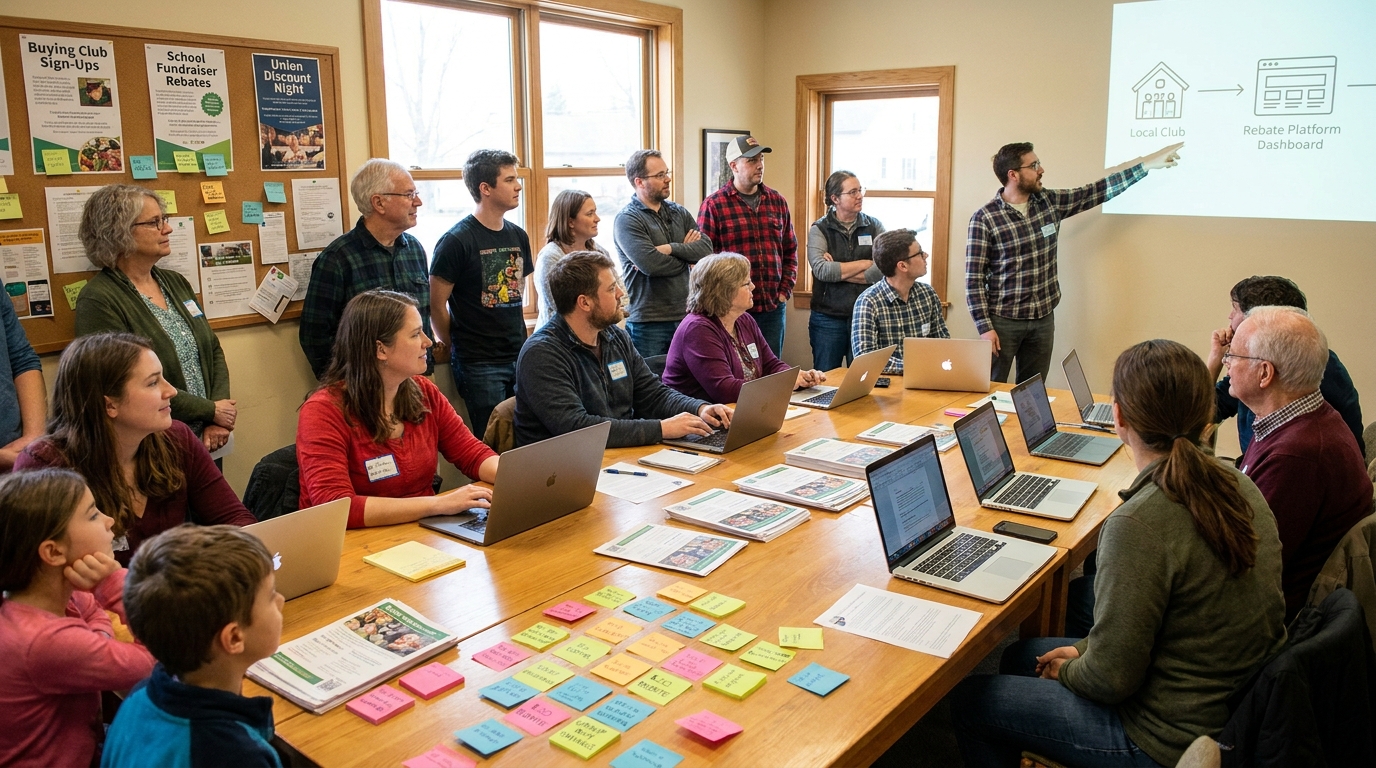
You can waste a lot of time chasing rebate groups online, only to end up in dead chats, spam channels, or groups run by people you would never trust with ten dollars, let alone your shopping money. That gets old fast. The easier path is often sitting right in front of you. If you want to know how to find local community rebate groups, start with one real-world place you already visit every week. Think school pickup, your church, a gym, a neighborhood coffee shop, a library, an apartment complex, or even the break room at work. Those places already have something random internet groups do not. Shared routines and real accountability. When a rebate circle grows around an actual location, members are more likely to know each other, spot bad behavior early, and share deals that fit the same stores and schedules. That makes the group smaller, yes, but often much safer and more useful.
⚡ In a Hurry? Key Takeaways
- To find local community rebate groups, start with one place you already know well, then ask around for existing chats, parent groups, staff channels, or neighborhood deal circles.
- Use a simple question like, “Is there a local group where people share rebates or bulk-buy deals for this area?” and look for warm introductions instead of public links.
- Groups tied to real places are often safer because members share real-world accountability, but you should still check rules, payment habits, and admin behavior before joining.
Why the best rebate group may be hiding in plain sight
Most people start the same way. They search Facebook. They poke around Telegram. They type “rebate deals near me” and hope for the best.
That is understandable. It is also how many people end up in the loudest and least trustworthy spaces.
A local anchor group works differently. It forms around a place, not just a topic. Maybe parents at one elementary school share grocery rebates. Maybe nurses on one hospital floor trade household deals. Maybe a neighborhood HOA chat has a side thread for cashback offers and bulk buys.
That local tie matters because people usually behave better when there is a chance they will see each other again on Tuesday morning.
What “local anchor” really means
A local anchor is one physical place that already connects people. It is the hub. The rebate group grows from that hub.
Good local anchors include:
Schools and daycare centers. Churches and faith groups. Apartment buildings. Workplaces. Sports clubs. Senior centers. Libraries. Parent associations. Community gardens. Local cafés with regulars. Neighborhood Facebook groups linked to a real area.
You are not looking for a massive audience. You are looking for a believable one.
How to find local community rebate groups without looking sketchy
The trick is to ask in a normal, specific way. Not “Anyone got deals?” That sounds vague and spammy. Instead, ask if a group already exists.
Start with the places you already visit
Pick one spot where you are a known face. That could be your kid’s school, your office, or the building lobby where everyone waits for packages.
Then ask one of these questions:
- “Is there already a parent chat where people share grocery rebates or store promos?”
- “Do people here have a deals group for cashback apps or local store offers?”
- “Is there a neighborhood thread for bulk buys, coupon stacking, or rebate finds?”
Small wording change, big difference. You are asking for a real group that people use, not begging strangers for links.
Look for the side channels
Many good groups are not labeled “rebate group” at all. They live inside broader chats.
Examples:
- A PTA WhatsApp that has a deal-sharing thread
- A church women’s group with a shopping sub-chat
- A work Slack channel called “frugal finds”
- An apartment resident Facebook group where neighbors swap rebate screenshots
This is one reason public searches miss them. The best groups are often tucked inside existing communities.
Ask the practical person, not the loud person
Every community has one. The organized parent. The office admin who knows every form. The neighbor who runs the holiday potluck sheet. The person at the front desk who knows which chat everyone actually uses.
Ask them first. They usually know where the real conversations happen.
Why real-world groups feel safer
They are not magically safe. But they often have better trust signals.
What to look for
Do members know each other offline. Is there a clear admin. Are deal instructions easy to follow. Do people talk about actual stores in your area. Are payment expectations clear. Does the group avoid pressure and hype.
If the group is tied to one school district, one church, or one workplace, that is useful context. It means members probably share store access, schedules, and standards for behavior.
That alone can cut down on nonsense.
Red flags that still matter, even in local groups
Do not let the word “local” turn off your common sense.
Watch for these warning signs
- Admins asking for upfront money with no clear process
- Pressure to act immediately or lose your spot
- No one can explain how the rebate actually works
- Links sent only in private after vague promises
- Members who seem real, but never discuss actual results
- Requests for sensitive personal or banking details
If a group gets defensive when you ask normal questions, back away.
The easiest places to search this week
If you want a practical starting list, here it is.
1. School and parent networks
Parents are already sharing lunch ideas, fundraiser links, and pickup reminders. Rebate sharing often fits naturally into that mix, especially for groceries, household items, and kid supplies.
2. Workplace chats
Office workers, teachers, medical staff, and shift teams often build informal deal-sharing circles because everyone wants to save on the same basics.
3. Neighborhood groups
Look at HOA pages, Buy Nothing communities, local Facebook groups, building bulletin boards, and apartment resident chats.
4. Faith and volunteer groups
These communities already run on trust and repeated contact. That can make them a natural home for careful group saving.
5. Regular local businesses
Your neighborhood café, gym, salon, or laundromat may not host a rebate group directly, but regulars often know each other well enough to point you toward one.
If you cannot find one, start a tiny one
You do not need 500 members. Start with three to ten people who already share a real-world connection.
Keep it simple
- Choose one platform, like WhatsApp, Facebook Messenger, or Signal
- Set one rule about no pressure and no mystery links
- Focus on stores everyone actually uses
- Ask members to post proof or clear steps
- Keep personal payment details out of the chat unless absolutely necessary
A small, boring, reliable group is better than a huge, chaotic one every single time.
Use online clues to support your local search
If your offline search comes up empty, use online tools more carefully. Niche hashtags, school names, neighborhood names, and local store references can help you spot quieter communities that are still rooted in real life.
A smart next step is The ‘Code Word’ Method: Use Niche Hashtags To Uncover Quiet Rebate Communities. It is useful when broad searches keep leading you into fake channels and junk groups.
The best approach is often a mix. Start offline. Use online clues to confirm or extend what you find.
How to tell if a local group is worth staying in
After you join, give it a quick test.
Good signs
- People share deals that match local stores and real routines
- Questions get answered clearly
- Admins set boundaries without acting like mini dictators
- Members talk about results, not just promises
- The group saves you time, not just money
If you leave the chat more confused than when you entered, it is probably not your group.
At a Glance: Comparison
| Feature/Aspect | Details | Verdict |
|---|---|---|
| Local anchor group | Built around a school, workplace, building, church, or neighborhood with real-world overlap between members. | Best choice for trust and relevance. |
| Large public rebate channel | Easy to find, but often full of spam, dead links, fake urgency, and strangers with no accountability. | Use cautiously, if at all. |
| Tiny self-started group | A few trusted people from one real-world circle sharing deals on a simple app. | Excellent if no good group already exists. |
Conclusion
Right now, a lot of people are looking for ways to stretch every dollar, and that is exactly why risky rebate spaces keep attracting newcomers. The loudest groups are not always the best ones. Often, the safer option is closer to home. If you focus on how to find local community rebate groups through places you already know, you give yourself a better shot at finding people who are accountable, practical, and shopping in the same world you are. That means fewer random links, fewer anonymous admins, and more useful savings. It also helps grow stronger circles inside your own community. Instead of everyone chasing deals alone, your school, workplace, or neighborhood can bring trusted people into the Rebate Clubs ecosystem together. Start with one real-world spot. That is usually all it takes to find the right hub.