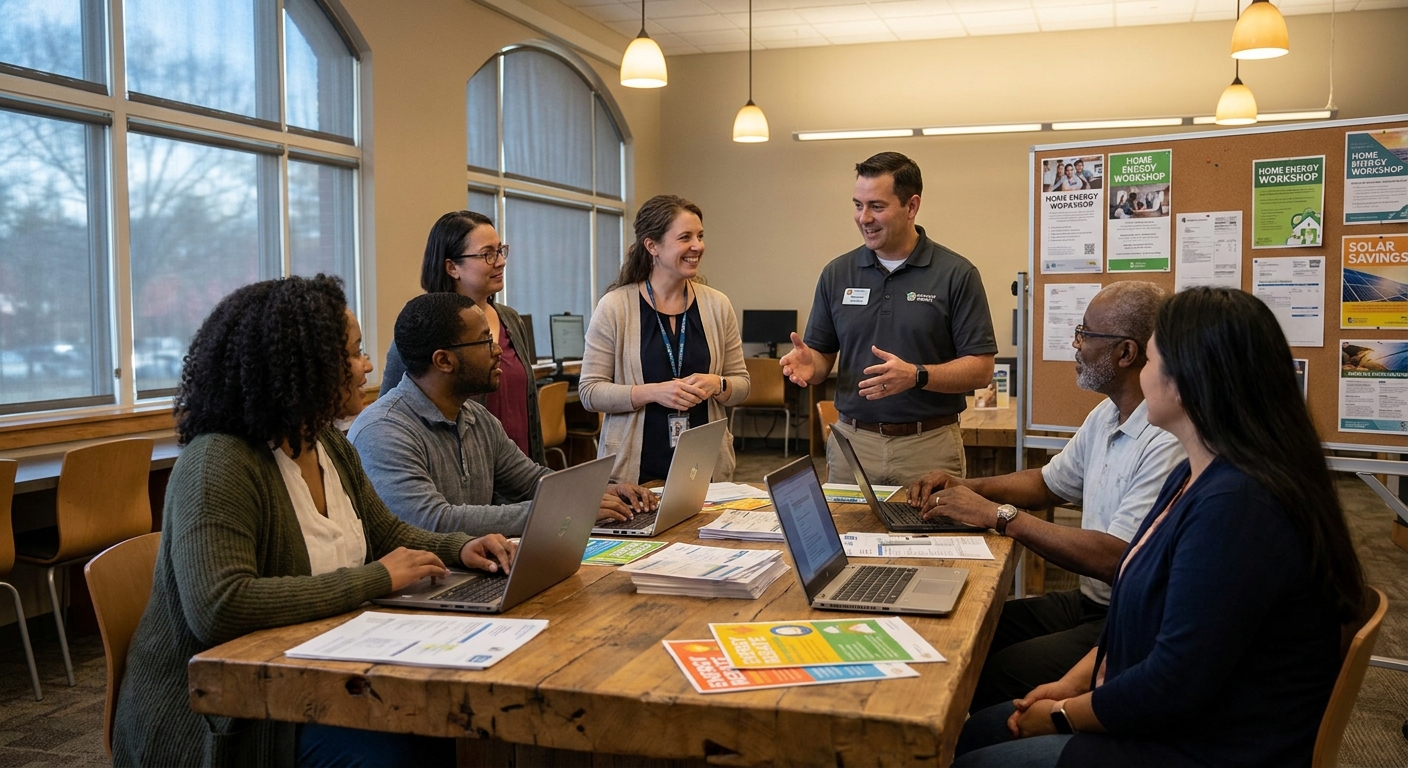
You click on a rebate link, answer ten questions, upload a utility bill, and then hit a dead end. Or worse, you find out the “community deal” closed months ago. That gets old fast. A lot of people think they are missing some secret club where everyone else is getting heat pump discounts, cheaper insulation, or group-buy solar quotes. The truth is less glamorous and more useful. Many of those connections start in ordinary places, especially your local library.
Libraries are quietly hosting bill help clinics, energy workshops, digital skills nights, and city resource events. That matters because the right people are already in the room. You have residents who want to save money, staff who know local programs, and nonprofit or utility partners who can explain what is real and what is junk. If you have been wondering how to use my local library to find community rebate groups, the answer is simple. Do not just attend the workshop. Use it as the starting point for a small, practical buyers club that keeps sharing deals after everyone goes home.
⚡ In a Hurry? Key Takeaways
- Your local library can be a real-world entry point to community rebate groups, especially through energy workshops, bill clinics, and city partner events.
- Go in with a plan. Ask who runs local programs, collect 5 to 10 contacts, and start one simple follow-up group for sharing links and bulk-buy ideas.
- Stick to verified offers from utilities, city agencies, and known nonprofits. Libraries help because the people in the room are easier to vet than random online channels.
Why the library works better than another random rebate link
Most rebate hunting fails for one boring reason. It is too lonely.
You are expected to sort out eligibility rules, compare contractor quotes, watch deadlines, and somehow know which incentive stacks with which program. That is a lot for one person after dinner on a Tuesday.
A library event changes the math. Now you are not one confused applicant. You are one of several neighbors asking the same questions at the same time.
That matters because group buying usually starts with three things. Trust. Timing. Enough people to make a discount worth asking for.
Libraries already have all three in reach.
What kinds of library events can lead to rebate groups
Do not wait for an event called “Join a Rebate Club.” It may not exist under that name.
Look for events like these:
- Utility bill help clinics
- Home energy workshops
- Weatherization sign-up nights
- Digital literacy classes with city services
- Sustainability fairs
- Senior resource events
- Tenant rights or housing assistance workshops
These events often attract the exact mix you need. Residents who want lower bills. Local staff who know active incentives. Partner organizations with forms, flyers, and deadlines. Sometimes even contractors or outreach teams.
How to use my local library to find community rebate groups
Here is the simple playbook.
1. Search the calendar like a detective, not a shopper
Check your library website and search terms like “energy,” “utility,” “home,” “savings,” “green,” “weatherization,” “solar,” “senior help,” and “community resources.”
If the online calendar is thin, call the front desk. Ask this:
“Do you host any utility bill clinics, home energy workshops, or city resource nights where residents can learn about rebates or assistance programs?”
That one question is often better than browsing ten web pages.
2. Show up with three goals
Do not just sit in the back and collect pamphlets.
Your goals are:
- Find one organizer who knows local programs
- Find five neighbors interested in saving on the same type of upgrade
- Find one easy next step, like a follow-up meeting or group chat
That is enough to get something real started.
3. Ask the questions that reveal whether a real group can form
Good questions include:
- Which rebates are active right now, not just “coming soon”?
- What upgrades are people here asking about most?
- Is there a local nonprofit or utility contact who can verify offers?
- Has anyone here tried a group purchase for insulation, smart thermostats, or heat pumps?
- Would the library allow a follow-up meet-up if enough residents are interested?
You are listening for patterns. If six people care about draft proofing or electric appliance rebates, that is your first club topic.
4. Keep the contact list simple
You do not need a fancy website. A one-page sign-up sheet works.
Ask for:
- First name
- Email or phone
- ZIP code
- Main interest, like insulation, solar, appliances, or bill help
Tell people exactly what the list is for. Something like, “This is just for sharing verified rebate links and seeing if we have enough people for a bulk quote.”
That feels practical, not spammy.
Turn one workshop into an actual buyers club
This is where most good intentions fizzle out. People leave, life gets busy, and the notes sit in a tote bag.
So make the next step painfully easy.
Pick one communication channel
Email is boring, but it works. A private Facebook group can work. A group text is fine for very small groups. If your group later wants a faster alert system, you can also learn from The ‘Telegram Radar Shortcut’: Turn Quiet Deal Channels Into Real Rebate Clubs You Can Actually Join, especially if members already use Telegram and want a cleaner way to track deals.
At the start, simpler is better.
Choose one shared mission for the first month
Do not launch with “all rebates for everyone.” That gets messy fast.
Start with one goal, such as:
- Compare smart thermostat rebates
- Get three insulation quotes for the same neighborhood
- Track city heat pump incentives
- Share utility bill reduction programs for seniors or renters
A narrow focus helps people stay engaged.
Assign tiny roles
You do not need officers and bylaws. Just ask for small jobs.
- One person tracks city rebate pages
- One person watches the local utility website
- One person asks the library about another room booking
- One person gathers contractor names people already trust
Now it is a group, not a wish.
How to spot real opportunities versus time-wasting noise
Not every “deal” is worth chasing. A good library-based group has one big advantage over internet-only searching. People can compare notes in plain English.
Use this rule. If nobody in the room can explain who funds the offer, who qualifies, and when it ends, treat it as unproven.
Green flags
- Linked from a utility, city, county, or state site
- Backed by a known nonprofit or housing agency
- Clear deadlines and eligibility rules
- Named program contacts
- Paper handouts that match the official website
Red flags
- Pressure to “act today” before you read anything
- Vague claims about free upgrades with no program name
- Contractors asking for a deposit before incentive details are confirmed
- Links shared in chat with no source
- People who cannot explain whether the offer is a rebate, tax credit, or financing plan
Best group-buy ideas for a library-based rebate club
Some purchases are easier to organize than others.
Good starters
- Smart thermostats
- LED bulbs and power strips
- DIY weather sealing kits
- Home energy audits
- Insulation quote comparisons
These are easier because people can compare the same products or similar service packages.
More advanced projects
- Heat pumps
- Water heaters
- Rooftop solar
- Window replacements
These can still work, but they need better screening because homes differ a lot. In those cases, your “group buy” may be less about one exact product and more about negotiated contractor pricing, free consultations, or waived assessment fees.
What to say at the event if you are shy
You do not need to sound like an organizer. Try one of these lines:
- “I keep missing deadlines. Is anyone here interested in sharing rebate alerts?”
- “If a few of us are looking at the same upgrade, maybe we could compare quotes together.”
- “Would anyone want a simple email list for verified local programs?”
- “Has this library ever hosted a follow-up meet-up for this kind of thing?”
That is enough to get nods and start a conversation.
How librarians and staff can quietly help
Libraries usually cannot endorse a contractor or run a private buying club for you. Fair enough.
But they often can help in practical ways:
- Provide meeting space
- Promote a follow-up community discussion
- Connect you with city outreach staff
- Point you to local databases and public resource guides
- Host another neutral info session if interest is strong
That support is huge. It gives your group a trustworthy home base without making the library responsible for every deal.
A simple 7-day plan after the workshop
Day 1
Send a short message to everyone who signed up. Thank them. Share one verified link and one date for a follow-up chat.
Day 2 to 3
Make a shared document with active rebates, deadlines, and who each one fits.
Day 4
Ask members to vote on the first group topic. Keep it to one choice.
Day 5 to 6
Have two people verify the top programs with the utility or city office.
Day 7
Hold a 30-minute call or library meet-up. Decide the next action, such as requesting three bulk quotes or building a monthly rebate alert list.
What if your library does not host these events yet?
You can still use the library as the spark.
Ask if they would consider a community information night with a local utility rep, sustainability office, or nonprofit housing group. Libraries often say yes to events that are practical, local, and clearly helpful.
Come prepared with a narrow idea. “Home energy savings and local rebate help for residents” is a lot easier to schedule than “everything about green technology.”
At a Glance: Comparison
| Feature/Aspect | Details | Verdict |
|---|---|---|
| Library workshops | In-person access to residents, city staff, nonprofits, and utility partners in one place | Best starting point for trust and local connections |
| Solo online rebate hunting | Easy to start, but often confusing, repetitive, and hard to verify | Useful for research, weak for momentum |
| Ongoing buyers club | Shared alerts, quote comparisons, bulk purchases, and better follow-through after events | Best long-term value if kept simple and verified |
Conclusion
You do not need a secret handshake to find better rebate deals. You need a room where the right people already show up, and right now libraries across the country are quietly hosting utility bill clinics, home energy workshops, and digital skills nights that do exactly that. City staff, nonprofits, utility partners, and regular residents are already sitting in the same room. That is the hard part done for you. Your job is to use a simple playbook. Ask better questions, gather a small contact list, pick one shared goal, and turn a one-time workshop into an ongoing buyers club. Once that group starts sharing verified links, comparing quotes, and splitting bulk purchases, you stop chasing rebates alone. Your community starts watching for new incentives together and bringing those wins back into real Rebate Clubs, so more people level up, not just the loudest coupon hunter.