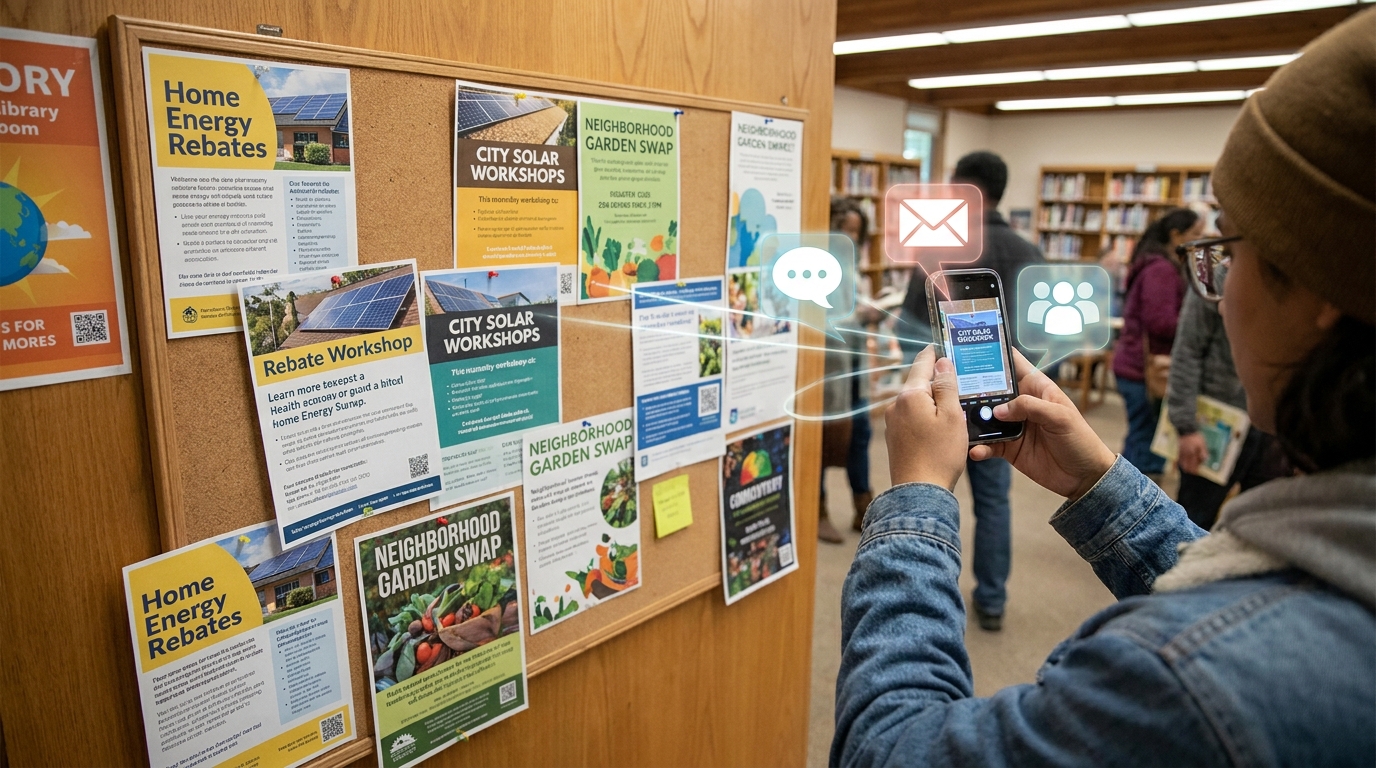
Most people see a local Facebook post about a city workshop, energy rebate, or home upgrade class and keep scrolling. Fair enough. Those posts look dull, and a lot of us assume they lead to a long webinar and a stack of forms. But that is often where the useful stuff starts. The public post is just the front door. The real help usually shows up later, in the smaller circles around it. Think neighbor email threads, private Facebook chats, HOA message boards, church newsletters, library mailing lists, and text groups where people compare notes on what actually worked.
If you have been trying to figure out how to find local community rebate groups, this is one of the smartest low-stress ways to do it. Instead of joining giant deal groups filled with random links and expired offers, you follow the trail from official local notices into smaller, higher-trust communities. That is where people share which contractor paperwork got approved fastest, which rebates can be stacked, how long checks took to arrive, and which programs looked good on paper but turned out to be a headache.
⚡ In a Hurry? Key Takeaways
- Official local PSA posts often lead to the best invite-only rebate groups, not just the public event itself.
- Sign up for workshops, ask one follow-up question, and look for side channels like email lists, private chats, and neighborhood groups.
- Stick with groups tied to real local institutions or real neighbors, because spammy public deal groups are far less reliable.
Why the boring posts are worth your time
Here is the trick. City offices, utilities, county energy programs, and local nonprofits have to advertise publicly. That means they post on Facebook, Eventbrite, library calendars, neighborhood apps, and community boards. The post itself may be dry. It might say something like “Free weatherization workshop” or “Learn how to apply for heat pump incentives.” Not thrilling.
But the people who show up are often exactly the people you want to meet. They are homeowners, renters, landlords, retirees, and practical savers who are already trying to get the same local rebates you are. And once a handful of them starts trading updates, a side group often appears naturally.
That side group is where the useful details live. Not theory. Actual results.
What these small rebate communities share that public groups miss
Big public deal groups tend to be noisy. Someone posts a screenshot from another state. Someone else drops a referral code. Three people argue about whether the deal is dead. You leave with more confusion than you started with.
Local micro-groups are different. They usually share things like:
- Which local rebates stack with state or utility offers
- Which forms need extra documents
- Which ZIP codes or neighborhoods qualify for special pilot programs
- Which workshops hand out one-on-one application help
- How long approvals and payouts are actually taking
- Which contractors understand the rebate paperwork
- Which deals are more trouble than they are worth
That kind of information almost never shows up on a national coupon blog. It is too local, too fresh, and often changes too fast.
How to find local community rebate groups without wasting hours
1. Start with the official noticeboard trail
Search where local agencies actually post. Check:
- Your city or county Facebook page
- Your utility company events page
- Local library event calendars
- Community center boards
- Eventbrite with your town name plus “rebate,” “energy,” “home upgrade,” or “workshop”
- Neighborhood Facebook groups
- Nextdoor and Patch
You are not just looking for the rebate itself. You are looking for events, webinars, Q&As, and “how to apply” sessions. Those are the best entry points.
2. Register, even if you are not sure you will attend live
This matters more than people think. Registration often gets you onto a follow-up email list. That is where useful links, contact names, and future invites tend to appear.
Even if the workshop is basic, the follow-up message might mention another program, a neighborhood pilot, a partner nonprofit, or an upcoming clinic where residents can get help filling out forms.
3. Watch for the side doors
After the event, look for clues that a smaller group exists. The signs are usually subtle:
- “Reply if you want the handout”
- “Join our monthly update list”
- “We have a neighborhood sustainability committee”
- “Residents are swapping application tips in our members group”
- “Ask your questions in the follow-up thread”
That is the moment to step in.
4. Ask one useful, specific question
You do not need to be a networking superstar. Just ask something practical.
For example:
- “Has anyone here stacked this with the utility insulation rebate?”
- “Did anyone get approved using a mobile home address?”
- “How long did your reimbursement take after install?”
- “Is there a local contractor people trust for the paperwork?”
Specific questions get specific answers. And helpful people often pull you into the better conversation after that.
5. Follow the person who has receipts, not the loudest opinion
In any group, one or two people will clearly know what they are talking about. They share screenshots, timelines, and exact steps. Pay attention to them.
If someone says, “My heat pump rebate was approved in 18 days, here is what they asked me to resubmit,” that is gold. If someone says, “These programs are all scams,” maybe not so much.
The best places these invite-only groups show up
They are usually not fancy. In fact, the more ordinary they look, the better.
- Private Facebook groups for a subdivision or town
- Email chains from workshop hosts
- Google Groups run by sustainability volunteers
- WhatsApp or Signal chats started after an event
- HOA newsletters or resident portals
- Church or school parent mailing lists
- Library or nonprofit community newsletters
These groups work because they are tied to real people in a real place. That cuts down on junk and fake urgency.
How to tell if a rebate group is worth joining
Not every private group is useful. Some are just quieter versions of the same noise. A good local rebate group usually has three things.
Real locality
People mention your utility, your county office, your city permit process, your climate zone, your contractors. It feels grounded.
Proof, not vibes
Members share screenshots, official links, approval emails, and dates. They say what worked and what failed.
Low sales pressure
If every conversation ends with “DM me for my installer,” be careful. Useful groups can mention contractors, sure. But the main point should be helping neighbors get the rebate, not pushing a sale.
A good next step after you find one strong group
Once you find one useful local group, do not stop there. Ask where else members swap updates. One good group often connects to two or three better ones.
And if you want to build a tighter circle from people you already know, this is a smart companion idea: The ‘Referral Circle’ Shortcut: Turn Your Existing Friends Into A Private Rebate Club. That approach works especially well when you are tired of dead threads and want a smaller, more reliable group.
Safety tips before you share too much
Small groups are useful, but use common sense.
- Do not post your full address, account number, or application ID publicly
- Redact personal details in screenshots
- Confirm deadlines and rules on the official program site
- Be careful with “guaranteed approval” claims
- Watch for contractors or marketers pretending to be neighbors
The sweet spot is this. Use the group for real-world tips, then verify the final details with the official source.
A simple script you can use today
If you spot a local PSA post and want to turn it into a community lead, try this:
“Thanks for sharing this. I am interested in the rebate, but I am especially trying to learn from people locally who have already applied. Is there a follow-up group, email list, or neighborhood thread where residents are comparing notes?”
That is polite, clear, and surprisingly effective.
At a Glance: Comparison
| Feature/Aspect | Details | Verdict |
|---|---|---|
| Official PSA posts | Public, easy to find, often bland, but they lead to workshops and local contacts. | Best starting point |
| Large public deal groups | Lots of activity, but often full of expired offers, off-topic posts, and non-local advice. | Use with caution |
| Invite-only local micro-groups | Smaller, higher-trust spaces where neighbors share timelines, screenshots, and step-by-step wins. | Most useful for real savings |
Conclusion
If you have been overwhelmed by generic advice like “check your utility site” or burned out by spammy public deal groups, this is a much better route. Cities, utilities, and energy offices are pushing out fresh rebate programs right now, and their workshops and PSA posts are often the easiest way into the smaller circles where the real value shows up. That is where neighbors compare payout timelines, swap screenshots, explain the forms, and tell you which offers are actually worth the trouble. Once you know how to find local community rebate groups through these official noticeboard posts, you have a repeatable system. You are not hunting blindly anymore. You are following the path from public announcement to private, practical local knowledge, and that is something the big national deal sites simply cannot match.