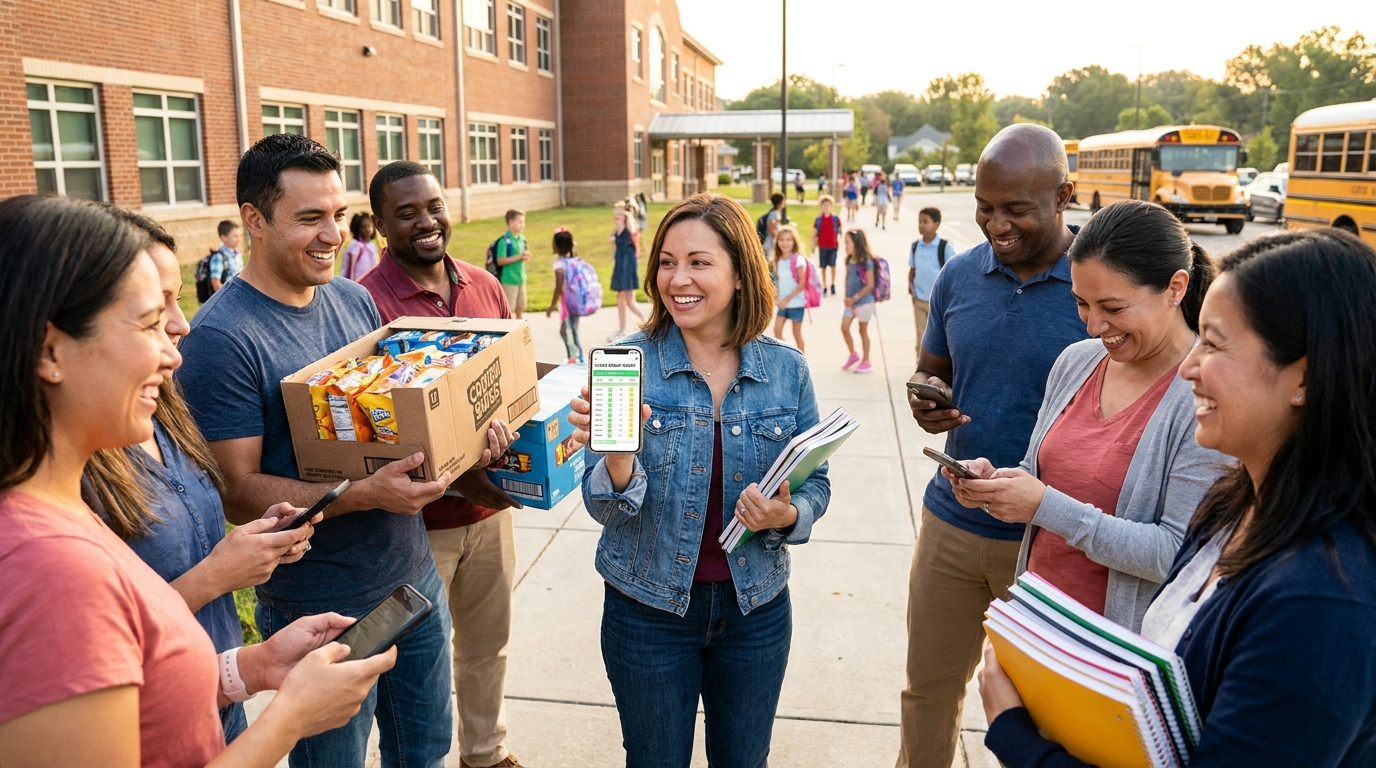
The school pickup line has turned into a running budget meeting nobody asked for. One parent is hunting for cheaper granola bars. Another needs new shin guards by Friday. Somebody else is trying to figure out why the “optional” classroom contribution somehow does not feel optional at all. Meanwhile, the PTA email thread and class WhatsApp chat keep buzzing, but most of that chatter goes nowhere useful. Lots of reminders. Lots of scrambling. Not much actual saving. The good news is that these groups already have the hard part handled. They have people, trust, and the same repeat needs showing up over and over. If you want to know how to use school and PTA groups for bulk buy rebates, the shortcut is simple. Start with one item everyone already buys, collect interest, set one order window, and turn that first shared purchase into a repeatable little rebate club that saves money without adding a second job to your life.
⚡ In a Hurry? Key Takeaways
- Use school and PTA groups for bulk buy rebates by starting with one high-repeat item like snacks, uniforms, or basic supplies.
- Keep it simple. One organizer, one payment deadline, one pickup day, and clear rules on who is in.
- Focus on trusted vendors, visible totals, and easy-to-handle products so the group saves money without turning into chaos.
Why school groups are perfect for this
Parents in school communities buy the same stuff at the same time. That is rare. Most online groups are random. A school group is not. Families need field trip snacks, classroom tissues, sports socks, spirit wear, and replacement water bottles on a loop.
That is why school chats are such a good place to start a rebate club. You are not trying to convince strangers to care about some niche product. You are gathering people who already have the same shopping list.
The trick is to stop treating these chats like bulletin boards and start using them like small buying groups.
What a school pickup line rebate club actually looks like
Do not picture a giant, formal organization with bylaws and spreadsheets that need their own committee. Think smaller.
One parent notices that ten families are all buying the same peanut-free snack packs for class. Instead of each household placing separate orders, the group combines demand into one order. That bigger order may qualify for lower per-unit pricing, waived shipping, or a rebate through a club platform or supplier deal. The savings get split back across the families.
Then you repeat it next month.
That is the whole idea. Small, practical, repeatable.
How to use school and PTA groups for bulk buy rebates
1. Start with a product that people already buy
The first order should be boring. That is a compliment.
Boring products work because they are predictable and low-drama. Good starting points include:
- Classroom snacks
- Lunchbox staples
- Printer paper and basic school supplies
- Team sports socks or practice shirts
- Uniform basics
- Art supplies teachers ask for all year
Skip custom items at first. Skip anything size-heavy, complicated, or likely to create returns.
2. Ask one very specific question
Most group chats die because the ask is too vague.
Do not post, “Would anyone be interested in saving money together?”
Post something like this instead:
“I am putting together a shared order for peanut-free snack packs if at least 8 families want in. If we hit the minimum, we should get lower pricing and maybe shipping savings too. Reply by Thursday with how many boxes you want.”
That gives people a clear product, clear deadline, and clear next step.
3. Set a cutoff and stick to it
This part matters more than people think. A shared order falls apart when there is no deadline. Someone always wants to add one more case after you have already checked out.
Use a simple rule:
- Interest closes on Tuesday night
- Payment due by Wednesday at noon
- Order placed Wednesday afternoon
- Pickup Friday at school pickup or practice
That rhythm makes the club feel real instead of messy.
4. Keep money handling clean
Nothing kills a parent savings idea faster than confusion about money.
Before collecting a dollar, share:
- The item link or photo
- The expected price per unit
- Any shipping or service fees
- The rebate or discount structure, if known
- The payment deadline
Then collect payment before placing the order. Not after. Always before.
If you are using a platform built for rebate groups, even better. It creates a cleaner record and reduces the awkward “Hey, you still owe me $18.47” messages.
5. Make pickup easy
The easiest pickup point is one that already exists. School pickup. Saturday game day. PTA meeting night. Dance practice. Do not invent a second logistical event if you do not need one.
If an order is large, sort it into named bags before you arrive. That five-minute step can save half an hour of confusion in a parking lot.
What products work best in parent groups
The sweet spot is simple, repeatable, and easy to divide.
Best first categories
- Bulk snacks for classrooms and teams
- Cleaning wipes, tissues, and hand sanitizer
- Markers, glue sticks, pencils, notebooks
- Team consumables like water, ice packs, or tape
- Uniform basics with standard sizing already known
Categories to save for later
- Personalized spirit wear
- Shoes with fit issues
- Anything with many style choices
- Items with high return rates
The goal of your first club is not to prove you can coordinate a mini supply chain. It is to prove the group can save money with almost no friction.
How to keep the group from turning into a headache
A school rebate club works best when it has light structure. Not zero structure.
Use a simple format for every post
Try this:
- Item
- Price estimate
- Minimum order needed
- Deadline
- Payment method
- Pickup date
People respond better when they can scan details in ten seconds.
Have one organizer per order
Not five. One.
That person does not need to run the club forever, but each order needs a point person. Rotating by month or by product category works well.
Do not overcomplicate savings math
If the discount is 12 percent, say 12 percent. If the rebate comes later, explain when and how it will be shared. Round clearly when needed. Transparency beats fancy accounting.
Why this works better than waiting for random promo codes
Promo codes are nice when they show up. They are also unreliable. A group purchase is different because you are creating savings from demand that already exists.
That is the bigger shift. Instead of every family trying to hunt down separate deals, the group uses its regular buying power to create a better one.
If you have seen this work in neighborhood groups too, that is no accident. The same idea is behind The ‘Local Listserv Shortcut’: Turn Quiet Email Lists Into Real Rebate Groups You Can Actually Join. Quiet community channels often hide the best savings opportunities because the people in them already trust each other and often need the same things.
A sample message you can copy into a PTA or class chat
Here is a version that sounds normal and gets to the point:
“Quick idea for anyone trying to cut school costs a bit. A bunch of us buy the same classroom snacks and supply refills every month anyway. I can organize a shared order for this round if we have enough families to make it worth it. This first one would be for snack packs and tissues. If you want in, reply with quantity by Thursday at 6 p.m. I will send final price and payment details before ordering.”
That is enough. You do not need a sales pitch.
Common mistakes to avoid
Starting too big
If your first attempt includes twelve products, multiple brands, and special requests, you are setting yourself up for a mess.
Start with one item or one small category.
Allowing late additions
It feels rude to say no, but late adds create mistakes and resentment. Protect the process.
Choosing items with tricky returns
If half the group may want refunds or swaps, your savings will disappear into time and hassle.
Forgetting to show the savings
After the order, tell people what the group saved. Even a simple note helps:
“Shared order total saved the group $86 versus separate purchases, plus everyone skipped individual shipping.”
People are much more likely to join the next round when they can see the result.
When to turn one order into a real repeating club
Once you get through one successful order, look for repeat demand. Did ten families want the same product again a month later? Good sign. Did a sports team need the same basics every season? Also a good sign.
That is when a one-off shared order becomes a real rebate club.
You do not need hundreds of members. Sometimes 8 to 20 committed households are enough to make recurring savings worthwhile.
At a Glance: Comparison
| Feature/Aspect | Details | Verdict |
|---|---|---|
| Best starter item | Repeat purchases like snacks, tissues, pencils, or team supplies are easiest to group and divide. | Best place to begin |
| Group coordination | Works best with one organizer, one deadline, and payment collected before ordering. | Keep it tight and simple |
| Risk level | Low when using trusted sellers and easy-to-split products. Higher with custom gear, sizes, and returns. | Stick to low-drama items first |
Conclusion
Family budgets are getting squeezed from every direction, and school communities are one of the few places where lots of households with the same needs already talk every single week. That is a real advantage. If you use school and PTA groups for bulk buy rebates the smart way, one shared order of snacks, uniforms, or supplies can turn into a simple community-run rebate club that keeps saving people money month after month. It can also cut waste, reduce duplicate fees, and make those busy parent chats a little more useful. You do not have to wait for a giant retailer to toss you a one-time promo code. Small parent groups can use their own buying power right now, and Rebate Clubs is exactly the kind of place where that idea can grow into something practical.