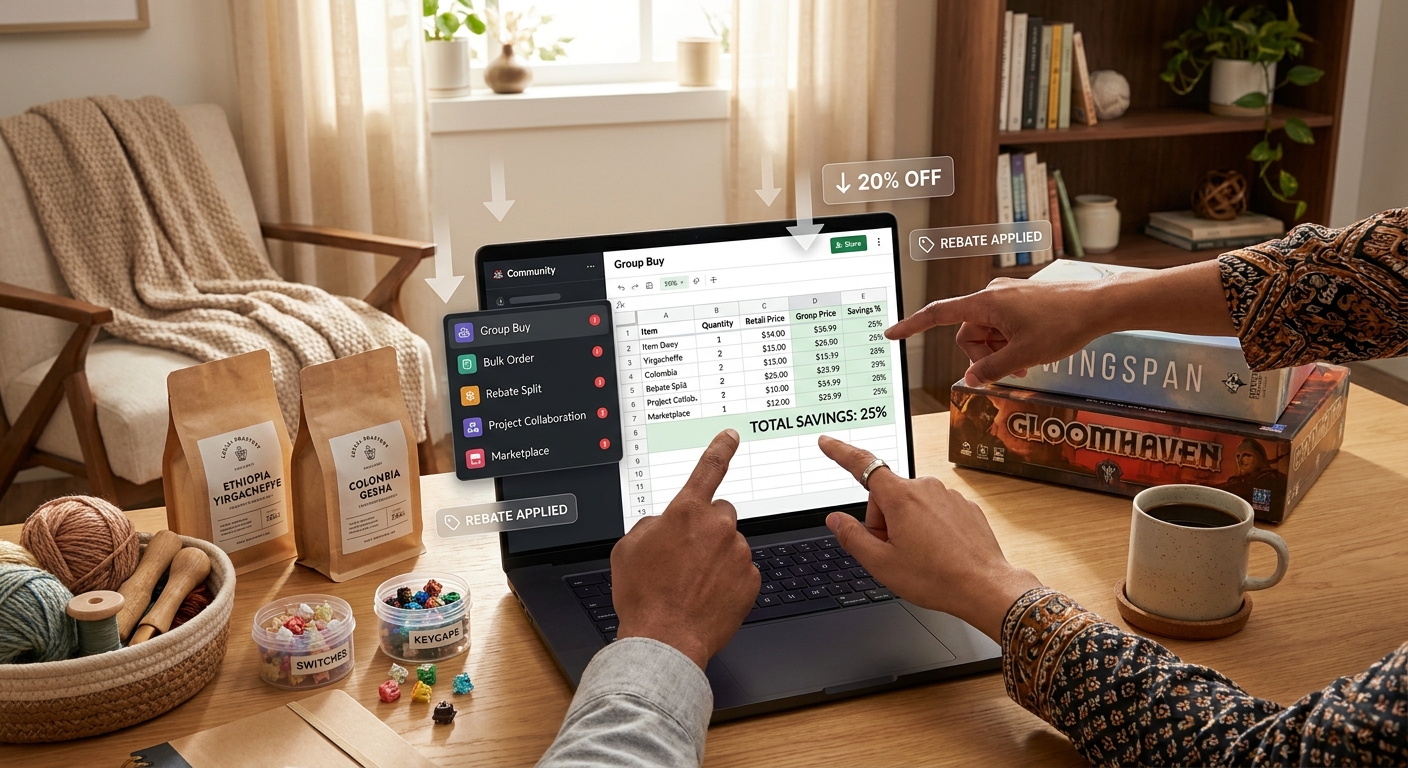
You are not imagining it. Looking for “deal groups” now often feels like rummaging through a junk drawer full of expired codes, referral spam, and people shouting about savings that vanished three days ago. The better discounts are often hiding somewhere much less obvious. They sit inside small hobby communities for coffee roasting, aquarium keeping, sewing, trail cycling, specialty baking, 3D printing, and dozens of other oddly specific interests. These groups are not really built around coupons. They are built around shared obsession. The savings happen on the side, through bulk orders, supplier rebates, shared shipping, and member-to-member tips about when to buy. If you have been wondering how to join group buy and rebate communities for my hobby, the trick is to stop searching for “rebates” first and start searching for your people. Once you find a healthy group, the money-saving part usually reveals itself pretty quickly.
⚡ In a Hurry? Key Takeaways
- The best rebate clubs are often hobby groups first, deal groups second.
- Search by niche interest, then look for signs of recurring group buys, trusted organizers, and clear rules.
- Never send money into a group with vague payment terms, no history, or pressure to act fast.
Why the best savings are hiding in weird little hobby corners
Big public deal spaces got crowded. Then they got noisy. Then they got monetized.
Small hobby groups went the other direction. They stayed focused. Members talk every day, so trust builds over time. That trust makes group buys possible. One member finds a supplier discount. Another checks shipping thresholds. Someone else organizes a spreadsheet. Suddenly a club for home cheese making or keyboard modding becomes the cheapest place to buy supplies all month.
That is the basic pattern. The deal is not the main event. The hobby is.
If this sounds familiar, you may also like The ‘Niche Forum Shortcut’: Turn Quiet Hobby Boards Into Invite‑Only Rebate Clubs You Can Actually Join, which gets into how quieter communities often beat giant social platforms for real savings.
How to find group buy and rebate communities for your hobby
Start with the hobby, not the word “deals”
This is the part most people miss.
Instead of searching “camping deals group” or “coupon club for baking,” try searches like:
- “home espresso Discord bulk order”
- “aquarium forum group buy”
- “soap making Facebook supplier rebate”
- “3D printing filament co-op”
- “board game accessories preorder group”
Use the name of the exact thing people obsess over. Beans, resin, feeders, yarn, imported flour, replacement parts. Specific searches pull up the communities where buying together already happens.
Check the places where enthusiasts still gather
Three places matter most right now.
Discord. Fast-moving, chatty, often invite-based. Good for flash buys and supplier alerts.
Facebook Groups. Surprisingly useful for local or regional bulk orders, especially when shipping costs matter.
Niche forums. Older, slower, but often better organized. You can read old buy threads and see who has been reliable for years.
Reddit can still help, but mainly as a signpost. It is often where people mention the real group without running the real deal there.
What a healthy group buy culture looks like
Not every hobby group is a good one. Some are messy. Some are one-person operations with too much power and too little transparency.
Good groups tend to share a few traits.
Clear rules
You should be able to tell, within a few minutes, how buys work, who runs them, when payment is due, and what happens if shipping goes wrong.
Visible history
Look for past buy threads, order recaps, photos of received items, or members saying “mine arrived today.” A track record matters more than hype.
More conversation than selling
If every post is just “DM me to order,” walk away. In a real hobby community, people also talk about the hobby itself. They ask questions. Share projects. Compare suppliers. The deal activity sits inside a real community.
Known organizers
The best group buys usually have one or two regular organizers that everyone seems to know. Other members vouch for them without sounding scripted.
No panic tactics
Urgency happens sometimes because suppliers set deadlines. That is normal. Pressure is different. If people are pushed to send money instantly without enough detail, that is a bad sign.
How to join without being awkward
This part matters more than people think.
Many of these communities are friendly, but they can be wary of newcomers who show up, grab one discount, and disappear. Fair enough. Organizing bulk orders is work.
Read before you speak
Spend a few days watching how people talk. Read the pinned posts. Search old threads. Learn the rhythm of the place.
Introduce yourself like a normal human
You do not need a speech. A simple note works.
Example: “Hi, I’m new here. I’m into small-batch hot sauce making and mostly looking for better sources for bottles and peppers. I saw a few old group buy threads and wanted to learn how they usually work.”
That tells people you are interested in the hobby, not just the discount.
Ask useful questions
Good questions are specific.
- How often do bulk orders happen here?
- Is there a minimum order size?
- Do members usually split shipping by weight or value?
- Are there preferred suppliers the group trusts?
Bad questions are lazy.
- Any deals?
- Who gives the biggest discount?
- Can someone add me to everything?
How the savings usually work
Do not expect a giant flashing “50% off” sign. The real value is often a stack of smaller savings that add up.
Bulk pricing
Suppliers may offer lower per-unit costs once a group passes a threshold.
Shared shipping
This is huge for heavy, fragile, or temperature-sensitive items. One big shipment split across ten people can beat ten separate orders by a mile.
Access to supplier rebates
Some small vendors quietly offer rebates, loyalty credits, or end-of-month promos to repeat community buyers.
Insider timing
Members often know when a seasonal sale is actually worth waiting for and when it is just marketing noise.
Safety rules that are boring but important
This is where your friendly IT neighbor gets slightly fussy. For good reason.
Use payment methods with some protection
If a group only accepts irreversible payment methods and has no established history, be careful. Protection is not foolproof, but it is better than none.
Start small
Your first order should be modest. Treat it as a trust test. See how communication, payment, packing, and delivery are handled.
Keep records
Save screenshots, order details, and payment confirmations. You probably will not need them. You will be glad you have them if something goes sideways.
Watch for “celebrity organizer” syndrome
If one person controls money, supplier contact, order tracking, and dispute resolution with zero transparency, that is too much concentration in one pair of hands.
Trust patterns, not promises
A warm tone means very little. A solid six-month history means a lot.
Best hobbies for this shortcut
Some hobbies are especially good for community-based rebates and bulk savings.
- Specialty cooking and baking
- Coffee and tea
- Aquariums and terrariums
- Sewing, knitting, and fiber arts
- 3D printing and maker projects
- Cycling and outdoor gear maintenance
- Model building and tabletop gaming
- Pet nutrition and breed-specific supplies
The common thread is simple. These hobbies involve repeat purchases, enthusiast knowledge, and suppliers willing to reward volume.
If you do not see rebates yet, stay put
This is another thing people get wrong. They join a group, do a quick search for “discount,” and leave if nothing appears.
Do not do that.
Many good communities do not run deals continuously. They rotate around seasons, supplier stock, or enough members being ready at once. Sometimes the best move is simply staying active for a few weeks so you are around when the next buy opens.
Comment on projects. Share a useful tip. Post a photo. Become familiar. In these spaces, belonging often comes before savings.
At a Glance: Comparison
| Feature/Aspect | Details | Verdict |
|---|---|---|
| Public deal groups | High volume, lots of posts, but often full of expired links, affiliate clutter, and low trust. | Good for browsing. Weak for reliable savings. |
| Hobby-based group buys | Smaller communities with recurring bulk orders, shared shipping, and trusted organizers. | Best option if you want repeat value. |
| Invite-only micro-groups | Often the strongest discounts, but access depends on participation, reputation, and patience. | Excellent once trust is built. |
Conclusion
Prices are up, the old coupon hunt feels thinner every year, and many of the best savings no longer sit in obvious “deal” channels. They have moved into scattered Discord servers, Facebook groups, and niche forums where people already care deeply about the same hobby and happen to buy the same things over and over. That is good news if you know what to look for. Learn to spot a healthy group buy culture, join politely, start small, and pay attention to how trust works in the room. You can cut costs right away using communities that already exist, instead of waiting for some big new savings program to arrive. Better yet, when you join the right way, you are not just taking a discount. You are helping keep a useful little community alive, organized, and worth returning to next week.