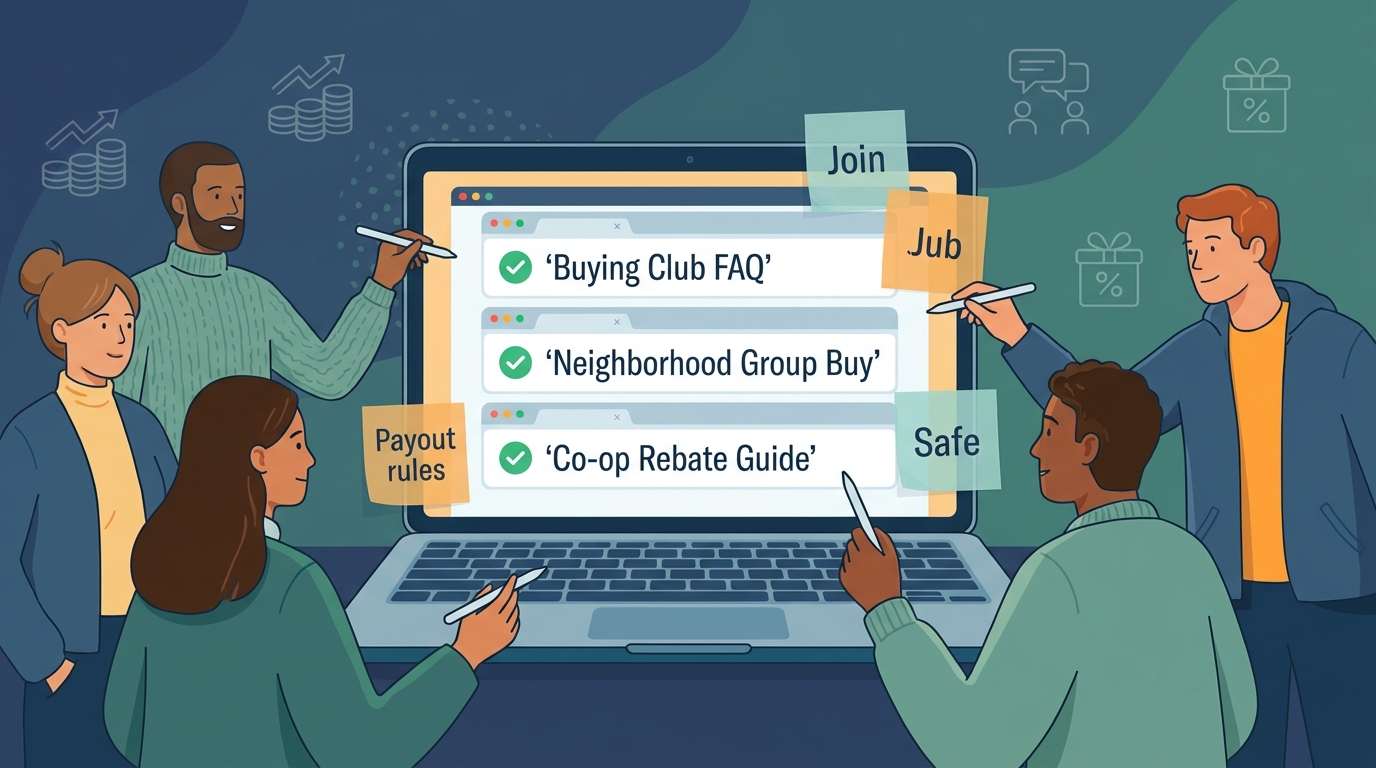
You are not lazy if you have bounced off rebate groups before. Most people hit the same wall fast. Too many links. Too many “invite only” chats. Too many groups that look active until you join and realize the last useful post was six months ago. If you are trying to figure out how to safely join community buying groups for rebates, the trick is not to hunt harder. It is to start where insiders start: the welcome guide, FAQ page, or “how it works” section. Those public onboarding pages often tell you everything that matters. They show which groups are real, how payouts work, what products they cover, what rules can get you removed, and how to contact an actual human. That cuts your search time down to minutes, not hours. Better yet, it helps you skip the sketchy Telegram channels and dead Discord servers that waste time and can cost you money.
⚡ In a Hurry? Key Takeaways
- Start with a group’s public welcome page, FAQ, or “how it works” guide. That is the fastest way to find legit rebate communities.
- Check for payout rules, posting dates, contact info, and local coverage before you join anything.
- If a group hides basic rules, has no active support, or pushes urgent buy-now language, skip it.
The onboarding shortcut is simple
Think of a welcome guide as the group’s user manual. Good communities publish one because new members ask the same questions every day. Bad communities avoid one because clear rules make it harder to stay vague.
That is why these public-facing pages are so useful right now. They quietly gather the exact details you need in one place. You can see the program terms, payment timing, approved stores, deal categories, refund rules, and where members actually talk.
Instead of searching “best rebate group” and crossing your fingers, search for phrases like these:
- “how it works” + buying club + your city
- “FAQ” + rebate group + grocery
- “getting started” + deal community + neighborhood
- “new member guide” + co-op rebate + local
You are looking for pages that explain the process in plain English. If the group cannot explain itself clearly, do not trust it with your money flow.
What to scan in the first 10 minutes
1. Look for named communities, not vague promises
A legit onboarding page usually links to specific spaces. That might be a Discord server, a private Facebook group, a Slack channel, a forum, or a local email list. It should tell you where members gather and what each channel is for.
Good sign: “Join our grocery rebate Discord for weekly item drops, and our local pickup channel for Chicago members.”
Bad sign: “DM admin for secret deals.”
2. Check the payout method
This is where many people get burned. A group can be active and still be a poor fit for your budget.
Look for answers to these questions:
- Do you buy first and get paid later?
- How long does reimbursement take?
- Is payout cash, store credit, gift card, or points?
- Is there a minimum payout amount?
- Are there limits per member or per household?
If the guide is fuzzy about timing, treat that as a warning. Rebate timing matters more than advertised savings.
3. Read the risk warnings
This part is easy to skip, but it is often the most useful section on the page. Real communities spell out the annoying stuff up front. They warn you that stock can sell out, receipt windows can close, or an offer can get pulled by a retailer.
That honesty is a good sign. Scammy or sloppy groups usually talk only about savings, never about timing, limits, or rejected submissions.
4. Check the date stamps and comment activity
A polished guide from 2022 is still a dead guide. You want signs of life. Check whether the FAQ was updated recently. Check linked groups for fresh posts, recent moderator replies, and normal member questions.
If every recommendation points to inactive channels, move on.
How to tell if a rebate group is worth the hassle
There is a difference between “legit” and “useful.” Some groups are real but not practical for you. Maybe the offers require too much up-front spending. Maybe they focus on products you never buy. Maybe the best deals are only in another region.
Use this quick filter:
- Fit: Does it match your stores, your city, and what you actually buy?
- Cash flow: Can you float the purchases until the rebate lands?
- Activity: Are deals posted often enough to matter?
- Support: Can you find admin help or a clear dispute process?
- Rules: Are the instructions clear enough that you can follow them once, correctly?
If a group fails two or more of those, it is probably not worth your time.
Your tonight plan: find three good options, not thirty
Do not build a giant spreadsheet of every possible club on the internet. That is how people get stuck. Pick three or four promising communities and compare only the basics.
Step 1: Open the public guide
Start with the onboarding page or FAQ.
Step 2: Pull out the essentials
Write down:
- Where members gather
- What stores or categories they cover
- How reimbursement works
- Any membership rules or fees
- Whether they mention your city or nearby pickup areas
Step 3: Join one public touchpoint first
If they have a public forum, social page, or preview channel, start there. Watch how people talk. A healthy group has normal questions, clear moderator replies, and recent examples of completed rebates.
Step 4: Narrow it down
Choose the two that best fit your budget and shopping habits. Then plug those into your tracking routine so you can compare offers instead of chasing random links.
If you also want to turn ordinary store rewards into something more useful, this guide on The ‘Loyalty Loop Shortcut’: Turn Quiet Store Rewards Programs Into Real Rebate Groups You Can Actually Join pairs nicely with this approach. It helps if your rebate hunting starts with stores you already use.
Red flags that should end the search immediately
You do not need to investigate every mystery. Some signs are enough to walk away.
- No public rules or FAQ at all
- No recent posts, updates, or moderator activity
- Pressure to act fast before you can read terms
- Only private messages, no documented process
- Unclear payout timing or changing terms
- Lots of testimonials, but no real instructions
- Requests for unusual payments, fees, or personal info up front
A good rebate community does not need to be mysterious. It needs to be clear.
Why this works better than coupon-blog hopping
Coupon blogs and random group lists often copy each other. They can send you into circles. One “best buying clubs” article links to a Facebook group, that group links to a Telegram thread, and the Telegram thread leads nowhere.
Onboarding hubs are better because they are closer to the source. They are made by the community itself or by organizers who need new members to understand the system. That means you get current rules, real contact points, and a better feel for whether the group is still alive.
That matters a lot when every dollar counts. A “great” deal is not great if you miss the rebate window or join a group that cannot answer basic questions.
At a Glance: Comparison
| Feature/Aspect | Details | Verdict |
|---|---|---|
| Public onboarding page | Lists rules, payment timing, community links, and contact info in one place. | Best starting point |
| Random invite link | May lead to inactive, poorly moderated, or hard-to-verify groups with few clear rules. | Use caution |
| Payout and timing details | Shows whether you need to front money, wait for reimbursement, or meet minimums. | Must check before joining |
Conclusion
The big win here is speed and safety. In the last 24 hours there has been a noticeable spike in public “how it works” pages, FAQ forums, and recommended-group lists from buying clubs, neighborhood deal organizers, and co-op rebate programs. That is gold for regular shoppers. Those pages quietly spell out the communities, rules, warnings, and contact points that regular members use every day, without forcing you to dig through scammy coupon blogs or spammy Facebook groups. Use that. Tonight, you can open three or four legit community-based rebate options, compare how they pay out, and then plug your favorites into Rebate Clubs so you can track, stack, and share deals like an actual club, not a solo bargain hunter guessing in the dark. It is a simple move, but it helps you avoid dead groups, missed deadlines, and cash-flow mistakes at exactly the moment when cutting recurring costs matters most.