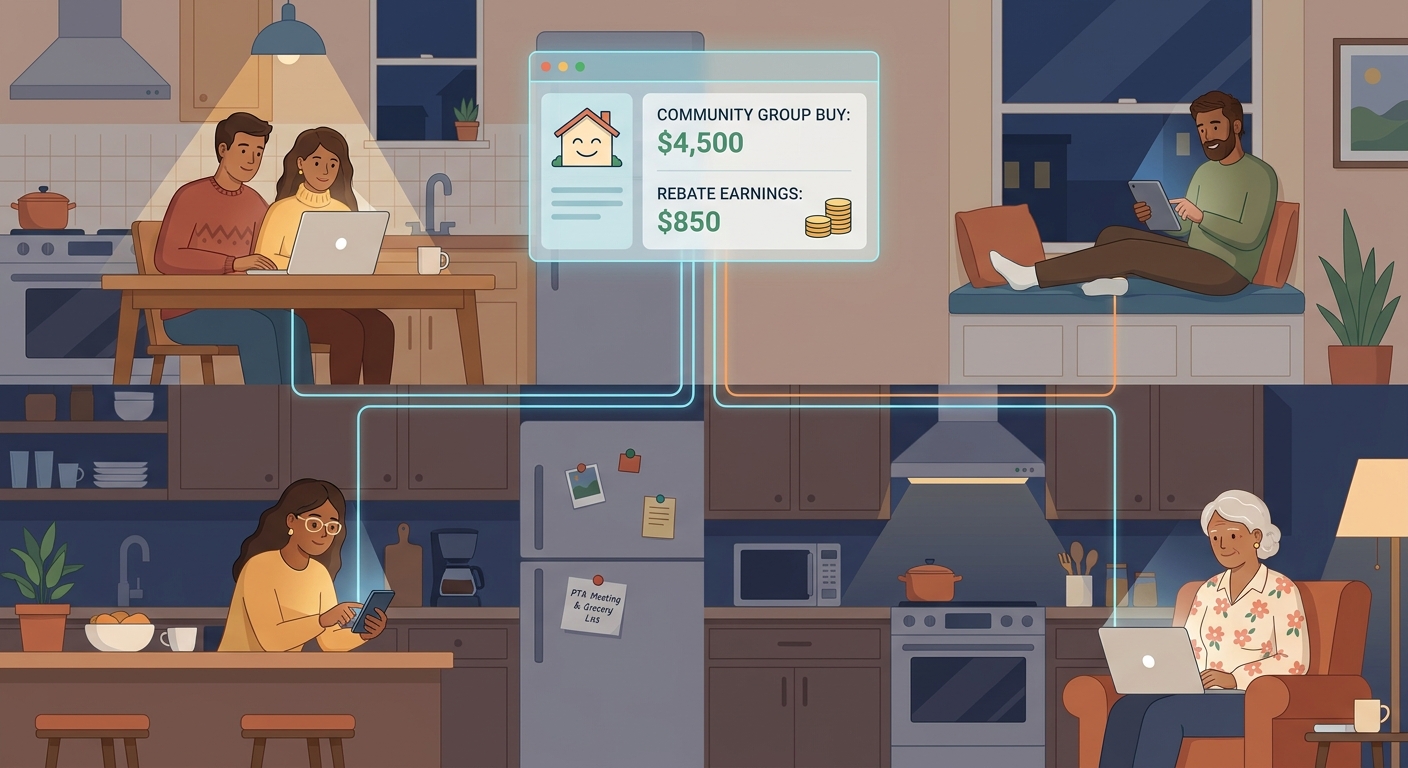
Your neighborhood email list probably looks half asleep. One message about a missing tabby. One reminder about the school fun run. One person asking if anyone has a ladder. It does not look like the start of a serious money-saving plan. That is exactly why it works. When budgets are tight, most people do not want to join another app, learn a new platform, or trust a random Facebook post promising huge savings. But they will open messages from the PTA, HOA, church group, apartment board, or mutual aid list they already know. If you have been wondering how to use community email lists to start a rebate buying group, the short version is simple. Start small, keep it boring, and use the trust that is already there. A quiet local list can turn into a practical rebate group much faster than a flashy public page full of strangers.
⚡ In a Hurry? Key Takeaways
- Yes, you can use an existing PTA, HOA, church, Slack, or newsletter list to start a small rebate buying group without building a new community from scratch.
- Begin with one simple test buy, one clear pickup plan, and one easy sign-up reply instead of launching a giant group all at once.
- Keep payments, deadlines, and product rules crystal clear so the group saves money without turning into a trust problem.
Why sleepy local lists beat public social media
Here is the part people miss. A local list does not need to be exciting to be useful. It needs to be trusted.
That trust matters more than hype. If someone sees a post in a school newsletter or a church email thread, they already have context. They know roughly who is asking. They know where pickup might happen. They know this is tied to real people, not a mystery account with a stock photo.
That lowers friction fast. Fewer people ask, “Is this legit?” More people ask, “What is the minimum order?”
That is a much better place to start.
What a rebate buying group actually is
A rebate buying group is just a small pool of people who agree to buy the same items, or buy through the same offer, so everyone can reach quantity discounts, cashback thresholds, bundle pricing, or local delivery minimums.
Sometimes the savings come from brand rebates. Sometimes from store promos. Sometimes from wholesale or co-op pricing. Sometimes from stacking all three.
You are not building a business empire here. You are organizing one practical group purchase at a time.
Think of it like this
One family buying 3 packs of paper towels gets regular pricing.
Ten families combining an order may trigger a lower unit price, a shipping break, a store pickup deal, a rebate threshold, or a co-op discount.
That is the whole idea.
How to use community email lists to start a rebate buying group
The easiest mistake is trying to sound too polished. Do not do that. People trust normal.
Step 1: Pick a group that already has light trust
Good options include:
- PTA or school family newsletters
- HOA and condo email lists
- Church, synagogue, mosque, or temple groups
- Local mutual aid email chains
- Apartment resident lists
- Neighborhood Slack or Discord spaces
The best list is not the biggest one. It is the one where people already respond to practical messages.
Step 2: Start with one category people already buy
Do not begin with twenty products. Start with one lane.
Good starter categories:
- Paper goods
- Cleaning supplies
- Snack packs for school lunches
- Canned goods
- Laundry detergent
- Basic pantry staples
If your group is food-focused, it may also help to read The ‘Neighborhood Bulk‑Buy Shortcut’: Turn Local Food Co‑ops Into Real Rebate Clubs You Can Actually Join. It is a good example of how existing local buying habits can turn into a more organized savings plan.
Step 3: Send a soft test message, not a grand announcement
You are not asking people to “join a movement.” You are checking interest.
A simple message works better:
“Hi all, I noticed we may be able to save on household basics if a few of us combine orders once a month. I am testing interest in a small rebate or bulk-buy group for items like paper towels, detergent, and pantry staples. If you want details, reply with ‘interested’ and I will send the first sample order.”
That is enough. Clear. Low pressure. Easy to answer.
Step 4: Run one pilot order
Your first order should be almost boring. That is a compliment.
Try one store, one rebate structure, one pickup location, one deadline.
For example:
- Orders due by Thursday at 8 p.m.
- Three approved items only
- Pickup Saturday from 10 a.m. to noon
- Payment due before order is placed
If the first round goes smoothly, people come back. If the first round is chaos, they vanish.
Keep the setup simple, because simple gets replies
You do not need fancy tools right away.
What you can use at the start
- Email replies for interest
- A Google Form for item requests
- A shared spreadsheet for totals
- Venmo, PayPal, or another familiar payment option
- A porch, lobby, church hall, or school parking lot for pickup, if allowed
That is enough for a test run.
If the group grows later, then you can add structure. At the beginning, the goal is not perfect software. The goal is proving the idea works.
The secret is that the list is doing the recruiting for you
This is why local email lists are so effective. You are not convincing strangers to trust you. The community wrapper is doing part of that job already.
People on these lists often have the same shopping patterns, same school calendar, same commute, and same pain points. That means your offer feels relevant faster.
A public social post has to fight for attention. A local list message lands in a smaller, warmer room.
What to say in your first real invite
Once a few people respond, send a follow-up with specifics.
Include these five things:
- What kinds of products are included
- How the savings happen
- What the deadline is
- How payment works
- Where and when pickup happens
Example:
“Thanks to everyone who replied. I am doing a first test order for household basics this week. The savings come from combined quantity pricing plus current store rebates. This round includes detergent, paper towels, and snack bars. Orders close Thursday night. Payment is due before I place the order. Pickup is Saturday morning near the community center. Reply if you want the item sheet.”
No buzzwords. No hard sell. Just the facts.
How to avoid becoming the unpaid neighborhood inventory manager
This matters. A lot.
Many good group buys fall apart because one helpful person becomes the default warehouse, accountant, and customer service desk.
Set these rules early
- No payment, no order
- No endless substitutions unless clearly offered
- Late pickups have a backup plan
- All sales are final once the shared order is placed, unless damaged
- Rebate timing should be explained up front
That last point is especially important. Some rebates hit right away. Others take weeks. Make sure people understand whether they are getting an instant lower price or a later payout.
Safety and trust basics you should not skip
Even with a trusted list, use common sense.
Good habits for a safer group
- Use transparent spreadsheets or order summaries
- Show unit pricing and estimated savings clearly
- Do not overpromise rebate amounts
- Use public or semi-public pickup spots when possible
- Check whether your school, HOA, or faith group has rules about commerce on the list
If list rules are strict, frame it as a resident-organized savings interest group and move interested people to a separate email thread after the first reply.
What works better than trying to “scale” too fast
People love to jump from 8 members to dreams of 300. Slow down.
A rebate group works best when it feels dependable. Not huge.
Better growth path
- Round 1: 5 to 10 households
- Round 2: Repeat the same category
- Round 3: Add one more product lane
- Round 4: Ask for one volunteer to help with pickup or admin
That pace is manageable. It also helps you spot problems before they get expensive.
Who this works best for
This approach is especially good for people who already sit in the middle of a real-world network.
- Parents in school communities
- Residents in apartment or condo buildings
- Faith community volunteers
- Neighborhood organizers
- Mutual aid helpers
If you are the person who already forwards useful info, you are in a strong position to start this.
Common mistakes that make people tune out
1. Sounding like a reseller pitch
If it sounds like recruitment, people back away. Keep the focus on one shared order and clear savings.
2. Using too many tools at once
Do not make people join a Slack, download an app, create an account, and fill out a five-tab spreadsheet just to buy detergent.
3. Choosing weird products first
Start with plain, repeat-purchase items. Save specialty products for later.
4. Hiding the math
Show how the savings work. People do not need a finance lecture, but they do need the numbers.
5. Ignoring list culture
A PTA list may welcome practical family savings notes. A tightly moderated HOA list may not. Read the room.
At a Glance: Comparison
| Feature/Aspect | Details | Verdict |
|---|---|---|
| Existing community email list | Warm audience, built-in trust, faster replies, less setup | Best place to start a small rebate buying group |
| Public Facebook or social media recruiting | Larger reach, but colder leads, more skepticism, more moderation headaches | Useful later, but riskier for a first test |
| One small pilot order | Simple product list, clear payment rules, easy pickup, quick proof of concept | Strongest way to build confidence and repeat participation |
Conclusion
You do not need a giant following, a perfect app, or a flashy brand to get a rebate group off the ground. You probably already have the best starting point sitting in your inbox. Right now budgets are tight and people are hesitant to join yet another app or public Facebook group, but they still read messages from their PTA, HOA, church, or mutual aid list. That is the opening. Use the trust that already exists, start with one practical order, and keep the process simple enough that busy people can say yes. Tapping into those existing trust channels lets you stand up a rebate group days faster, with warmer leads, higher participation, and less risk than trying to recruit strangers from scratch on social media.