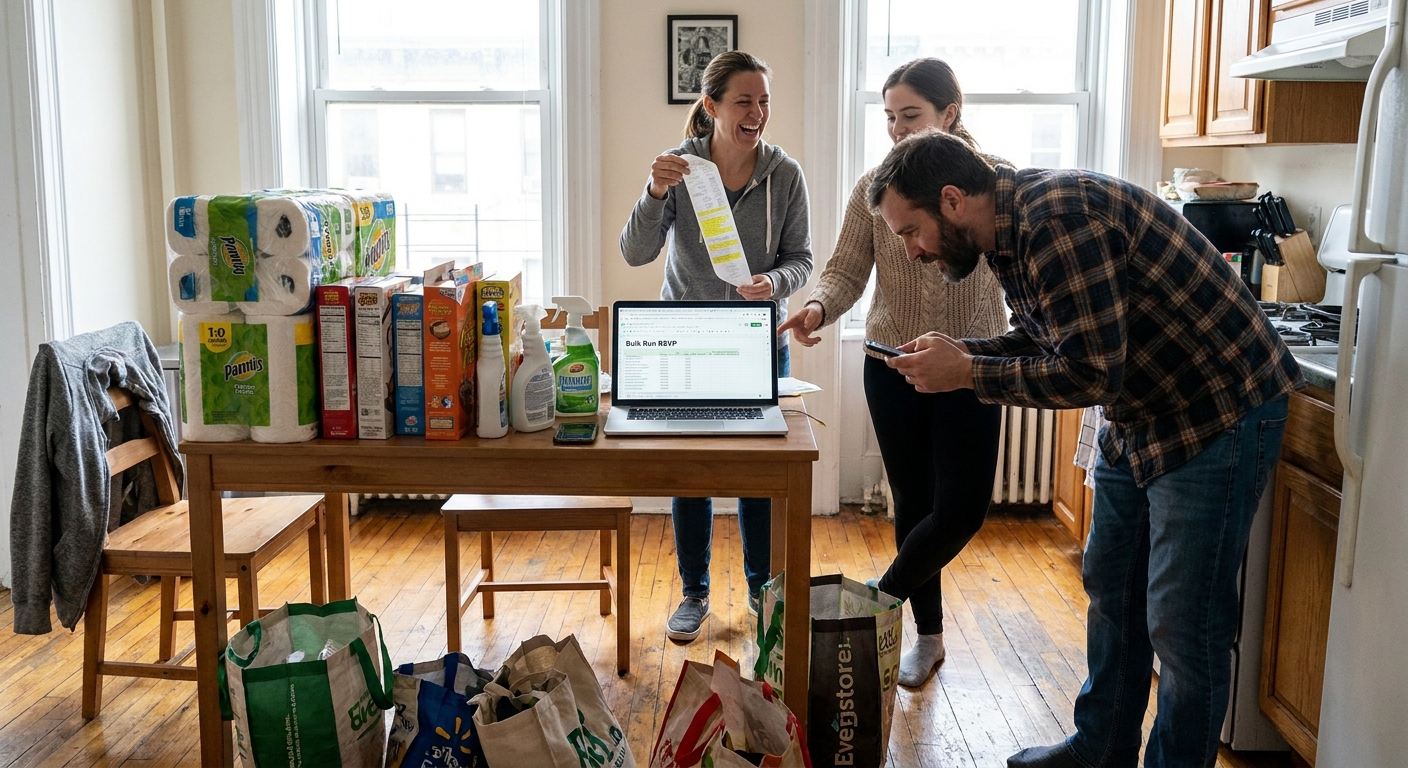
You are not the only one who misses those “I’m doing a Costco run, anyone want in?” posts by about 14 minutes. They pop up in the group chat, fill fast, then disappear into a pile of dog photos, plumber tips, and porch package warnings. By the time you ask, the order is closed, pickup is done, and you are back to paying full price for paper towels and cereal. That is frustrating, especially because the same few people usually seem to be doing these runs over and over. The good news is that you do not need a giant coupon club or a fancy shopping app to join them. If you have been wondering how to join local community rebate buying groups, the easiest answer is often to help turn those random bulk-order posts into a simple standing circle. A shared list, a set pickup day, and clear payment rules can turn one-off favors into regular savings.
⚡ In a Hurry? Key Takeaways
- Yes, you can join local community rebate buying groups without a membership by starting with neighbors already posting bulk runs and helping them make it regular.
- Ask for one simple system, like a monthly order sheet, payment cutoff, and pickup window, instead of waiting for random invite-only posts.
- Small private groups are often safer and more useful than giant public deal pages because people know each other and can track orders, costs, and rebates more clearly.
Why these posts feel impossible to catch
Neighborhood chats move fast. Really fast.
One person posts that they are heading to Costco, Restaurant Depot, the local produce wholesaler, or an Asian market across town. Five people jump in. Three send private messages. Then the original post goes quiet because the organizer is driving, shopping, or buried in replies.
From the outside, it looks random. But usually it is not random at all. It is a mini buying group that just has not been named yet.
That matters, because once you see it that way, you stop chasing every post and start looking for the pattern behind it.
How to join local community rebate buying groups without waiting for an invitation
The best shortcut is to find the people who are already doing the work informally.
Look for repeat organizers
In most neighborhood chats, the same names come up again and again. They are the ones posting things like:
- “Doing a warehouse run Friday”
- “Anyone need produce from the wholesale market?”
- “I can add a few people to my household basics order”
- “We hit the rebate threshold if a couple more people want in”
Those are your people. They may not call themselves a buying group, but that is what they are.
Send a low-pressure message
Do not ask a dozen questions at once. Keep it easy.
Try something like this:
“I keep missing these bulk runs, but I would love to join if you ever make it a regular list. If it helps, I can use a shared sheet or order by a set deadline.”
That message does two useful things. It shows genuine interest, and it removes work from the organizer instead of adding to it.
Offer structure, not more chaos
People rarely avoid starting a group because they hate saving money. They avoid it because managing ten flaky neighbors sounds exhausting.
If you can help make the process simple, you become the person they want in the group.
The “Bulk Run RSVP Shortcut” that actually works
Here is the basic formula.
- Spot two or three people who already organize occasional bulk runs.
- Ask if they would be open to a small recurring list for interested neighbors.
- Set one order method, one payment method, and one pickup routine.
- Track savings and rebates so people see the value and stick around.
That is it. No app required. No membership pitch. No giant public forum full of strangers.
What “formalize it” really means
This sounds bigger than it is. You are not starting a corporation. You are just giving an existing habit a shape.
A simple group can run on:
- A text thread or private chat
- A shared Google Sheet
- A recurring monthly order day
- Venmo, Zelle, or cash on pickup
- A note showing who got what and what the total was
That light structure is enough to turn “maybe next time” into “I know how this works.”
What to say when you want to help start one
If you are trying to nudge a casual organizer into a real group, wording matters.
Here is a simple message you can copy and tweak:
“A few of us seem to keep missing your bulk posts. Would it help to make a small recurring list for monthly runs? I can help with a sheet, order deadline, and pickups so it is not all on you.”
Notice what this does. It does not demand access. It offers support.
That is often the difference between getting ignored and getting added.
How small groups save more than giant public deal pages
This is the part many people miss.
The fastest-growing collective buying setups right now are not huge public bargain pages. They are tiny private circles. Apartment buildings. Parents from the same school. Three streets in one neighborhood. Church groups. Pet-owner chats. Small mutual aid networks.
Why? Because trust beats scale when groceries and household basics are involved.
In a smaller group:
- People are more likely to pay on time
- Pickup is easier to arrange
- Orders are easier to double-check
- Rebates can be tracked clearly
- Members are less likely to vanish after one run
If you have also seen local support networks doing this in quieter ways, you might like The ‘Mutual Aid Shortcut’: Turn Quiet Help Groups Into Real Rebate Circles You Can Join Today. It gets at the same basic truth. A warm, useful group becomes much more helpful once there is a clear path to regular savings.
Set a few rules early, so nobody gets annoyed later
This is the unglamorous part. It is also the part that keeps the group alive.
Rule 1: Put order deadlines in writing
For example: orders due by Thursday at 8 p.m.
If someone misses it, they wait for the next run. That sounds strict, but it keeps the organizer sane.
Rule 2: Use exact item links or photos
“The big detergent” is not enough. “Tide 146 oz, original scent, $19.99 at Costco” is better.
Less confusion means fewer awkward porch-side debates.
Rule 3: Decide payment timing upfront
Prepay is easiest for most groups. If not, set a firm payment window.
Nothing kills a neighborhood bulk club faster than one person floating everybody else’s paper goods.
Rule 4: Be clear about the rebate split
If the organizer earns store rewards, credit card cash back, or quarterly rebates, decide how that value gets handled.
There is no one perfect answer. Some groups pass every cent back proportionally. Some let the organizer keep a small amount for gas and time. Some roll the rebate into future orders.
The important part is not the formula. It is the clarity.
Simple signs a group is worth joining
Not every “want in?” chat deserves your trust.
Good signs include:
- The organizer posts prices clearly
- There is a repeat schedule, even if it is monthly
- People confirm pickups publicly or in one shared thread
- There is a written list of who ordered what
- The group stays local and reasonably small
That last point matters. A building, a block, a school parent circle, or a neighborhood subsection is often ideal. It is large enough for buying power, but small enough for accountability.
Red flags to watch for
You do not need to be paranoid. You do need common sense.
- Vague pricing
- No receipt or order summary
- Pressure to pay quickly with no item breakdown
- Frequent last-minute changes
- One person controlling everything with no transparency
If it feels messy before you join, it will probably feel messier after.
What kinds of items work best in these circles
Start with boring stuff. That is where the savings usually are.
Best categories
- Paper towels and toilet paper
- Cleaning supplies
- Laundry detergent
- Rice, flour, oil, pasta
- Snack boxes for families
- Seasonal buys like charcoal, ice melt, school snacks, holiday baking supplies
These items are predictable, easy to split, and less likely to create “I thought this was different” problems.
Harder categories
- Fresh produce with mixed quality
- Frozen items if pickup timing is loose
- Anything with lots of flavor or size variations
Can those still work? Sure. But they are better once the group already trusts each other.
If nobody has started a real group yet, make the tiniest version possible
You do not need 40 members.
Start with three households. Pick one store. Choose one category, like household basics or lunchbox snacks. Set one date per month.
That is enough to prove the idea.
Once people see the receipt, the lower per-unit cost, and the rebate total, interest tends to grow on its own.
At a Glance: Comparison
| Feature/Aspect | Details | Verdict |
|---|---|---|
| Random public bulk-run posts | Easy to spot, but hard to join in time and often missing clear rules, pricing, or pickup details. | Good for one-off luck, not reliable savings. |
| Small private neighborhood buying circles | Usually built around people who already know each other, with repeat orders, simpler pickup, and clearer rebate tracking. | Best option for most readers. |
| Full formal shopping apps or paid memberships | Can work well, but add setup, fees, account hurdles, and more tech than many casual groups need. | Useful later, but not needed to start. |
Conclusion
If you keep missing those local pickup and bulk-order posts, the answer is not to refresh the chat harder. It is to spot the neighbors already doing these runs and help turn their habit into a simple system people can actually join. Right now, the most useful collective buying tools are often small, private groups coordinating regular bulk runs for better pricing and quarterly rebates, not giant public deal pages. With a shared list, a payment cutoff, and a clear pickup routine, you can lock in real savings on groceries, household basics, and seasonal buys without needing memberships, special apps, or advanced coupon skills. That is the real win here. You are not chasing random favors anymore. You are helping your block, building, or parent group create its own tiny warehouse club that feels trustworthy, repeatable, and genuinely worth joining.